

 Megtekintés
 Küldés
 Megosztás
 Részletek

 Letöltés
 Hasonló darabok
 X-ray felvétel
 Diavetítés
 Statisztika
So she came down from the tree


 Összes részlet megjelenítése
Giclée / Műnyomat
Múzeumi minőségű giclée vagy vászonnyomat, gyors gyártással és rugalmas finomítási lehetőségekkel. ( Kézzel festett másolat rendelése Áttérés digitális képre)




P118B $10

P118H $10

P118W $10

P438Z $10

P508JH $12

P508YH $12

P805H $10

P805Z $10

P919BZ $10

P919G $10

P919XJ $10

P959ZH $10

P968JZ $12

W106C $8

W218G $10

W218JH $8

W218Y $10

W307PJ $10

W316G $10

W316PJ $8

W316Y $10

W398PJ $8

W4111J $10

W500HY $15

W500JH $15

W692G $12

W849H $8

W940BG $15

W953PJ $8




Válasszon előre meghatározott méreteink közül, amelyek megfelelnek a műalkotás eredeti arányainak.

Megadhat saját méreteket is egy konkrét kerethez vagy helyszínhez igazítva. Amennyiben a kiválasztott méret nem egyezik az eredeti kép arányokkal, a műalkotást le fogjuk vágni, vagy kiegészítjük a képet tükrözött vagy egyszínű szélekkel. A gyártás megkezdése előtt egy digitális tervezetet küldünk jóváhagyásra.
Kérjük, vegye figyelembe, hogy a képernyőn látható előnézet nem tükrözi a tényleges levágást vagy kiegészítést. Csak a tervezet mutatja pontosan a végső kompozíciót.
Bár az egyedi méretek is elérhetőek, az eredeti arányok megőrzése érdekében azt javasoljuk, hogy válasszon a előre meghatározott listából származó méretet.
Világszerte történő kiszállítás területére mindössze 2 hét alatt, a szokásos 4-5 hét helyett. (15 szeptember)

Ingyenes globális expressz szállítás

Prémium minőségű len vászon

Teljes körű szállítási biztosítás

Vámvisszatérítési Garancia

Hiteles színpontosság garancia

100 napos visszaküldési lehetőség (csak hibás termékek esetén)

100% pénzvisszatérítési garancia

Több darab vásárlása esetén kedvezmény
 Az üvegkeretes opció csak 110 cm alatti méretben érhető el

So she came down from the tree
Giclée / Műnyomat
Reprodukció mérete
-


Összesített ár
$ 80
A Dreamlike Descent: Exploring Marc Chagall’s 1948 Composition
This captivating artwork by Marc Chagall, created in 1948, presents a vibrant and surreal scene that immediately draws the viewer into its enigmatic world. Dominated by intensely saturated colors and fluid forms, the painting depicts an unusual interaction – one figure seemingly carrying another aloft on their head amidst a stylized, densely populated tree. It’s a composition brimming with symbolic weight and emotional resonance, characteristic of Chagall's unique artistic vision.Stylistic Influences & Artistic Technique
The work firmly resides within the realm of Expressionism, though it also draws upon elements of Surrealism and his earlier association with Cubism and Symbolism. Chagall doesn’t aim for realistic representation; instead, he prioritizes emotional expression through bold color choices – a striking interplay of blues, greens, reds, and yellows – and simplified, abstracted shapes. The technique is notably gestural, suggesting the paint was applied liberally, likely with a palette knife to build up texture and layers. This creates a rough, almost impasto surface that adds depth and physicality to the dreamlike scene. The flattened perspective further enhances the painting’s two-dimensional quality, emphasizing its symbolic rather than literal nature.Subject Matter & Symbolism
At its core, the artwork explores themes of human connection, support, and perhaps even burden. The act of carrying another on one's head is powerfully evocative – it could represent a selfless act of devotion, the weight of responsibility, or a complex dynamic between two individuals. The tree itself serves as a central motif, potentially symbolizing life, growth, and ancestral roots—themes frequently revisited in Chagall’s oeuvre due to his upbringing in Vitebsk. The inclusion of the moon adds another layer of symbolism, often associated with dreams, intuition, and the subconscious. These elements combine to create a narrative that is open to interpretation, inviting viewers to project their own emotions and experiences onto the scene.Historical Context & Chagall’s Life
Created in 1948, this piece emerges from a period of significant upheaval and transition for Chagall. Having fled Europe during World War II, he found refuge in the United States before eventually settling in France. This experience profoundly impacted his work, infusing it with a sense of displacement, longing, and a renewed appreciation for themes of home and belonging. Chagall’s Belarusian-Jewish heritage deeply influenced his artistic style; the imagery often reflects memories of his childhood in Vitebsk – a city he affectionately referred to as “Russian Toledo” due to its rich cultural tapestry. His art consistently blends personal experiences with universal human emotions, making it profoundly relatable across cultures and generations.Emotional Impact & Interior Design Considerations
This painting evokes a sense of mystery, melancholy, and quiet contemplation. The vibrant colors are uplifting, yet the surreal imagery creates an underlying feeling of unease or longing. Its dynamic composition and bold aesthetic make it a striking focal point for any interior space.- In a modern living room, this artwork would add a touch of sophisticated whimsy.
- For a bedroom, its dreamlike quality could foster a sense of tranquility and introspection.
- Its rich color palette complements neutral palettes beautifully, while also holding its own against bolder décor schemes.
A művész életrajza
A Life Painted in Dreams: The World of Marc Chagall
Marc Chagall, born Moishe Shagal in 1887 in the small Belarussian town of Liozna near Vitebsk, wasn’t merely a painter; he was a poet of color, a weaver of dreams, and a chronicler of memory. His life, spanning nearly a century, mirrored the tumultuous currents of the 20th century, yet his art remained steadfastly rooted in a deeply personal vision—one infused with the folklore of his Hasidic Jewish upbringing and an unwavering belief in the power of imagination. Vitebsk itself was more than just a birthplace; it became the emotional core of his artistic universe, a recurring motif populated by flying figures, whimsical animals, and the vibrant hues of remembered landscapes. The town’s unique blend of cultures—Russian Orthodox churches alongside bustling Jewish marketplaces—forged an aesthetic sensibility that would defy easy categorization throughout his long career. Though he sought formal training first with a local sign painter and later in St. Petersburg under Léon Bakst, and then in Paris at the Académie de la Grande Chaumière, Chagall never fully embraced any single artistic movement. He absorbed elements of Cubism, Symbolism, and Fauvism, but always filtered them through his own intensely personal lens, creating a style that was uniquely, unmistakably Chagall.Early Years and Artistic Beginnings
Chagall’s formative years were marked by hardship and displacement. Born into a family of impoverished Jewish artisans, he experienced the trauma of pogroms—violent anti-Jewish riots—which instilled in him a lifelong preoccupation with themes of persecution and resilience. Despite these challenges, Chagall possessed an innate talent for drawing and painting from a young age. He initially studied at Vitebsk Art School, where he honed his skills under Léon Bakst, a prominent figure in the Ballets Russes avant-garde movement. This exposure to theatrical art profoundly influenced his visual language, fostering a fascination with dynamism and expressive gesture. However, Chagall’s artistic ambitions extended beyond the confines of academic training; he sought inspiration from folk traditions—particularly Jewish folklore—which would become central to his artistic vision. His early canvases already hinted at the distinctive style that would define his career: bold color palettes, flattened perspectives, and fantastical imagery—elements that defied conventional realism.The Symbolism of Vitebsk
Vitebsk remained an indelible presence in Chagall’s imagination throughout his life. The town served as a constant source of inspiration for his paintings, appearing repeatedly in works such as I and the Village (1911) and *Over Vitebsk* (1920-1922). These canvases aren't merely depictions of place; they are explorations of identity, memory, and the relationship between the individual and community. The village isn’t rendered realistically but as a fragmented collection of recollections, imbued with symbolic meaning. Houses tumble upside down, figures float in midair, and animals mingle seamlessly—creating an otherworldly atmosphere that captures the essence of Vitebsk's cultural landscape. Chagall’s use of color was particularly striking during this period. He employed vibrant hues—blues, yellows, reds—to convey emotion rather than literal representation, reflecting the spiritual fervor of his Jewish upbringing. This stylistic approach wasn’t accidental; it stemmed from a desire to move beyond mere imitation of reality and capture the essence of feeling, the weight of memory, and the power of folklore.The Influence of Cubism and Surrealism
While Chagall rejected strict adherence to any single artistic movement, he absorbed influences from Cubism and Surrealism—particularly from Pablo Picasso and André Breton. He experimented with fragmented perspectives and geometric forms, as seen in works like *The Chapel of Saint Helena* (1927), adapting cubist techniques to express his inner vision. Simultaneously, Chagall embraced the dreamlike logic of Surrealism, incorporating fantastical imagery and irrational juxtapositions into his canvases. This fusion of styles resulted in a distinctive visual language characterized by lyrical abstraction—a hallmark of his artistic oeuvre. He sought inspiration from biblical narratives and Jewish mysticism, translating these themes into emotionally charged paintings that explored profound questions about faith, suffering, and redemption.Major Achievements and Legacy
Throughout his prolific career, Chagall achieved international acclaim for his monumental canvases and innovative stained glass windows. His masterpiece, *White Crucifixion* (1937), stands as a poignant meditation on the horrors of Nazism and Jewish persecution—a testament to his artistic courage and moral conviction. He continued to produce works during World War II, reflecting the anxieties and uncertainties of the time. Following the war, Chagall emigrated to New York City, where he established himself as one of America’s leading artists. His paintings from this period explored themes of exile and displacement, capturing the spirit of a generation grappling with trauma and loss. He received numerous prestigious commissions, including the ceiling of the Paris Opera (1964), a breathtaking explosion of color and form that celebrated musical masterpieces. And his stunning stained glass windows for the Hadassah Hebrew University Medical Center synagogue in Jerusalem—a project undertaken in collaboration with Anatoly Yankilevich—transformed sacred space into an immersive experience of light and color. Marc Chagall’s legacy extends beyond his artistic creations; it resides in the enduring power of his vision—a vision that celebrates love, memory, and the boundless possibilities of the human imagination. He left behind a body of work that is both deeply personal and universally accessible, inviting viewers to lose themselves in a world painted with dreams and illuminated by hope. His art continues to inspire, challenge, and move us, ensuring that his vibrant and imaginative spirit will live on for generations to come.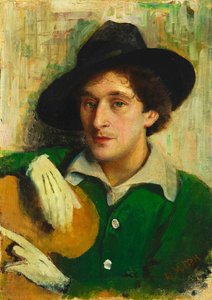
Marc Chagall
1887 - 1985 , Білорусь
A művészről röviden
- Artistic Movement Or Style: Современный стиль
- Artists Or Movements Influenced By This Artist: ['Сюрреализм']
- Artists Who Influenced This Artist:
- Леон Бакст
- Дюманьи
- Date Of Birth: 6 július 1887
- Date Of Death: 28 március 1985
- Full Name: Marc Chagall
- Nationality: Білім беруші
- Notable Artworks:
- В городе Витебск
- Белая распятие
- Place Of Birth: Liozna, Беларусь
Kapcsolódó cikkek
Beyond Reality: The Dreamlike Magic of Surrealist Expression and the Subconscious Mind
Explore the profound beauty of Surrealism. From Dalí’s dreamscapes to the subconscious depths of expressionism, discover how masters captured the irrational mind through breathtaking, hand-painted fine art and historical insight.
Beyond Reality: The Dreamlike Power of Surrealist Expressionism and the Subconscious Mind
Explore the profound depths of Surrealist Expressionism. Discover how masters like Dalí used dream logic and subconscious imagery to redefine reality through emotionally resonant, museum-quality art.

Surrealist Expressionism: A Visual Journey Through Dream Logic and Raw Emotion
Dive into the visceral world of Surrealist Expressionism. Explore how dream logic meets raw emotion through a visual journey of iconic techniques, post-war history, and bold aesthetics to transform your modern space with high-impact, unforgettable art.
Beyond Reality: A Curated Guide to the Dreamlike World of Surrealist Landscapes
Embark on a visual journey through the subconscious. Explore our expert guide to Surrealist landscapes, uncovering the dreamlike techniques of masters like Dalí to deepen your appreciation for this captivating art movement.
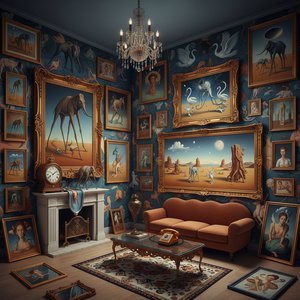
Salvador Dalí 25 Mesterműve: Az Élet és Álmaink Rejtélyei – OriginalUniqueArt
Fedezze fel Salvador Dalí 25 legikonikusabb művészeti alkotását! Ismerje meg a szürrealizmus mesterének álomképeit, festményeit és egyedi stílusát. Múzeumi minőségű reprodukciók és inspiráló dekorációs ötletek – OriginalUniqueArt.com.


