- Főoldal

- Vászonra nyomtatás
- mabel frances layng
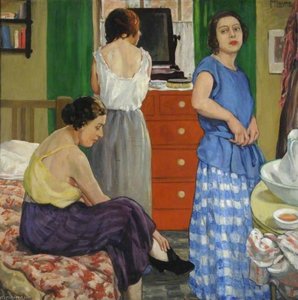
- The Tea Table

 Készíttetnék festményként Kép letöltése
 Megosztás
 Megosztás
 Részletek
 Kedvencekhez ad

 Letöltés
 Hasonló alkotások
 X-ray felvétel
 Diavetítés
The Tea Table
 1937
1937 60.0 x 75.0 cm
 Tovább olvasom
Giclée / Műnyomat
Múzeumi minőségű giclée vagy vászonnyomat, gyors gyártással és rugalmas finomítási lehetőségekkel.




































Válasszon előre meghatározott méreteink közül, amelyek megfelelnek a műalkotás eredeti arányainak.

Megadhat saját méreteket is egy konkrét kerethez vagy helyszínhez igazítva. Amennyiben a kiválasztott méret nem egyezik az eredeti kép arányokkal, a műalkotást le fogjuk vágni, vagy kiegészítjük a képet tükrözött vagy egyszínű szélekkel. A gyártás megkezdése előtt egy digitális tervezetet küldünk jóváhagyásra.
Kérjük, vegye figyelembe, hogy a képernyőn látható előnézet nem tükrözi a tényleges levágást vagy kiegészítést. Csak a tervezet mutatja pontosan a végső kompozíciót.
Bár az egyedi méretek is elérhetőek, az eredeti arányok megőrzése érdekében azt javasoljuk, hogy válasszon a előre meghatározott listából származó méretet.
Világszerte történő kiszállítás területére 2 hét alatt, a szokásos 4-5 hét helyett. 22 július

Ingyenes globális expressz szállítás

Prémium minőségű len vászon

Teljes szállítási biztosítás

Vámvisszatérítési Garancia

Tökéletes színpontosság garancia

60 napos visszaküldési lehetőség (csak gyártási hibák esetén)

100%-os pénzvisszatérítési garancia

Kedvezmény több termény esetén
 Az üvegkeretes opció csak 110 cm alatti méretben érhető el

The Tea Table
Giclée / Műnyomat
A reprodukció mérete
-


Összesített ár
-
A művész életrajza
Mabel Frances Layng: A Victorian Observer of Everyday Life
Mabel Frances Layng (9 November 1881 – December 1937) emerges from the annals of British art as a quietly significant observer of early 20th-century life. Often overshadowed by her contemporaries, Layng’s work offers a delicate yet remarkably perceptive glimpse into the domestic routines and social customs of Victorian England and its immediate aftermath. Born in Macclesfield, Cheshire, to Alfred Edward Freestone Layng and Ada Mary Coates, her upbringing provided a foundation for an artistic sensibility deeply rooted in observation and a nuanced understanding of human interaction.
Her early education included studies at the St. John’s Wood Art School and, crucially, under Frank Brangwyn at the London School of Art between 1906 and 1908. This latter connection proved pivotal, exposing her to a style that blended Impressionistic techniques with a focus on capturing fleeting moments and atmospheric effects. Following this formative period, Layng established herself as a professional artist, primarily supporting herself through painting, a relatively uncommon path for women artists of the time. She moved to Ealing, Middlesex, in 1914, where she remained until her death, dedicating herself to her craft and quietly building a body of work that reveals both technical skill and a genuine empathy for her subjects.
A Career Defined by Observation and Detail
Layng’s artistic career unfolded during a period of significant social change. The First World War profoundly impacted British society, and Layng's paintings often reflect the anxieties and rhythms of this era. She joined the Voluntary Aid Detachment of the British Red Cross in 1915, providing medical assistance at various London hospitals – an experience that undoubtedly informed her depictions of everyday life and the resilience of ordinary people. Her artistic output was consistently exhibited throughout her lifetime, gaining recognition through venues such as the Royal Academy, the Paris Salon, and numerous galleries across Britain, including Walker’s Galleries in London. These exhibitions showcased a diverse range of subjects – landscapes, portraits, and scenes of urban life – all rendered with a meticulous attention to detail and a subtle use of color.
Notable amongst her works are paintings like “The Strolling Players” (1916), which captured the vibrancy of street performers, and “Mars and Venus” (1920), a romantic depiction of a couple. Her later pieces, such as "The Picnic" (1921) and "Crossing the Road" (1928), continued to explore themes of domesticity and social interaction, often portraying women engaged in everyday activities – shopping, socializing, or simply enjoying quiet moments within their homes.
Technique and Style: A Delicate Realism
Layng’s artistic style is characterized by a delicate realism that avoids grand gestures or dramatic compositions. She favored small-scale works—often oil paintings on canvas—that invite close scrutiny. Her brushwork is generally smooth and understated, prioritizing tonal variations and subtle shifts in color to create a sense of atmosphere and depth. She skillfully employed light and shadow to model forms and evoke the feeling of a particular moment in time. Influenced by Impressionism, she captured the fleeting effects of light and movement with remarkable sensitivity, yet her work retains a distinctly British sensibility – an appreciation for quiet observation and a nuanced understanding of human behavior.
Her use of color is particularly noteworthy. Layng favored muted tones—soft blues, greens, and browns—that contribute to the overall sense of tranquility and intimacy in her paintings. She avoided bright, saturated colors, instead opting for subtle harmonies that create a harmonious and inviting atmosphere. This restrained palette allows her subjects – often ordinary women engaged in everyday activities – to emerge with a quiet dignity and charm.
Legacy and Significance
Mabel Frances Layng’s contribution to British art is often overlooked, yet her work deserves recognition for its quiet beauty and insightful observations. She represents a significant voice within the broader context of women artists in the early 20th century, demonstrating both artistic skill and resilience in a period when opportunities for female artists were limited. Her paintings offer a valuable window into Victorian and Edwardian England, capturing not only the visual appearance of daily life but also the social dynamics and emotional nuances that shaped this era. Today, her works are held in several museums and galleries across the United Kingdom, ensuring that her quietly compelling vision continues to resonate with audiences.
Her legacy is further cemented by the efforts of Staffordshire Archives and Heritage, which have meticulously documented her life and work, making it accessible for research and appreciation. Layng’s story serves as a reminder that even in the shadows of more celebrated artists, there are countless individuals whose contributions deserve to be remembered and celebrated.
mabel frances layng
1881 - 1937
Rövid tények
- Artistic Movement Or Style: Impressionism
- Artists Who Influenced This Artist: ['Frank Brangwyn']
- Date Of Birth: November 9, 1881
- Date Of Death: December 1937
- Full Name: Mabel Frances Layng
- Nationality: British
- Notable Artworks:
- The Strolling Players
- Mars and Venus
- The Picnic
- The Workroom
- Crossing the Road
- Place Of Birth: Macclesfield, Cheshire

