

 Megosztás
 Megosztás
 Részletek
 Útmutató

 Letöltés
 Hasonló darabok
 Diavetítés
 Statisztika
Statue der Diana


 Tovább olvasom
Kézzel készített olajfestmény reprodukció
Kézzel festett olajvastú vászon, az Ön által választott méretben és keretben, művészeink készítik meglévőre. ( Váltás nyomtatványra Áttérés digitális képre)




































Válasszon előre meghatározott méreteink közül, amelyek megfelelnek a műalkotás eredeti arányainak.

Írja be a kívánt szélességet és magasságot, hogy illeszkedjen a keretéhez vagy a falához. Mivel ez kézzel festett alkotás, egy eltérő formájú méret esetén a művész akár festhet is valamivel többet a kép körül, vagy korolathat is belőle — az Ön döntésének megfelelően. A festés megkezdése előtt küldünk egy digitális tervezetet jóváhagyásra. Az oldalon látható kép nem tartalmazza a végeredményt — csak a tervezet mutatja meg a valódi eredményt.
A rendelést követően a OriginalUniqueArt.com csapata e-mailt küld az ügyfélnek az instrukciókért, és biztosít egy előnézeti képet (mockup).
Világszerte elérhető szállítás () 3-4 hét alatt a szokásos 5 hét helyett. (25 október). A minőség nem kérdőjelezhető.

Ingyenes globális expressz szállítás

Prémium minőségű len vászon

Teljes körű szállítási biztosítás

Vámvisszatérítési Garancia

Tökéletes színarányosság garancia

100 napos visszaküldési garancia (csak gyártási hibás termékek esetén)

100% pénzvisszatérítési garancia

Több darab vásárlásakor kedvezmény
 Az üvegkeretes opció csak 110 cm alatti méretben érhető el

Statue der Diana
Reprodukciós technika
Reprodukció méretei
-


Összesített ár
Ft 96017
The Grace of the Hunt: Rediscovering Vasse’s Diana
In the quiet, hallowed halls of the Potsdam Gallery, there exists a moment of frozen motion that transcends the very stone from which it was carved. The Statue der Diana, a masterpiece sculpted by the French virtuoso Louis Claude Vassé around 1769, serves as a breathtaking testament to the heights of Neoclassical mastery. As the Roman goddess of the hunt, Diana is captured in a state of poised elegance, her form embodying both the strength of a predator and the ethereal grace of a deity. To behold this sculpture is to witness a profound dialogue between the artist and his medium, where the cold, unyielding nature of marble is coaxed into the fluid rhythm of life.
The artistry of Vassé is most evident in the way he navigates the tension between stillness and movement. The goddess holds her bow with a precision that speaks to her divine purpose, yet there is an unmistakable vitality in her stance. Every detail—from the intricate textures of her flowing drapery to the delicate rendering of her hair—suggests a figure caught in a fleeting second of transition. For the discerning collector or interior designer, this piece offers more than mere decoration; it provides a focal point of classical sophistication, capable of anchoring a room with its timeless authority and the subtle, rhythmic energy of the hunt.
A Legacy of Enlightenment and Royal Ambition
The historical tapestry surrounding this work is as rich as the sculpture itself. Commissioned by King Frederick II of Prussia, the statue was part of an ambitious decorative program designed to elevate his gallery to the splendor of the great French courts. Created in Paris under the watchful eye of the Enlightenment's aesthetic ideals, the statue traveled from France to Potsdam in 1771, arriving alongside its mythological counterpart, the Statue of Apollo. This pairing was not merely decorative but deeply symbolic, representing a sophisticated iconographic program that celebrated the harmony between art, nature, and the divine order.
Vassé, trained under the legendary Jean-Baptiste Girardon, brought to this work a profound understanding of anatomical accuracy and classical proportion. His ability to surpass the shadows of antiquity—specifically the famed Diana of Versailles—demonstrates the competitive spirit of the era, known as the paragone. This drive to outshine the masters of the past infused the sculpture with a sense of modern brilliance. For those seeking to surround themselves with art that carries the weight of history, a reproduction of this piece brings into the contemporary home a fragment of the Prussian Enlightenment, evoking an era where every artistic choice was a step toward higher human understanding.
Timeless Elegance for the Modern Interior
Integrating a work of such classical significance into a modern space requires an appreciation for its enduring emotional impact. The Statue der Diana does not merely occupy space; it commands it. Its presence evokes a sense of tranquility and intellectual depth, making it an ideal inspiration for curated environments that value heritage and refined taste. Whether placed in a sunlit library or as a centerpiece in a grand foyer, the sculpture’s interplay of light and shadow on its sculpted surfaces creates a dynamic visual experience that changes with the time of day.
For the art lover, owning a high-quality reproduction of Vassé’s work is an opportunity to engage with the sublime. It is an invitation to contemplate the skill of a sculptor who could turn stone into spirit. As a piece of decor, it offers a bridge between the ancient world and the present, providing a sophisticated aesthetic that transcends fleeting trends. In every curve of the goddess's form and every detail of her bow, there lies a permanent celebration of beauty, strength, and the eternal pursuit of artistic perfection.
Gyakran Ismételt Kérdések
Hol vásárolhatom meg „Statue der Diana”, Louis Claude Vassé alkotása digitális képét?
A „Statue der Diana”, Louis Claude Vassé alkotása digitális fájljának megvásárlása érdekében magas felbontású digitális kép letöltés a következő oldalon: Digitális kép.
Menny amountnyi fényt tűnik úgy vissza a "Statue der Diana" színei?
A „Statue der Diana”, Louis Claude Vassé alkotása alkotás Gentle Luminance fényerőséggel rendelkezik. A fényerő azt mutatja meg, hogy a színek mennyire tűnnek visszafényesnek.
A „Statue der Diana”, Louis Claude Vassé alkotása portré, tájékép vagy négyzet alakú kompozíció?
A „Statue der Diana”, Louis Claude Vassé alkotása Portrait formátumú alkotás. A formátum a kompozíció arányait határozza meg.
A művész életrajza
The Sculptor of Grace and Myth
In the luminous era of the French Enlightenment, few artists captured the delicate tension between classical permanence and human emotion as masterfully as Louis Claude Vasse. Born in Paris around 1716, Vasse was destined for a life shaped by stone and chisel; he was the son and grandson of sculptors, inheriting a lineage of craftsmanship that flowed through his veins. His artistic journey was not merely a pursuit of skill but a profound dialogue with the ancient world. Under the tutelage of masters like Edmé Bouchardon and influenced by the architectural principles of Jean-Baptiste Girardon, Vasse developed a style that would become a cornerstone of the Neoclassical movement. His work stands as a testament to an age that sought to find harmony in the rigorous ideals of Rome while embracing the refined elegance of the French court.
Vasse’s technical prowess was characterized by an extraordinary ability to coax life from unyielding materials. Whether working in the translucent glow of marble or the warm, earthy tones of terracotta, he possessed a singular talent for rendering anatomical accuracy alongside a poetic softness. His mastery of polished surfaces and subtle drapery folds allowed him to create figures that seemed to breathe within their stone confines. This technique was particularly evident in his ability to navigate the transition between stillness and movement, a quality that transformed his mythological subjects from static icons into living legends. To observe his work is to witness the triumph of light over mass, where every curve of a limb or fold of a garment serves to enhance the luminosity of the form.
A Legacy Carved in Marble and Memory
The breadth of Vasse’s achievements reflects the high esteem in which he was held by the aristocracy and the religious institutions of his time. His career was marked by prestigious accolades, including winning the Prix de Rome, a milestone that solidified his standing among the elite of the Académie royale de peinture et de sculpture. His commissions were as varied as they were magnificent, ranging from the intimate beauty of small statuettes to monumental works destined for royal galleries. Among his most celebrated contributions is the breathtaking Statue of Diana, created around 1769. This depiction of the Roman goddess of the hunt, characterized by its poised elegance and predatory grace, was commissioned by King Frederick II of Prussia and remains a pinnacle of Neoclassical achievement.
Beyond the mythological, Vasse’s hand touched the sacred and the commemorative, leaving an indelible mark on the architectural landscape of France. His notable works include:
- The Tomb of Stanislas Leszczyński at the Église Notre-Dame-de-Bon-Secours in Nancy, a profound expression of funerary art and devotion.
- The Sculptures of the Chapel of Saint-Louis Hospital in Paris, where he breathed life into biblical figures and saints through idealized, emotive forms.
- A Sleeping Shepherd, a piece that exemplifies his ability to capture quiet, pastoral intimacy.
- Terracotta studies, such as his depictions of Flora and Comedy, which showcase his versatility beyond the grand scale of marble.
As the 18th century progressed, Vasse’s work became a bridge between the ornate traditions of the past and the emerging humanist ideals of the Enlightenment. He did not merely replicate classical models; he sought to infuse them with a contemporary sensibility that reflected the intellectual shifts of his era. Though he passed away in 1772, his legacy persists in the silent majesty of the museums that house his creations. Through his dedication to clarity, rhythm, and grace, Louis Claude Vasse ensured that the spirit of antiquity would continue to resonate through the ages, forever etched in the enduring beauty of his art.

Louis Claude Vassé
1716 - 1772 , France
Gyors információk
- Full Name: Louis Claude Vassé
- Nationality: French
- Date Of Birth: 1716
- Date Of Death: 1772
- Place Of Birth: Paris, France
- Notable Artworks:
- A Sleeping Shepherd
- Diana statue
- Artistic Movement Or Style: Neoclassical Sculpture
- Artists Who Influenced This Artist: ['Antonio Canova']
- Artists Or Movements Influenced By This Artist: ['Jacques-Joseph Félix Bouchardy']
Kapcsolódó cikkek

The Enduring Allure of Marble in Art History: From Classical Sculpture to Modern Abstraction
Explore the captivating history of marble sculpture from ancient Greece to modern art. Discover renowned artists like Canova & Michelangelo, carving techniques, and investment insights at OriginalUniqueArt.

The Enduring Form: Sculpture Across History, Technique & Emotional Resonance
Explore the rich history of sculpture with OriginalUniqueArt. Discover key techniques, influential artists & investment potential for discerning collectors. Expert insights into valuing and collecting timeless masterpieces.
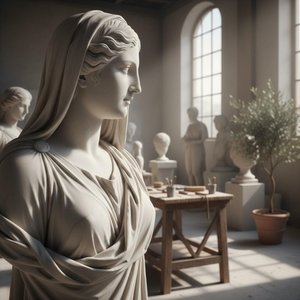
Timeless Elegance: A Complete Guide to the Sublime Beauty and Artistry of Marble Sculpture
Discover the sublime beauty of marble art through an expert exploration of Renaissance and Neoclassical masterpieces. From the delicate textures of Carpeaux to the grandeur of Sansovino, immerse yourself in a guide to timeless elegance and sculptural perfection.

The Enduring Form: Exploring Themes & Techniques in Sculpture Across Historical Periods
Explore the rich history of sculpture from ancient masterpieces to contemporary innovations. Discover key techniques, influential artists & investment potential for discerning art collectors.

A művészettörténet 10 legikonikusabb bronzszobra – OriginalUniqueArt.com
Fedezze fel a művészettörténet 10 legikonikusabb bronzszobrát! Ismerje meg Rodint, Michelangelót és más mestereket. Luxus minőségű nyomatok otthonába – OriginalUniqueArt.com.