
 Megtekintés
 Küldés
 Megosztás
 Részletek
 Útmutató

 Letöltés
 Hasonló darabok
 X-ray felvétel
 Diavetítés
 Q&A
Q&A Statisztika
cleopatre danse juive


 Összes részlet megjelenítése
Szerezzen be nyomtatásra kész fájlt, amely messze túlmutat a webes előnézeten. Minden általunk értékesített digitális kép az adatbázisunkban található nagy felbontású mesterfájlból származik – általában 5 000 és 15 000 pixel szélességű –, így magabiztosan nyomtathat nagy méretben, sokat vághat a képen, vagy reprodukálhatja a legfinomabb részleteket is.
Stúdiómból egyetlen fájl sem távozik feltartózkodás nélkül. Egy digitális szakértő az eredeti festménnyel összehasonlítja a színeket, és szükség esetén korrigálja azokat, majd professzionális retusználó eszközökkel javítja a tisztaságot és a részletgazdagságot — miközben mindig hű marad a művész vonalvezetéséhez és stílusához. Az eredmény egy olyan kép, amely úgy néz ki, mint egy festmény, és nem úgy, mint egy szűrőzött szkenn.
A végső munka befejezése előtt jóvá kell hagynia a képet: szakértőnk 72 órán belül elküldi azt e-mailben ellenőrzésre. Nem tetszett? Kérhet javításokat vagy korrekciókat, illetve visszatérítést kérhet, amennyiben a minőség nem felel meg az elvárásoknak.
Ez az a minőség, amelyre a kiadók, a design stúdiók, a galériák és a nyomdaték megbízhatnak.
Digitális kép
Töltsön le nagy felbontású fájlt személyes kiállításokhoz, nyomtatáshoz és kreatív projektekhez. ( Váltás nyomtatványra Kézzel festett másolat rendelése)
Minden digitális kép rendeléséhez tartozó extrák
Szakértői digitális kézbesítés, garantáltan
Amikor a OriginalUniqueArt.com szolgáltatást választja, nem csupán egy képet kap – professzionálisan felmagasított digitális műalkotást kap, amely precizitással készült, és amelyet megelégsedési gwarancia tesz biztoslássá. Az alábbiakban automatikusan minden benne 】

Gyors e-mail teslimítés
A nagy felbontású digitális képmásolatát a megrendelést követő 72 órán belül e-mailben elküldjük Önnek – azonnal használható formátumban.

MI-alapú digitális fájljavítás
Műve professzionális módon kerül optimalizálásra fejlett mesterséges intelligencia eszközök és manuális szerkesztés segítségével, biztosítva a maximális részletességet, tisztaságot és színpontosságot.

Örök életű ingyenes újradelivery
Véletlenül törölted vagy elvesztetted a fájlodat? Ne aggódj – bármikor ingyen újra megküldjük neked.

Nincs importköltség – soha
Élvezze műalkotásait azonnal, vám, illeték vagy szállítási költség nélkül – a digitális letöltések mindig adamentesek.

Színpontosság garantálása
Professzionális eszközök és színkezelés segítségével garantáljuk, hogy digitális képe a lehető legpontosabban tükrözze az eredeti színeket.

100 napos elégedettségi garancia
Ha nemມີ elégedett a digitális képével, 100 napon belül felülvizsgáljuk vagy 100% visszatérítjük az amountot – kérdés बिना.

100% Pénzvisszatérítési garancia
Nem tetszett a vásárlás? 100 napon belül teljes visszatérítést garantálunk a digitális fájl megvételétől számítva – kérdés nélkül.

Tömegrendelési kedvezmények
Vásároljon 3 képet, spóroljon 10%-et - Vásároljon 5-öt, spóroljon 15%-et - Vásároljon 10+ képet, spóroljon 20%-at. Kiváló kreatív projektekhez, galériákhoz és ügynökségekhez.
A Glimpse into Bakst's Exotic World: "Cleopatre danse juive"
This captivating black and white drawing, titled “Cleopatre danse juive” (Cleopatra Dances Jewishly), offers a fascinating glimpse into the artistic world of Léon Bakst, a pivotal figure in the early 20th-century art scene. Created around 1910, this work transcends a simple portrait; it’s an evocative study of costume, movement, and cultural fusion, characteristic of Bakst's distinctive style. The subject, likely intended to portray Cleopatra or another regal Egyptian figure, is depicted in a richly detailed costume – a long flowing dress accentuated by a striking gold sash. She holds a parasol, its intricate design adding further elegance to the composition. A small bird perched nearby introduces an element of natural dynamism into the otherwise poised scene.Style and Technique: The Essence of Modern Orientalism
Bakst was renowned for his contributions to the Ballets Russes, a theatrical company that revolutionized ballet with its lavish productions and innovative artistic collaborations. This drawing reflects that influence, embodying what is often termed "Modern Orientalism." While rooted in European artistic traditions, Bakst infused his work with exotic motifs drawn from Eastern cultures – particularly Russian, Middle Eastern, and Asian aesthetics. The stark black and white palette emphasizes the dramatic interplay of light and shadow, highlighting the textures of the costume and the graceful contours of the figure. His technique demonstrates a mastery of line and form, capturing not just likeness but also an underlying sense of movement and theatricality. The drawing’s fluidity suggests it may have been preparatory work for a larger stage design or costume concept.Historical Context: The Ballets Russes and Artistic Revolution
To fully appreciate "Cleopatre danse juive," understanding its historical context is crucial. Bakst was a key designer for Sergei Diaghilev's Ballets Russes, which debuted in Paris in 1909. This company challenged conventional ballet aesthetics with its groundbreaking choreography, music (often by Debussy and Stravinsky), and most notably, its opulent costumes and stage designs created by artists like Bakst, Erté, and Picasso. The Ballets Russes sparked a sensation, influencing art, fashion, and design across Europe and beyond. "Cleopatre danse juive," likely conceived during this period of intense artistic experimentation, reflects the era's fascination with exoticism and its embrace of modernism. The "juive" (Jewish) element in the title is intriguing; it suggests a possible blending of cultural identities or perhaps a commentary on societal perceptions – further enriching the work’s complexity.Symbolism and Emotional Impact
Beyond its aesthetic appeal, “Cleopatre danse juive” carries layers of symbolic meaning. The parasol, often associated with femininity and protection, adds an air of mystery to the subject. The bird could symbolize freedom or a fleeting moment in time. More broadly, the image evokes themes of power, beauty, and cultural exchange. The drawing’s monochromatic palette contributes to its emotional depth; it creates a sense of timelessness and introspection. Viewers are drawn into a world of elegance and intrigue, experiencing a poignant blend of grace and melancholy. The work's enduring appeal lies in its ability to transport us to a bygone era while simultaneously resonating with contemporary sensibilities regarding beauty, identity, and artistic expression.Kérdések és válaszok
Milyen színtelítettséggel rendelkezik „cleopatre danse juive”, Léon Bakst alkotása?
A „cleopatre danse juive”, Léon Bakst alkotása színei Muted telítettségűek. A telítettség azt mutatja meg, hogy a színek mennyire élénkek vagy fakók.
Hogyan illeszkedik a "cleopatre danse juive" Léon Bakst témáiba és stílusába?
A "cleopatre danse juive" Léon Bakst Art Nouveau korszakának alkotása, melynek témakörében orientalist aesthetic, russian symbolism, european theatrical design, representative of bakst's stage designs, reflects ballets russes influence, exploration of costume & character, exotic femininity, dance and performance is feltűlik.
Megtekinthető „cleopatre danse juive”, Léon Bakst alkotása a saját falamon vásárlás előtt?
A „cleopatre danse juive”, Léon Bakst alkotása mű kiterjesztett valóság technológiával, egy kompatibilis eszközön keresztül, a mű Kiterjesztett valóság előnézet oldalán megtekinthető a saját falán is.
Művész életrajza
Early Life and the Seeds of Artistic Rebellion
Born Leyb-Khaim Izrailevich Rosenberg in 1866, within the pale of settlement in Grodno—a city then part of the Russian Empire—Léon Bakst’s journey toward artistic renown was a compelling narrative woven with both innate talent and societal constraints. His family, though comfortably middle class, possessed connections to the imperial court through his grandfather, a celebrated tailor who enjoyed patronage from the Tsar. This background instilled in young Leyb a keen awareness of cultural nuances alongside an early passion for drawing, vividly demonstrated when he won a contest at just twelve years old. However, this burgeoning artistic inclination initially met with resistance from his parents, hesitant to embrace such an unconventional path. Despite their reservations, Bakst persevered, eventually studying at the prestigious St. Petersburg Academy of Arts as a non-credit student while supplementing his education by working as a book illustrator—a practical necessity that honed his skills and provided financial independence. It was in 1889 that he adopted the surname "Bakst," a pragmatic decision reportedly motivated by concerns that his birth name might hinder career advancement within a society often prejudiced against Jewish individuals, revealing the challenges faced by artists from marginalized communities during that era. The atmosphere of Grodno, steeped in both tradition and simmering social tensions, undoubtedly shaped Bakst’s early artistic sensibilities—a sensitivity to detail, an appreciation for narrative, and perhaps even a subtle awareness of the complexities of identity.The World of Art and Embracing Modernity
Bakst’s artistic development truly flourished with his involvement in the influential “World of Art” movement. He quickly became a pivotal figure alongside luminaries like Sergei Diaghilev and Alexandre Benois, contributing significantly to the group's eponymous periodical through his striking graphics. This association brought him widespread recognition and established him as a rising star within Russia’s artistic circles. His early works included compelling portraits of prominent figures such as Filipp Malyavin, Vasily Rozanov, Andrei Bely, and Zinaid Gippius, showcasing his ability to capture not only physical likeness but also the intellectual and emotional essence of his subjects. Bakst's style during this period was a fascinating blend of Russian artistic traditions with burgeoning European influences—particularly Orientalism and early Modernism. He embraced vibrant colors, exotic themes, and stylized forms, foreshadowing the revolutionary aesthetic he would later bring to the stage. This willingness to experiment and synthesize diverse influences marked him as an artist attuned to the changing currents of his time. His work began to whisper of a new visual language, one that moved beyond strict representation toward evocative suggestion. The *Mir Iskusstva* group, with its emphasis on accessibility and cross-disciplinary exploration, provided Bakst with a fertile ground for experimentation—a space where he could challenge conventional artistic boundaries and develop his unique vision.Revolutionizing Ballet with the Ballets Russes
The pivotal moment in Bakst’s career arrived in 1908 when he began designing sets and costumes for theatrical productions—a shift that would forever alter the landscape of stage design. His collaboration with Sergei Diaghilev's Ballets Russes proved transformative, revolutionizing theatrical aesthetics and catapulting both artists to international fame. Bakst’s designs were groundbreaking; they moved away from realistic depictions, embracing stylized forms, bold colors, and a sense of opulent fantasy. Productions like Cleopatra, Scheherazade (1910)—perhaps his most iconic work—Carnaval (1910), Narcisse (1911), and particularly L'Après-midi d’un Faune (1912) became legendary for their visual splendor. L’Après-midi d’un Faune, in particular, was a seminal work that profoundly influenced the development of ballet and stage design, establishing a new aesthetic language for the art form. He didn't merely create backdrops; he constructed immersive worlds that heightened the emotional impact of the choreography and music. The costumes were equally innovative, often incorporating exotic fabrics, shimmering embellishments, and daring silhouettes that challenged conventional notions of theatrical attire. Bakst’s approach was not simply decorative—he sought to integrate visual elements seamlessly with the narrative and musical score, creating a holistic artistic experience for the audience. The Ballets Russes under Diaghilev's direction became a crucible for innovation, attracting artists from across Europe and pushing the boundaries of theatrical expression.Legacy and Enduring Influence
Léon Bakst’s legacy extends far beyond his contributions to ballet. He is rightfully considered one of the most important figures in the history of theatrical design, significantly impacting both set and costume creation for generations to come. His designs also contributed to the development of the Art Deco style with their emphasis on stylized forms, rich colors, and exotic themes—a testament to his far-reaching influence on visual culture. Despite facing some criticism during his lifetime for perceived extravagance, Bakst’s work was widely celebrated, and his funeral in 1924 was attended by a remarkable gathering of prominent artists, poets, musicians, dancers, and critics—a poignant demonstration of the esteem in which he was held. Today, his artwork can be found in museums worldwide and continues to inspire through reproductions available on platforms like OriginalUniqueArt.com, ensuring that his innovative spirit and artistic vision endure for audiences around the globe. Bakst’s ability to synthesize diverse influences, embrace experimentation, and create visually stunning worlds cemented his place as a true visionary of the 20th century.- A master of color and composition.
- Pioneered new approaches to theatrical design.
- Influenced Art Deco aesthetics.
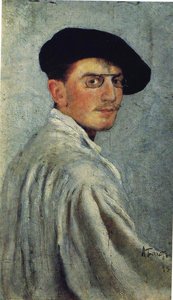
Léon Bakst
1866 - 1924 , Fehéroroszország
Érmeradatok
- Artistic Movement Or Style: Art Nouveau, Orientalizmus
- Artists Or Movements Influenced By This Artist: ['Ballets Russes']
- Date Of Birth: 1866
- Date Of Death: 1924
- Full Name: Léon Bakst
- Nationality: Orosz
- Notable Artworks:
- Scheherazade
- L'Après-midi d'un Faune
- Cleopatra
- Place Of Birth: Grodno, Беларусь