Baroque
St. Peter (Jusepe de Ribera)
Jusepe de Ribera (1591–1652) megalkotta: St. Peter. A Baroque irányzathoz tartozik. Oil On Canvas anyagból készült. A műtárgyat a Madrid, Spanyolország-i Museo del Prado-ben őrzik.
- Oil On Canvas
- Museo del Prado, Madrid

 Megtekintés

 Kézzel festett olajfestmény
 Küldés
 Megosztás
 Információs lap


 Letöltés
 Hasonló darabok
 X-ray felvétel
 Diavetítés
 Kérdések és válaszok

 Statisztika
St. Peter röviden
- Cím
- St. Peter
- Művész
- Jusepe de Ribera (1591–1652)
- A művész születési helye
- Xàtiva, Spanyolország
- Műszaki adatok
- Oil On Canvas
- Megtekinthető helyszín
- Museo del Prado, Madrid, Spanyolország
- Mozgalom
- Baroque
- Időszak
- Early Modern
- Téma
- man, beard, book, keys, cloak, brown
Mit ábrázol a St. Peter?
The Portrait of St. Peter by Jusepe de Ribera
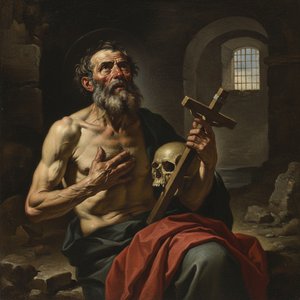
In this oil painting on canvas, Jusepe de Ribera presents us with a portrait of St. Peter. The subject, a central figure among the apostles of Jesus and recognized as the first Pope, is rendered with a profound sense of presence. Ribera focuses on the man himself, capturing the weight of his role and the character of his lived experience. There is a quiet intensity in the way the figure is presented, inviting a closer look at the weathered details of his countenance.
The work is a significant example of the Baroque style. Through this approach, the artist emphasizes the spiritual and human dimensions of the apostle. The depiction avoids idealization, opting instead for a directness that feels immediate. By focusing on the specific attributes of the saint, Ribera allows the subject to command the space, presenting a figure that is both a religious icon and a man of flesh and bone.
Composition and Visual Elements of the Portrait
The composition is built upon a stable pyramidal structure, with the head of St. Peter forming the apex of the form. He is presented from the waist up, his body turned slightly toward the viewer's left. In his right hand, he holds a book and a set of keys, objects that anchor the figure within the frame. This arrangement directs the eye upward toward his weathered features, creating a sense of quiet, grounded presence.
A strong light source enters from the left, illuminating his face and upper body while casting the rest of the figure into deep shadow. This light creates a sharp contrast against a background that is nearly black, pushing the subject forward into the viewer's space. The color palette is restrained, dominated by warm earth tones—ochre, brown, and gold—which emphasize the textures of his skin and the heavy folds of his clothing.
Technique and Artistic Style of the Work
The work is defined by a profound use of tenebrism, where the subject emerges from a nearly black background into a sharp, focused light. This dramatic chiaroscuro creates a sense of volume, pulling the figure forward and emphasizing the physical presence of the man. Such a heavy interplay of light and shadow reflects the influence of Caravaggio, grounding the religious subject in a palpable, earthly reality. The light source, positioned to the left, carves out the contours of the face and the weathered texture of the skin, casting deep shadows that heighten the emotional weight of the portrait.
Ribera’s approach to the medium is tactile and deliberate. He employs a technique of layering paint to build up depth, allowing the viewer to sense the physical weight of the drapery and the coarse nature of the beard. Visible brushstrokes are not hidden; instead, they contribute to the overall effect, lending a sense of immediacy to the rendering of the fabric and the aged features. Strong, defined lines delineate the eyes, nose, and mouth, providing a structural clarity that balances the more fluid, organic shapes of the figure. The result is a composition that feels both intensely personal and physically substantial.
Other Works by Jusepe de Ribera
The artist's exploration of this particular subject matter is reflected in several other significant pieces within our collection and major institutions. We hold St. Simeon 1 in our catalog, a work that speaks to the same profound human experience found in this portrait. Another notable piece in our collection is The Repentance of Saint Peter, which is currently housed in the Museum of Fine Arts, Lyon.
Beyond our own holdings, Ribera's preoccupation with the themes of remorse and spiritual weight is evident in other historical examples. The work known as Penitent St. Peter, dated about 1630, is held at the Kunsthistorisches Museum in Vienna. This piece shares a similar intensity in its depiction of the apostle's character. Additionally, The Tears of Saint Peter, which dates to 1612, is part of the collection at the Metropolitan Museum of Art in New York. These works collectively illustrate the artist's ability to capture the complexities of faith and the physical reality of the human condition through his characteristic use of light and shadow.
Melyik múzeumban található meg a St. Peter?
Museo del Prado
Madrid, Spanyolország
A Museo del Prado története A Museo del Prado gyökerei Spanyolország Királyi Gyűjteményéhez fűződnek, amelynek története a 18. századig nyúlik vissza. Ami VII.


St. Peter nagy felbontású képei
Felfüggesztett szerzői jogok: a művész 1652-ben halt meg.
Jusepe de Ribera, St. Peter, Museo del Prado. Felfüggeszthető jogforrás
St. Peter kapcsán felmerülő kérdések megválaszolva
Hol látható ma a(z) „St. Peter”, Jusepe de Ribera alkotása?
A „St. Peter”, Jusepe de Ribera alkotása eredeti darabja a Museo del Prado, Madrid, Spanyolország gyűjteményében található. A reprodukció lehetővé teszi, hogy a mű otthonában is megjelenjen.
Milyen anyagból készült a "St. Peter"?
A "St. Peter" alkotás Oil On Canvas technikával készült.
Milyen témák jelennek meg a(z) „St. Peter”, Jusepe de Ribera alkotása alkotásban?
A „St. Peter”, Jusepe de Ribera alkotása alkotás témái közé tartozik a man, beard, book, keys, cloak, brown, gold, skin. Ezek együtt foglalják össze a mű tárgyát.
A „St. Peter”, Jusepe de Ribera alkotása jogtalanul védett (public domain)?
A „St. Peter”, Jusepe de Ribera alkotása szerzői jogi státusza: a mű közösségi tulajdon – a szerzői jog lejártt. Ez határozza meg, hogy a kép másolatai szabadon készíthetők-e.
Ki készítette a(t): "St. Peter"?
A "St. Peter" alkotását Jusepe de Ribera készítette. Az ezen az oldalon található információk Jusepe de Ribera eredeti művészetét mutatják be.
Mely művészeti irány része a „St. Peter”, Jusepe de Ribera alkotása?
A „St. Peter”, Jusepe de Ribera alkotása a Baroque irányzat része. Ez az irányzat adja a mű stilisztikai kontextusát.
A „St. Peter” Jusepe de Ribera pályájának mely szakaszát képviseli?
Jusepe de Ribera pályaművében a „St. Peter” a Mature Period korszakba tartozik. Ez az időszak segít összehasonlíthatóvá tenni a művet a művész többi alkotásával.
Mi magyarázza a „St. Peter”, Jusepe de Ribera alkotása szerzői jogi helyzetét?
A "St. Peter" szerzői jogi státusza – közösségi tulajdon – a szerzői jog lejártt – a művész 1652 évi halálából adódik.
Maradt-e a "St. Peter" mű a művész hon országában?
Igen – a műalkotás a művész honos országában található. A „St. Peter” mű Spanyolország múzeumának gyűjteményében található, míg Jusepe de Ribera Spanyolország országban született.
A művészről: Jusepe de Ribera

1591–1652, Spanyolország
Jusepe de Ribera
A Life Forged in Shadow and Light Jusepe de Ribera, akit sokan a „Kis Spanyolnak” – Lo Spagnoletto – ismernünk, a barokk kor egyik kiemelkedő alakja volt, egy művész, akinek vásznai drámai intenzitással és becsületségtelen realisztikummal töltek el. 1591-ben született Xátivában, Spanyolországban, utazása hamarosan elvezette őt a valenciai gyökerektől, végül pedig olyan pozícióba helyezte, amelynek köszönhetően 17. században Nápolyban, akkoriban spanyol fennhatóság alatt álló városban lett egyik legjelentősebb festője. Ribera életét nem csupán művészi fejlődésének kronológiájává emelte; egy történet volt nehézségekkel, ambíciókkal és a mänuszállati természet ábrázolásának határozott elkötelezettségével összefüggő narratív, amely minden furcsaságával feltűnően őszintén mutatkozott be.
Jusepe de Ribera részletesen Jusepe de Ribera legkiemelkedőbb művei
Jusepe de Ribera további művei
 Magdalena Ventura a férjével és a fiával1631
 A clubláb
 St. Onuphrius1637
 The Duel of Women (The Duel of Isabella de Carazzi and Diambra de Pettinella)1636
Esszék a St. Peter körül
 Mastering the Shadows: The Dramatic Power of Chiaroscuro and Tenebrism in Baroque Fine ArtExplore the profound drama of chiaroscuro and tenebrism. Discover how masters like Caravaggio used light and shadow to sculpt emotion and v…
 Masterpieces of Light: The Top 25 Artworks by Duccio di BuoninsegnaJourney through the divine elegance of Duccio di Buoninsegna. Explore 25 iconic Sienese masterpieces, from the Maestà to the Rucellai Madon…
 Jusepe de Ribera: Dramatic Realism & Spiritual Intensity in the Spanish Golden AgeExplore the powerful Baroque paintings of Jusepe de Ribera, master of tenebrism and dramatic realism. Discover his spiritual intensity, inf…