

 Megtekintés
 Küldés
 Megosztás
 Részletek
 Útmutató

 Letöltés
 Hasonló darabok
 X-ray felvétel
 Diavetítés
 Q&A
Q&A Statisztika
Still-Life
 Acrylic On Canvas
- WallArt
- Dutch Golden Age
 54.0 x 44.0 cm
 Wallraf-Richartz Múzeum
 Összes részlet megjelenítése
Giclée / Műnyomat
Múzeumi minőségű giclée vagy vászonnyomat, gyors gyártással és rugalmas finomítási lehetőségekkel. ( Kézzel festett másolat rendelése Áttérés digitális képre)




P118B Ft10

P118H Ft10

P118W Ft10

P438Z Ft10

P508JH Ft12

P508YH Ft12

P805H Ft10

P805Z Ft10

P919BZ Ft10

P919G Ft10

P919XJ Ft10

P959ZH Ft10

P968JZ Ft12

W106C Ft8

W218G Ft10

W218JH Ft8

W218Y Ft10

W307PJ Ft10

W316G Ft10

W316PJ Ft8

W316Y Ft10

W398PJ Ft8

W4111J Ft10

W500HY Ft15

W500JH Ft15

W692G Ft12

W849H Ft8

W940BG Ft15

W953PJ Ft8




Válasszon előre meghatározott méreteink közül, amelyek megfelelnek a műalkotás eredeti arányainak.

Írja be a keretének vagy a falának megfelelő szélességet és magasságot. A nyomatot csak le lehet vágni, soha nem tehető nagyobbá, mint az eredeti kép, így egy eltérő alakú méretnél a kép egy része elveszik. Mielőtt bármit kinyatintanánk, küldünk egy digitális próbamodellt jóváhagyásra. Az oldalon látható kép nem tartalmazza a valós levágást — ezt csak a próbamodell mutatja meg.
Világszerte történő kiszállítás területére mindössze 2 hét alatt, a szokásos 4-5 hét helyett. (29 október)

Ingyenes globális expressz szállítás

Prémium minőségű len vászon

Teljes körű szállítási biztosítás

Vámvisszatérítési Garancia

Hiteles színarányosság garancia

100 napos visszaküldési lehetőség (csak hibás termékek esetén)

100% pénzvisszatérítési garancia

Több darab vásárlásakor kedvezmény
 Az üvegkeretes opció csak 110 cm alatti méretben érhető el

Still-Life
Giclée / Műnyomat
Reprodukció mérete
-


Összesített ár
Ft 25847
The Enigmatic Still Life of Juriaen van Streeck
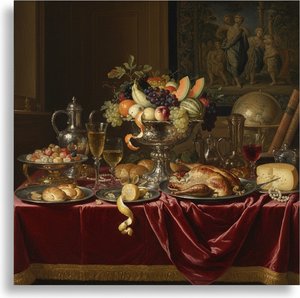
Juriaen van Streeck’s “Still-Life,” a remarkably preserved panel dating from the mid-17th century, offers a captivating glimpse into the world of Dutch Golden Age painting. More than simply a depiction of objects—a bowl of fruit, a porcelain ewer, and a scattering of silverware—it's an intricate meditation on light, texture, and the fleeting nature of beauty itself. The painting resides within the Bavarian State Painting Collections, a testament to its enduring quality and artistic merit.
Van Streeck’s style is deeply rooted in the traditions established by Willem Kalf, yet possesses a subtle individuality. He masterfully employs chiaroscuro—the dramatic contrast between light and shadow—to imbue each object with a palpable sense of volume and realism. The artist doesn't merely represent; he sculpts with light, creating an illusion of depth that draws the viewer into the scene. Notice how the folds of the velvet cloth seem to ripple in the reflected light, or how the sheen on the porcelain gleams with an almost ethereal quality.
A Symphony of Objects and Symbolism
The composition itself is a carefully orchestrated arrangement of seemingly disparate elements. The central focus rests upon a rich still life featuring a blue and white Wan-li bowl, overflowing with luscious peaches, a vibrant lemon, and an orange – each rendered with meticulous detail. A porcelain ewer and vase, alongside a gleaming silver knife, complete the tableau. But these are not merely decorative objects; they carry layers of symbolic meaning deeply embedded within the context of 17th-century Dutch society.
The inclusion of fruit, particularly peaches and oranges, was a deliberate reference to prosperity and abundance – hallmarks of the burgeoning merchant class that dominated the Netherlands at the time. The porcelain ewer, with its intricate floral patterns, speaks to the appreciation for luxury goods imported from the East. Even the loaf of bread, partially consumed, subtly alludes to the transient nature of earthly pleasures, a common theme in Dutch Golden Age art reflecting on mortality and the vanity of worldly possessions. The two butterflies fluttering amongst the objects further enhance this sense of ephemeral beauty.
The Painter’s Technique and Historical Context
Van Streeck's skill lies not just in his ability to render objects with photographic accuracy, but also in his understanding of how light interacts with different surfaces. He demonstrates a remarkable control over brushwork, creating subtle gradations of tone that mimic the way light would fall upon these materials. The painting’s palette is restrained yet sophisticated, dominated by rich browns, golds, and deep reds – colors that evoke the opulence of the Dutch merchant elite.
Created during a period of immense artistic innovation, “Still-Life” reflects the broader cultural trends of the time. The rise of the middle class fueled a demand for art depicting domestic life and luxurious objects, while artists like Van Streeck continued to explore themes of beauty, mortality, and the complexities of human experience. The painting’s provenance – its acquisition by the Princeton University Art Museum in 1954 – underscores its historical significance and enduring appeal.
A Timeless Appeal: Reproduction and Beyond
Reproductions of “Still-Life” offer a remarkable opportunity to bring this exquisite work into your home or office. The meticulous detail, the masterful use of light, and the profound symbolism combine to create a piece that is both visually stunning and intellectually stimulating. Consider pairing it with pieces that evoke similar themes – perhaps a richly textured rug, a vintage silver tray, or a collection of antique ceramics – to create an interior space that reflects your appreciation for beauty, history, and the enduring power of art.
Kérdések és válaszok
Milyen méretű „Still-Life”, Juriaen van Streeck alkotása nyomatás illik a javasolt szobához?
A „Still-Life”, Juriaen van Streeck alkotása javasolt nyomtatási mérete Medium egy Living Room számára.
Milyen tónus felé hajlik a "Still-Life"?
A „Still-Life”, Juriaen van Streeck alkotása domináns színe a Warm Sunset Tones. Ez a szín a paletta alapvető tónusa.
Mit ábrázol a "Still-Life"?
A „Still-Life”, Juriaen van Streeck alkotása alkotás témái közé tartozik a still life, fruit, food, gold, velvet, music, symbolism, dutch painting. Ezek együtt foglalják össze a mű tárgyát.
A művész életrajza
A Haladás Aranykorában: Juriaen van Streeck Élete és Művészete
Juriaen van Streeck, egy név, mely mélyen rézonál a holland aranykor festészetében, magunkba vonva minket egy aprólékosan megmunkált világba, tele jelképes gondolkodással. 1632-ben született Amsterdamban, az időszakban, amikor a művészet virágzása elérte csúcspontját, van Streeck élete nagy részét a kompozíciók mesterének szentelte – egy olyan műfajnak, amely a mestere keze alatt nem csupán ábrázolás lett, hanem mélyebb létezésről szóló meditáció. Bár az ő korai éveiről kevés adat maradt fenn, tudjuk, hogy beilleszkedett egy társadalomban, amelyet gazdagság, kereskedelem és a halál elkerülhetetlenségének alatti tudatosság definiált, témák, amelyek meghatározták művészi látását. 1653-ban feleségül vette Grietje Claes-t, megalapozva egy családot a düttő Jordaan környékén, majd később áttelelnének Prinsengrachton; családjuk végül kilenc gyermekre nőtte ki magát, bár szerencsére három gyermek nem élt túl az első hónapokban. Később van Streeck megkereste magát Kerkstraat úton együdként is, ami a művészi foglalkozás mellett a valóságok iránti pragmatikus átállást tükrözi – egy tanúság a 17. századi élet valódi kihívásaival szemben.A Tárgyak Nyelve: Stílus és Válság
Van Streeck művészete viragosztott ki a holland kompozíciók gazdag hagyományában, egy olyan műfajban, amely az apró részletekre való odafigyelés és jelképes mélységre volt jellemző. Kiválóan tudott komposíciókat készíteni tárgyakkal – fényes sisakokkal, bőrkötésekkel, finom levelekkel, hangos zenekerékjelekkel, gyönyörű gyümölcsökkel és, ami különösen fontos, *memento mori* elemekkel, mint például kopókészek vagy romló vadállatok. Ezek utóbbiak integrálódottak a Vanitas hagyományába, egy erőteljes művészi áramlat, amely a lét átmeneti természetét emlékeztette. Stílusának nyomai az ívelt Willem Kalfra, más népszerű holland kompozíciók mesteréről is feltűnnek, különösen a gazdag színpaletták és a drámai kompozíciók terén. Azonban van Streeck nem csupán utózzák Kalfot; saját egyedi megközelítést fejlesztettek ki, belefogva a munkáiba egyedülálló érzékenységet, amely a látványos szépség mellett mélyebb filozófiai reflexiót is felkeltett. Kiválóan tudott a különböző anyagok textúrájának ábrázolásában – a fém fényes ragyogása, a gyümölcs puha lágyasága, a üveg törékeny átlátsalassága – így a nézők számára egy látványos vizuális élményt teremtve, ugyanakkor arra is ösztönözte őket, hogy elgondolkodjanak.A Halál Szimbólumai: A Vanitas Hagyomány és a Művész Építése
Van Streeck művészetének szíve a halál gondolata és az élet átmeneti természetének kérdése. A *memento mori* szimbólumok beépítése nem csupán dekoratív volt; egy tudatos kísérlet volt arra, hogy a nézőkkel beszélgetést indítsanak az életről, a halálról és a jelentés kereséséről egy gyorsan változó világban. Egy kopókész szájában a gazdag tárgyak között egyértelműen emlékeztetett arra, hogy minden földi javatlan, míg a romló gyümölcsök az szépség és az élet természetes hanyatlását jelképezték. A halál témája nem csupán a művész számára volt fontos; egyedülálló képességgel rendelkezett a tárgyak ábrázolásában, de nem csak azt akarta megörölni nekik, hanem az esszenciájukat, súlyukat, textúrájukat és jelképes jelentésüket is. Ez a precíz megközelítés tükrözi a korabeli kultúra általános figyelmét az észrevételre és a tudományos kutatásra, amely a Zelta Korban virágzott. Kompozícióik gyakran luxusnak tűnnek, emlékeztetve Kalf munkájára, de van Streeck egyedi érzékenységet hozott be, amelyek vizuálisan vonzóak és gondolatébresztők egyaránt. Bemutatott művek, mint például "Snack", "Gyümölcsökkel és citrommal" és "Citronnal, gyümölcsökkel és citrommal a márványtáblán egy szőttes függönyrel" példákat képeznek erre a finom egyensúlyra az esztétikus szépség és a jelképes súly között.A Válság és a Folyamat: A Művész Élete
Van Streeck élete nem volt csupán művészi alkotások létrehozása, hanem egy család életének is része. Felesége, Grietje Claes, vele együtt 1653-ban elvette, és a düttő Jordaan környékén telepedtek le, ahol kilenc gyermekük született, bár három gyermek nem élt túl az első hónapokban. Később van Streeck megkereste magát Kerkstraat úton együdként is, ami a művészi foglalkozás mellett a valóságok iránti pragmatikus átállást tükrözi – egy tanúság a 17. századi élet valódi kihívásaival szemben.A Művész Utódai és Értéke
Juriaen van Streeck jelentős, bár talán nem olyan széles körű elismertségnek örvendő helyet foglal el a holland aranykor festészetében. Bár nem olyan népszerű, mint néhány társát – Kalf vagy Vermeer esetében –, azonosította őt Arnold Houbraken művészettörténésze is, aki kiemelte sokoldalúságát a kompozíciók terén. Van Streeck hatása feltűnő Barend van der Meer munkájában is látható, ami egyfajta művészi inspirációt mutatott. Művei értékes betekintést nyújtanak a 17. századi holland társadalom gondolkodásába – gazdagságra való vágya, halál tudatossága és az értékkeresés egy gyorsan változó világban. A kompozíciók gyakran luxusnak tűnnek, emlékeztetve Kalf munkájára, de van Streeck egyedi érzékenységet hozott be, amelyek vizuálisan vonzóak és gondolatébresztők egyaránt. ## Összegzés Juriaen van Streeck egy olyan művész volt, aki a holland aranykorban virágzott, és a halál, az átmenet és a világ értelmének keresése témáit ábrázolta kompozícióiban. Művei nem csupán esztétikai élményt nyújtottak, hanem mélyebb filozófiai reflexiót is felkeltettek. A holland művészetben betöltött szerepe és a korabeli társadalom gondolkodásának tükrözése miatt van Streeck egyedülálló helyet foglal el a művészettörténetben.
Juriaen van Streeck
1632 - 1687 , Holland
Rövid információk
- Artistic Movement Or Style: Hollandia aranykor
- Artists Or Movements Influenced By This Artist: ['Barend van der Meer']
- Artists Who Influenced This Artist: ['Willem Kalf']
- Date Of Birth: 1632
- Date Of Death: 1687
- Full Name: Juriaen van Streeck
- Nationality: Hollandi
- Notable Artworks:
- Schouburg Plate K
- Snack
- Still-Life
- Place Of Birth: Amszterdam, Holland
Kapcsolódó cikkek

Golden Light & Dutch Skies: The Timeless Magic of Dutch Golden Age Landscapes
Discover the breathtaking beauty of Dutch Golden Age landscapes. Explore the mastery of light, chiaroscuro, and 17th-century realism through an expert art history lens, celebrating the enduring legacy of the Dutch Masters for discerning collectors and art lovers.

A Hollandi Aranykor 10 Mesterműve: Festmények, Amelyek Megváltoztatták a Világot | OriginalUniqueArt.com
Fedezze fel a Hollandi Aranykor 10 legikonikusabb műalkotását! Rembrandt, Vermeer és más mesterek festményeinek történeteit olvassa el. Barokk stílus, klasszikus művészet – inspirálódjon otthon dekorációjához a OriginalUniqueArt.com-on! Fedezze fel a teljes gyűjteményt online.

Rembrandt legikonikusabb művei: 25 mestermű a vászonon – OriginalUniqueArt
Fedezze fel Rembrandt van Rijn 25 legikonikusabb művét! Barokk portrék, bibliai jelenetek és önarcképek a Holland aranykorból. Művészeti reprodukciók prémium minőségben – OriginalUniqueArt. Explore the full collection online!
Abraham Hendricksz van Beyeren: Pioneering Dutch Still Life & the Banquet Tradition
Explore the captivating world of Dutch Golden Age still life with Abraham van Beyeren. Discover his innovative techniques, symbolic banquet scenes & lasting influence on art history. Learn about collecting these masterpieces.

Golden Age Reflections: Dutch Baroque Painting & Cultural Innovation
Explore the Dutch Golden Age of painting! Discover key artists like Vermeer & ter Borch, their innovative techniques, and the rich cultural context behind these Baroque masterpieces. Learn about collecting & appreciating this iconic art period.