
 Megtekintés
 Küldés
 Megosztás
 Részletek

 Letöltés
 Hasonló darabok
 X-ray felvétel
 Diavetítés
Mrieille


 Összes részlet megjelenítése
Giclée / Műnyomat
Múzeumi minőségű giclée vagy vászonnyomat, gyors gyártással és rugalmas finomítási lehetőségekkel. ( Kézzel festett másolat rendelése Kép letöltése)




P118B $10

P118H $10

P118W $10

P438Z $10

P508JH $12

P508YH $12

P805H $10

P805Z $10

P919BZ $10

P919G $10

P919XJ $10

P959ZH $10

P968JZ $12

W106C $8

W218G $10

W218JH $8

W218Y $10

W307PJ $10

W316G $10

W316PJ $8

W316Y $10

W398PJ $8

W4111J $10

W500HY $15

W500JH $15

W692G $12

W849H $8

W940BG $15

W953PJ $8




Válasszon előre meghatározott méreteink közül, amelyek megfelelnek a műalkotás eredeti arányainak.

Megadhat saját méreteket is egy konkrét kerethez vagy helyszínhez igazítva. Amennyiben a kiválasztott méret nem egyezik az eredeti kép arányokkal, a műalkotást le fogjuk vágni, vagy kiegészítjük a képet tükrözött vagy egyszínű szélekkel. A gyártás megkezdése előtt egy digitális tervezetet küldünk jóváhagyásra.
Kérjük, vegye figyelembe, hogy a képernyőn látható előnézet nem tükrözi a tényleges levágást vagy kiegészítést. Csak a tervezet mutatja pontosan a végső kompozíciót.
Bár az egyedi méretek is elérhetőek, az eredeti arányok megőrzése érdekében azt javasoljuk, hogy válasszon a előre meghatározott listából származó méretet.
Világszerte történő kiszállítás területére mindössze 2 hét alatt, a szokásos 4-5 hét helyett. (29 augusztus)

Ingyenes globális expressz szállítás

Prémium minőségű len vászon

Teljes körű szállítási biztosítás

Vámvisszatérítési Garancia

Hiteles színpontosság garancia

60 napos visszaküldési lehetőség (csak hibás termékek esetén)

100% pénzvisszatérítési garancia

Több darab vásárlása esetén kedvezmény
 Az üvegkeretes opció csak 110 cm alatti méretben érhető el

Mrieille
Giclée / Műnyomat
Reprodukció mérete
-


Összesített ár
$ 80
Mireille - A Portrait of Delicate Beauty Amidst Parisian Shadows
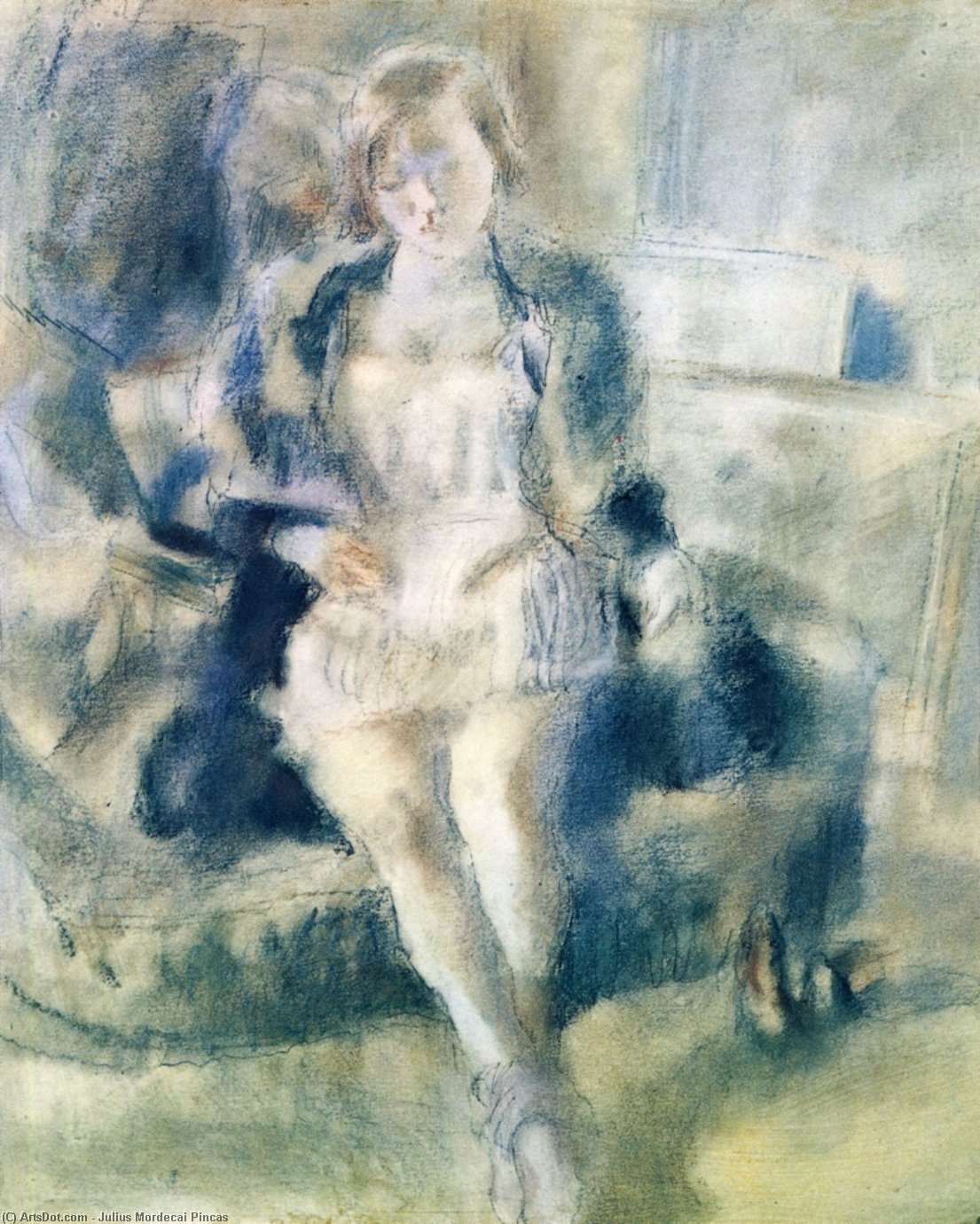
The painting “Mireille” by Jules Pascin (1930) stands as a testament to the School of Paris’s fascination with capturing fleeting moments and conveying profound emotion through subtle visual cues. More than just a depiction of a woman seated on a couch, it's an exploration of vulnerability and quiet contemplation within the bustling backdrop of early 20th-century Parisian life.- Subject Matter: Pascin’s subject is Hermine David, a fellow artist and muse who became his lifelong companion. The portrait captures her serene gaze as she rests on a couch, crossed legs suggesting both comfort and restraint.
- Style & Technique: Executed in pastel and fusain on carton prepared à la gouache, “Mireille” exemplifies Pascin’s signature style—characterized by muted colors, atmospheric lighting, and meticulous detail. The artist skillfully employs hatching and cross-hatching to sculpt the form of David's body, creating a sense of depth and texture that draws the viewer into the scene.
- Historical Context: Created during Pascin’s Parisian years, “Mireille” reflects the artistic spirit of the time—a movement embracing Impressionism’s exploration of light and color alongside Expressionist tendencies to convey psychological states. The painting aligns with the broader aesthetic concerns of École de Paris artists who sought to depict human experience with honesty and sensitivity.
- Symbolism: The couch itself symbolizes domestic tranquility, yet David's posture conveys a subtle melancholy—perhaps hinting at unspoken anxieties or reflections on life’s complexities. Pascin’s masterful use of light casts shadows across David’s face, emphasizing her vulnerability and adding to the painting’s emotional resonance.
- Emotional Impact: “Mireille” succeeds in capturing a moment of quiet introspection—a portrait that invites contemplation about beauty, solitude, and the human condition. Its understated elegance speaks volumes about Pascin's ability to distill profound emotion into deceptively simple visual elements.
Provenance & Recognition
The artwork is housed at Centre Pompidou in Paris, a prestigious institution dedicated to modern art and cultural heritage. It was generously donated by Hermine David and Lucy Krohg in 1936, cementing its place within the canon of École de Paris masterpieces. Its inclusion in exhibitions like “Ginette and Mireille” (2014) underscores Pascin’s enduring influence on artistic discourse.Further Exploration & Collecting
Interested collectors can delve deeper into Jules Pascin's oeuvre through publications such as "20th Century Drawings" by Una E. Johnson, which meticulously examines his stylistic innovations and thematic preoccupations. Notably, “Ginette and Mireille” was featured prominently in the 2014 exhibition “Pascin: Exposition Pascin au Japon,” showcasing his work alongside contemporaries like Picasso and Matisse—a testament to his contribution to European art history.Resources & Inspiration
For those seeking inspiration or delving into the world of Impressionistic pastel portraits, explore articles detailing Jules Pascin’s artistic journey and legacy. Discover how he captured the essence of human emotion through masterful technique and evocative imagery – a timeless pursuit that continues to resonate with artists and audiences alike.A művész életrajza
Julius Mordecai Pincas (Jules Pascin): A Life Painted in Shadows and Light
Born into a world of wealth and tradition, Julius Mordecai Pincas – later known as Jules Pascin – emerged from the bustling port city of Vidin in Bulgaria, a place steeped in history and shadowed by the Danube. His early life, marked by family expectations and artistic inclinations initially dismissed by his father, laid the foundation for an extraordinary career that would ultimately lead him to become one of the most captivating figures within the School of Paris.
His childhood was spent amidst the opulence of a Sephardic Jewish trading family. Moving to Bucharest in 1892, young Julius discovered his passion for art, sketching in unexpected corners – even at a local brothel, an experience that would later inform his unique perspective on human nature and beauty. This early exposure, coupled with the disapproval of his father regarding his artistic pursuits, fueled a determination to forge his own path. He received formal training in Vienna and Munich, absorbing influences from Impressionism, Cézanne’s structured landscapes, and the bold experimentation of Fauvism. These formative years instilled within him a keen eye for detail, an appreciation for color, and a willingness to challenge conventional artistic boundaries.
Parisian Dreams and the Birth of a Pseudonym
In 1905, Pascin embarked on a pivotal journey to Paris – a city that had long been a magnet for artists seeking inspiration and freedom. Immediately immersed in the vibrant atmosphere of Montparnasse, he joined a circle of kindred spirits, including figures like Paul Klee and Wassily Kandinsky. It was here, adopting the pseudonym “Pascin” – an anagram of his surname – that he began to truly establish himself as an artist. This deliberate shift wasn’t merely a stylistic choice; it was a strategic maneuver designed to shield his family from potential embarrassment stemming from his more provocative early drawings.
His initial Parisian works reflected the influence of the Fauvist movement, characterized by intense colors and expressive brushstrokes. He also studied at the Académie Matisse, further refining his technique and exploring new approaches to composition. However, Pascin’s artistic journey wasn't simply about mimicking established styles; he was actively seeking a unique voice – one that would capture the essence of modern life with both sensitivity and boldness.
The Soul of Paris: Women, Shadows, and Psychological Depth
Pascin’s art is inextricably linked to his fascination with women. He depicted them in a myriad of ways—often nude or partially dressed, captured in moments of quiet contemplation, casual intimacy, or poignant vulnerability. These weren't idealized representations; rather, they were imbued with a profound psychological depth, hinting at the complexities and contradictions inherent within the human experience. His paintings are not merely portraits but windows into the souls of his subjects.
His palette was remarkably vibrant, utilizing bold colors to create dramatic effects and evoke powerful emotions. He skillfully employed light and shadow to sculpt forms, adding a sense of atmosphere and mystery to his compositions. Beyond mere representation, Pascin sought to convey an underlying narrative—a story whispered through the subtle gestures, expressions, and relationships depicted in his works. He was particularly drawn to capturing the fleeting moments of everyday life – a dancer’s graceful movement, a waiter’s weary gaze, or a woman lost in thought.
Major Works and Lasting Legacy
Among Pascin's most celebrated paintings are *Nude with a Green Hat* (1925), a striking study of female beauty; *Little Girl on an Armchair* (1925), which captures innocence and vulnerability; and *Loose Women* (1911), a provocative depiction of modern life. His portrait of Hermine David, a muse and lover, remains a significant work housed in the Musée National d'Art Moderne, Centre Pompidou in Paris.
Despite his artistic success, Pascin’s life was marked by personal struggles. He battled with depression and alcoholism throughout much of his career, ultimately succumbing to suicide in 1930 at the young age of 45. Yet, despite this tragic end, his legacy continues to endure. Jules Pascin remains a pivotal figure within the School of Paris, an artist whose bold style, psychological depth, and captivating portrayals of human experience continue to resonate with audiences today. His works are exhibited in museums around the world, ensuring that his unique vision will be remembered for generations to come.

Jules Pascin
1885 - 1930 , Bulgária
A művészről röviden
- Artistic Movement Or Style: École de Paris
- Artists Who Influenced This Artist:
- Paul Cézanne
- Fauvism
- Date Of Birth: 1885-03-31
- Full Name: Julius Mordecai Pincas
- Nationality: Bulgári
- Notable Artworks:
- Nude with a Green Hat
- Little Girl on an Armchair
- Place Of Birth: Vidin, Bulgária
Kapcsolódó cikkek

The Hague School: Realism, Atmosphere & the Dawn of Dutch Impressionism
Explore the Hague School's pivotal role in Dutch art history. Discover realism, atmospheric landscapes & its influence on Impressionism. Learn about key artists like Mauve & Maris with OriginalUniqueArt.
Capturing the Grey Light: A Journey Through the Soulful Atmosphere of the Hague School
Explore the evocative beauty of the Hague School. Discover how Dutch masters captured the soulful 'grey light' through atmospheric realism and tonalism, paving the way for Impressionism. A deep dive into the misty landscapes and emotional depth of this legendary art movement.

A Hudson River Iskola 10 Mesterműve: Tájképfestészet és Amerika Lelke – OriginalUniqueArt
Fedezze fel a Hudson River Iskola 10 legikonikusabb műalkotását! Frederic Church, Thomas Cole és más amerikai festők romantikus tájképei. Vászonkép másolatok, faliképek otthonába – OriginalUniqueArt.com kínálatából. Explore the full collection online!

The Sublime Landscape: Exploring the Hudson River School Movement
Explore the captivating world of the Hudson River School! Discover the history, artists, and defining characteristics of this iconic American art movement. Learn about Romanticism's influence & find inspiration for your collection.

The Ashcan School: A Guide to Urban Realism for Professional Interior Design and Hospitality Procurement
Discover the raw energy of the Ashcan School. Our guide for hotel designers explores urban realism, offering professional insights into sourcing hand-painted oil reproductions and custom large-scale murals for high-end hospitality and corporate interiors.

