

 Megtekintés
 Küldés
 Megosztás
 Részletek
 Útmutató

 Letöltés
 Hasonló darabok
 X-ray felvétel
 Diavetítés
 Statisztika
Capri Battery
 Acrylic On Canvas
- WallArt
- Fluxus
 1985
1985 8.0 x 11.0 cm
 Skóciai Nemzeti Galéria
 Összes részlet megjelenítése
Az ezen az oldalon megjelenített műalkotások szerzői jogi védelem alatt állnak, ami azt jelenti, hogy törvényileg nem készíthetünk és nem adhatunk el belőlük pontos másolatokat. Ez a védelem olyan nemzetközi megállapodások alapján érvényesül, mint például a Berni Egyezmény és a nemzeti jogszabályok által, beleértve azokat is, amelyeket meghatározott Az USA szerzői jogi törvénye – 17. cím.
Ez a módszer teljes mértékben megfelel a szerzői jogi szabályozásnak, mivel nem tartalmazza a védett műalkotás másolását vagy duplikálását. Ehelyett ez egy kreatív újinterpretáció – egy új festmény, amely az eredetivel való összefüggései miatt hatással van rá, de nem az az.
Giclée / Műnyomat
Múzeumi minőségű giclée vagy vászonnyomat, gyors gyártással és rugalmas finomítási lehetőségekkel. ( Kézzel festett másolat rendelése Áttérés digitális képre)




P118B Ft10

P118H Ft10

P118W Ft10

P438Z Ft10

P508JH Ft12

P508YH Ft12

P805H Ft10

P805Z Ft10

P919BZ Ft10

P919G Ft10

P919XJ Ft10

P959ZH Ft10

P968JZ Ft12

W106C Ft8

W218G Ft10

W218JH Ft8

W218Y Ft10

W307PJ Ft10

W316G Ft10

W316PJ Ft8

W316Y Ft10

W398PJ Ft8

W4111J Ft10

W500HY Ft15

W500JH Ft15

W692G Ft12

W849H Ft8

W940BG Ft15

W953PJ Ft8




Válasszon előre meghatározott méreteink közül, amelyek megfelelnek a műalkotás eredeti arányainak.

Írja be a keretének vagy a falának megfelelő szélességet és magasságot. A nyomatot csak le lehet vágni, soha nem tehető nagyobbá, mint az eredeti kép, így egy eltérő alakú méretnél a kép egy része elveszik. Mielőtt bármit kinyatintanánk, küldünk egy digitális próbamodellt jóváhagyásra. Az oldalon látható kép nem tartalmazza a valós levágást — ezt csak a próbamodell mutatja meg.
Világszerte történő kiszállítás területére mindössze 2 hét alatt, a szokásos 4-5 hét helyett. (25 október)

Ingyenes globális expressz szállítás

Prémium minőségű len vászon

Teljes körű szállítási biztosítás

Vámvisszatérítési Garancia

Hiteles színarányosság garancia

100 napos visszaküldési lehetőség (csak hibás termékek esetén)

100% pénzvisszatérítési garancia

Több darab vásárlásakor kedvezmény
 Az üvegkeretes opció csak 110 cm alatti méretben érhető el

Capri Battery
Giclée / Műnyomat
Reprodukció mérete
-


Összesített ár
Ft 25642
The Still Life of a Question
Joseph Beuys’ *Capri Battery*, created in 1985 during his convalescence on the Italian island, is not merely a photograph; it's an invitation to contemplate the very nature of energy, time, and our relationship with the natural world. The image itself – a stark tableau featuring a lemon and a light bulb – possesses a deceptive simplicity that belies its profound conceptual weight. Beuys, already a figure known for his radical social sculpture and performance art, here presents a quiet, almost meditative work, one that challenges viewers to question the assumptions embedded within everyday objects. The deliberate flatness of the composition, the neutral background, and the careful placement of the lemon and bulb create an immediate sense of stillness, drawing our attention entirely to these two seemingly disparate elements. It’s a scene frozen in time, a visual paradox demanding interpretation.- The Objects: The lemon, a symbol of vitality and abundance, sits poised against the light bulb, representing illumination and artificiality.
- The Instruction: Beuys' accompanying instruction – “Change battery every thousand hours” – is deliberately misleading. The light bulb, permanently switched off, will never require replacement, highlighting the futility of our relentless pursuit of perpetual motion and technological advancement.
A Reflection on Energy and Ecology
*Capri Battery* emerged during a period when Beuys was deeply engaged with ecological concerns and exploring ways to bridge the gap between art and social transformation. His work frequently grappled with themes of sustainability, resource depletion, and the destructive impact of industrialization on the environment. The lemon, in this context, can be seen as representing the earth’s resources – a finite supply that must be used responsibly. The light bulb, conversely, symbolizes our reliance on artificial energy sources, often at the expense of the natural world. The work isn't simply about warning against environmental degradation; it’s an attempt to provoke a fundamental shift in perspective, urging us to reconsider our values and priorities. Historical Context: Beuys’ interest in ecological themes was fueled by his experiences during World War II, witnessing the devastation caused by conflict and the exploitation of natural resources. His later work often incorporated elements of shamanism and indigenous cultures, drawing on ancient wisdom about living in harmony with nature.The Language of Symbolism
Beuys’ use of symbolism is both subtle and potent. The lemon's bright yellow hue evokes feelings of warmth, optimism, and the promise of renewal – qualities that contrast sharply with the cold, sterile light bulb. The act of placing these two objects side-by-side creates a visual tension, suggesting a fundamental conflict between natural processes and human intervention. The wooden box itself adds another layer of meaning, hinting at the containerization and artificiality of our modern world. It’s a carefully constructed arrangement designed to stimulate thought and invite contemplation. The choice of materials is also significant: The light bulb, a ubiquitous symbol of progress and technological advancement, is rendered inert and useless, highlighting its inherent limitations. The lemon, a simple fruit representing the bounty of nature, becomes an unexpected source of energy – a metaphor for the potential that lies dormant within the natural world.A Legacy of Conceptual Art
*Capri Battery* stands as a pivotal work in Joseph Beuys’ oeuvre and a landmark achievement in conceptual art. It exemplifies his ability to transform ordinary objects into powerful symbols, prompting viewers to engage with complex philosophical questions. The work's enduring appeal lies in its simplicity, its ambiguity, and its capacity to resonate deeply with contemporary concerns about sustainability, technology, and the future of humanity. Reproductions of this piece offer a unique opportunity to bring Beuys’ profound insights into any space, serving as a constant reminder of the interconnectedness between art, life, and the environment.Kérdések és válaszok
Mennyire tel愈t a "Capri Battery" színpalettája?
A „Capri Battery”, Beuys alkotása alkotás Subtle Color telítettségű színekkel készült.
A "Capri Battery" Beuys egyik legnépszerűbb műve?
A „Capri Battery”, Beuys alkotása népszerűségi szintje: Recognized.
Milyen elhelyezés illik „Capri Battery”, Beuys alkotása formátumához?
A Landscape formájú, a „Capri Battery” című alkotás reprodukcióját egy Living Room számára javasoljuk.
A művész életrajza
A Life Sculpted in Society
Joseph Beuys, a name synonymous with the expansion of artistic boundaries, was more than just an artist; he was a visionary who believed creativity held the key to societal transformation. Born in Krefeld, Germany, in 1921, his life unfolded against a backdrop of immense political and social upheaval, profoundly shaping his artistic philosophy. From a childhood marked by relocation and early exposure to both natural sciences and the burgeoning darkness of Nazism—an event crystallized by rescuing Carl Linnaeus’s *Systema Naturae* from a book burning—Beuys developed a sensitivity to the fragility of existence and the power of symbolic action. His formative years were steeped in an intellectual curiosity that spanned music, mythology, and history, laying the groundwork for his later multidisciplinary approach. Though briefly involved with the Hitler Youth as a teenager – a common experience for German youth at the time – Beuys’s trajectory would ultimately lead him to challenge established norms and advocate for radical social change through art.The Crucible of War and the Birth of an Iconography
World War II proved a pivotal, almost mythic, turning point in Beuys's life. Volunteering for the Luftwaffe in 1941, he experienced a near-fatal plane crash in Crimea in 1944. The story that emerged from this event—his rescue by Tatar tribesmen who wrapped his broken body in felt and fat to preserve warmth and aid healing—became central to his artistic identity. While historical accounts dispute the details of this narrative, Beuys embraced it as a foundational myth, imbuing these materials with profound symbolic weight. Felt, representing protection, insulation, and connection to nature; and fat, symbolizing energy, healing, and transformation—these became recurring motifs in his work, acting as potent metaphors for the human condition and the potential for renewal. Following the war, Beuys formally studied sculpture at the Düsseldorf Academy of Fine Arts, but it was his engagement with anthroposophy, the spiritual philosophy developed by Rudolf Steiner, that truly ignited his artistic vision. This connection to Steiner’s ideas profoundly influenced his belief in the interconnectedness of all things and the potential for art to heal both individuals and society.Social Sculpture: Art as a Revolutionary Force
Beuys’s most significant contribution to art history is arguably his concept of “Social Sculpture” (*Soziale Plastik*). This wasn't merely about creating physical objects; it was a holistic vision where creativity played a vital role in shaping society and politics. He believed that every individual possessed creative potential, and that this potential could be unlocked through participation—blurring the lines between artist, artwork, and audience. Social Sculpture wasn’t confined to galleries or museums; it extended into everyday life, encompassing political activism, educational initiatives, and public performances. He envisioned a “Gesamtkunstwerk”—a total work of art—where all aspects of human existence could be creatively engaged to foster positive social change. This philosophy underpinned his numerous actions, installations, and pedagogical endeavors, challenging the traditional role of the artist as a solitary creator and positioning them instead as a catalyst for collective transformation. He saw art not just as something beautiful or aesthetically pleasing, but as a tool for social critique and reconstruction.Performance, Materials, and Political Engagement
Beuys’s artistic practice was remarkably diverse, encompassing performance art, installations, drawings, sculptures, and political activism. His performances were often ritualistic, involving direct engagement with the public and unconventional materials. Iconic works like his felt suits, which he wore during numerous actions, symbolized warmth, protection, and a primal connection to nature. Fat Installations explored themes of energy, healing, and transformation, while performances such as “I Like to Learn” (1965), where he sat in a gallery window with stones and honey inviting dialogue, emphasized the importance of knowledge sharing and open communication. Sculptures like “Lightning with Stag in Its Glare” represented primal forces and human consciousness. Beyond his artistic creations, Beuys actively participated in political debates, founding the Free International Zone (FIZ) at documenta 7—a space for artistic experimentation and social dialogue—and becoming a vocal supporter of the German Green Party. He believed art could be a powerful force for environmental protection and democratic reform.A Lasting Legacy
Joseph Beuys died in 1986, leaving behind a legacy that continues to inspire artists, activists, and thinkers today. He radically challenged conventional notions of creativity and authorship, emphasizing participation and social engagement. His work expanded the definition of art beyond aesthetic concerns to encompass political, environmental, and spiritual dimensions. His concept of Social Sculpture remains profoundly relevant, urging us to recognize the creative potential within ourselves and to actively participate in shaping a more just and sustainable future. Beuys wasn’t simply an artist; he was a prophet of possibility, reminding us that art has the power not only to reflect society but also to transform it. His work continues to be studied and debated, solidifying his position as one of the most influential artists of the 20th century.
Beuys
1921 - 1986 , Németország
Rövid információk
- Artistic Movement Or Style: Fluxus, Szóciálművészet
- Artists Or Movements Influenced By This Artist: ['Szóciálművészet']
- Artists Who Influenced This Artist:
- Rudolf Steiner
- Achilles Moortgat
- Date Of Birth: 1921. 5. 12.
- Date Of Death: 1986. 1. 23.
- Full Name: Joseph Beuys
- Nationality: Német
- Notable Artworks:
- Feltrukkok
- Selyemruha
- A valóság
- Lágy szív
- Place Of Birth: Krefeld, Németország
Kapcsolódó cikkek

A művészettörténet 10 legikonikusabb bronzszobra – OriginalUniqueArt.com
Fedezze fel a művészettörténet 10 legikonikusabb bronzszobrát! Ismerje meg Rodint, Michelangelót és más mestereket. Luxus minőségű nyomatok otthonába – OriginalUniqueArt.com.

The Enduring Form: Exploring Themes & Techniques in Sculpture Across Historical Periods
Explore the rich history of sculpture from ancient masterpieces to contemporary innovations. Discover key techniques, influential artists & investment potential for discerning art collectors.

A művészettörténet 10 legikonikusabb bronzszobra – OriginalUniqueArt.com
Fedezze fel a művészettörténet 10 legikonikusabb bronzszobrát! Ismerje meg Rodin, Michelangelo és más mesterek alkotásait. Luxus minőségű reprodukciók otthonába – OriginalUniqueArt.com.
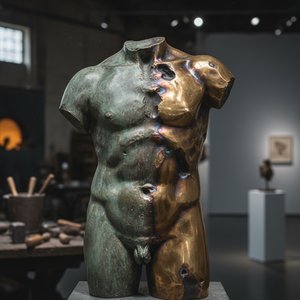
A bronzszobrászat örökös hagyatéka: történelem, technikák és kortárs értelmezések
Fedezze fel a bronzszobrászat gazdag történetét és lenyűgöző alkotásait! Ismerje meg az ősrégi technikákat, kortárs művészeket és szobrok gondozását. Prémium minőségű reprodukciókért látogasson el hozzánk!

The Enduring Form: Sculpture Across History, Technique & Emotional Resonance
Explore the rich history of sculpture with OriginalUniqueArt. Discover key techniques, influential artists & investment potential for discerning collectors. Expert insights into valuing and collecting timeless masterpieces.