

 Megtekintés
 Küldés
 Megosztás
 Részletek
 Útmutató

 Letöltés
 Hasonló darabok
 X-ray felvétel
 Diavetítés
 Statisztika
The Dancing Lesson


 Összes részlet megjelenítése
Kézzel készített olajfestmény reprodukció
Kézzel festett olajvastú vászon, az Ön által választott méretben és keretben, művészeink készítik meglévőre. ( Váltás nyomtatványra Áttérés digitális képre)




P118B Ft10

P118H Ft10

P118W Ft10

P438Z Ft10

P508JH Ft12

P508YH Ft12

P805H Ft10

P805Z Ft10

P919BZ Ft10

P919G Ft10

P919XJ Ft10

P959ZH Ft10

P968JZ Ft12

W106C Ft8

W218G Ft10

W218JH Ft8

W218Y Ft10

W307PJ Ft10

W316G Ft10

W316PJ Ft8

W316Y Ft10

W398PJ Ft8

W4111J Ft10

W500HY Ft15

W500JH Ft15

W692G Ft12

W849H Ft8

W940BG Ft15

W953PJ Ft8




Válasszon előre meghatározott méreteink közül, amelyek megfelelnek a műalkotás eredeti arányainak.

Írja be a kívánt szélességet és magasságot, hogy illeszkedjen a keretéhez vagy a falához. Mivel ez kézzel festett alkotás, egy eltérő formájú méret esetén a művész akár festhet is valamivel többet a kép körül, vagy korolathat is belőle — az Ön döntésének megfelelően. A festés megkezdése előtt küldünk egy digitális tervezetet jóváhagyásra. Az oldalon látható kép nem tartalmazza a végeredményt — csak a tervezet mutatja meg a valódi eredményt.
A rendelést követően a OriginalUniqueArt.com csapata e-mailt küld az ügyfélnek az instrukciókért, és biztosít egy előnézeti képet (mockup).
Világszerte elérhető szállítás () 3-4 hét alatt a szokásos 5 hét helyett. (27 október). A minőség nem kérdőjelezhető.

Ingyenes globális expressz szállítás

Prémium minőségű len vászon

Teljes körű szállítási biztosítás

Vámvisszatérítési Garancia

Hiteles színarányosság garancia

100 napos visszaküldési lehetőség (csak hibás termékek esetén)

100% pénzvisszatérítési garancia

Több darab vásárlásakor kedvezmény
 Az üvegkeretes opció csak 110 cm alatti méretben érhető el

The Dancing Lesson
Reprodukciós technika
Reprodukció mérete
-


Összesített ár
Ft 96851
A művész életrajza
A Life Immersed in Light and Shadow
José Jiménez Aranda, born in the vibrant city of Seville in 1837, was a painter who navigated the complex currents of 19th-century Spanish art with remarkable versatility. His life, spanning just over six decades, coincided with an era of profound transformation—socially, politically, and artistically—and his work serves as a compelling reflection of this dynamic period. From rigorous academic training to embracing the influence of masters like Goya and Velázquez, and later finding inspiration in the luminous scenes championed by Mariano Fortuny, Aranda’s artistic journey was one of continuous evolution. He wasn't merely a recorder of his time; he was an interpreter, capturing both the grandeur of historical moments and the quiet intimacy of everyday life with equal skill. The tragic loss of his wife and daughter in 1892 cast a long shadow over his later years, prompting a return to Seville where he dedicated himself to teaching and continued to refine his distinctive style, leaving behind a legacy that continues to resonate within Spanish art history.Formative Years and Artistic Pilgrimages
Aranda’s artistic inclinations were nurtured from an early age, receiving initial instruction from Manuel Cabral and Eduardo Cano de la Peña. This foundational training proved crucial when, in 1851, he entered the Real Academia de Bellas Artes de Santa Isabel de Hungría in Seville. The Academy provided a rigorous grounding in classical techniques, but it was his subsequent travels that truly ignited his artistic vision. A pivotal moment came during an extended stay in Rome between 1871 and 1878, where he encountered the work of Mariano Fortuny. Fortuny’s influence is palpable in Aranda's paintings from this period—a shared fascination with luminous color, meticulous detail, and a penchant for depicting elegant scenes often set in historical contexts. This wasn't simply imitation; Aranda absorbed Fortuny’s techniques and adapted them to his own artistic sensibilities. Before Rome, however, he immersed himself in the masterpieces of Spanish art at the Museo del Prado in Madrid, studying the works of Goya and Velázquez with a discerning eye. These masters instilled in him an appreciation for dramatic lighting, psychological depth, and the power of observation—qualities that would become hallmarks of his own style. He also spent time as a restorer and designer of stained glass in Jerez de la Frontera, further honing his technical skills and developing a keen understanding of color and composition.Parisian Refinement and Costumbrista Visions
The years Aranda spent in Paris (1881-1890) were arguably the most commercially successful of his career. He specialized in what became known as “tableautin” painting—small-scale genre scenes, often depicting 18th-century life with a refined elegance reminiscent of Fortuny. These works found favor among collectors and established Aranda’s reputation as a skilled and sophisticated painter. However, upon returning to Madrid, his artistic focus shifted. He began to explore *costumbrismo*, a distinctly Spanish genre that focused on depicting the customs, traditions, and everyday life of the people. Paintings like “Una Desgracia” (A Disaster) from 1890 demonstrate this new direction—a poignant portrayal of human suffering rendered with both realism and emotional depth. This work earned him a first medal at the Nacional exhibition, solidifying his position as a leading figure in Spanish art. It was a move away from the purely decorative towards a more socially conscious form of representation, reflecting a growing engagement with the realities of contemporary Spain.A Monumental Legacy: Don Quijote and Beyond
While Aranda produced numerous paintings throughout his career—dynamic bullfighting scenes like “A Pass in the Bullring” (1870), insightful social commentaries such as “Slave for Sale” (c. 1897)—it is perhaps his illustrations for a tercentenary edition of *Don Quijote* that represent his most ambitious and enduring achievement. He created an astonishing 689 highlighted drawings for this project, a monumental undertaking that showcased not only his technical virtuosity but also his deep understanding of Cervantes’ masterpiece. These illustrations are more than mere accompaniments to the text; they are interpretations—vivid, expressive renderings of iconic scenes and characters that capture the spirit of the novel. Beyond *Don Quijote*, Aranda dedicated himself to teaching at the Academy of Fine Arts in Seville after returning to his birthplace, nurturing a new generation of Spanish artists including Daniel Vázquez Díaz, Eugenio Hermoso, Ricardo López Cabrera, Manuel González Santos, and Sanz Arizmendi. His influence extended beyond his own artistic output, shaping the course of Spanish painting for years to come. He became a pivotal figure in the Alcala de Guadaíra circle of landscape painters, further enriching the artistic landscape of Spain.Enduring Significance
José Jiménez Aranda’s legacy lies in the breadth and depth of his work—from the elegant historical scenes influenced by Fortuny to the insightful portrayals of everyday life rooted in *costumbrismo*. He was a master of technique, known for his meticulous attention to detail, refined brushwork, and ability to capture the essence of Spanish culture. His illustrations for Don Quijote stand as a testament to his versatility and artistic vision, cementing his place as a significant figure in 19th-century Spanish art. Though perhaps not as widely recognized today as some of his contemporaries, Aranda’s paintings continue to captivate viewers with their beauty, sensitivity, and enduring relevance—a lasting tribute to a life dedicated to the pursuit of artistic excellence. *His ability to blend technical skill with emotional depth ensures that his work will continue to inspire and resonate with audiences for generations to come.*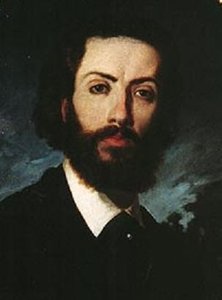
Jiménez Aranda, José
1837 - 1903 , Spanyolország
Rövid információk
- Artistic Movement Or Style: Costumbrismo, Tábláztatás
- Artists Or Movements Influenced By This Artist:
- Vázquez Díaz
- Hermoso
- Artists Who Influenced This Artist:
- Goya
- Velázquez
- Fortuny
- Date Of Birth: 1837
- Date Of Death: 1903
- Full Name: José Jiménez Aranda
- Nationality: Spanyol
- Notable Artworks:
- A Pass in the Bullring
- Don Quijote ill.
- Una Desgracia
- Place Of Birth: Sevilla, Spanyolország
Kapcsolódó cikkek

José Villegas Cordero: A Study in Ecuadorian Modernism & National Identity
Explore the life & work of José Villegas Cordero, a pivotal Spanish painter celebrated for his historical scenes & Rococo portraits. Discover his legacy and influence on Ecuadorian modernism with OriginalUniqueArt.

Goya Mesterművei: A Spanyol Lélek 25 Legikonikus Képe – OriginalUniqueArt
Fedezze fel Goya 25 leglenyűgözőbb mesterművét! Ismerje meg a spanyol festő életművét, portréit és ikonikus képeit. Vásároljon prémium minőségű reprodukciókat a OriginalUniqueArt.com-on, és teremtsen egyedi otthoni dekorációt klasszikus művészettel! Explore the full collection online.
José Gutiérrez Solana: A Chronicle of Spanish Society Through Expressionist Vision
Explore the captivating world of José Gutiérrez Solana, a pivotal Spanish Expressionist painter. Discover his haunting depictions of early 20th-century Spain, influenced by Goya & El Greco. Learn about his key works and lasting legacy.
A 19. század festészete: 10 ikonikus műalkotás a történelemből
Fedezze fel a 19. század festészetének 10 legikonikusabb műalkotását! Monet, Manet és más mesterek remekművei romantikától az impresszionizmusig. Múzeumi minőségű reprodukciók otthonába OriginalUniqueArt.com-on. Ismerje meg a történeteket és inspirálódjon!
Jorge José Castillo Casalderrey: A Spanish Abstract Expressionist's Evolving Vision
Explore the captivating world of Jorge José Castillo Casalderrey, a leading Spanish Abstract Expressionist. Discover his unique style, market value & legacy. Expert insights for discerning collectors.