Menü

() ·

A painting made for you, by hand

The Magic Circle

Kézzel készített olajfestmény reprodukció

Kézzel festett olajvastú vászon, az Ön által választott méretben és keretben, művészeink készítik meglévőre. ( Váltás nyomtatványra Áttérés digitális képre)

A gyűjtemény leírása

A művész életrajza

Fedezd fel John William Waterhouse (1849-1917) lenyűgöző Pre-Raphaelite és viktorális festményeit! Élvezz a romantikus meséit, mitológiai témáit és ikonikus hősényeinek művészetét.

from ·

Chapter 1

How large should it be?

Slide to change the size; the picture on the left shows the frame at its real width. The proportions of the original are kept.

Standard méret
egyedi méretű
CM
INCH

Válasszon előre meghatározott méreteink közül, amelyek megfelelnek a műalkotás eredeti arányainak.

szélesség
magasság

Írja be a kívánt szélességet és magasságot, hogy illeszkedjen a keretéhez vagy a falához. Mivel ez kézzel festett alkotás, egy eltérő formájú méret esetén a művész akár festhet is valamivel többet a kép körül, vagy korolathat is belőle — az Ön döntésének megfelelően. A festés megkezdése előtt küldünk egy digitális tervezetet jóváhagyásra. Az oldalon látható kép nem tartalmazza a végeredményt — csak a tervezet mutatja meg a valódi eredményt.

Chapter 2

How should it arrive?

Choose the edges of the stretched canvas

Choose your frame

Corner sample of the WhiteWrap canvas edge finish, stretched on tömörfa bars
White Ft1
Corner sample of the BlurSideWrap canvas edge finish, stretched on tömörfa bars
Blurside Ft1
Corner sample of the ExtendedWrap canvas edge finish, stretched on tömörfa bars
Extended Ft1
Corner sample of the P118B picture frame: formázott polisztirol, 5 cm wide and 3 cm thick
P118B Ft10
Corner sample of the P118H picture frame: formázott polisztirol, 5 cm wide and 3 cm thick
P118H Ft10
Corner sample of the P118W picture frame: formázott polisztirol, 5 cm wide and 3 cm thick
P118W Ft10
Corner sample of the P438Z picture frame: formázott polisztirol, 5.5 cm wide and 3.5 cm thick
P438Z Ft10
Corner sample of the P508JH picture frame: formázott polisztirol, 7 cm wide and 3.5 cm thick
P508JH Ft12
Corner sample of the P508YH picture frame: formázott polisztirol, 7 cm wide and 3.5 cm thick
P508YH Ft12
Corner sample of the P805H picture frame: formázott polisztirol, 5 cm wide and 3.5 cm thick
P805H Ft10
Corner sample of the P805Z picture frame: formázott polisztirol, 5 cm wide and 3.5 cm thick
P805Z Ft10
Corner sample of the P919BZ picture frame: formázott polisztirol, 7 cm wide and 3.5 cm thick
P919BZ Ft10
Corner sample of the P919G picture frame: formázott polisztirol, 7 cm wide and 3.5 cm thick
P919G Ft10
Corner sample of the P919XJ picture frame: formázott polisztirol, 7 cm wide and 3.5 cm thick
P919XJ Ft10
Corner sample of the P959ZH picture frame: formázott polisztirol, 5 cm wide and 3 cm thick
P959ZH Ft10
Corner sample of the P968JZ picture frame: formázott polisztirol, 6 cm wide and 4 cm thick
P968JZ Ft12
Corner sample of the W106C picture frame: tömörfa, 5 cm wide and 3 cm thick
W106C Ft8
Corner sample of the W218G picture frame: tömörfa, 5 cm wide and 3 cm thick
W218G Ft10
Corner sample of the W218JH picture frame: tömörfa, 5 cm wide and 3 cm thick
W218JH Ft8
Corner sample of the W218Y picture frame: tömörfa, 5 cm wide and 3 cm thick
W218Y Ft10
Corner sample of the W307PJ picture frame: tömörfa, 6 cm wide and 3 cm thick
W307PJ Ft10
Corner sample of the W316G picture frame: tömörfa, 6 cm wide and 3 cm thick
W316G Ft10
Corner sample of the W316PJ picture frame: tömörfa, 6 cm wide and 3 cm thick
W316PJ Ft8
Corner sample of the W316Y picture frame: tömörfa, 6 cm wide and 3 cm thick
W316Y Ft10
Corner sample of the W398PJ picture frame: tömörfa, 5 cm wide and 3 cm thick
W398PJ Ft8
Corner sample of the W4111J picture frame: tömörfa, 6.5 cm wide and 3.5 cm thick
W4111J Ft10
Corner sample of the W500HY picture frame: tömörfa, 7 cm wide and 5 cm thick
W500HY Ft15
Corner sample of the W500JH picture frame: tömörfa, 7 cm wide and 5 cm thick
W500JH Ft15
Corner sample of the W692G picture frame: tömörfa, 8 cm wide and 4 cm thick
W692G Ft12
Corner sample of the W849H picture frame: tömörfa, 5 cm wide and 3 cm thick
W849H Ft8
Corner sample of the W940BG picture frame: tömörfa, 7.5 cm wide and 4.5 cm thick
W940BG Ft15
Corner sample of the W953PJ picture frame: tömörfa, 6 cm wide and 3.5 cm thick
W953PJ Ft8
Corner sample of the H24-GOLD picture frame: faragott fa gesszóval, 10 cm wide and 6 cm thick
H24-GOLD Ft30
Corner sample of the H24-SILVER picture frame: faragott fa gesszóval, 10 cm wide and 6 cm thick
H24-SILVER Ft30
Corner sample of the H36-GOLD picture frame: faragott fa gesszóval, 15 cm wide and 6.5 cm thick
H36-GOLD Ft45
Corner sample of the H36-SILVER picture frame: faragott fa gesszóval, 15 cm wide and 6.5 cm thick
H36-SILVER Ft45

Moulding: . Overall size with the frame: .

Chapter 3

Who paints it, and should anything change?

Examples of what can be changed: Replace face with customer photo; Add pet (e.g., replace cat with dog); Include hidden message in background; Change background landscape or elements.
After order, OriginalUniqueArt.com team will email client for instructions and provide a mockup preview

Világszerte elérhető szállítás () 3-4 hét alatt a szokásos 5 hét helyett. (29 október). A minőség nem kérdőjelezhető.

Chapter 4

The finishing touches

A nameplate, as in a museum?

A gravírozott bronztábla részletei

This elegant plaque features the artist's name and the title of the artwork, finely engraved for a timeless presentation.

It is made from bronze with a refined, elegant finish. The text is precisely laser-engraved for a sharp and permanent result. Measuring 9x2 cm, the plaque is compact yet easy to read. It's built to be durable and scratch-resistant, offering a professional, museum-quality look. Mounting is simple thanks to the included adhesive backing.

Átlátszó akril tábla részletei

The plaque includes essential engraved details such as the artist's name, the title of the artwork, the date it was created, the type of media used-like oil on canvas or watercolor-a brief description of the piece, and a QR code that links to the complete artwork information.

It is crafted from clear acrylic, offering a sleek, modern appearance. The text is UV-engraved in black to ensure strong visual contrast. With a size of 10x15 cm, it ensures optimal readability. It comes equipped with two metal hooks for secure wall mounting. The plaque is designed to be weather-resistant, making it suitable for various environments, and it includes interactive features that work seamlessly with smartphone scanning.

Fekete akril tábla részletei

This elegant plaque includes engraved information such as the artist's name, the title of the artwork, the date it was created, the type of media used (like oil on canvas or watercolor), a short description of the artwork, and a QR code for quick access to more information.

The plaque itself is made from refined black acrylic with a premium finish. The text is laser-engraved in white for high contrast and readability. Its size is 10x15 cm, designed to be easy to read. It comes with two metal hooks for professional mounting. The design is sleek and fits any interior style. It is also weather-resistant and durable, with built-in digital integration for mobile compatibility.

A protective varnish?

When do you need it?

Chapter 5

Your painting, as you ordered it

The Magic Circle

Reprodukciós technika

Reprodukció mérete

-

Kiváló mesterművész

Nagyobb részletesség, finomság és bővített gyártási idő

-

Reprodukció keretezése

-

-

A bármely oldalsó méretét túlszálaló 105 cm (kb. 41 hüvelyk) meghaladó műalkotások vagy reprodukciók esetében a keret összeszerelhető készletként, szétszerelve kerül szállításra. Ez a módszer biztosítja a biztonságos szállítást, és megakadályozza a szállítás során fellépő sérüléseket.

Szakmész összeszerelést igényel – ez nem DIY (önösszeszerelhető) termék.
A készletet egy tapasztalt keretező szakembernek kell összeszerelnie és a vásznat feszítenie kell, fa ragasztó (nem tartalmazza a csomag), vásznfeszítő fogó és szorítók használatával, amelyek a ragasztó száradásáig a keretrészeket egymáshoz vuôngjba tartják. A helytelen összeszerelés vagy a nem egyenletes vásznfeszítés maradandó károsíthatja a műalkotást, és ez nem része a garanciánknak.

  • A készlet tartalmazza az összes tömörfa rudat, pontosan méretre vágva.

  • A mellékelt csavarokkal, valamint a sarokszerekhez szükséges faütő ragasztóval kell összeszerelnie (ez nem tartalmazható a csomagban), így a keretrendezőnek külön kell beszereznie.

  • A csomag nem tartalmazza a szükséges professzionális eszközöket: egy vászonfeszítőt és klipseket a rácsok vízszintes tartásához a ragasztó megszáradásáig.

Fontos:
A sarokcsatlakozásokhoz fánylagra van szükség, a keretrudakat szorítókapcsokkal kell rögzíteni, amíg a rag teljesen meg nem szárad, a kész keretre feszített vászonhoz pedig vászonfeszítő fogat szükséges. Ezek egyike sem található meg a készletben. Kérjük, rendelés előtt győződjön meg róla, hogy rendelkezik tapasztalt keretező szakemberrel.

Névtábla

-

-

Védőréteg (Lakk)

Fényes lakk (intenzívabb színek, védelem a fény és a nedvesség hatása ellen)

-

Műalkotásom egyedi igényre szabása

Példák a módosíthatóságra: az arc kicserélése az ügyfél fotójára; háziállat hozzáadása (pl. macska helyett kutya); rejtett üzenet elhelyezése a háttérben; a háttér tájainak vagy elemeinek megváltoztatása.

-

Sürgős

Világszerte szóló szállítás () mindössze 3-4 hét alatt, a szokásos 5 hét helyett. (29 október). A minőség nem kérdőjelezhető.

-

Express szállítás

Világszerte elérhető szállítás területre 5 héten belül. (5 november).

A szállítás díja tartalmazza

Összesített ár

Ft 96927

Összesített ár Ft 96927

Az üvegkeretes opció csak 110 cm alatti méretben érhető el

Included with every order

  • Ingyenes globális expressz szállítás
  • Prémium minőségű len vászon
  • Teljes körű szállítási biztosítás
  • Vámvisszatérítési Garancia
  • Hiteles színarányosság garancia
  • 100 napos visszaküldési lehetőség (csak hibás termékek esetén)
  • 100% pénzvisszatérítési garancia
  • Több darab vásárlásakor kedvezmény
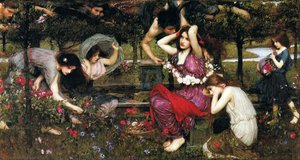
The Magic Circle is an oil painting in the Pre-Raphaelite style, created in 1886 by John William Waterhouse. The painting depicts a witch or sorceress drawing a magic circle on the earth to create a ritual space. The Magic Circle was shown at the Royal Academy in 1886, and, after Consulting the Oracle and St. Eulalia, was Waterhouse's third exhibit with a supernatural theme in as many years. The painting was well-received at its exhibition, and was purchased for £650 the same year by the Tate Gallery, through the Chantrey Bequest.

Kérdések és válaszok

A „The Magic Circle”, John William Waterhouse alkotása jogtalanul védett (public domain)?

A szerzői jogokkal kapcsolatban a "The Magic Circle" mű közösségi tulajdon – a szerzői jog lejártt.

Mely művészhez köthető a "The Magic Circle"?

A „The Magic Circle” műtémét John William Waterhouse alkotójának tulajdonítják.

Hol találhatók statisztikák a(z) „The Magic Circle”, John William Waterhouse alkotása kapcsán?

A "The Magic Circle" számára létre van hozva egy Statisztikák oldal. Ez az oldal ábrázolja a mű és a művész többi alkotásának havi látogatottságát, országon és nyelvenként bontva.

More about this painting

Megtekintés AR előnézet Váltás nyomtatványra Áttérés digitális képre Küldés
Részletek Útmutató Kedvencekhez ad Letöltés Hasonló darabok X-ray felvétel Diavetítés Q&A Statisztika

In numbers

  • 29frames to choose from
  • standard sizes, in its own proportions
  • 5weeks to paint and deliver it
John William Waterhouse

John William Waterhouse

1849 - 1917, Olaszország

Quick facts about John William Waterhouse

  • Artistic Movement Or Style: Preraffaelita, Viktória
  • Artists Or Movements Influenced By This Artist: ['Impressionista']
  • Artists Who Influenced This Artist:
    • Alma-Tadema
    • Frederic Leighton
  • Date Of Birth: 1849. április 6.
  • Date Of Death: 1917. február 10.
  • Full Name: John William Waterhouse
  • Nationality: Angol
  • Notable Artworks:
    • A Lady of Shalott
    • Ophelia
    • Hylas és a nümfe
    • Penelope
  • Place Of Birth: Róma, Olaszország

A művész életrajza

A Roman Beginning: The Early Life and Influences of John William Waterhouse

John William Waterhouse, a name synonymous with the romantic allure of Pre-Raphaelite painting, began his artistic journey far from the fog-laden landscapes often associated with the movement. Born in Rome in 1849 to English parents, his earliest years were steeped in the classical beauty of Italy – an environment that would profoundly shape his aesthetic sensibilities. This formative period instilled within him a deep appreciation for ancient Roman art and mythology, themes that would recur throughout his prolific career. The Waterhouse family returned to England in 1854, settling in South Kensington, London, a location strategically chosen for its proximity to the burgeoning Victoria and Albert Museum. Here, young John was exposed to an unparalleled collection of classical sculpture and decorative arts, further nurturing his fascination with antiquity. His initial training was conventional, encompassing studies at the Royal Academy Schools, where he honed his technical skills in drawing and painting, but it was the atmosphere of intellectual curiosity and artistic innovation that truly ignited his passion. Even early works reveal a meticulous attention to detail and a commitment to historical accuracy, qualities that would become hallmarks of his style.

Embracing the Pre-Raphaelite Brotherhood

While Waterhouse’s initial work displayed classical leanings reminiscent of artists like Alma-Tadema and Frederic Leighton, he gradually gravitated towards the ideals of the Pre-Raphaelite Brotherhood. This artistic collective, founded in 1848, championed a return to the detailed observation of nature and the vibrant colors found in early Italian Renaissance art – before what they perceived as the stylistic decline initiated by Raphael. Waterhouse didn’t join the brotherhood itself, but he wholeheartedly embraced its principles, infusing his paintings with a lyrical beauty and emotional depth that resonated deeply with audiences. His 1874 painting, Sleep and his Half-Brother Death, exhibited at the Royal Academy, marked a turning point, demonstrating his growing mastery of symbolic narrative and atmospheric effects. This success paved the way for consistent inclusion in the annual exhibitions, establishing him as a rising star within the London art scene. He wasn’t merely replicating Pre-Raphaelite techniques; he was interpreting them through his own unique lens, blending classical precision with romantic sensibility.

Mythological Visions and Arthurian Echoes

Waterhouse's most celebrated works are those that draw inspiration from mythology and Arthurian legend. He possessed a remarkable ability to breathe life into ancient stories, portraying goddesses, nymphs, and tragic heroines with an exquisite blend of beauty and pathos. The Lady of Shalott, perhaps his most iconic painting, exists in three versions (1888, 1894, and 1916), each a testament to his enduring fascination with Tennyson’s poem. The image of the doomed lady, adrift on her river barge, became emblematic of Victorian romanticism and the plight of artistic isolation. Similarly, his depictions of Ophelia, capturing the moment before her tragic demise, are imbued with a haunting melancholy. He didn't simply illustrate these tales; he explored their psychological depths, focusing on the emotional states of his subjects. Hylas and the Nymphs, Ariadne, and Penelope and the Suitors are further examples of his ability to transform classical narratives into visually stunning and emotionally resonant works of art. His paintings weren’t just beautiful; they were imbued with a sense of narrative power, inviting viewers to contemplate the complexities of human experience.

Technique and Style

Waterhouse's distinctive style was characterized by several key elements. He meticulously researched historical details, ensuring accuracy in costumes, settings, and props. His paintings often featured rich, saturated colors—particularly deep blues, greens, and reds—creating a sense of atmosphere and drama. A hallmark of his work is the use of soft, diffused light, reminiscent of Pre-Raphaelite influences but with a more refined and controlled approach. He employed a technique known as "burnishing," applying paint in thin layers to create a smooth, almost glazed surface. This gave his paintings a luminous quality, enhancing their visual impact. Waterhouse’s compositions were typically balanced and symmetrical, reflecting a classical sensibility. However, he skillfully introduced elements of movement and dynamism through the placement of figures and the use of flowing drapery. His meticulous attention to detail, combined with his expressive use of color and light, resulted in paintings that are both visually stunning and emotionally evocative.

Legacy and Lasting Influence

John William Waterhouse continued to paint prolifically until his death in 1917, achieving widespread recognition and acclaim during his lifetime. He was elected a full Academician in 1895 and dedicated time to teaching at the St. John's Wood Art School, nurturing the next generation of artists. While his popularity waned somewhat after World War I, there has been a significant resurgence of interest in his work in recent decades. Today, Waterhouse is celebrated as one of the most important figures of the Pre-Raphaelite movement and a master of Victorian painting. His paintings continue to captivate audiences with their exquisite beauty, emotional depth, and timeless appeal. He left behind a legacy of romantic visions, mythological interpretations, and tragic heroines that continue to inspire artists and art lovers alike. The enduring power of his work lies in its ability to transport viewers to another world – a realm of myth, legend, and profound human emotion.