Váltás nyomtatványra
 Összes részlet megjelenítése







































 A bármely oldalsó méretét túlszálaló 105 cm (kb. 41 hüvelyk) meghaladó műalkotások vagy reprodukciók esetében a keret összeszerelhető készletként, szétszerelve kerül szállításra. Ez a módszer biztosítja a biztonságos szállítást, és megakadályozza a szállítás során fellépő sérüléseket.


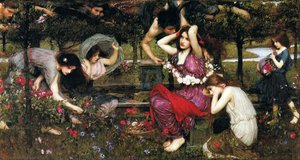
A Descent into Serenity: John William Waterhouse’s ‘Ophelia’
John William Waterhouse's “Ophelia,” completed in 1910, is more than just a portrait; it’s an immersion into the melancholic beauty of Shakespeare’s tragedy. This oil on canvas, measuring 62 x 100 cm, exemplifies the Romantic movement’s fascination with emotion, nature, and the ethereal qualities of female beauty – a fascination deeply rooted in the artistic currents of the Victorian era.
- The Subject: The painting depicts Ophelia, the doomed heroine from Hamlet, frozen in a moment of poignant vulnerability. Waterhouse doesn’t portray her as a victim of circumstance but rather as a figure of quiet dignity and tragic grace, embodying the inherent sadness within Shakespeare's narrative.
- Romanticism Redefined: Created during a period of intense artistic revival, “Ophelia” reflects the Pre-Raphaelite movement’s emphasis on meticulous detail, vibrant color palettes, and a return to medieval and Renaissance aesthetics – a deliberate rejection of the perceived artificiality of Neoclassical art.
A Symphony of Color and Texture
Waterhouse's masterful technique is immediately apparent in “Ophelia.” He employs a rich tapestry of blues and greens, evoking the tranquil waters of the Elbe River where Ophelia drowns – a scene meticulously rendered with an almost photographic realism. The use of light is particularly striking, bathing Ophelia’s form in a soft, diffused glow that enhances her ethereal quality. Note the intricate detailing of her flowing gown, the delicate texture of the flowers adorning her hair, and the subtle variations in color within each petal. This attention to detail speaks to Waterhouse's commitment to capturing not just a likeness but also the very essence of his subject.
Symbolism Woven into the Canvas
Beyond its aesthetic beauty, “Ophelia” is laden with symbolic meaning. The flowers woven into her hair – specifically violets (representing faithfulness), forget-me-nots (symbolizing remembrance), and roses (signifying love) – are not merely decorative elements; they are potent visual metaphors for Ophelia’s tragic fate. Her pose, languid yet vulnerable, suggests a surrender to the inevitable, while the surrounding landscape mirrors her internal turmoil. The inclusion of figures in the background, though secondary, adds another layer of complexity, hinting at the broader themes of loss and despair that permeate Shakespeare's play.
A Legacy of Romantic Vision
"Ophelia" stands as a testament to John William Waterhouse’s enduring artistic vision. Completed in 1910, this painting continues to resonate with viewers today due to its profound emotional depth and technical brilliance. It is a captivating exploration of beauty, sorrow, and the human condition – a timeless masterpiece that exemplifies the Romantic movement's most poignant achievements. This reproduction offers an exceptional opportunity to own a piece of art history, bringing the serene tragedy of Ophelia into your space.
Kérdések és válaszok
Kinek ajánlható ajándékként a „Ophelia”, John William Waterhouse alkotása?
A „Ophelia”, John William Waterhouse alkotása ajándékajánlata ötvözi a Wedding lehetőséget a Statement céljával.
Milyen hangulatot árasztana egy szobában egy „Ophelia”, John William Waterhouse alkotása reprodukció?
A „Ophelia”, John William Waterhouse alkotása Romantic hangulata tökéletesen illeszkedik a javasolt helyszínhez: egy Living Room.
Mely korszakban készült a „Ophelia”, John William Waterhouse alkotása?
A "Ophelia" a 19th Century korszak alkotása.
 Megtekintés
 Küldés
 Megosztás
 Részletek
 Útmutató

 Letöltés
 Hasonló darabok
 X-ray felvétel
 Diavetítés
 Q&A
Q&A Statisztika