
 Megtekintés
 Küldés
 Megosztás
 Részletek
 Útmutató

 Letöltés
 Hasonló darabok
 X-ray felvétel
 Diavetítés
 Kérdések és válaszok
 Statisztika
Lady Hamilton as a Bacchante

- 38.0 x 28.0 cm


 Összes részlet megjelenítése
Giclée / Műnyomat
Múzeumi minőségű giclée vagy vászonnyomat, gyors gyártással és rugalmas finomítási lehetőségekkel. ( Kézzel festett másolat rendelése Áttérés digitális képre)




P118B Ft10

P118H Ft10

P118W Ft10

P438Z Ft10

P508JH Ft12

P508YH Ft12

P805H Ft10

P805Z Ft10

P919BZ Ft10

P919G Ft10

P919XJ Ft10

P959ZH Ft10

P968JZ Ft12

W106C Ft8

W218G Ft10

W218JH Ft8

W218Y Ft10

W307PJ Ft10

W316G Ft10

W316PJ Ft8

W316Y Ft10

W398PJ Ft8

W4111J Ft10

W500HY Ft15

W500JH Ft15

W692G Ft12

W849H Ft8

W940BG Ft15

W953PJ Ft8




Válasszon előre meghatározott méreteink közül, amelyek megfelelnek a műalkotás eredeti arányainak.

Írja be a keretének vagy a falának megfelelő szélességet és magasságot. A nyomatot csak le lehet vágni, soha nem tehető nagyobbá, mint az eredeti kép, így egy eltérő alakú méretnél a kép egy része elveszik. Mielőtt bármit kinyatintanánk, küldünk egy digitális próbamodellt jóváhagyásra. Az oldalon látható kép nem tartalmazza a valós levágást — ezt csak a próbamodell mutatja meg.
Világszerte történő kiszállítás területére mindössze 2 hét alatt, a szokásos 4-5 hét helyett. (10 november)

Ingyenes globális expressz szállítás

Prémium minőségű len vászon

Teljes körű szállítási biztosítás

Vámvisszatérítési Garancia

Hiteles színarányosság garancia

100 napos visszaküldési lehetőség (csak hibás termékek esetén)

100% pénzvisszatérítési garancia

Több darab vásárlásakor kedvezmény
 Az üvegkeretes opció csak 110 cm alatti méretben érhető el

Lady Hamilton as a Bacchante
Giclée / Műnyomat
Reprodukció mérete
-


Összesített ár
Ft 26473
Lady Hamilton as a Bacchante: A Dance of Desire and Roman Echoes
Élisabeth Louise Vigée Le Brun’s “Lady Hamilton as a Bacchante,” painted in 1792, is more than just a portrait; it's a carefully constructed tableau vivant, brimming with theatricality, historical allusion, and the simmering intensity of a forbidden love. The painting captures Emma Hart Hamilton – later Lady Hamilton – not merely as a beautiful woman, but as a figure drawn from ancient mythology, embodying both earthly allure and ethereal grace. Le Brun, a prominent artist in the French court, skillfully employs the conventions of Neoclassicism while subtly injecting elements of Romanticism, creating an image that is simultaneously formal and deeply emotive.
The subject herself, Emma Hamilton, was a captivating figure. A former dancer and actress, she possessed a remarkable beauty and charm, which quickly caught the eye of Sir William Hamilton, the British Ambassador to Naples. Their affair became legendary, fueled by mutual admiration and a shared passion for art and culture. Le Brun’s choice to depict her as a Bacchante – a follower of Dionysus, the god of wine, revelry, and ecstasy – is profoundly symbolic. It speaks to the intoxicating nature of their relationship, suggesting a world of unrestrained pleasure and passionate abandon. The pose itself—hand raised to her chin, eyes gazing directly at the viewer—commands attention, inviting us into this private, almost illicit, scene.
The Techniques of Illusion: Mezzotint and Dramatic Lighting
“Lady Hamilton as a Bacchante” is executed in mezzotint, a printmaking technique that lends itself beautifully to capturing both subtle tonal variations and dramatic contrasts. This process, perfected by John Raphael Smith (a key figure in the painting’s creation), involved meticulously roughening a metal plate with ink, creating areas of deep blackness that would then be selectively wiped away to reveal the white paper beneath. The result is an image rich in texture and shadow, reminiscent of Rembrandt's masterful use of chiaroscuro. Smith’s engraving, which served as the basis for Le Brun’s painting, further amplified this effect, adding layers of detail and emphasizing the theatricality of the scene.
Le Brun masterfully utilizes lighting to heighten the drama. The figure is bathed in a soft, diffused light that highlights her flowing white dress and the delicate folds of her hair. This luminosity contrasts sharply with the darker background, creating a sense of depth and drawing our attention to Hamilton’s face—a study in composure and vulnerability. The careful manipulation of light and shadow not only enhances the visual impact but also contributes to the painting's overall mood of restrained passion.
Historical Context and Mythic Resonance
To fully appreciate “Lady Hamilton as a Bacchante,” it’s crucial to understand its historical context. The painting was created during the tumultuous years following the French Revolution, a period marked by political upheaval and social change. The Neoclassical style, of which Le Brun was a prominent proponent, sought to revive the ideals of ancient Greece and Rome—a deliberate reaction against the excesses of the Baroque era. By depicting Hamilton as a Bacchante, Le Brun subtly references Roman mythology, specifically the Bacchanalia – frenzied religious rites dedicated to Dionysus that were outlawed by Roman authorities.
The choice of the Bacchantes motif also reflects the broader cultural anxieties of the time. The bacchantic frenzy represented both liberation and chaos—a potent symbol for a society grappling with uncertainty and moral decay. Hamilton’s embrace of this mythological role can be interpreted as an assertion of her own agency, a defiant rejection of societal constraints.
A Legacy of Beauty and Intrigue
“Lady Hamilton as a Bacchante” remains one of the most captivating portraits of the late 18th century. It’s a testament to Le Brun's artistic skill, Smith’s masterful printmaking, and the enduring power of myth and romance. The painting continues to fascinate viewers with its blend of beauty, drama, and historical significance. Reproductions offer a remarkable opportunity to experience this iconic image firsthand, bringing its timeless allure into any setting—from grand galleries to intimate interiors.
Kérdések és válaszok
Milyen hangulatot árasztana egy szobában egy „Lady Hamilton as a Bacchante”, John Raphael Smith alkotása reprodukció?
A „Lady Hamilton as a Bacchante”, John Raphael Smith alkotása Romantic hangulata tökéletesen illeszkedik a javasolt helyszínhez: egy Living Room.
Hol találhatok egy útmutatót a(z) "Lady Hamilton as a Bacchante" alkotáshoz?
A "Lady Hamilton as a Bacchante" útmutatója a mű Útmutató oldala – egy kinyomtatható adatlap, amely bemutatja a művet a leírással, a szerzői megjegyzéssel és az azonosító táblázattal (művész, dátumok, technika, eredeti méret, gyűjtemény) együtt.
Melyik szobához ajánlott a „Lady Hamilton as a Bacchante”, John Raphael Smith alkotása?
A "Lady Hamilton as a Bacchante" reprodukciója jól illik egy Living Room-be.
A művész életrajza
A Life Etched in Light: The World of John Raphael Smith
John Raphael Smith, born in Derby in 1751, emerged as a pivotal figure during the vibrant late Georgian era – an artist whose life was a remarkable tapestry woven from diverse talents. He wasn’t merely a painter; he was a master of mezzotint engraving, a shrewd print dealer, a dedicated mentor, and a keen observer of his time. His story is one of versatility, driven by a deep-seated passion for capturing the essence of human experience through light, shadow, and meticulous detail. Born into an artistic lineage – his father, Thomas Smith, was a respected landscape painter – John Raphael’s early life provided fertile ground for his burgeoning talent. He initially apprenticed as a linen-draper, gaining practical skills and a grounding in commerce, but it was the irresistible pull towards artistic expression that ultimately shaped his destiny. His relocation to London in 1767 marked the true beginning of his career, supplementing his income with miniature portraits while simultaneously embracing the captivating world of printmaking.Master of Mezzotint and Portraiture
Smith swiftly established himself as a virtuoso of mezzotint engraving – a technique demanding both technical precision and artistic vision. This intricate process involved meticulously scraping and burnishing a copper plate to create tonal variations, allowing for an extraordinary level of detail and atmospheric depth. His early successes, notably reproductions of works by Henry Benbridge, quickly garnered recognition within the art world. However, his engagement with Sir Joshua Reynolds proved transformative. Over forty meticulous reproductions of Reynolds’ paintings flowed from Smith's hand, demonstrating a remarkable ability to not only faithfully replicate likeness but also to capture the subtle nuances of color and texture that defined Reynolds’ distinctive style. This dedication to interpreting Reynolds’ artistic philosophy cemented Smith’s reputation as one of England’s foremost engravers. Beyond portraiture, Smith explored genre scenes and satirical pieces – over 400 works in total – revealing a keen observational eye and a playful wit. His portraits were particularly distinguished by their realism and intimate portrayal of subjects, offering glimpses into the lives of prominent figures of his era.Royal Patronage and Artistic Collaboration
Smith’s exceptional talent did not go unnoticed by the influential circles of London society. In 1784, he received a prestigious appointment as Mezzotint Engraver to the Prince of Wales – a position that significantly elevated his status within the artistic establishment. This royal patronage opened doors to lucrative commissions from prominent individuals, including Charles James Fox and Benjamin Thompson. These works stand as testaments to Smith’s ability to capture both physical resemblance and psychological depth, reflecting the sophisticated tastes of the aristocracy. His involvement extended beyond mere reproduction; he was a shrewd print dealer and publisher, notably collaborating with the radical writer and artist William Blake. This association highlights Smith's willingness to engage with diverse artistic voices and his role in fostering a vibrant intellectual climate within London’s art world – a period marked by both artistic innovation and social upheaval.A Legacy Forged in Mentorship
Perhaps one of Smith’s most enduring legacies lies not solely in his own artistic output but also in his dedication to nurturing the next generation of talent. He served as a prolific mentor, guiding numerous apprentices who would go on to become celebrated artists in their own right.- Among his pupils were figures such as J.M.W. Turner,
- Charles H. Hodges,
- William Ward,
- and Thomas Girtin.
Key Works
Smith’s oeuvre encompasses a vast range of subjects and styles, reflecting his versatility as an artist. Some of his most celebrated works include:- *Pascal Poali*, after Henry Benbridge (early success)
- *Edwin the Minstrel*, after Wright of Derby
- *Mercury Inventing the Lyre*, after Barry
- Numerous portraits of Sir Joshua Reynolds’ paintings, showcasing his meticulous skill and understanding of color and composition.
- Portraits of prominent figures such as Charles James Fox, Benjamin Thompson, and Lieutenant William Collingwood – each capturing the subject's personality with remarkable accuracy.

John Raphael Smith
1752 - 1812 , Egyesült Királyság
Rövid információk
- Artistic Movement Or Style: Mezzotint, portré
- Artists Or Movements Influenced By This Artist:
- Turner
- Girtin
- Artists Who Influenced This Artist:
- Reynolds
- Wright of Derby
- Date Of Birth: 1752
- Date Of Death: 1812
- Full Name: John Raphael Smith
- Nationality: Angol
- Notable Artworks:
- A Captive
- Lt. Collingwood
- Thomas King Jr Smith
- Place Of Birth: Derby, Anglia
Kapcsolódó cikkek

John Singer Sargent 25 Mesterműve: Elegancia és Portrék a OriginalUniqueArt Galériában
Fedezze fel John Singer Sargent 25 legikonikusabb művészeti alkotását! Portrék, impresszionista stílus és a fény játéka – inspirálódjon Sargent életrajzából és vászonképeiből. Művészeti reprodukciók otthonába a OriginalUniqueArt-on!

John Constable 25 Mesterműve: A Természet Lényege Vászonon – OriginalUniqueArt.com
Fedezze fel John Constable 25 legszebb művészeti alkotását! Ismerje meg a romantika ikonikus tájképeit, Dedham Vale szépségét és a természet lenyűgöző ábrázolásait. Vászonkép reprodukcióinkkal eleganciát csempészhet otthonába – OriginalUniqueArt.com

Thomas Stuart Smith: A Study in British Impressionism & the Poetic Landscape
Explore the captivating world of Thomas Stuart Smith (1815-1869), a Scottish painter bridging Romantic realism and British Impressionism. Discover his genre scenes, philanthropic legacy & stunning interiors.

Raphael 25 Mesterműve: A Reneszánsz Zsenialitása – Vásároljon Kiváló Minőségű Reprodukciókat!
Fedezze fel Raphael 25 legpárásabb műalkotását! Olvasson a reneszánsz zsenialitásáról, festészeti technikáiról és ikonikus képeiről. Vásároljon exkluzív olajfestmény reprodukciókat otthona díszítésére a OriginalUniqueArt.com-on!
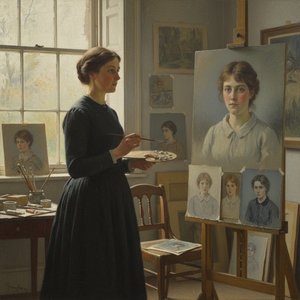
Gwen John: Intimacy, Modernity & the Quiet Power of Welsh Portraiture
Explore the captivating world of Gwen John, a pioneering Welsh artist renowned for her intimate portraits & subtle style. Discover her life, legacy, and how to bring her timeless beauty into your home with OriginalUniqueArt.