

 Előnézet
 Megosztás
 Megosztás
 Részletek
 Útmutató

 Letöltés
 Hasonló darabok
 X-ray felvétel
 Diavetítés
 Statisztika
The Buffalo Hunt
 Oil On Canvas
- WallArt
- Renaissance Composition
 1855
1855 75.0 x 99.0 cm
 Crystal Bridges Museum of American Art
 Tovább olvasom
Kézzel készített olajfestmény reprodukció
Kézzel festett olajvastú vászon, az Ön által választott méretben és keretben, művészeink készítik meglévőre. ( Váltás nyomtatványra Áttérés digitális képre)




P118B Ft10

P118H Ft10

P118W Ft10

P438Z Ft10

P508JH Ft12

P508YH Ft12

P805H Ft10

P805Z Ft10

P919BZ Ft10

P919G Ft10

P919XJ Ft10

P959ZH Ft10

P968JZ Ft12

W106C Ft8

W218G Ft10

W218JH Ft8

W218Y Ft10

W307PJ Ft10

W316G Ft10

W316PJ Ft8

W316Y Ft10

W398PJ Ft8

W4111J Ft10

W500HY Ft15

W500JH Ft15

W692G Ft12

W849H Ft8

W940BG Ft15

W953PJ Ft8




Válasszon előre meghatározott méreteink közül, amelyek megfelelnek a műalkotás eredeti arányainak.

Ön megadhat saját méreteket egy adott kerethez vagy térhez igazításhoz. Ha a kiválasztott méret nem egyezik az eredeti kép arányával, akkor a műalkotást levágjuk, vagy további kézzel festett elemekkel meghosszabbítjuk a festményt. A gyártás megkezdése előtt küldünk Önnek egy digitális előnézetet jóváhagyásra.
Kérjük, vegye figyelembe, hogy a képernyőn megjelenő előnézet nem tükrözi a tényleges vágást vagy kiterjesztést. Csak az előnézet fog pontosan mutatni a végső kompozíciót.
Bár egyedi méretek állnak rendelkezésre, javasoljuk, hogy válasszon egy méretet az előre meghatározott listából az eredeti arányok megőrzése érdekében.
A rendelést követően a OriginalUniqueArt.com csapata e-mailt küld az ügyfélnek az instrukciókért, és biztosít egy előnézeti képet (mockup).
Világszerte elérhető szállítás () 3-4 hét alatt a szokásos 5 hét helyett. (7 október). A minőség nem kérdőjelezhető.

Ingyenes globális expressz szállítás

Prémium minőségű len vászon

Teljes körű szállítási biztosítás

Vámvisszatérítési Garancia

Tökéletes színarányosság garancia

100 napos visszaküldési garancia (csak gyártási hibás termékek esetén)

100% pénzvisszatérítési garancia

Több darab vásárlásakor kedvezmény
 Az üvegkeretes opció csak 110 cm alatti méretben érhető el

The Buffalo Hunt
Reprodukciós technika
Reprodukció méretei
-


Összesített ár
Ft 109423
A Vision of the American Frontier: The Buffalo Hunt by John Mix Stanley
John Mix Stanley’s “The Buffalo Hunt” isn't merely a painting; it’s a meticulously crafted window into a pivotal moment in American history and the vibrant culture of the Blackfeet people. Completed in 1855, this monumental canvas transports us to the vast expanse of the Montana prairie, capturing not just a hunt but a complex interplay of observation, artistic interpretation, and a burgeoning fascination with the ‘wild west.’ Stanley, a pioneer himself who spent years documenting Native American life across the American West, imbued this work with a deliberate formality—a conscious nod to Renaissance composition—that elevates it beyond simple documentary representation. The pyramidical arrangement of figures, echoing the stability of classical art, subtly contrasts with the untamed energy of the scene, suggesting an attempt to impose order upon the raw power of nature and the Blackfeet’s mastery over it.
A Study in Earth Tones and Dynamic Movement
The painting's immediate impact lies in its rich palette—a symphony of earthy browns, tans, muted greens, and deep blues that evoke the stark beauty of the prairie landscape. Stanley skillfully employs atmospheric perspective, receding elements into a hazy distance to create an illusion of immense depth. The strong diagonal lines generated by the charging horses and the purposeful strides of the warriors inject a palpable sense of movement, drawing the viewer’s eye through the composition. Notice how the darker hues of the horses and figures stand in sharp contrast against the lighter background—a deliberate choice that emphasizes their strength and dominance within this environment. The brushwork itself is remarkably detailed, hinting at Stanley's traditional oil painting technique; visible strokes suggest a layering process, adding texture to the fur of the buffalo and the clothing of the hunters.
Echoes of Renaissance Art and Respect for Indigenous Culture
Stanley’s artistic choices reveal a fascinating dialogue with European art history. The pyramidal composition, reminiscent of Renaissance masters like Raphael and Leonardo da Vinci, lends an air of grandeur and authority to the scene. However, Stanley doesn't simply replicate classical forms; he adapts them to depict a distinctly American subject matter. The figures themselves—mounted Blackfeet warriors—are rendered with a remarkable degree of respect, recalling early equestrian portraits that celebrated European leaders. This deliberate gesture suggests Stanley’s recognition of the Blackfeet’s skill and courage as hunters and warriors, imbuing the painting with a subtle sense of admiration. The historical context is crucial: Stanley witnessed firsthand the hunting skills of the Piegan Indians at Fort Benton in 1853, an experience that profoundly shaped his artistic vision.
Lost Legacy and Enduring Symbolism
Sadly, much of Stanley’s vast collection of paintings documenting Native American life was destroyed in the devastating 1865 fire at the Smithsonian Institution. Only seven works survived, a tragic loss for art history. Despite this, “The Buffalo Hunt” remains a powerful testament to Stanley's artistic talent and his insightful portrayal of the American West. The painting’s symbolism extends beyond a simple depiction of a hunt; it speaks to themes of exploration, cultural encounter, and the complex relationship between humans and nature. It serves as a poignant reminder of a lost legacy—a collection of paintings that once offered invaluable insights into the lives and traditions of Native American tribes during a transformative period in American history. Reproductions of this iconic work continue to resonate today, offering viewers a glimpse into a bygone era and prompting reflection on the enduring spirit of the frontier.
Gyakran Ismételt Kérdések
Hogyan javasolt a(z) "The Buffalo Hunt" kinyomtatása – milyen méretben, milyen elrendezésben?
A „The Buffalo Hunt”, John Mix Stanley alkotása egyik nyomatásához a Medium méretű, Landscape elrendezésű nyomtatást javasoljuk.
Ki készítette a(t): "The Buffalo Hunt"?
A „The Buffalo Hunt” műtémét John Mix Stanley alkotójának tulajdonítják.
Milyen témát és hangulatot ötvöz a „The Buffalo Hunt”, John Mix Stanley alkotása?
A „The Buffalo Hunt”, John Mix Stanley alkotása buffalo hunt, native americans, equestrian, pyramid, prairie, stanley, blackfeet, renaissance-t ábrázol, Earthy hangulatban. A tárgy és a légkör együtt határozza meg a művet.
Mennyi éves volt John Mix Stanley, amikor megalkotta a "The Buffalo Hunt" alkotást 1855 årban?
John Mix Stanley 41 éves korában festette a „The Buffalo Hunt” című művét. A művész 1814 született, a alkotás dátuma pedig 1855.
Milyen elhelyezés illik „The Buffalo Hunt”, John Mix Stanley alkotása formátumához?
A Landscape formájú, a „The Buffalo Hunt” című alkotás reprodukcióját egy Living Room számára javasoljuk.
Mikor készült a "The Buffalo Hunt"?
A "The Buffalo Hunt" művészeti alkotás 1855-ból származik. A dátum John Mix Stanley pályájának és az adott korszaknak is meghatározó pontjaként szolgál.
„The Buffalo Hunt”, John Mix Stanley alkotása festmény, rajz vagy grafika?
A "The Buffalo Hunt" egy WallArt alkotás.
A művész életrajza
A Pioneer of the American West: The Life and Art of John Mix Stanley
John Mix Stanley, a name perhaps less familiar than some of his contemporaries, stands as a crucial figure in documenting the landscapes and peoples of the 19th-century American West. His life story is one woven with threads of resilience, artistic dedication, and an unwavering spirit of exploration—a testament to a man shaped by hardship yet driven by a profound desire to capture the essence of a rapidly changing frontier. Born in Canandaigua, New York, on January 17, 1814, Stanley’s early years were marked by loss and apprenticeship, experiences that instilled within him a remarkable self-reliance—a quality that would define his adventurous career. Orphaned at the tender age of twelve, he was thrust into a world of responsibility, apprenticed to a coach maker by fourteen, learning not just the craft but also the value of hard work and independent skill. It was through diligent self-teaching, fueled by an innate artistic talent, that he ultimately embarked on his extraordinary journey as a painter.From Sign Painter to Frontier Observer
Stanley’s artistic trajectory began modestly in Detroit, Michigan, where he established himself as an itinerant sign and portrait painter in 1832. This initial period wasn't merely about mastering technical skills; it was a crucial phase of observation—a deep immersion into the rhythms of daily life, the nuances of light and shadow, and the expressive potential of human faces. He meticulously studied his subjects, absorbing their personalities and capturing them with remarkable accuracy. However, Stanley’s artistic ambitions soon extended beyond the commissions of local businesses. Inspired by the burgeoning interest in depicting Native American cultures—a trend spearheaded by artists like George Catlin—he began to seek opportunities to document these vibrant and often misunderstood communities. This shift marked a turning point in his career, leading him westward in 1842 alongside Sumner Dickerman, an artist from Troy, New York, on a deliberate expedition to the American Southwest.Documenting Native Cultures in Indian Territory
The journey to the American Southwest was more than just a scenic excursion; it was a deeply purposeful quest—a commitment to preserving a vanishing way of life. Establishing himself at Fort Gibson in what is now Oklahoma (Indian Territory), Stanley immersed himself fully within the cultures of the various tribes inhabiting the region. He attended significant councils, such as the one between Cherokee and Texas representatives at Tahlequah, meticulously recording these events through portraits and scenes of daily life. His commitment to documentation extended beyond mere observation; he sought to understand the social structures, customs, and spiritual beliefs of these Native American communities. This period yielded a remarkable body of work—over 85 paintings that offered an unprecedented visual record of a rapidly changing world. The scale of this undertaking was ambitious, reflecting Stanley’s dedication to his mission.Military Service and Panoramic Visions
The outbreak of the Mexican-American War in 1846 presented another opportunity for Stanley to contribute his artistic skills. He joined Colonel Stephen Watts Kearney's expedition to California and the Oregon Territory as a draftsman, producing detailed sketches and paintings that captured the drama and scope of the military campaign. These images weren’t simply illustrations of battles; they were attempts to document the landscape, the people, and the challenges faced by the American forces. Following his service in the Mexican-American War, Stanley continued to explore the West, traveling north to Oregon and Washington, where he painted landscapes and documented various Native American tribes. In 1854, he even mounted a monumental panorama of Western scenes in Washington, D.C., showcasing over 42 distinct scenes—a testament to his ambition and artistic vision. Sadly, this ambitious project was lost when the Smithsonian Institution burned down in 1865, taking with it much of Stanley’s work.A Legacy Preserved – and a Tragic Loss
Despite the devastating loss of many of his paintings in the Smithsonian fire, Stanley's legacy endures through the surviving works held by museums across the nation—including the Buffalo Historical Society, the Detroit Institute of Arts, the Gilcrease Museum in Tulsa, Oklahoma, and the Stark Museum of Art in Orange, Texas. These paintings offer invaluable insights into 19th-century frontier life and Native American cultures, serving as a poignant reminder of a time when the West was being rapidly transformed. Stanley’s work is not merely aesthetically pleasing; it's a historical record—a visual testament to the encounters, conflicts, and cultural exchanges that shaped the American West. His dedication to documenting these experiences, often in the face of adversity, solidifies his place as a pioneering artist and a crucial chronicler of a vanishing world. John Mix Stanley was more than just an artist; he was a visual anthropologist who captured the essence of the American West during a period of profound transformation.- Pioneering Documentation: Stanley was among the first artists to systematically document Native American cultures through painting.
- Extensive Travel: His travels across the American West and Hawaii resulted in a vast body of work depicting diverse landscapes and peoples.
- Historical Record: Surviving paintings provide valuable insights into 19th-century frontier life and Native American cultures.

John Mix Stanley
1814 - 1872 , Egyesült Államok
Gyors információk
- Artistic Movement Or Style: Realista romantikus
- Artists Or Movements Influenced By This Artist: ['George Catlin']
- Artists Who Influenced This Artist: ['George Catlin']
- Date Of Birth: 17 janvier 1814
- Date Of Death: 10 avril 1872
- Full Name: John Mix Stanley
- Nationality: Amerikai
- Notable Artworks:
- Ko rak koo kiss
- Tengerparti táj
- Szívócsillag
- Place Of Birth: Canandaigua, USA
Kapcsolódó cikkek

John Constable 25 Mesterműve: A Természet Lényege Vászonon – OriginalUniqueArt.com
Fedezze fel John Constable 25 legszebb művészeti alkotását! Ismerje meg a romantika ikonikus tájképeit, Dedham Vale szépségét és a természet lenyűgöző ábrázolásait. Vászonkép reprodukcióinkkal eleganciát csempészhet otthonába – OriginalUniqueArt.com

Az amerikai realizmus 10 ikonikus remekműve – festmények otthonra a OriginalUniqueArt kínálatából
Fedezze fel az amerikai realizmus 10 legikonikusabb remekművét! Ismerje meg Andrew Wyeth, Edward Hopper és más festők történetét. Múzeumi minőségű reprodukciók otthonra a OriginalUniqueArt kínálatából – inspiráló faliképek és dekorációk online.

Grant Wood & American Regionalism: Identity, Myth & the Rural Landscape
Explore the world of Grant Wood & American Regionalism with OriginalUniqueArt. Discover the symbolism behind 'American Gothic', recurring themes, and the movement's lasting impact on art history. High-quality reproductions available.

John Singer Sargent 25 Mesterműve: Elegancia és Portrék a OriginalUniqueArt Galériában
Fedezze fel John Singer Sargent 25 legikonikusabb művészeti alkotását! Portrék, impresszionista stílus és a fény játéka – inspirálódjon Sargent életrajzából és vászonképeiből. Művészeti reprodukciók otthonába a OriginalUniqueArt-on!
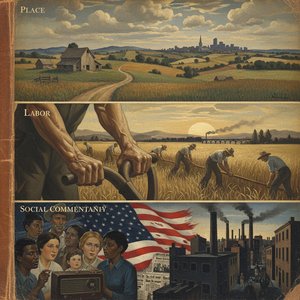
American Regionalism: A Crucible of Identity – Exploring Themes of Place, Labor & Social Commentary
Explore American Regionalism's powerful depiction of the American heartland during the Great Depression. Discover Grant Wood, Thomas Hart Benton & more. Expert analysis & high-quality art reproductions at OriginalUniqueArt.
