

 Megtekintés
 Küldés
 Megosztás
 Részletek

 Letöltés
 Hasonló darabok
 X-ray felvétel
 Diavetítés
 Statisztika
Klosterstrasse
 Oil On Canvas
- WallArt
- Romantic Urbanism
 1830
1830- 19th Century
 32.0 x 44.0 cm
 Nemzeti Galéria
 Összes részlet megjelenítése
Giclée / Műnyomat
Múzeumi minőségű giclée vagy vászonnyomat, gyors gyártással és rugalmas finomítási lehetőségekkel. ( Kézzel festett másolat rendelése Áttérés digitális képre)




P118B $10

P118H $10

P118W $10

P438Z $10

P508JH $12

P508YH $12

P805H $10

P805Z $10

P919BZ $10

P919G $10

P919XJ $10

P959ZH $10

P968JZ $12

W106C $8

W218G $10

W218JH $8

W218Y $10

W307PJ $10

W316G $10

W316PJ $8

W316Y $10

W398PJ $8

W4111J $10

W500HY $15

W500JH $15

W692G $12

W849H $8

W940BG $15

W953PJ $8




Válasszon előre meghatározott méreteink közül, amelyek megfelelnek a műalkotás eredeti arányainak.

Megadhat saját méreteket is egy konkrét kerethez vagy helyszínhez igazítva. Amennyiben a kiválasztott méret nem egyezik az eredeti kép arányokkal, a műalkotást le fogjuk vágni, vagy kiegészítjük a képet tükrözött vagy egyszínű szélekkel. A gyártás megkezdése előtt egy digitális tervezetet küldünk jóváhagyásra.
Kérjük, vegye figyelembe, hogy a képernyőn látható előnézet nem tükrözi a tényleges levágást vagy kiegészítést. Csak a tervezet mutatja pontosan a végső kompozíciót.
Bár az egyedi méretek is elérhetőek, az eredeti arányok megőrzése érdekében azt javasoljuk, hogy válasszon a előre meghatározott listából származó méretet.
Világszerte történő kiszállítás területére mindössze 2 hét alatt, a szokásos 4-5 hét helyett. (11 szeptember)

Ingyenes globális expressz szállítás

Prémium minőségű len vászon

Teljes körű szállítási biztosítás

Vámvisszatérítési Garancia

Hiteles színpontosság garancia

100 napos visszaküldési lehetőség (csak hibás termékek esetén)

100% pénzvisszatérítési garancia

Több darab vásárlása esetén kedvezmény
 Az üvegkeretes opció csak 110 cm alatti méretben érhető el

Klosterstrasse
Giclée / Műnyomat
Reprodukció mérete
-


Összesített ár
$ 80
A Window Into Prussian Life: Johann Philipp Eduard Gaertner’s Klosterstrasse
The painting Klosterstrasse by Johann Philipp Eduard Gaertner stands as a testament to the meticulous observation of urban landscapes that characterized the Biedermeier era—a period marked by quiet introspection and an appreciation for the tangible beauty of everyday life in Prussia. Created in 1830, this oil on canvas masterpiece measuring 32 x 44 cm resides within the Nationalgalerie in Berlin, offering visitors a rare glimpse into a pivotal moment in German artistic history. As an art expert specializing in historical reproductions at OriginalUniqueArt.com, I can confidently assert that Klosterstrasse transcends mere depiction; it embodies a profound understanding of its time and place.- Subject Matter: Gaertner’s focus isn't on grand narratives or heroic figures but rather on the commonplace—a busy Berlin street scene bathed in diffused light. The composition skillfully captures the dynamism of urban activity, presenting pedestrians navigating cobblestone streets amidst towering buildings adorned with ornate facades. Notably, a prominent church steeple punctuates the skyline, symbolizing faith and civic pride – elements deeply ingrained within Prussian society at the time.
- Style & Technique: Gaertner’s approach aligns perfectly with Biedermeier aesthetics—characterized by realism tempered with subtle tonal harmonies. He employs meticulous brushwork to render textures convincingly, capturing the weathered stone of buildings and the folds of clothing with remarkable accuracy. The subdued lighting contributes significantly to the painting's atmosphere, casting shadows that deepen the sense of depth and creating a contemplative mood.
- Historical Context: Klosterstrasse emerged during a period of significant social and political transformation in Prussia—the aftermath of Napoleon’s defeat and the burgeoning industrial revolution. Gaertner’s depiction reflects the anxieties and aspirations of his contemporaries, capturing both the grandeur of Prussian architecture and the everyday realities of urban life. It serves as invaluable documentation for historians studying the visual culture of 1830s Berlin.
- Symbolism: Beyond its realistic portrayal, Klosterstrasse carries symbolic weight. The church steeple represents spiritual solace amidst the bustle of the city—a common motif in Biedermeier art reflecting a desire for moral grounding and stability. Furthermore, the architectural details convey Prussia’s ambition to modernize while preserving its heritage.
- Emotional Impact: Viewing Klosterstrasse evokes a feeling of quiet contemplation—drawing the viewer into a scene frozen in time. The artist's masterful use of light and color creates an immersive experience that transports us back to 19th-century Berlin, prompting reflection on themes of urban life, faith, and artistic precision.
A művész életrajza
A Chronicler of Prussian Grandeur: The Life and Art of Johann Philipp Eduard Gaertner
Johann Philipp Eduard Gaertner, born in Berlin in 1801, occupies a unique and remarkably significant niche within the history of 19th-century German painting. He wasn’t driven by the grand narratives often associated with historical painters or the romanticized landscapes favored by many of his contemporaries. Instead, Gaertner dedicated his artistic life to an almost architectural precision—a profound affection for the evolving cityscape of Prussia, meticulously documenting its palaces, streets, and public spaces through incredibly detailed depictions. His name might not immediately resonate with the same level of recognition as figures like Caspar David Friedrich or Philipp Otto Runge, yet Gaertner’s work offers invaluable visual documentation of a pivotal era—a bridge between the Biedermeier aesthetic and the nascent modern world. His journey began modestly enough; after an early relocation to Kassel with his mother in 1806, where he received initial drawing instruction, Gaertner returned to Berlin in 1813 and embarked on a six-year apprenticeship at the Royal Porcelain Factory. While this provided foundational skills in decorative arts, he found its constraints stifling, supplementing them with formal studies at the prestigious Academy of Arts. This early experience instilled within him an unparalleled attention to detail—a characteristic that would become instantly recognizable as a hallmark of his mature style and define his lasting legacy.From Decorative Painter to Vedutist: A Parisian Awakening
Gaertner’s artistic trajectory took a decisive turn in 1821 when he secured a position as a decorative painter within the studios of Carl Wilhelm Gropius, the royal court theater painter. This role proved unexpectedly transformative; it allowed him not only to hone his technical skills but also to observe firsthand the interplay of light and shadow—essential elements for any aspiring architectural painter. Crucially, it exposed him to the vibrant artistic scene of Paris, a city then considered the epicenter of European art. A pivotal moment arrived with the sale of a portrait of King Friedrich Wilhelm III to the royal family, providing Gaertner with the financial means to undertake a truly transformative study trip to France. This sojourn proved absolutely crucial in shaping his artistic vision and establishing his future direction. Immersed in the Parisian art world, he was utterly captivated by the magnificent vistas of medieval buildings—the weathered facades, intricate details, and imposing scale of structures that had stood for centuries. He found himself particularly drawn to the *vedute* tradition—a genre of landscape painting that flourished in France during the 18th century, characterized by its meticulous depiction of urban architecture. Artists like Claude Joseph Vernet and Jean-Baptiste Rode were masters of capturing the essence of cities through detailed renderings, and Gaertner eagerly absorbed their techniques, learning to manipulate light, atmosphere, and perspective with remarkable skill. Upon his return to Berlin in 1828, Gaertner immediately dedicated himself primarily to painting these evocative urban scenes—establishing himself as a freelance artist and beginning a family.Documenting a Changing Berlin: Patronage and Panoramic Visions
The following decade witnessed Gaertner diligently documenting the Biedermeier-style buildings of Berlin, catering to the tastes of wealthy patrons and, most significantly, the royal court. He produced a series of stunning depictions of castles in Bellevue, Charlottenburg, and Glienicke—each rendered with an almost obsessive attention to detail. In 1833, his dedication was formally recognized when he was admitted to the Academy as a “Perspective Painter,” a testament to his growing reputation within the artistic community. However, it was the commission for a monumental six-panel panorama of Berlin in 1834 that truly cemented his place in art history. This ambitious project—painted from the rooftop of the Friedrichswerder Church, a strategically chosen location offering unparalleled panoramic views of the city—became an instant sensation and secured Gaertner’s lasting fame. Both King Friedrich Wilhelm III and his daughter, Tsarina Alexandra Feodorovna, acquired versions of this panorama, demonstrating the immense prestige and demand for Gaertner's work. It is believed that he utilized a camera obscura – a device projecting an image of the outside world onto a surface – to aid in accurately sketching the layouts and perspectives of his paintings, a testament to his commitment to precision and detail. This period represents the zenith of his career, fueled by royal patronage and a growing appreciation for his ability to capture not just the physical structures but also the very *spirit* of Berlin.Shifting Fortunes and Enduring Legacy
The death of King Friedrich Wilhelm III in 1840 marked a significant turning point in Gaertner’s career. His successor, Friedrich Wilhelm IV, favored Italianate landscapes over Gaertner's architectural depictions—a shift in artistic taste that led to a decline in royal commissions and financial difficulties for the artist. Rather than succumb to despair, Gaertner adapted by focusing on illustrating historical sites and monuments throughout Prussia. He embarked on extensive travels, meticulously documenting castles, churches, and other significant landmarks through watercolor sketches – both scenic views intended for sale and detailed inventories of Prussian heritage. While this provided a modest source of income from the growing middle class, it couldn’t fully replace the lost patronage of the royal court. His artistic focus gradually shifted towards more romantic scenes featuring steep cliffs, gypsies, ruins, and oak trees—though these later works are generally considered less successful than his earlier architectural paintings. As photography emerged as a rival medium in the latter half of the 19th century, Gaertner sought respite from Berlin’s bustling atmosphere, settling in Flecken Zechlin near Rheinsberg in 1870, where he died in 1877. Despite this relative obscurity during his lifetime, Gaertner's work was rediscovered at the “Deutschen Jahrhundert-Ausstellung” (German Century Exhibition) of 1906, followed by major exhibitions in 1968, 1977, and 2001—events that have dramatically increased appreciation for his detailed depictions of Prussian architecture and urban landscapes. His legacy lies not just in the beauty of his paintings but also in their historical significance as invaluable records of a transforming era—offering a unique and intimate glimpse into the heart of 19th-century Prussia through the discerning eye of a dedicated and meticulous artist.Influences and Techniques
- Medieval Architecture: Gaertner’s fascination with medieval buildings, particularly those encountered during his time in Paris, profoundly influenced his artistic direction.
- Parisian Vedute Painting: The tradition of detailed cityscapes, exemplified by French *vedutisti*, provided a crucial framework for his approach to architectural representation.
- Camera Obscura: It is believed Gaertner utilized this device to aid in accurately sketching the layouts and perspectives of his paintings.
- Meticulous Detail: His training at the Royal Porcelain Factory instilled a commitment to precision and accuracy that permeated his work.
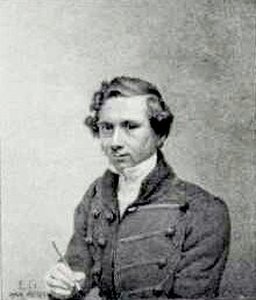
Johann Philipp Eduard Gaertner
1801 - 1877 , Németország
A művészről röviden
- Artistic Movement Or Style: Biedermeier, Vedute
- Artists Who Influenced This Artist:
- Középkori építészet
- Párizsi vedútészit
- Date Of Birth: 1801 június 2.
- Date Of Death: 1877 február 22.
- Full Name: Johann Philipp Eduard Gaertner
- Nationality: Német
- Notable Artworks:
- A Neue Wache épülete Berlin
- Klosterstrasse
- Belvedere táj Görögországban
- Place Of Birth: Berlin, Németország
Kapcsolódó cikkek

Oil on Canvas: A Historical & Technical Exploration of a Timeless Artistic Medium
Explore the rich history & enduring techniques of oil painting on canvas. Discover the science behind its longevity, conservation practices, and contemporary relevance. Expert insights for art enthusiasts.

The Enduring Legacy of Oil on Canvas: Technique, History & Aesthetic Impact
Explore the rich history & techniques of oil painting – from Renaissance masters to Impressionism. Discover pigments, layering methods, and why this timeless medium endures. Expert insights for artists & art enthusiasts.

Az olajfestészet örökös hagyatéka: technika, történelem és kortárs gyakorlat
Fedezze fel az olajfestészet történetét, technikáit és a kortárs művészeti trendeket! Szakértői útmutatók, híres festők alkotásai és tippek az olajfestmény ápolásához. Inspirálódjon most!
The Soul of Impressionism: Why Oil on Canvas Captures Eternal Light and Timeless Emotion
Discover the enchanting alchemy of Impressionism. Explore how the mastery of oil on canvas, through glazing and impasto, captures eternal light and emotion. Perfect for lovers of Monet and Van Gogh seeking the profound depth of hand-painted fine art.
A művészettörténet 10 ikonikus olajfestménye – OriginalUniqueArt.com
Fedezze fel a művészettörténet 10 legikonikusabb olajfestményét! Leonardo, Van Gogh, Rembrandt és más mesterek remekművei – történetükkel, technikájukkal. Vászonképek otthonába a OriginalUniqueArt.com-on! Fedezze fel a teljes gyűjteményt online.