

 Megtekintés
 Küldés
 Megosztás
 Részletek
 Útmutató

 Letöltés
 Hasonló darabok
 X-ray felvétel
 Diavetítés
 Q&A
Q&A Statisztika
Alpine Landscape
 Oil On Canvas
- WallArt
- Romanticism
 1821
1821 110.0 x 148.0 cm
 Germanisches Nationalmuseum
 Összes részlet megjelenítése
Giclée / Műnyomat
Múzeumi minőségű giclée vagy vászonnyomat, gyors gyártással és rugalmas finomítási lehetőségekkel. ( Kézzel festett másolat rendelése Áttérés digitális képre)




P118B Ft10

P118H Ft10

P118W Ft10

P438Z Ft10

P508JH Ft12

P508YH Ft12

P805H Ft10

P805Z Ft10

P919BZ Ft10

P919G Ft10

P919XJ Ft10

P959ZH Ft10

P968JZ Ft12

W106C Ft8

W218G Ft10

W218JH Ft8

W218Y Ft10

W307PJ Ft10

W316G Ft10

W316PJ Ft8

W316Y Ft10

W398PJ Ft8

W4111J Ft10

W500HY Ft15

W500JH Ft15

W692G Ft12

W849H Ft8

W940BG Ft15

W953PJ Ft8




Válasszon előre meghatározott méreteink közül, amelyek megfelelnek a műalkotás eredeti arányainak.

Írja be a keretének vagy a falának megfelelő szélességet és magasságot. A nyomatot csak le lehet vágni, soha nem tehető nagyobbá, mint az eredeti kép, így egy eltérő alakú méretnél a kép egy része elveszik. Mielőtt bármit kinyatintanánk, küldünk egy digitális próbamodellt jóváhagyásra. Az oldalon látható kép nem tartalmazza a valós levágást — ezt csak a próbamodell mutatja meg.
Világszerte történő kiszállítás területére mindössze 2 hét alatt, a szokásos 4-5 hét helyett. (31 október)

Ingyenes globális expressz szállítás

Prémium minőségű len vászon

Teljes körű szállítási biztosítás

Vámvisszatérítési Garancia

Hiteles színarányosság garancia

100 napos visszaküldési lehetőség (csak hibás termékek esetén)

100% pénzvisszatérítési garancia

Több darab vásárlásakor kedvezmény
 Az üvegkeretes opció csak 110 cm alatti méretben érhető el

Alpine Landscape
Giclée / Műnyomat
Reprodukció mérete
-


Összesített ár
Ft 26157
A Vision of the Norwegian Wilderness: Exploring Johan Christian Dahl’s “Alpine Landscape”
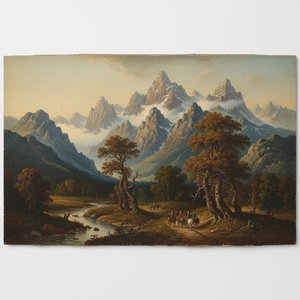
Johan Christian Dahl's "Alpine Landscape," painted in 1821, isn’t merely a depiction of a mountain scene; it’s a profound meditation on nature’s power and humanity’s place within its vastness. This seminal work, deeply rooted in the Romantic movement, transcends simple landscape painting to become a powerful expression of emotion and a testament to Dahl's mastery of capturing the spirit of Norway. The painting immediately draws the viewer into a dramatic vista – a towering mountain range dominates the upper portion of the canvas, their jagged peaks piercing an overcast sky, while a verdant valley unfolds below, threaded by a rushing stream that snakes its way towards a diminutive cabin nestled amongst the trees. The scene is imbued with a palpable sense of both beauty and foreboding, reflecting the Romantic fascination with the sublime – that feeling of awe and terror inspired by the grandeur of nature.
Romanticism’s Embrace: Style and Technique
Dahl's style firmly aligns with the tenets of Romanticism, prioritizing emotional response over strict realism. He eschews precise detail in favor of capturing the *feeling* of the landscape – its wildness, its solitude, and its inherent drama. The painting’s composition is carefully orchestrated to emphasize this effect; the horizontal expanse of the valley grounds the viewer while the towering mountains create a sense of depth and scale. Dahl's technique is equally crucial to the work’s impact. He employs a textured brushstroke – visible impasto, particularly in the depiction of foliage and rocky surfaces – that lends a remarkable physicality to the scene. The paint itself seems to shimmer with light and shadow, conveying not just the appearance of the landscape but also its very essence. The use of cool blues and greens dominates the palette, creating a sense of atmospheric depth and reflecting the often-dramatic weather conditions characteristic of the Norwegian mountains. Contrasting these cool tones are warm browns and ochres used to depict the rocks and trees, adding warmth and grounding the composition.
Symbolism in the Landscape: Humanity’s Smallness
Beyond its purely aesthetic qualities, “Alpine Landscape” is rich in symbolic meaning. The small cabin nestled within the valley represents humanity's presence within this immense natural world – a tiny speck against the backdrop of towering mountains and endless skies. The rushing stream symbolizes the relentless flow of time and the interconnectedness of all things. The overcast sky, with its dramatic clouds, hints at both beauty and potential danger, mirroring the Romantic fascination with the unpredictable forces of nature. The figures in the lower left corner – a small group of people – further emphasize this theme, suggesting humanity’s vulnerability and our dependence on the natural world. Dahl's choice to include these figures subtly reminds us of our own insignificance within the grand scheme of things, prompting contemplation about our relationship with the environment.
A Legacy Forged in Norway: Historical Context
Johan Christian Dahl’s work emerged during a pivotal period in Norwegian history – a time of burgeoning national identity and artistic awakening. Following centuries of Danish rule, Norway had recently gained its independence, and there was a fervent desire to establish a distinct Norwegian cultural heritage. Dahl played a crucial role in this process, becoming the first truly celebrated Norwegian landscape painter and establishing a new standard for artistic expression. His paintings were not merely beautiful images; they were imbued with a deep sense of national pride and a celebration of Norway’s unique natural beauty. The painting's creation coincided with the rise of Romanticism across Europe, but Dahl adapted this movement to reflect the specific landscapes and cultural values of his homeland. He was deeply influenced by artists like Caspar David Friedrich, whose emphasis on the sublime and the spiritual resonated strongly with Dahl’s own artistic vision. The work is a testament to Dahl's skill as an artist and his contribution to the development of Norwegian art.
Additional Research: Explore ‘Alpine Landscape’ by Johan Christian Dahl (1821) at OriginalUniqueArt. Discover more about the artist at OriginalUniqueArt and read articles on his legacy at OriginalUniqueArt. You can also view the painting’s original image at Wikimedia Commons.
Kérdések és válaszok
Milyen elhelyezés illik „Alpine Landscape”, Jóhán Kristóf Dávid alkotása formátumához?
A „Alpine Landscape”, Jóhán Kristóf Dávid alkotása Landscape formátumú alkotása egy Living Room számára ajánlott. A formátum és a tér együtt segítik a reprodukció elhelyezését.
Általánosságban inkább világos vagy sötét a "Alpine Landscape"?
A "Alpine Landscape" alkotás fényerisége összességében balanced, luminanciája pedig Soft Shadow.
Milyen formájú és méretű „Alpine Landscape”, Jóhán Kristóf Dávid alkotása?
A „Alpine Landscape”, Jóhán Kristóf Dávid alkotása egy 110 x 148 cm méretű, Landscape formátumú alkotás.
A művész életrajza
Johan Christian Clausen Dahl: A Norvég Romantizmus Megalapítója
Johan Christian Clausen Dahl, akit J.C. Dahlként is ismerünk, 1788. február 24-én született Bergenben, Norvégiában, és 1857. október 14-én halt meg Drezdában, Németországban. Életútja a norvég tájképfestészet forradalmának története, egy olyan művészé, aki nem csupán festett képeket, hanem formált egy egész nemzet művészi identitását. Dahl származása során sokgyermekes család elsőszülöttjeként nőtt fel, és már korán megmutatta tehetségét a dekorációs festészetben. Bergenben elsajátította az alapokat, majd támogatói gyűjtésének köszönhetően tanulmányokba mehetett Koppenhágában, Carl Adolf Lorentzen, Nicolaj Dajon és Georg Haas irányításával. Ez a korai szakasz meghatározta művészeti pályáját, megalapozva későbbi romantikus stílusát.A Romantizmus Ébredése: Dahl Művészi Fejlődése
Dahl művészetének fejlődése szorosan összefüggött a korabeli német romantizmussal, különösen Caspar David Friedrich hatásával. A természet mélyreható tanulmányozása és a nagyszabású természeti jelenségek iránti vonzódása vezette el őt ahhoz, hogy realista alapokon építse fel saját egyéni stílusát. Nápolyban Franz Ludwig Catellel együtt festett, ami betekintést nyújtott az olasz reneszánsz művészetébe és a dél-európai tájak varázsába. Rómában Bertel Thorvaldsen köréhez csatlakozva szerves része lett a korabeli művészeti életnek. Az utazások során, különösen Norvégiában tett látogatásain, Dahl nem csupán tájképeket festett, hanem a norvég faépítészet mesterműveit is megörökítette, ezzel hozzájárulva a nemzeti identitás erősítéséhez. A művész egyre inkább elkötelezte magát a norvég tájak ábrázolása mellett, és ezáltal vált az első nemzetközi hírű norvég festővé, aki a romantikus stílus úttörőjeként emelkedett ki.A Norvég Tájképfestészet Alapítója: Munkásságának Jellemzői
Dahl munkáiban a technikai virtuozitás és az érzelmi mélység találkozik. A „Winter Landscape near Vordingborg, Denmark” című festménye tökéletes példa arra, hogyan képes volt megragadni a téli táj lényegét, a fény és árnyék játékát, a hó finom részleteit. Az „Harnham Church, near Salisbury” című alkotása pedig azt mutatja meg, hogy milyen mesterien tudott egyensúlyt teremteni a természetes fények és a színek között, ezzel tökéletesen visszaadva a romantikus művészet érzékenységét. Dahl nem csupán tájakat festett; ő éltette meg őket vászonra, átélve a nézővel a természeti szépség varázsát. A norvég táj iránti szeretetét és tiszteletét minden egyes ecsetvonásban kifejezte, ezzel hozzájárulva ahhoz, hogy Norvégia tájai a művészetben is elismert helyet kapjanak.Örökség és Kulturális Hatása: A Nasjonalgalleriet Alapítása
Johan Christian Dahl nem csupán egy kiváló festő volt; ő egy intézményalapító, a norvég művészeti élet meghatározó alakja. Jelentős szerepet játszott a Nasjonalgalleriet (Nemzeti Galéria) alapításában Osloban, ami ma is Norvégia egyik legjelentősebb művészeti intézménye. Ez az intézmény nem csupán norvég és nemzetközi műalkotásokat őriz meg, hanem aktívan támogatja a művészet népszerűsítését és fejlesztését. Dahl munkássága generációk számára szolgált inspirációnak, és hozzájárult ahhoz, hogy Norvégia a 19. században a romantikus festészet egyik fontos központjává váljon. A mai napig emlékeznek rá mint a norvég tájképfestészet alapítójára, akinek öröksége tovább él a művészetben és a kultúrában egyaránt.
Jóhán Kristóf Dávid
1788 - 1857 , Norvégia
Rövid információk
- Elhalálozás Dátuma: 1857. október 14.
- Jelentős Művek:
- Téli táj Vordingborg közelében
- Harnham temploma, Salisbury közelében
- Kiöszkölt Művészek/Mozgások: ['Knud Baade']
- Mely Művészek Befolyásolták:
- John Constable
- Caspar David Friedrich
- Művészeti Irányzat: Romantizmus
- Nemzetiség: Norvég
- Születési Dátum: 1788. február 24.
- Születési Hely: Bergen, Norvégia
- Teljes Név: Johan Christian Claussen Dahl
Kapcsolódó cikkek

Evocations of Place: A Historical Journey Through Landscape Art
Explore the rich history of landscape art with OriginalUniqueArt. Discover renowned artists, movements like Impressionism & Romanticism, and expert guidance for collecting timeless pieces. Find your perfect serene escape today!
Majestic Peaks on Canvas: A Historical & Artistic Exploration of Mountains in Fine Art
Explore the history of mountain painting! Discover Romantic masterpieces & key artists like Dahl & Calame. Learn about the Sublime & Picturesque aesthetics and find your perfect artwork at OriginalUniqueArt.

Evoking Nature's Sublime: A Comprehensive Exploration of 19th-Century Landscape Painting
Explore the captivating world of 19th-century landscape painting! Discover renowned artists like Friedrich & Monet, key movements, and find the perfect artwork to bring nature's serenity into your home. Expert insights at OriginalUniqueArt.

A Romantikus Tájképfestészet 10 Legikonikusabb Műalkotása – OriginalUniqueArt.com
Fedezze fel a romantikus tájképfestészet 10 legikonikusabb műalkotását! Caspar David Friedrich, J.M.W. Turner és más mesterek festményeinek története – inspiráló olajfestmények otthonába. OriginalUniqueArt.com: múzeumi minőségű reprodukciók és egyedi dekorációk online.

Johan Christian Dahl: Pioneering Norwegian Romantic Landscape Painting
Explore the life & art of Johan Christian Dahl, Norway's first great Romantic painter. Discover his iconic landscapes, cultural impact, and lasting legacy with OriginalUniqueArt.

.jpg)