
 Megtekintés
 Küldés
 Megosztás
 Részletek
 Útmutató

 Letöltés
 Hasonló darabok
 X-ray felvétel
 Diavetítés
 Kérdések és válaszok
 Statisztika
Windmill near Delft


 Összes részlet megjelenítése
Giclée / Műnyomat
Múzeumi minőségű giclée vagy vászonnyomat, gyors gyártással és rugalmas finomítási lehetőségekkel. ( Kézzel festett másolat rendelése Áttérés digitális képre)




P118B Ft10

P118H Ft10

P118W Ft10

P438Z Ft10

P508JH Ft12

P508YH Ft12

P805H Ft10

P805Z Ft10

P919BZ Ft10

P919G Ft10

P919XJ Ft10

P959ZH Ft10

P968JZ Ft12

W106C Ft8

W218G Ft10

W218JH Ft8

W218Y Ft10

W307PJ Ft10

W316G Ft10

W316PJ Ft8

W316Y Ft10

W398PJ Ft8

W4111J Ft10

W500HY Ft15

W500JH Ft15

W692G Ft12

W849H Ft8

W940BG Ft15

W953PJ Ft8




Válasszon előre meghatározott méreteink közül, amelyek megfelelnek a műalkotás eredeti arányainak.

Írja be a keretének vagy a falának megfelelő szélességet és magasságot. A nyomatot csak le lehet vágni, soha nem tehető nagyobbá, mint az eredeti kép, így egy eltérő alakú méretnél a kép egy része elveszik. Mielőtt bármit kinyatintanánk, küldünk egy digitális próbamodellt jóváhagyásra. Az oldalon látható kép nem tartalmazza a valós levágást — ezt csak a próbamodell mutatja meg.
Világszerte történő kiszállítás területére mindössze 2 hét alatt, a szokásos 4-5 hét helyett. (8 november)

Ingyenes globális expressz szállítás

Prémium minőségű len vászon

Teljes körű szállítási biztosítás

Vámvisszatérítési Garancia

Hiteles színarányosság garancia

100 napos visszaküldési lehetőség (csak hibás termékek esetén)

100% pénzvisszatérítési garancia

Több darab vásárlásakor kedvezmény
 Az üvegkeretes opció csak 110 cm alatti méretben érhető el

Windmill near Delft
Giclée / Műnyomat
Reprodukció mérete
-


Összesített ár
Ft 26396
A Symphony of Light and Sky: The Essence of Windmill near Delft
In the quiet, sun-drenched landscapes of the Netherlands, certain moments possess a timeless quality that transcends the mere passage of years. Johan Barthold Jongkind’s 1857 masterpiece, Windmill near Delft, captures such a moment with unparalleled grace. This is not simply a landscape painting; it is a profound meditation on the ephemeral nature of light and the enduring spirit of the Dutch countryside. As the eye wanders across the canvas, one is immediately struck by the brilliant azure sky, where fluffy white clouds drift lazently, casting soft shadows upon the earth below. The composition is anchored by a solitary windmill, positioned with a deliberate, off-center elegance that guides the viewer’s gaze through a tranquil scene of rural life.
The painting serves as a vital bridge between the structured traditions of Dutch Romanticism and the burgeoning revolution of Impressionism. While the subject matter—a quintessential Dutch vista featuring a winding canal and figures engaged in daily rhythms—honors the heritage of masters like Vermeer, Jongkind’s technique whispers of a new era. He moves away from the rigid, meticulous outlines of his predecessors, opting instead for a loose, expressive brushwork that prioritizes atmosphere over anatomical precision. This approach allows the light to appear almost tactile, as if the viewer could feel the warmth of the sun filtering through an overcast afternoon. For the discerning collector or interior designer, this piece offers a sense of movement and vitality, making it a breathtaking focal point for any space seeking a touch of classical serenity paired with modern energy.
Technique and the Impressionistic Dawn
To study Windmill near Delft is to witness the early tremors of the Impressionist movement. Jongkind, a close contemporary and friend to Claude Monet and Eugène Boudin, utilized a palette that was both vibrant and harmoniously muted. His technique involves a sophisticated layering of oil paints to build depth and luminosity, creating a surface where colors bleed into one another with soft, feathered edges. The canal in the foreground acts as a mirror, reflecting the expansive heavens above and pulling the viewer deeper into the perspective of the landscape. This use of horizontal lines emphasizes the vastness of the Dutch horizon, instilling a sense of peace and boundless space.
The emotional resonance of the work lies in its ability to evoke nostalgia without descending into sentimentality. The scattered figures—women tending to flowers by the water’s edge and a man navigating a small boat—are not mere decorations; they are symbols of the quiet, industrious pulse of community life. There is a rhythmic quality to the composition, where the geometric strength of the windmill meets the organic, flowing shapes of the foliage and water. For those looking to adorn a home or gallery, this reproduction offers more than just aesthetic beauty; it provides an invitation to slow down and appreciate the fleeting, beautiful textures of the natural world.
Kérdések és válaszok
Milyen anyagból készült a "Windmill near Delft"?
Jongkind János a Oil On Canvas technikát alkalmazta a "Windmill near Delft" alkotáshoz. A technika határozza meg az eredeti mű anyagösszetételt.
Windmill near Delft színei erőteljesnek vagy lágynak tűnnek?
A „Windmill near Delft”, Jongkind János alkotása Balanced szín intenzitással rendelkezik.
Milyen orientációjú a „Windmill near Delft”, Jongkind János alkotása?
A „Windmill near Delft”, Jongkind János alkotása egy Portrait kompozíció. A nyomtatási méret kiválasztása előtt érdemes ellenőrizni az arányokat.
A művész életrajza
A Forerunner of Light: The Life and Art of Johan Barthold Jongkind
Johan Barthold Jongkind, a name perhaps less immediately recognizable than those of Monet or Renoir, occupies a pivotal position in the story of Impressionism. Born on June 3, 1819, in Lattrop, a small town in the Netherlands, Jongkind’s artistic journey was one marked by both profound talent and personal struggle. His early life unfolded amidst the tranquil landscapes of Overijssel province, a region that would deeply inform his lifelong fascination with water, light, and atmosphere. Though initially employed as a clerk, his inherent artistic inclinations led him to The Hague in 1837, where he began formal training under Andreas Schelfhout, a respected landscape painter steeped in the Dutch tradition. This foundation proved crucial, instilling in Jongkind a meticulous observation of nature and a mastery of technique that would later be infused with a distinctly modern sensibility. It was a period of learning the fundamentals, but also one of burgeoning ambition, prompting him to seek further artistic development in the vibrant heart of Paris.Parisian Encounters and Artistic Development
The move to Paris in 1846 proved transformative. Jongkind entered the studios of Eugène Isabey and François-Édouard Picot, immersing himself in the French art scene. He quickly gained recognition, exhibiting at the Salon as early as 1848, earning praise from influential critics like Charles Baudelaire and Émile Zola. These were years of promise, yet shadowed by a growing internal turmoil. Jongkind battled with bouts of depression and alcoholism, challenges that would intermittently disrupt his career and personal life. Despite these struggles, he continued to paint prolifically, focusing on scenes of the Seine River, the bustling Parisian streets, and the atmospheric nuances of the surrounding countryside. His work during this period reveals a unique blend of Dutch realism and emerging French Romanticism, characterized by vigorous brushwork and a keen sensitivity to light effects. He wasn’t merely depicting landscapes; he was capturing their fleeting moods, their ephemeral beauty. This ability to convey atmosphere would become his signature style and a key influence on the artists who followed. His early works often featured dramatic skies and reflections, hinting at the emotional depth that would later define his oeuvre.A Mentor to Monet: The Seeds of Impressionism
Jongkind's return to the Netherlands in 1855 was temporary. He eventually settled back in Paris in 1861, where his artistic path intersected with that of a young Claude Monet. This encounter proved profoundly significant for both artists. Jongkind became a mentor to Monet, sharing his knowledge of *plein air* painting – working outdoors directly from nature – and encouraging him to embrace a more spontaneous and expressive approach. Monet himself credited Jongkind with providing the “definitive education” of his eye, recognizing in the older artist’s work a freedom and sensitivity that resonated deeply with his own artistic aspirations. Jongkind's influence can be seen in Monet’s early landscapes, particularly those depicting scenes along the Seine, where the emphasis on light, atmosphere, and fleeting impressions is strikingly similar. He wasn’t simply teaching technique; he was imparting a philosophy of seeing, a way of capturing the essence of a moment in time. The two artists often painted together, exchanging ideas and techniques, forging a bond that would profoundly shape the course of Impressionist painting.Themes and Style: Reflections on Light and Atmosphere
Jongkind’s paintings are characterized by a remarkable ability to capture the subtle shifts in light and atmosphere. He was particularly drawn to scenes of the Seine River, often depicting it at twilight or dawn, when its waters shimmered with reflected light. His compositions were typically informal and unpretentious, eschewing rigid structures in favor of a more intuitive approach. He frequently employed loose brushwork and vibrant colors to convey the fleeting effects of weather and time. Unlike many of his contemporaries who sought to create idealized representations of nature, Jongkind embraced its imperfections and irregularities, capturing the raw beauty of the natural world with honesty and immediacy. His subjects ranged from bustling cityscapes to tranquil rural scenes, but in each case, he prioritized the depiction of light and atmosphere above all else. His work is often described as “atmospheric,” a term that perfectly captures his ability to evoke mood and emotion through subtle variations in color and tone.Legacy and Lasting Influence
Though Jongkind never fully achieved the widespread fame enjoyed by some of his contemporaries, his contribution to the development of Impressionism is undeniable. His paintings, often characterized by their loose brushwork, dramatic skies, and evocative use of color, paved the way for a new approach to landscape painting. He demonstrated that capturing the subjective experience of light and atmosphere was as important as accurately representing physical reality. His work can be found in prominent museums such as the Van Gogh Museum in Amsterdam and the Musée d'Orsay in Paris, testaments to his enduring artistic merit.- Notable Works: *Moonlight on the Canal*, numerous paintings of the Seine near Notre-Dame Cathedral.
- Influence: A key influence on Claude Monet and a forerunner of Impressionism.
- Final Years: Jongkind passed away on February 9, 1891, in Saint-Égrève, France, leaving behind a legacy that continues to inspire artists and art enthusiasts today.

Jongkind János
1819 - 1891 , Holland
Rövid információk
- Artistic Movement Or Style: Impressionista előfutár
- Artists Or Movements Influenced By This Artist: ['Monet Claude']
- Artists Who Influenced This Artist:
- Isabey Eugène
- Schelfhout Andreas
- Date Of Birth: 1819. 6. 3.
- Date Of Death: 1891. 2. 9.
- Full Name: Johan Barthold Jongkind
- Nationality: Hollandi
- Notable Artworks:
- Holdfény a csatornán
- A Seina tájképek
- Place Of Birth: Lattrop, Holland
Kapcsolódó cikkek

Evocations of Place: A Historical Journey Through Landscape Art
Explore the rich history of landscape art with OriginalUniqueArt. Discover renowned artists, movements like Impressionism & Romanticism, and expert guidance for collecting timeless pieces. Find your perfect serene escape today!

A Romantikus Tájképfestészet 10 Legikonikusabb Műalkotása – OriginalUniqueArt.com
Fedezze fel a romantikus tájképfestészet 10 legikonikusabb műalkotását! Caspar David Friedrich, J.M.W. Turner és más mesterek festményeinek története – inspiráló olajfestmények otthonába. OriginalUniqueArt.com: múzeumi minőségű reprodukciók és egyedi dekorációk online.

Golden Light & Dutch Skies: Bringing the Magic of Dutch Golden Age Landscapes into Your Home
Transform your home with the breathtaking light of Dutch Golden Age landscapes. Discover how hand-painted oil reproductions of masterworks like Ruisdael and Vermeer bring timeless elegance, atmosphere, and soulful texture to modern interiors. Elevate your space with museum-quality art.
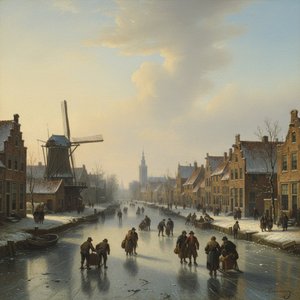
Charles Leickert: Capturing the Dutch Golden Age Light – A Comprehensive Study of Technique, Context, and Legacy
Explore the captivating winter landscapes of Charles Leickert, a master of Dutch Golden Age light & atmosphere. Discover his techniques, symbolism, and lasting legacy – a comprehensive study for art enthusiasts and collectors.

Golden Light & Dutch Skies: The Timeless Magic of Dutch Golden Age Landscapes
Discover the breathtaking beauty of Dutch Golden Age landscapes. Explore the mastery of light, chiaroscuro, and 17th-century realism through an expert art history lens, celebrating the enduring legacy of the Dutch Masters for discerning collectors and art lovers.