
 Megtekintés
 Küldés
 Megosztás
 Részletek
 Útmutató

 Letöltés
 Hasonló darabok
 X-ray felvétel
 Diavetítés
 Statisztika
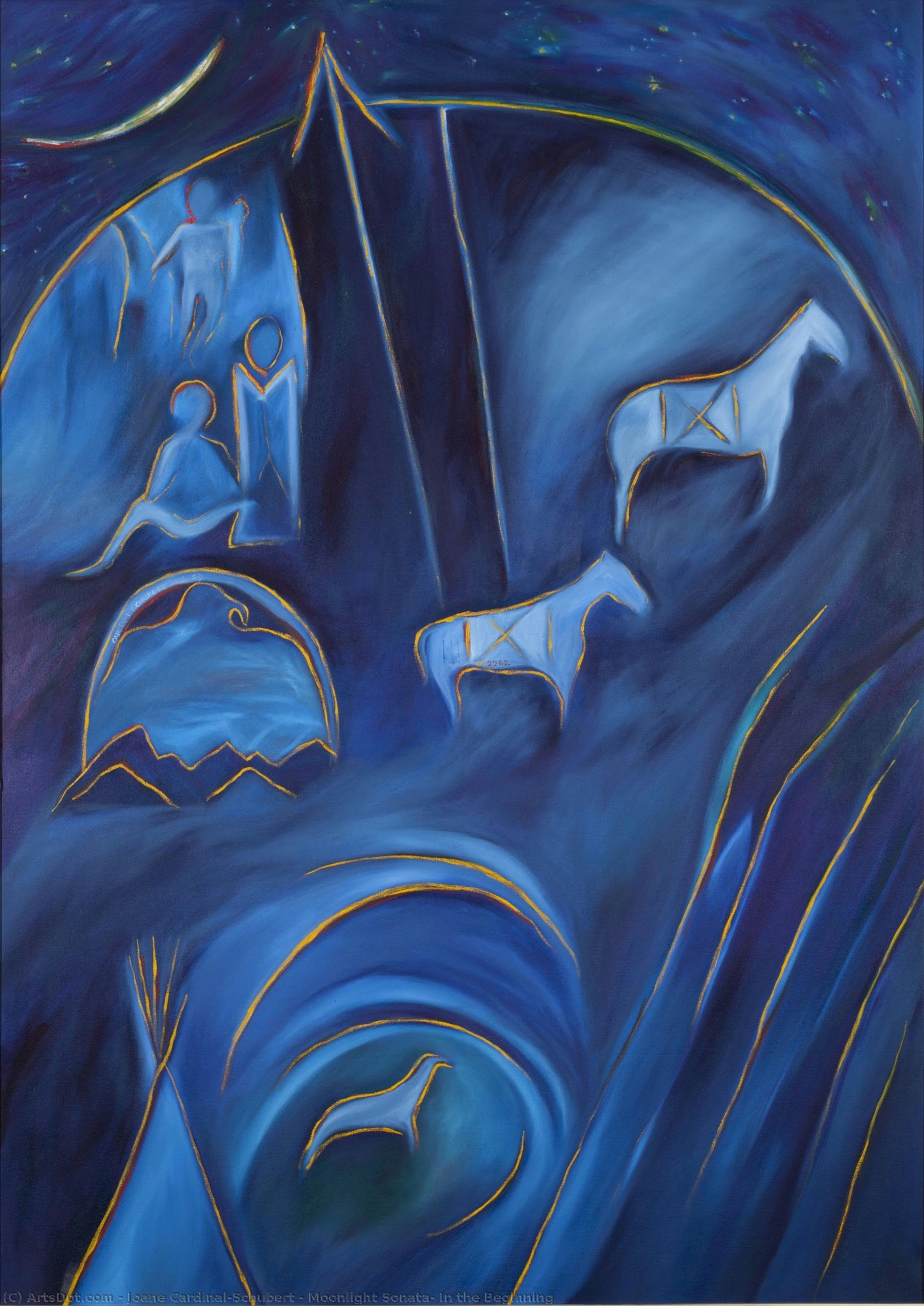
Moonlight Sonata: In the Beginning
 1989
1989 171.0 x 122.0 cm
 Alberta Foundation for the Arts
 Összes részlet megjelenítése
Az ezen az oldalon megjelenített műalkotások szerzői jogi védelem alatt állnak, ami azt jelenti, hogy törvényileg nem készíthetünk és nem adhatunk el belőlük pontos másolatokat. Ez a védelem olyan nemzetközi megállapodások alapján érvényesül, mint például a Berni Egyezmény és a nemzeti jogszabályok által, beleértve azokat is, amelyeket meghatározott Az USA szerzői jogi törvénye – 17. cím.
Ez a módszer teljes mértékben megfelel a szerzői jogi szabályozásnak, mivel nem tartalmazza a védett műalkotás másolását vagy duplikálását. Ehelyett ez egy kreatív újinterpretáció – egy új festmény, amely az eredetivel való összefüggései miatt hatással van rá, de nem az az.
Giclée / Műnyomat
Múzeumi minőségű giclée vagy vászonnyomat, gyors gyártással és rugalmas finomítási lehetőségekkel. ( Kézzel festett másolat rendelése Áttérés digitális képre)




































Válasszon előre meghatározott méreteink közül, amelyek megfelelnek a műalkotás eredeti arányainak.

Írja be a keretének vagy a falának megfelelő szélességet és magasságot. A nyomatot csak le lehet vágni, soha nem tehető nagyobbá, mint az eredeti kép, így egy eltérő alakú méretnél a kép egy része elveszik. Mielőtt bármit kinyatintanánk, küldünk egy digitális próbamodellt jóváhagyásra. Az oldalon látható kép nem tartalmazza a valós levágást — ezt csak a próbamodell mutatja meg.
Világszerte történő kiszállítás területére mindössze 2 hét alatt, a szokásos 4-5 hét helyett. (26 október)

Ingyenes globális expressz szállítás

Prémium minőségű len vászon

Teljes körű szállítási biztosítás

Vámvisszatérítési Garancia

Hiteles színarányosság garancia

100 napos visszaküldési lehetőség (csak hibás termékek esetén)

100% pénzvisszatérítési garancia

Több darab vásárlásakor kedvezmény
 Az üvegkeretes opció csak 110 cm alatti méretben érhető el

Moonlight Sonata: In the Beginning
Giclée / Műnyomat
Reprodukció mérete
-


Összesített ár
Ft 25642
A művész életrajza
A Legacy of Resilience: The Art of Joane Cardinal-Schubert
Joane Cardinal-Schubert (1942–2009) was far more than a painter; she was a profound visual storyteller and a fierce advocate for the Kainai Nation. Born in Canoe Lake, Alberta, her life’s work emerged as a powerful response to the systemic erasures of Indigenous history within the Canadian landscape. Growing up amidst the quiet strength of her heritage, she recognized early on how colonial education systems sought to omit the vibrant traditions, languages, and histories of her people. This void became the catalyst for her artistic mission. Rather than accepting the silence imposed by mainstream narratives, Cardinal-Schubert utilized her canvas as a site of reclamation, transforming personal and collective memory into a monumental act of cultural preservation. Her formal training at the Alberta College of Art + Design provided her with a sophisticated technical foundation in painting, printmaking, and multimedia, yet her true education was rooted in the oral histories and spiritual landscapes of the Kainaiwa people. As her career progressed, her work evolved from traditional representations into complex, multi-layered installations that challenged the viewer to confront the uncomfortable realities of colonialism. She mastered the ability to weave together disparate elements—textiles, sculptural components, and photographic prints—to create immersive environments that breathed life into ancestral spirits and historical truths.Symbolism, Narrative, and the Spirit of the Land
The aesthetic language of Cardinal-Schultbert is deeply evocative, characterized by a rich tapestry of symbolism that bridges the gap between the physical and spiritual realms. Her compositions often feature figures that serve as vessels for resilience, embodying the enduring spirit of her ancestors. These figures do not exist in isolation; they are inextricably linked to landscapes that are imbued with profound spiritual significance. In her work, the land is never merely a backdrop but a living participant in the narrative, reflecting the deep-seated connection between Indigenous identity and the natural world. Through her use of mixed media, she achieved a tactile depth that invited viewers into a sensory experience of history. Her paintings often possess a rhythmic quality, where color and form dance to the cadence of mythic storytelling. By integrating sculptural elements and textiles, she broke the boundaries of the two-dimensional plane, mirroring the way Indigenous culture is lived through movement, craft, and ceremony. This approach allowed her to address themes of sovereignty and identity with a complexity that transcended simple protest, offering instead a nuanced celebration of survival and continuity.Historical Significance and Artistic Achievement
The impact of Joane Cardinal-Schubert extends well beyond the borders of the gallery space. As an artist-activist, she utilized her platform to spark essential dialogues regarding Indigenous sovereignty and the lasting scars of colonial policy. Her work served as a vital bridge, bringing the struggles and triumphs of the Kainai Nation to a global audience and demanding recognition for the truths often suppressed by history books. Her contributions were formally recognized through her induction into the Royal Canadian Academy of Arts, a testament to her standing within the highest echelons of the Canadian art community. Her enduring legacy can be summarized through several key pillars of her contribution to contemporary art:- Cultural Reclamation: She successfully re-centered Kainaiwa history and mythology within the contemporary art discourse, countering colonial erasure.
- Interdisciplinary Innovation: Her mastery of mixed media and installation art expanded the boundaries of Indigenous expression in Canada.
- Artistic Activism: She pioneered a way for fine art to function as a tool for political and social change, addressing themes of sovereignty and justice.
- Spiritual Connection: Her ability to translate the sacred relationship between people and the environment into visual form remains a cornerstone of her oeuvre.

Joane Cardinal-Schubert
1942 - 2009 , Canada
Rövid információk
- Full Name: Joane Cardinal-Schubert
- Nationality: Canadian
- Date Of Birth: 1942
- Date Of Death: 2009
- Place Of Birth: Canoe Lake, Canada
- Notable Artworks:
- Moonlight Sonata: In the Beginning
- I Dream of Horse / Counterpane
- Looking for the Silver Bullet
- Artistic Movement Or Style: Contemporary Indigenous Art