Megtekintés
 Küldés
 Megosztás
 Részletek
 Útmutató

 Letöltés
 Hasonló darabok
 X-ray felvétel
 Diavetítés
 Kérdések és válaszok
 Statisztika
Sèrie Grans rupestres 3


 Összes részlet megjelenítése
Az ezen az oldalon megjelenített műalkotások szerzői jogi védelem alatt állnak, ami azt jelenti, hogy törvényileg nem készíthetünk és nem adhatunk el belőlük pontos másolatokat. Ez a védelem olyan nemzetközi megállapodások alapján érvényesül, mint például a Berni Egyezmény és a nemzeti jogszabályok által, beleértve azokat is, amelyeket meghatározott Az USA szerzői jogi törvénye – 17. cím.
Ez a módszer teljes mértékben megfelel a szerzői jogi szabályozásnak, mivel nem tartalmazza a védett műalkotás másolását vagy duplikálását. Ehelyett ez egy kreatív újinterpretáció – egy új festmény, amely az eredetivel való összefüggései miatt hatással van rá, de nem az az.
Giclée / Műnyomat
Múzeumi minőségű giclée vagy vászonnyomat, gyors gyártással és rugalmas finomítási lehetőségekkel. ( Kézzel festett másolat rendelése Áttérés digitális képre)




P118B Ft10

P118H Ft10

P118W Ft10

P438Z Ft10

P508JH Ft12

P508YH Ft12

P805H Ft10

P805Z Ft10

P919BZ Ft10

P919G Ft10

P919XJ Ft10

P959ZH Ft10

P968JZ Ft12

W106C Ft8

W218G Ft10

W218JH Ft8

W218Y Ft10

W307PJ Ft10

W316G Ft10

W316PJ Ft8

W316Y Ft10

W398PJ Ft8

W4111J Ft10

W500HY Ft15

W500JH Ft15

W692G Ft12

W849H Ft8

W940BG Ft15

W953PJ Ft8




Válasszon előre meghatározott méreteink közül, amelyek megfelelnek a műalkotás eredeti arányainak.

Írja be a keretének vagy a falának megfelelő szélességet és magasságot. A nyomatot csak le lehet vágni, soha nem tehető nagyobbá, mint az eredeti kép, így egy eltérő alakú méretnél a kép egy része elveszik. Mielőtt bármit kinyatintanánk, küldünk egy digitális próbamodellt jóváhagyásra. Az oldalon látható kép nem tartalmazza a valós levágást — ezt csak a próbamodell mutatja meg.
Világszerte történő kiszállítás területére mindössze 2 hét alatt, a szokásos 4-5 hét helyett. (8 november)

Ingyenes globális expressz szállítás

Prémium minőségű len vászon

Teljes körű szállítási biztosítás

Vámvisszatérítési Garancia

Hiteles színarányosság garancia

100 napos visszaküldési lehetőség (csak hibás termékek esetén)

100% pénzvisszatérítési garancia

Több darab vásárlásakor kedvezmény
 Az üvegkeretes opció csak 110 cm alatti méretben érhető el

Sèrie Grans rupestres 3
Giclée / Műnyomat
Reprodukció mérete
-


Összesített ár
Ft 26415
A Portal to the Subconscious: The Dreamscape of Miró
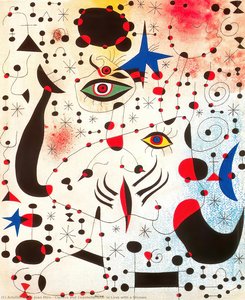
To gaze upon Joan Miró’s "Sèrie Grans rupestres 3" is to step through a looking glass, leaving the predictable weight of the physical world behind for a realm where gravity is merely a suggestion. Created in 1967, during one of the artist's most prolific and experimental eras, this masterpiece serves as a crystallized fragment of Catalan folklore and a profound testament to Miró’s lifelong commitment to exploring the human psyche. The painting is far more than an abstract composition; it is a rhythmic, visual poem that invites the viewer to rediscover a sense of childlike wonder. Through a delicate dance of biomorphic shapes and celestial motifs, Miró captures the silent whispers of the Catalan landscape, translating them into a universal language of dreams and intuition.
The artwork embodies the very essence of Surrealism, acting as a vessel for "psychic automatism"—the spontaneous outpouring of thought unfiltered by the constraints of reason. In this piece, we witness the chance encounters between disparate images that Miró so masterfully orchestrated to unlock hidden truths. The composition feels alive, breathing with a primal energy that connects the modern viewer to the ancient, much like the prehistoric cave paintings that inspired the series' title. It is an invitation to feel the pulse of the subconscious, making it an extraordinary centerpiece for those who seek art that provokes deep thought and emotional resonance.
The Alchemy of Texture and Color
Miró’s technical approach in "Sèrie Grans rupestres 3" is a masterclass in organic abstraction. Eschewing the rigid boundaries of representational accuracy, he utilized a technique characterized by thick impasto, where pigment is pushed onto the canvas to create a tactile, sculptural surface. This heavy application of paint creates geological textures that mimic the ruggedness of earth and stone, lending a palpable sense of physicality to the ethereal subject matter. The surface of the work becomes a landscape in itself, inviting the eye to wander over ridges and valleys of color.
The palette is a sophisticated balance of the earthy and the luminous. Muted, grounded tones reminiscent of the Catalan soil provide a foundation for sudden, brilliant flashes of primary blues and sun-drenched yellows. This interplay of light and shadow captures a sense of luminosity, as if the painting were being viewed through the shifting light of a Mediterranean afternoon. For the discerning collector or interior designer, this balance of vibrant energy and soothing earthiness allows the piece to integrate seamlessly into diverse environments, providing a focal point that is both stimulating and harmoniously balanced.
A Legacy of Visionary Symbolism
Every line and shape in this work carries the weight of Miró’s personal mythology. The figures within the composition—ranging from anthropomorphic faces to geometric abstractions and animal-like forms—function as symbols of a shared human experience. These shapes are not merely decorations; they are characters in a cosmic drama, representing the intersection of memory, instinct, and identity. The artist's ability to blend the whimsical with the profound ensures that the painting remains eternally modern, offering new layers of meaning upon every encounter.
For those looking to adorn a space with a high-quality reproduction, "Sèrie Grans rupestres 3" offers an unparalleled opportunity to bring a piece of art history into the contemporary home. It is a work that transcends mere decoration, offering instead a window into the soul of a visionary. Whether placed in a quiet study or a grand living hall, this painting serves as a constant reminder of the beauty found in the unseen, making it a timeless investment for any lover of fine art.
Kérdések és válaszok
Hogyan kapcsolódnak „Sèrie Grans rupestres 3”, Joan Miró alkotása színei a mű érzelmi töltetéhez?
A „Sèrie Grans rupestres 3”, Joan Miró alkotása egy Neutrals színpalettát ötvöz a Reflective hangulatú tónussal.
Melyik szobához ajánlott a „Sèrie Grans rupestres 3”, Joan Miró alkotása?
A „Sèrie Grans rupestres 3”, Joan Miró alkotása számára a javasolt helyszín egy Living Room. Természetesen ez az ajánlás az Ön belső terehez is igazítható.
Megtekinthetném a(z) „Sèrie Grans rupestres 3”, Joan Miró alkotása röntgensugárzásos felvételét?
A „Sèrie Grans rupestres 3”, Joan Miró alkotása röntgensugár-nézetét a mű X-ray felvétel oldalán tekinthetjük meg: ez az alkotás interaktív vizsgálata eleven optikai rétegeken keresztül.
A művész életrajza
A Catalan Visionary: The Life and Art of Joan Miró
Joan Miró i Ferrà, born in Barcelona in 1893, stands as one of the most significant figures in 20th-century art. His journey was not merely a progression through styles but an exploration of inner worlds, translating dreams, memories, and Catalan identity onto canvas with a uniquely poetic visual language. From humble beginnings marked by illness and initial parental reservations about his artistic pursuits, Miró persevered, driven by an innate need to express the intangible—the emotions, sensations, and subconscious currents that lie beneath the surface of reality. His early life was steeped in the traditions of Barcelona, a city brimming with architectural marvels thanks to Antoni Gaudí, whose organic forms would subtly influence Miró’s later abstractions. The goldsmithing profession of his father instilled an appreciation for meticulous craftsmanship, while the rugged Catalan landscape became a recurring motif and source of inspiration throughout his career.Early Influences and the Path to Surrealism
Miró's formal artistic training began at La Llotja in Barcelona, where he honed his skills in traditional techniques. However, it was exposure to the avant-garde movements sweeping through Paris that truly ignited his creative evolution. The vibrant colors of Fauvism and the fragmented forms of Cubism resonated deeply, prompting him to move to Paris in 1920. This period proved pivotal as he encountered artists like Pablo Picasso and began experimenting with increasingly abstract compositions. Yet, Miró didn’t simply adopt these styles; he synthesized them, forging a path toward his own distinctive aesthetic. He sought to distill forms to their essence, stripping away representational details in favor of symbolic shapes and evocative colors. This exploration led him to the Surrealist group in 1924, aligning him with artists such as Max Ernst and Salvador Dalí. While embracing the Surrealist interest in the subconscious, Miró maintained a unique sensibility—his work was less about shocking imagery or Freudian symbolism than it was about creating a world of playful forms and poetic suggestion. He rejected the prevailing artistic conventions of his time, prioritizing intuition and imagination over rational representation.The Language of Symbols: Key Works and Artistic Innovations
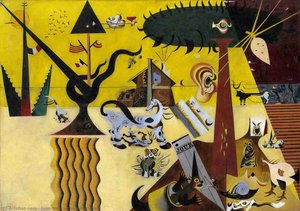
Throughout the 1920s and 30s, Miró developed his signature visual vocabulary—a universe populated by biomorphic shapes, floating forms, and vibrant colors. The Farm (1922), often considered a cornerstone of his oeuvre, exemplifies this transition. It’s not merely a depiction of rural life but an evocation of Catalan identity and a symbolic representation of the natural world. The painting utilizes bold hues—primarily yellows and reds—to convey a sense of energy and vitality, mirroring the dynamism of the Catalan landscape. Miró's technique involved layering paint onto canvas in multiple passes, creating textured surfaces that contribute to the overall atmosphere of dreamlike wonder. His collaborative spirit led to innovative techniques like *grattage*, pioneered with Max Ernst in 1926 for designs intended for Sergei Diaghilev's ballet, where textures were revealed by scraping paint across canvas. The Dutch Interiors (1928) series demonstrated his ability to reinterpret the Old Masters through a distinctly modern lens, transforming domestic scenes into dreamlike abstractions. He skillfully employed geometric shapes—circles and squares—to juxtapose with organic forms, creating visual tension that reflects the complexities of human experience. Painting (1933), with its striking palette and simplified compositions, encapsulates Miró’s exploration of the subconscious and his rejection of conventional artistic boundaries. This monumental canvas embodies his belief in art as a vehicle for conveying profound emotional truths. Beyond painting, Miró fearlessly experimented with sculpture, ceramics, and printmaking, expanding his creative horizons and demonstrating a remarkable versatility.Legacy and Enduring Influence
Joan Miró's impact on 20th-century art is undeniable. He wasn’t simply a painter; he was a visionary who challenged the very definition of artistic expression. His work paved the way for abstract expressionism and continues to inspire artists across disciplines. He established two foundations—the Fundació Joan Miró in Barcelona (1975) and the Fundació Pilar i Joan Miró in Palma de Mallorca (1981)—ensuring that his legacy would endure, providing spaces for artistic exploration and education. Throughout his long career, he remained committed to pushing boundaries, questioning conventions, and exploring the depths of human imagination. Miró’s art is a testament to the power of abstraction, symbolism, and poetic expression—a vibrant celebration of life, dreams, and the enduring spirit of Catalan culture. His work continues to resonate with audiences worldwide, inviting us to enter a world where anything is possible and the boundaries between reality and fantasy blur into a captivating dance of color and form. He died in Palma de Mallorca in 1983, leaving behind an unparalleled body of work that remains a beacon of artistic innovation and imaginative vision.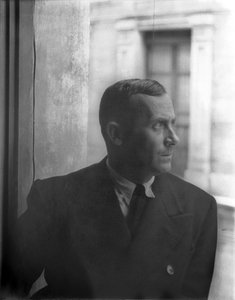
Joan Miró
1893 - 1983 , Spanyolország
Rövid információk
- Artistic Movement Or Style: Szürrealizmus
- Artists Who Influenced This Artist:
- Van Gogh
- Cézanne
- Date Of Birth: 1893
- Date Of Death: 1983
- Full Name: Joan Miró i Ferrà
- Nationality: Spanyolország
- Notable Artworks:
- Háza a pálmalébennel
- Nude with Mirror
- A Tűzeső a Flamboyant Tollak
- Place Of Birth: Barcelona, Spanien
Kapcsolódó cikkek
Állatok a művészetben: Szimbolizmus és jelentés a festményekben
Fedezze fel az állatok rejtett szimbolikáját a művészetben! Mélyreható elemzésekkel segítünk megérteni a festmények jelentését, a középkortól a modern korig. Ismerje meg a művészettörténet legérdekesebb aspektusait!

Beyond Form & Color: Geometric Abstraction's Evolution in 20th/21st Century Art
Explore the evolution of geometric abstraction from Cubism to contemporary art. Discover key artists like Malevich & Mondrian, investment insights, and expert collecting advice at OriginalUniqueArt.

Neo-Abstract Art: The High-Impact Evolution of Modern Visual Energy and Geometric Sophistication
Discover the power of Neo-Abstract art. Explore how bold geometric forms and high-impact visual energy are redefining modern design. Learn to curate sophisticated, high-energy spaces with the latest trends in contemporary abstraction and structural color.

Geometrikus Absztrakció Mesterei: 10 Alapvető Műalkotás a Lakberendezéshez
Fedezze fel a geometrikus absztrakció 10 legikonikusabb műalkotását! Kandinsky, Mondrian és más mesterek festményeinek története inspirálja otthona dekorációját. Múzeumi minőségű reprodukciók a OriginalUniqueArt.com-on – fedezze fel online!

Joan Miró 25 Mesterműve: Katalán álomképek a faladra | OriginalUniqueArt.com
Fedezze fel Joan Miró 25 legikonikusabb műalkotását! Ismerje meg a katalán szürrealizmus mesterét, festményeinek történetét és inspiráló színeit. Művészeti reprodukciók prémium minőségben – OriginalUniqueArt.com.