

 Előnézet
 Megosztás
 Megosztás
 Részletek
 Útmutató

 Letöltés
 Hasonló darabok
 X-ray felvétel
 Diavetítés
 Statisztika
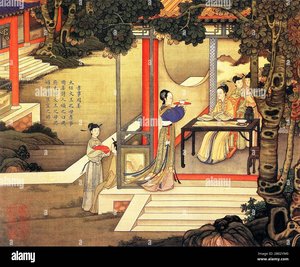
Lidai tuibei quantu


 Tovább olvasom
Kézzel készített olajfestmény reprodukció
Kézzel festett olajvastú vászon, az Ön által választott méretben és keretben, művészeink készítik meglévőre. ( Váltás nyomtatványra Áttérés digitális képre)




































Válasszon előre meghatározott méreteink közül, amelyek megfelelnek a műalkotás eredeti arányainak.

Ön megadhat saját méreteket egy adott kerethez vagy térhez igazításhoz. Ha a kiválasztott méret nem egyezik az eredeti kép arányával, akkor a műalkotást levágjuk, vagy további kézzel festett elemekkel meghosszabbítjuk a festményt. A gyártás megkezdése előtt küldünk Önnek egy digitális előnézetet jóváhagyásra.
Kérjük, vegye figyelembe, hogy a képernyőn megjelenő előnézet nem tükrözi a tényleges vágást vagy kiterjesztést. Csak az előnézet fog pontosan mutatni a végső kompozíciót.
Bár egyedi méretek állnak rendelkezésre, javasoljuk, hogy válasszon egy méretet az előre meghatározott listából az eredeti arányok megőrzése érdekében.
A rendelést követően a OriginalUniqueArt.com csapata e-mailt küld az ügyfélnek az instrukciókért, és biztosít egy előnézeti képet (mockup).
Világszerte elérhető szállítás () 3-4 hét alatt a szokásos 5 hét helyett. (21 szeptember). A minőség nem kérdőjelezhető.

Ingyenes globális expressz szállítás

Prémium minőségű len vászon

Teljes körű szállítási biztosítás

Vámvisszatérítési Garancia

Tökéletes színarányosság garancia

100 napos visszaküldési garancia (csak gyártási hibás termékek esetén)

100% pénzvisszatérítési garancia

Több darab vásárlásakor kedvezmény
 Az üvegkeretes opció csak 110 cm alatti méretben érhető el

Lidai tuibei quantu
Reprodukciós technika
Reprodukció méretei
-


Összesített ár
$ 300
A művész életrajza
A Visionary of the Qing Dynasty: The Life and Legacy of Jiao Bingzhen
In the vibrant tapestry of the early Qing dynasty, few threads shimmered with as much innovative brilliance as that of Jiao Bingzhen. Born in 1689 in Jinan, Shandong, Jiao emerged from a scholarly lineage to become a painter who did not merely observe his world but fundamentally reimagined how it could be captured on silk and paper. His life, though relatively brief, spanned a transformative era in Chinese history—a period marked by the profound intellectual exchange between the Middle Kingdom and the West. Jiao was far more than a traditionalist; he was a daring pioneer who stood at the crossroads of two great artistic worlds, weaving together the delicate elegance of Chinese brushwork with the structural rigor of European realism.
The atmosphere of Jiao’s era was thick with the scent of change, driven largely by the presence of Jesuit missionaries within the imperial court. These travelers brought with them not only scientific advancements but also a revolutionary way of seeing: the concept of linear perspective. For a painter trained in the traditional Chinese style—which often favored a multi-point, atmospheric approach to depth—the introduction of a single vanishing point offered a startling new dimension. Jiao Bingzhen embraced this challenge with unparalleled curiosity. He studied the mechanics of light and shadow and the mathematical precision of Western composition, yet he never abandoned the soulful, rhythmic essence of his heritage. This synthesis allowed him to create works that felt both grounded in physical reality and elevated by poetic symbolism.
The Master of Perspective and the Gengzhitu Series
Jiao’s most enduring contribution to the art world lies in his ability to document the very heartbeat of Chinese civilization through a lens of unprecedented detail. His most celebrated achievement, the Gengzhitu, or "Rice and Silk Culture," stands as a monumental testament to his skill and his role as a chronicler of prosperity. Commissioned by the Kangxi Emperor, this ambitious series consisted of forty-six intricate scenes depicting the essential labors of the empire: the rhythmic tilling of the earth and the delicate, painstaking process of silk weaving. Through these paintings, Jiao did not just illustrate agricultural cycles; he celebrated an idealized vision of a peaceful, industrious society.
In these works, one can witness the breathtaking marriage of styles. While the subjects—the farmers, the looms, and the lush landscapes—are deeply rooted in Chinese tradition, the execution utilizes Western-inspired depth to pull the viewer into the scene. The architectural structures possess a weight and three-dimensionality that were revolutionary for the time, creating an immersive experience that felt almost cinematic. This mastery of detail extended to his portraits and miniatures, where he captured the intricate textures of silk, the subtle glow of skin, and the complex layers of courtyard life with a precision that earned him immense prestige within the imperial circles.
Historical Significance and Artistic Resonance
The historical importance of Jiao Bingzhen transcends the mere aesthetic beauty of his canvases. He served as a vital bridge during a period of intense cultural contact, proving that the boundaries between East and West could be blurred to create something entirely new and transcendent. His work influenced the trajectory of court painting, paving the way for subsequent artists to experiment with hybrid styles. By integrating European scientific observation with Chinese lyrical expression, he helped redefine the visual language of the Qing dynasty.
Today, Jiao’s legacy continues to resonate within the halls of great museums, from the Victoria and Albert Museum to the Art Institute of Chicago. His paintings remain much more than historical documents; they are emotional journeys into a lost era of splendor. When we look upon his depictions of family unity or the industrious spirit of the peasantry, we see a master who understood that true innovation does not require the abandonment of one's roots, but rather the courage to expand them. Jiao Bingzhen remains an eternal symbol of how art can harmonize disparate worlds, creating a vision of beauty that is both profoundly local and universally captivating.
Jiao Bingzhen
1689 - 1726 , China
Gyors információk
- Artistic Movement Or Style: Qing Dynasty Painting; Western Perspective Blend
- Artists Or Movements Influenced By This Artist:
- Zhao Ruo'ai
- Ren Xiong
- Artists Who Influenced This Artist: ['Traditional Chinese Painting Techniques']
- Date Of Birth: Jinan, China (1689)
- Date Of Death: 1726
- Full Name: jiao bingzhen
- Nationality: Chinese
- Notable Artworks:
- Desk Album: Flower and Bird Paintings (Gossiping Sparrows)
- Ten Magnificent Landscapes - View 1
- Place Of Birth: Jining, Shandong