

 Megtekintés
 Küldés
 Megosztás
 Részletek
 Útmutató

 Letöltés
 Hasonló darabok
 X-ray felvétel
 Diavetítés
 Statisztika
Sin título (Untitled)


 Összes részlet megjelenítése
Az ezen az oldalon megjelenített műalkotások szerzői jogi védelem alatt állnak, ami azt jelenti, hogy törvényileg nem készíthetünk és nem adhatunk el belőlük pontos másolatokat. Ez a védelem olyan nemzetközi megállapodások alapján érvényesül, mint például a Berni Egyezmény és a nemzeti jogszabályok által, beleértve azokat is, amelyeket meghatározott Az USA szerzői jogi törvénye – 17. cím.
Mint tiszteletes és törvényes alternatívát, olyan egyedi, kézzel festett alkotásokat kínálunk, amelyek az eredetiből merítnek inspirációt. Tapasztalt és professzionális művészeink alaposan tanulmányozzák az eredeti stílusát, hangulatát és művészeti esszenciáját, hogy egy olyan új, egyedi alkotást hozzunk létre, amely ugyanazt az érzést kelti – miközben önálló, eredeti alkotásként létezik.
Ez a módszer teljes mértékben megfelel a szerzői jogi szabályozásnak, mivel nem tartalmazza a védett műalkotás másolását vagy duplikálását. Ehelyett ez egy kreatív újinterpretáció – egy új festmény, amely az eredetivel való összefüggései miatt hatással van rá, de nem az az.
Kézzel készített olajfestmény reprodukció
Kézzel festett olajvastú vászon, az Ön által választott méretben és keretben, művészeink készítik meglévőre. ( Váltás nyomtatványra Áttérés digitális képre)




P118B Ft10

P118H Ft10

P118W Ft10

P438Z Ft10

P508JH Ft12

P508YH Ft12

P805H Ft10

P805Z Ft10

P919BZ Ft10

P919G Ft10

P919XJ Ft10

P959ZH Ft10

P968JZ Ft12

W106C Ft8

W218G Ft10

W218JH Ft8

W218Y Ft10

W307PJ Ft10

W316G Ft10

W316PJ Ft8

W316Y Ft10

W398PJ Ft8

W4111J Ft10

W500HY Ft15

W500JH Ft15

W692G Ft12

W849H Ft8

W940BG Ft15

W953PJ Ft8




Válasszon előre meghatározott méreteink közül, amelyek megfelelnek a műalkotás eredeti arányainak.

Írja be a kívánt szélességet és magasságot, hogy illeszkedjen a keretéhez vagy a falához. Mivel ez kézzel festett alkotás, egy eltérő formájú méret esetén a művész akár festhet is valamivel többet a kép körül, vagy korolathat is belőle — az Ön döntésének megfelelően. A festés megkezdése előtt küldünk egy digitális tervezetet jóváhagyásra. Az oldalon látható kép nem tartalmazza a végeredményt — csak a tervezet mutatja meg a valódi eredményt.
A rendelést követően a OriginalUniqueArt.com csapata e-mailt küld az ügyfélnek az instrukciókért, és biztosít egy előnézeti képet (mockup).
Világszerte elérhető szállítás () 3-4 hét alatt a szokásos 5 hét helyett. (26 október). A minőség nem kérdőjelezhető.

Ingyenes globális expressz szállítás

Prémium minőségű len vászon

Teljes körű szállítási biztosítás

Vámvisszatérítési Garancia

Hiteles színarányosság garancia

100 napos visszaküldési lehetőség (csak hibás termékek esetén)

100% pénzvisszatérítési garancia

Több darab vásárlásakor kedvezmény
 Az üvegkeretes opció csak 110 cm alatti méretben érhető el

Sin título (Untitled)
Reprodukciós technika
Reprodukció mérete
-


Összesített ár
Ft 96304
The Composition of Form and Color
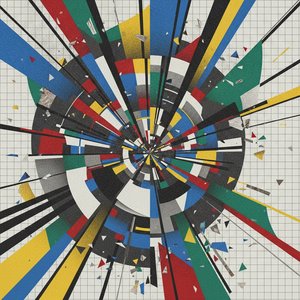
Sin título (Untitled) presents a geometric arrangement of shapes that interact through overlapping planes. The work consists of a series of squares rendered in distinct colors, including red, blue, green, yellow, and orange. Interspersed among these quadrilaterals are circular forms that interrupt the linear edges of the squares. In this specific black and white photograph, the tonal values emphasize the contrast between light and dark areas within the pattern. The arrangement creates a sense of depth through the superimposition of different geometric layers. This layering produces an optical effect where the shapes appear to vibrate or shift as the viewer's perspective changes.Materiality and Kinetic Principles
The technique involves the use of industrial materials to manipulate light and perception. The artist utilizes plexiglass, metal, nylon, and wood to construct surfaces that reject traditional figuration. By placing different planes of line or geometric form on top of one another, the work achieves a physical sense of separation between layers. This method creates several levels of depth on the surface of the piece. The use of transparent or semi-transparent materials allows for the creation of an optical impression of movement. As the eye moves across the composition, the interaction of color and shape generates a rhythmic, non-repetitive motion.Historical Context of Kineticism
This work emerged from the mid-twentieth century Kinetic art movement, which was prominent in Argentina, Uruguay, and Venezuela. During this period, the use of new industrial materials like metal and plexiglass reflected the rapid urbanization and economic growth associated with the oil economy in Venezuela. The approach to art during this era focused on the exploration of physical space through pictorial means rather than through representational subjects. The movement sought to create works that functioned as optical engines, triggering physiological responses in the observer. Through these methods, the boundaries between the viewer and the object are reduced, making the spectator an active participant in the perception of the work's energy.Kérdések és válaszok
Milyen elhelyezés és milyen térhelyiség ajánlott a(z) „Sin título (Untitled)”, Jesús Rafael Soto alkotása számára?
A(z) „Sin título (Untitled)”, Jesús Rafael Soto alkotása esetében a(z) Focal használatát és a(z) Coworking helyiségben való elhelyezést javasoljuk.
Erős fény-árnyék kontrasztot mutat-e a "Sin título (Untitled)"?
A „Sin título (Untitled)”, Jesús Rafael Soto alkotása Statement kontrasztot mutat a világos és sötét részek között.
Hol látható ma a(z) „Sin título (Untitled)”, Jesús Rafael Soto alkotása?
A „Sin título (Untitled)”, Jesús Rafael Soto alkotása eredeti darabja a Inter-American Development Bank, Washington, D.C., Amerikai Egyesült Államok gyűjteményében található. A reprodukció lehetővé teszi, hogy a mű otthonában is megjelenjen.
A művész életrajza
The Architect of Motion: The Life and Vision of Jesús Rafael Soto
In the quiet streets of Ciudad Bolívar, Venezuela, a young boy once spent his hours meticulously recreating the masterpieces he encountered in magazines and almanacs. This early fascination with the transformative power of imagery was more than a childhood pastime; it was the genesis of a lifelong quest to dismantle the boundaries between the viewer and the viewed. Jesús Rafael Soto, born on June 5, 1923, would grow to become a titan of the Kinetic and Op Art movements, a man whose work did not merely sit upon a wall or stand upon a pedestal, but rather breathed, vibrated, and pulsed with an energy that demanded physical engagement.
Soto’s journey into the professional realm began with the vibrant, graphic world of cinema posters in his hometown. At sixteen, he was already mastering the principles of visual communication, a skill that would later underpin his ability to manipulate light and space. His formal education at the Escuela de Artes Plásticas y Artes Aplicadas in Caracas provided the academic rigor necessary to transition from graphic design to "pure art." Under the mentorship of influential figures like Antonio Edmundos Monsanto, Soto was introduced to a global dialogue of modernism, connecting him with a generation of Venezuelan masters including Carlos Cruz-Diez and Alejandro Otero. This period of intense study and connection laid the groundwork for his departure to Paris in 1951, a move that would catapult his experimental spirit onto the international stage.
The Alchemy of Perception and Material
As Soto’s career matured, he moved away from traditional representation toward a profound exploration of kinetic perception. He became an alchemist of industrial materials, finding poetic potential in the cold surfaces of metal, plexiglass, and nylon. His technique was revolutionary; by layering wire over canvas or superimposing transparent sheets, he created works that appeared to shimmer and oscillate even when the viewer remained still. These were not merely paintings but optical engines designed to trigger a physiological response—a rhythmic vibration that blurred the line between the object and the eye.
The true pinnacle of his sculptural innovation arrived with the Penetrables. Debuting in Caracas in 1968, these monumental installations represented a radical departure from the static nature of traditional sculpture. Constructed from cascading curtains of flexible nylon tubes, the Penetrables invited the public to step inside the artwork itself. To walk through a Penetrable was to lose oneself in a labyrinth of texture and light, where the movement of one's own body dictated the shifting patterns of the art. In these spaces, Soto achieved his ultimate goal: the dissolution of the barrier between the observer and the observed, turning the spectator into an active participant in the creation of the aesthetic experience.
A Lasting Legacy in the Modern Canon
The historical significance of Jesús Rafael Soto cannot be overstated. He was a central figure in a movement that redefined mid-twentieth-century art across South America and beyond, influencing how we perceive space, energy, and motion. His influence is etched into the very fabric of the world's most prestigious institutions, with his works residing in permanent collections such as:
- The Museum of Modern Art (MoMA) in New York
- Tate Modern in London
- Centre Georges Pompidou in Paris
- Museum Ludwig in Germany
- Galleria Nazionale d'Arte Moderna in Rome
Beyond the museum walls, his legacy lives on through the Jesús Soto Museum of Modern Art in his beloved Ciudad Bolívar, a testament to his commitment to his roots and the democratization of art. When Soto passed away in 2005, he left behind more than just a catalog of masterpieces; he left a new way of seeing. He taught us that art is not a static entity to be contemplated from a distance, but a living, breathing phenomenon that exists in the dynamic intersection of light, movement, and human presence.

Jesús Rafael Soto
1923 - 2005
Rövid információk
- Full Name: Jesús Rafael Soto
- Nationality: Venezuelan
- Date Of Birth: 1923
- Date Of Death: 2005
- Place Of Birth: Ciudad Bolívar, Venezuela
- Notable Artworks:
- Sin título
- Mirror
- Penetrables
- Artistic Movement Or Style: Op Art & Kinetic Art
- Artists Who Influenced This Artist: Antonio Eduardo Monsanto
- Artists Or Movements Influenced By This Artist: Yaacov Agam, Jean Tinguely
Kapcsolódó cikkek

Kandinsky Mesterművei: 25 Lenyűgöző Festmény a Modern Művészet Gyöngyszemeiből | OriginalUniqueArt
Fedezze fel Wassily Kandinsky 25 legikonikusabb művét! Merüljön el az absztrakt művészet világában, ismerje meg a színek és formák lenyűgöző történetét. Prémium minőségű reprodukciók és inspiráló dekorötletek a OriginalUniqueArt.com-on.

Geometrikus Absztrakció Mesterei: 10 Alapvető Műalkotás a Lakberendezéshez
Fedezze fel a geometrikus absztrakció 10 legikonikusabb műalkotását! Kandinsky, Mondrian és más mesterek festményeinek története inspirálja otthona dekorációját. Múzeumi minőségű reprodukciók a OriginalUniqueArt.com-on – fedezze fel online!
Beyond the Lines: The High-Impact Trend Forecast of Geometric Abstraction
Discover the high-impact world of Geometric Abstraction. From Cubist roots to modern urban trends, explore how bold shapes and colors redefine contemporary design. Elevate your space with expert art insights and custom-made abstract masterpieces.

Neo-Abstract Art: The High-Impact Evolution of Modern Visual Energy and Geometric Sophistication
Discover the power of Neo-Abstract art. Explore how bold geometric forms and high-impact visual energy are redefining modern design. Learn to curate sophisticated, high-energy spaces with the latest trends in contemporary abstraction and structural color.

Beyond Form & Color: Geometric Abstraction's Enduring Legacy in Art History
Explore the captivating world of geometric abstraction! Discover its origins, key artists like Malevich & Mondrian, and why this movement remains highly valued by art collectors today. Expert insights at OriginalUniqueArt.
