Menü
Text size

() ·

A painting made for you, by hand

Fruit Vendő

Kézzel készített olajfestmény reprodukció

Kézzel festett olajvastú vászon, az Ön által választott méretben és keretben, művészeink készítik meglévőre. ( Váltás nyomtatványra Áttérés digitális képre)

A gyűjtemény leírása

Jerome Myers (1867-1940) amerikai realista művésze volt, aki az Ashcan Szkólához kötődött és nagyban befolyásolta az amerikai városi élet megközelítése. Évtizedei alatt új tájakra költözött és egyetemi tanulmányokat végzett George de Forest Brush irányításával.

A művész életrajza

Jerome Myers (1867-1940): Az Ashcan Számra ismert művész szívélyes ábrázolása NYC életéből és az új bevándorlók közösségeiből. Kulcszám szerepe volt az 1913 Armory Show rendezvénysébé, amely előmutatta Európa modern művészetét Amerikának. ==== Hungarian Meta Description ====: Jerome Myers (1867-1940): Az Ashcan Számra ismert művész szívélyes ábrázolása NYC életéből és az új bevándorlók közösségei

from ·

Chapter 1

How large should it be?

Slide to change the size; the picture on the left shows the frame at its real width. The proportions of the original are kept.

Standard méret
egyedi méretű
CM
INCH

Válasszon előre meghatározott méreteink közül, amelyek megfelelnek a műalkotás eredeti arányainak.

szélesség
magasság

Írja be a kívánt szélességet és magasságot, hogy illeszkedjen a keretéhez vagy a falához. Mivel ez kézzel festett alkotás, egy eltérő formájú méret esetén a művész akár festhet is valamivel többet a kép körül, vagy korolathat is belőle — az Ön döntésének megfelelően. A festés megkezdése előtt küldünk egy digitális tervezetet jóváhagyásra. Az oldalon látható kép nem tartalmazza a végeredményt — csak a tervezet mutatja meg a valódi eredményt.

Chapter 2

How should it arrive?

Choose the edges of the stretched canvas

Choose your frame

Corner sample of the WhiteWrap canvas edge finish, stretched on tömörfa bars
White Ft1
Corner sample of the BlurSideWrap canvas edge finish, stretched on tömörfa bars
Blurside Ft1
Corner sample of the ExtendedWrap canvas edge finish, stretched on tömörfa bars
Extended Ft1
Corner sample of the P118B picture frame: formázott polisztirol, 5 cm wide and 3 cm thick
P118B Ft10
Corner sample of the P118H picture frame: formázott polisztirol, 5 cm wide and 3 cm thick
P118H Ft10
Corner sample of the P118W picture frame: formázott polisztirol, 5 cm wide and 3 cm thick
P118W Ft10
Corner sample of the P438Z picture frame: formázott polisztirol, 5.5 cm wide and 3.5 cm thick
P438Z Ft10
Corner sample of the P508JH picture frame: formázott polisztirol, 7 cm wide and 3.5 cm thick
P508JH Ft12
Corner sample of the P508YH picture frame: formázott polisztirol, 7 cm wide and 3.5 cm thick
P508YH Ft12
Corner sample of the P805H picture frame: formázott polisztirol, 5 cm wide and 3.5 cm thick
P805H Ft10
Corner sample of the P805Z picture frame: formázott polisztirol, 5 cm wide and 3.5 cm thick
P805Z Ft10
Corner sample of the P919BZ picture frame: formázott polisztirol, 7 cm wide and 3.5 cm thick
P919BZ Ft10
Corner sample of the P919G picture frame: formázott polisztirol, 7 cm wide and 3.5 cm thick
P919G Ft10
Corner sample of the P919XJ picture frame: formázott polisztirol, 7 cm wide and 3.5 cm thick
P919XJ Ft10
Corner sample of the P959ZH picture frame: formázott polisztirol, 5 cm wide and 3 cm thick
P959ZH Ft10
Corner sample of the P968JZ picture frame: formázott polisztirol, 6 cm wide and 4 cm thick
P968JZ Ft12
Corner sample of the W106C picture frame: tömörfa, 5 cm wide and 3 cm thick
W106C Ft8
Corner sample of the W218G picture frame: tömörfa, 5 cm wide and 3 cm thick
W218G Ft10
Corner sample of the W218JH picture frame: tömörfa, 5 cm wide and 3 cm thick
W218JH Ft8
Corner sample of the W218Y picture frame: tömörfa, 5 cm wide and 3 cm thick
W218Y Ft10
Corner sample of the W307PJ picture frame: tömörfa, 6 cm wide and 3 cm thick
W307PJ Ft10
Corner sample of the W316G picture frame: tömörfa, 6 cm wide and 3 cm thick
W316G Ft10
Corner sample of the W316PJ picture frame: tömörfa, 6 cm wide and 3 cm thick
W316PJ Ft8
Corner sample of the W316Y picture frame: tömörfa, 6 cm wide and 3 cm thick
W316Y Ft10
Corner sample of the W398PJ picture frame: tömörfa, 5 cm wide and 3 cm thick
W398PJ Ft8
Corner sample of the W4111J picture frame: tömörfa, 6.5 cm wide and 3.5 cm thick
W4111J Ft10
Corner sample of the W500HY picture frame: tömörfa, 7 cm wide and 5 cm thick
W500HY Ft15
Corner sample of the W500JH picture frame: tömörfa, 7 cm wide and 5 cm thick
W500JH Ft15
Corner sample of the W692G picture frame: tömörfa, 8 cm wide and 4 cm thick
W692G Ft12
Corner sample of the W849H picture frame: tömörfa, 5 cm wide and 3 cm thick
W849H Ft8
Corner sample of the W940BG picture frame: tömörfa, 7.5 cm wide and 4.5 cm thick
W940BG Ft15
Corner sample of the W953PJ picture frame: tömörfa, 6 cm wide and 3.5 cm thick
W953PJ Ft8
Corner sample of the H24-GOLD picture frame: faragott fa gesszóval, 10 cm wide and 6 cm thick
H24-GOLD Ft30
Corner sample of the H24-SILVER picture frame: faragott fa gesszóval, 10 cm wide and 6 cm thick
H24-SILVER Ft30
Corner sample of the H36-GOLD picture frame: faragott fa gesszóval, 15 cm wide and 6.5 cm thick
H36-GOLD Ft45
Corner sample of the H36-SILVER picture frame: faragott fa gesszóval, 15 cm wide and 6.5 cm thick
H36-SILVER Ft45

Moulding: . Overall size with the frame: .

Chapter 3

Who paints it, and should anything change?

Examples of what can be changed: Replace face with customer photo; Add pet (e.g., replace cat with dog); Include hidden message in background; Change background landscape or elements.
After order, OriginalUniqueArt.com team will email client for instructions and provide a mockup preview

Világszerte elérhető szállítás () 3-4 hét alatt a szokásos 5 hét helyett. (30 október). A minőség nem kérdőjelezhető.

Chapter 4

The finishing touches

A nameplate, as in a museum?

A gravírozott bronztábla részletei

This elegant plaque features the artist's name and the title of the artwork, finely engraved for a timeless presentation.

It is made from bronze with a refined, elegant finish. The text is precisely laser-engraved for a sharp and permanent result. Measuring 9x2 cm, the plaque is compact yet easy to read. It's built to be durable and scratch-resistant, offering a professional, museum-quality look. Mounting is simple thanks to the included adhesive backing.

Átlátszó akril tábla részletei

The plaque includes essential engraved details such as the artist's name, the title of the artwork, the date it was created, the type of media used-like oil on canvas or watercolor-a brief description of the piece, and a QR code that links to the complete artwork information.

It is crafted from clear acrylic, offering a sleek, modern appearance. The text is UV-engraved in black to ensure strong visual contrast. With a size of 10x15 cm, it ensures optimal readability. It comes equipped with two metal hooks for secure wall mounting. The plaque is designed to be weather-resistant, making it suitable for various environments, and it includes interactive features that work seamlessly with smartphone scanning.

Fekete akril tábla részletei

This elegant plaque includes engraved information such as the artist's name, the title of the artwork, the date it was created, the type of media used (like oil on canvas or watercolor), a short description of the artwork, and a QR code for quick access to more information.

The plaque itself is made from refined black acrylic with a premium finish. The text is laser-engraved in white for high contrast and readability. Its size is 10x15 cm, designed to be easy to read. It comes with two metal hooks for professional mounting. The design is sleek and fits any interior style. It is also weather-resistant and durable, with built-in digital integration for mobile compatibility.

A protective varnish?

When do you need it?

Chapter 5

Your painting, as you ordered it

Fruit Vendő

Reprodukciós technika

Reprodukció mérete

-

Kiváló mesterművész

Nagyobb részletesség, finomság és bővített gyártási idő

-

Reprodukció keretezése

-

-

A bármely oldalsó méretét túlszálaló 105 cm (kb. 41 hüvelyk) meghaladó műalkotások vagy reprodukciók esetében a keret összeszerelhető készletként, szétszerelve kerül szállításra. Ez a módszer biztosítja a biztonságos szállítást, és megakadályozza a szállítás során fellépő sérüléseket.

Szakmész összeszerelést igényel – ez nem DIY (önösszeszerelhető) termék.
A készletet egy tapasztalt keretező szakembernek kell összeszerelnie és a vásznat feszítenie kell, fa ragasztó (nem tartalmazza a csomag), vásznfeszítő fogó és szorítók használatával, amelyek a ragasztó száradásáig a keretrészeket egymáshoz vuôngjba tartják. A helytelen összeszerelés vagy a nem egyenletes vásznfeszítés maradandó károsíthatja a műalkotást, és ez nem része a garanciánknak.

  • A készlet tartalmazza az összes tömörfa rudat, pontosan méretre vágva.

  • A mellékelt csavarokkal, valamint a sarokszerekhez szükséges faütő ragasztóval kell összeszerelnie (ez nem tartalmazható a csomagban), így a keretrendezőnek külön kell beszereznie.

  • A csomag nem tartalmazza a szükséges professzionális eszközöket: egy vászonfeszítőt és klipseket a rácsok vízszintes tartásához a ragasztó megszáradásáig.

Fontos:
A sarokcsatlakozásokhoz fánylagra van szükség, a keretrudakat szorítókapcsokkal kell rögzíteni, amíg a rag teljesen meg nem szárad, a kész keretre feszített vászonhoz pedig vászonfeszítő fogat szükséges. Ezek egyike sem található meg a készletben. Kérjük, rendelés előtt győződjön meg róla, hogy rendelkezik tapasztalt keretező szakemberrel.

Névtábla

-

-

Védőréteg (Lakk)

Fényes lakk (intenzívabb színek, védelem a fény és a nedvesség hatása ellen)

-

Műalkotásom egyedi igényre szabása

Példák a módosíthatóságra: az arc kicserélése az ügyfél fotójára; háziállat hozzáadása (pl. macska helyett kutya); rejtett üzenet elhelyezése a háttérben; a háttér tájainak vagy elemeinek megváltoztatása.

-

Sürgős

Világszerte szóló szállítás () mindössze 3-4 hét alatt, a szokásos 5 hét helyett. (30 október). A minőség nem kérdőjelezhető.

-

Express szállítás

Világszerte elérhető szállítás területre 5 héten belül. (6 november).

A szállítás díja tartalmazza

Összesített ár

Ft 98090

Összesített ár Ft 98090

Az üvegkeretes opció csak 110 cm alatti méretben érhető el

Included with every order

  • Ingyenes globális expressz szállítás
  • Prémium minőségű len vászon
  • Teljes körű szállítási biztosítás
  • Vámvisszatérítési Garancia
  • Hiteles színarányosság garancia
  • 100 napos visszaküldési lehetőség (csak hibás termékek esetén)
  • 100% pénzvisszatérítési garancia
  • Több darab vásárlásakor kedvezmény

Jerome Myers: A Visionary of Urban Realism

Jerome Myers (1867-1940) stands as a pivotal figure in American art history, particularly within the Ashcan School movement. Born in Petersburg, Virginia, his life’s journey—marked by itinerant experiences shaped by his father's absences—fueled an artistic sensibility deeply attuned to the struggles and resilience of marginalized communities. This formative upbringing instilled within him a profound empathy for the everyday realities of ordinary people, a perspective that would permeate his prolific output.

Myers’s artistic trajectory began with diverse pursuits – acting and scene painting honed his skills in visual storytelling and dramatic composition—providing invaluable groundwork for his formal training at Cooper Union followed by eight years at the Art Students League under George de Forest Brush. However, it was New York City itself that truly captivated him; specifically, the Lower East Side’s vibrant immigrant neighborhoods became the crucible of his artistic vision.

The Ashcan School and Its Aesthetic

Myers's commitment to portraying urban life with unflinching honesty aligns perfectly with the ethos of the Ashcan School. Rejecting idealized landscapes and academic conventions, these artists sought to capture the gritty textures and emotional complexities of American cities—particularly during the Progressive Era. Myers’s canvases eschewed romantic embellishment in favor of direct observation and meticulous detail, prioritizing capturing the palpable atmosphere of his surroundings.

Fruit Vendor: A Portrait of Resilience

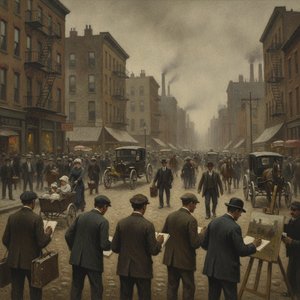
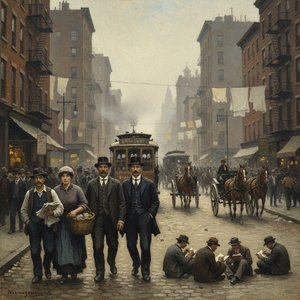
“Fruit Vendor,” painted circa 1920, exemplifies this stylistic approach. The monochrome palette—characteristic of Ashcan School artists—emphasizes form and texture, mirroring the starkness of urban life. Myers’s masterful technique utilizes broad brushstrokes to convey movement and dynamism, capturing the bustling energy of a busy marketplace.

The composition centers on a woman standing beside a fruit cart laden with apples – a deliberate choice reflecting Myers's fascination with immigrant communities and their daily struggles. Surrounding her are figures engaged in conversation and commerce, creating a tableau that speaks volumes about social interaction and economic hardship. The inclusion of a horse adds to the scene’s visual richness and reinforces its connection to the rural past juxtaposed against the burgeoning urban landscape.

Symbolism and Emotional Impact

Beyond mere depiction, “Fruit Vendor” carries symbolic weight. Myers's unwavering gaze at the human condition—particularly the dignity of labor and perseverance—resonates with humanist ideals prevalent during his time. The painting’s subdued tones evoke a sense of melancholy yet simultaneously convey hope – mirroring the spirit of resilience found within those navigating challenging circumstances.

Myers’s enduring legacy lies in his ability to transform observation into art, capturing not just what he saw but also what he felt. “Fruit Vendor,” like countless other works documenting the realities of American life, remains a testament to his artistic vision and its profound impact on the Ashcan School movement.

Kérdések és válaszok

Miért van az, hogy a "Fruit Vendő" szerzői jogi állapota ilyen?

A "Fruit Vendő" szerzői jogi státusza – közösségi tulajdon – a szerzői jog lejártt – a művész 1940 évi halálából adódik.

Erős fény-árnyék kontrasztot mutat-e a "Fruit Vendő"?

A „Fruit Vendő”, Jerome Myers alkotása Békés kontrasztot mutat a világos és sötét részek között.

Hol javasolt a(z) "Fruit Vendő" Portrait formátumú alkotás kihelyezését?

A Portrait formájú, a „Fruit Vendő” című alkotás reprodukcióját egy Nappali számára javasoljuk.

More about this painting

Megtekintés AR előnézet Váltás nyomtatványra Áttérés digitális képre Küldés
Részletek Útmutató Kedvencekhez ad Letöltés Hasonló darabok X-ray felvétel Diavetítés Q&A Statisztika

In numbers

  • 1920the year it was painted
  • 29frames to choose from
  • standard sizes, in its own proportions
  • 5weeks to paint and deliver it
Jerome Myers

Jerome Myers

1867 - 1940, Egyesült Államok

Quick facts about Jerome Myers

  • Artistic Movement Or Style: Ashcan School, Realizmus
  • Artists Or Movements Influenced By This Artist: ['Amerikai Realizmus']
  • Artists Who Influenced This Artist: ['George de Forest Brush']
  • Date Of Birth: 1867
  • Date Of Death: 1940
  • Full Name: Jerome Myers
  • Nationality: Amerikai
  • Notable Artworks:
    • Recreation Pier
    • Street Shrine
    • Italian Procession
  • Place Of Birth: Petersburg, USA

A művész életrajza

A Life Etched in Urban Reality

Jerome Myers, born March 20, 1867, in Petersburg, Virginia, was more than just a painter; he was a chronicler of the American urban experience at a pivotal moment in its history. His life story, marked by early hardship and constant relocation due to his father’s absences, deeply informed his artistic vision. This itinerant upbringing instilled within him an acute sensitivity to the struggles and resilience of those living on the margins – a theme that would become central to his oeuvre. His brother, Gustavus Myers, forged a path as a journalist and activist, further cementing a family commitment to social observation and reform. Before fully dedicating himself to art, Myers tasted life as an actor and scene painter, experiences which undoubtedly honed his understanding of visual storytelling and dramatic composition. This practical foundation served him well when he formally pursued artistic training at Cooper Union for a year, followed by eight years at the Art Students League under the tutelage of George de Forest Brush. However, it wasn’t the established art centers of Europe that truly captured Myers' imagination; rather, it was the teeming streets and vibrant life of New York City’s Lower East Side that became his enduring muse. A brief sojourn to Paris in 1896 paled in comparison to the raw energy and compelling narratives unfolding within his own city.

The Ashcan School and a Unique Artistic Voice

Myers emerged as a key figure associated with the Ashcan School, a group of artists who bravely turned their attention away from traditional academic subjects and towards the gritty realities of urban life. However, Myers wasn’t simply replicating what he saw; he was interpreting it through a deeply empathetic lens. He deliberately chose to depict the everyday lives of new immigrants – not as objects of pity or sociological study, but as individuals possessing inherent dignity and beauty. Over a thousand drawings, paintings, etchings, and watercolors bear witness to his dedication, documenting their routines, struggles, and moments of joy outside the confines of tenement walls. He famously articulated his artistic philosophy by stating that where others saw ugliness and degradation, he perceived “poetry and beauty.” This wasn’t mere romanticism; it was a profound belief in the inherent worth of every human experience, regardless of circumstance. His work stands apart within the Ashcan School not for its shock value – though it certainly challenged conventional artistic norms – but for its quiet compassion and unwavering focus on the humanity of his subjects. He wasn’t interested in grand narratives or sweeping statements; he was captivated by the small moments that revealed the essence of a life lived fully, even amidst hardship.

Early Influences and Artistic Training

Myers' formative years instilled within him a deep appreciation for observation and social justice. His father’s frequent absences necessitated constant relocation, exposing him to diverse communities and fostering an understanding of displacement and resilience – experiences that would profoundly shape his artistic sensibility. Recognizing the importance of formal training, Myers enrolled at Cooper Union for a year before continuing his studies at the Art Students League under George de Forest Brush, gaining invaluable technical skills and exposure to influential artistic ideas. Brush’s guidance encouraged Myers to explore Impressionistic techniques and capture fleeting moments of light and color, establishing a stylistic foundation that would characterize much of his subsequent work.

The Lower East Side: A Constant Inspiration

Myers' artistic vision was irrevocably anchored in the Lower East Side of New York City. This vibrant neighborhood, teeming with immigrants from Europe and elsewhere, became the epicenter of his creative endeavors. He meticulously documented scenes of daily life – bustling marketplaces, crowded tenements, lively street celebrations – portraying them not as subjects for pity or academic analysis but as embodiments of human dignity and beauty. His artistic approach was marked by a deliberate rejection of idealized representations; instead, he sought to capture the raw emotion and palpable energy of urban existence.

A Catalyst for Modernism: The Armory Show

Myers’ involvement in organizing the 1913 Armory Show represents a pivotal moment in American art history. This exhibition served as an unprecedented introduction to European modernist movements – Cubism, Fauvism, and Expressionism – challenging established aesthetic conventions and sparking debate about the future of artistic expression. Myers championed these innovative ideas, demonstrating a willingness to embrace experimentation and reject conservative values—a stance that solidified his position as a pioneer of American Modernism.

Selected Works

  • Recreation Pier: This oil painting beautifully captures urban life and childhood innocence with Impressionistic brushstrokes and warm tones, offering a unique glimpse into American art history.
  • Street Shrine: A vibrant 1931 oil painting depicting a nighttime religious procession, showcasing dynamic composition, impasto texture, and an evocative style.
  • The Italian Procession: A Post-Impressionist scene of a bustling parade, capturing the energy of NYC life with thick impasto and expressive color.
Myers’ legacy rests on his unwavering commitment to portraying the lives of ordinary people with dignity and compassion. He didn't seek to sensationalize or exploit; he sought to understand and represent their experiences with honesty and empathy. His work continues to resonate today, reminding us of the importance of seeing – and valuing – the humanity in everyone, regardless of their background or circumstances. He remains a pivotal figure in American realism and the Ashcan School, an artist whose vision continues to inspire those who seek to capture the truth and beauty of the human condition.

Gyors információk

  • Notable elements or techniques: Detailed observation of urban life; expressive brushwork
  • Title: Fruit Vendor
  • Artistic style: Realism
  • Medium: Oil on Canvas
  • Influences: George de Forest Brush

Művészeti kvíz

Minden kérdésre csak egy helyes válasz létezik.

Kérdés 1:
Mi művészeti mozgalomhoz tartozik elsősorban Jerome Myers alkotása?
Kérdés 2:
A vászonra festett tájképet mely fontos elemző aspektus mutatja meg?
Kérdés 3:
George de Forest Brush milyen szerepet töltött be Jerome Myers művészi életében?
Kérdés 4:
Mi inspirálta Jerome Myert leginkább az amerikai városok életében?
Kérdés 5:
Mi volt az Armory Show 1913 jelentősége Jerome Myers számára?
Fedezze fel a műalkotásokat témák, stílusok és jellemzők szerint csoportosítva.