A szöveg mérete

() ·

Egy Önnek készült, kézzel festett alkotás

The Wreck

Kézzel készített olajfestmény reprodukció

Kézzel festett olajvastú vászon, az Ön által választott méretben és keretben, művészeink készítik meglévőre. ( Váltás nyomtatványra Áttérés digitális képre)

A gyűjtemény leírása

Géricault’s "The Wreck" – a dramatic Romantic seascape depicting nature’s power & human vulnerability. Explore its turbulent waves, impasto texture & historical significance.

A művész életrajza

Géricault, a francia festő, a romantika egyik első képviselője. A "Medúza tutaja" című monumentális alkotása a tragédia és az emberi szenvedés szívmeltő ábrázolása, mely a művész egyedi stílusát és társadalmi kritikáját mutatja be.

előbb ·

1. fejezet

Mekkora méretű legyen?

Húzza a csúszkát a méret megváltoztatásához; a bal oldali kép a keret valós szélességét mutatja. Az eredeti arányok megmaradnak.

Standard méret
egyedi méretű
CM
INCH

Válasszon előre meghatározott méreteink közül, amelyek megfelelnek a műalkotás eredeti arányainak.

szélesség
magasság

Írja be a kívánt szélességet és magasságot, hogy illeszkedjen a keretéhez vagy a falához. Mivel ez kézzel festett alkotás, egy eltérő formájú méret esetén a művész akár festhet is valamivel többet a kép körül, vagy korolathat is belőle — az Ön döntésének megfelelően. A festés megkezdése előtt küldünk egy digitális tervezetet jóváhagyásra. Az oldalon látható kép nem tartalmazza a végeredményt — csak a tervezet mutatja meg a valódi eredményt.

2. fejezet

Hogyan érkezzen meg?

Válaszd ki a feszített vászon széleit

Válassza ki a keretet

Corner sample of the WhiteWrap canvas edge finish, stretched on tömörfa bars
Fehér Ft1
Corner sample of the BlurSideWrap canvas edge finish, stretched on tömörfa bars
Elmosódott szélek Ft1
Corner sample of the ExtendedWrap canvas edge finish, stretched on tömörfa bars
Kiterjesztett Ft1
Corner sample of the P118B picture frame: formázott polisztirol, 5 cm wide and 3 cm thick
P118B Ft10
Corner sample of the P118H picture frame: formázott polisztirol, 5 cm wide and 3 cm thick
P118H Ft10
Corner sample of the P118W picture frame: formázott polisztirol, 5 cm wide and 3 cm thick
P118W Ft10
Corner sample of the P438Z picture frame: formázott polisztirol, 5.5 cm wide and 3.5 cm thick
P438Z Ft10
Corner sample of the P508JH picture frame: formázott polisztirol, 7 cm wide and 3.5 cm thick
P508JH Ft12
Corner sample of the P508YH picture frame: formázott polisztirol, 7 cm wide and 3.5 cm thick
P508YH Ft12
Corner sample of the P805H picture frame: formázott polisztirol, 5 cm wide and 3.5 cm thick
P805H Ft10
Corner sample of the P805Z picture frame: formázott polisztirol, 5 cm wide and 3.5 cm thick
P805Z Ft10
Corner sample of the P919BZ picture frame: formázott polisztirol, 7 cm wide and 3.5 cm thick
P919BZ Ft10
Corner sample of the P919G picture frame: formázott polisztirol, 7 cm wide and 3.5 cm thick
P919G Ft10
Corner sample of the P919XJ picture frame: formázott polisztirol, 7 cm wide and 3.5 cm thick
P919XJ Ft10
Corner sample of the P959ZH picture frame: formázott polisztirol, 5 cm wide and 3 cm thick
P959ZH Ft10
Corner sample of the P968JZ picture frame: formázott polisztirol, 6 cm wide and 4 cm thick
P968JZ Ft12
Corner sample of the W106C picture frame: tömörfa, 5 cm wide and 3 cm thick
W106C Ft8
Corner sample of the W218G picture frame: tömörfa, 5 cm wide and 3 cm thick
W218G Ft10
Corner sample of the W218JH picture frame: tömörfa, 5 cm wide and 3 cm thick
W218JH Ft8
Corner sample of the W218Y picture frame: tömörfa, 5 cm wide and 3 cm thick
W218Y Ft10
Corner sample of the W307PJ picture frame: tömörfa, 6 cm wide and 3 cm thick
W307PJ Ft10
Corner sample of the W316G picture frame: tömörfa, 6 cm wide and 3 cm thick
W316G Ft10
Corner sample of the W316PJ picture frame: tömörfa, 6 cm wide and 3 cm thick
W316PJ Ft8
Corner sample of the W316Y picture frame: tömörfa, 6 cm wide and 3 cm thick
W316Y Ft10
Corner sample of the W398PJ picture frame: tömörfa, 5 cm wide and 3 cm thick
W398PJ Ft8
Corner sample of the W4111J picture frame: tömörfa, 6.5 cm wide and 3.5 cm thick
W4111J Ft10
Corner sample of the W500HY picture frame: tömörfa, 7 cm wide and 5 cm thick
W500HY Ft15
Corner sample of the W500JH picture frame: tömörfa, 7 cm wide and 5 cm thick
W500JH Ft15
Corner sample of the W692G picture frame: tömörfa, 8 cm wide and 4 cm thick
W692G Ft12
Corner sample of the W849H picture frame: tömörfa, 5 cm wide and 3 cm thick
W849H Ft8
Corner sample of the W940BG picture frame: tömörfa, 7.5 cm wide and 4.5 cm thick
W940BG Ft15
Corner sample of the W953PJ picture frame: tömörfa, 6 cm wide and 3.5 cm thick
W953PJ Ft8
Corner sample of the H24-GOLD picture frame: faragott fa gesszóval, 10 cm wide and 6 cm thick
H24-GOLD Ft30
Corner sample of the H24-SILVER picture frame: faragott fa gesszóval, 10 cm wide and 6 cm thick
H24-SILVER Ft30
Corner sample of the H36-GOLD picture frame: faragott fa gesszóval, 15 cm wide and 6.5 cm thick
H36-GOLD Ft45
Corner sample of the H36-SILVER picture frame: faragott fa gesszóval, 15 cm wide and 6.5 cm thick
H36-SILVER Ft45

Keretprofil: . A kerettel együtt vett teljes méret: .

3. fejezet

Ki festi, és változtatni kellene-e bármit?

Példák a módosíthatóságra: Az arc kicserélése a vásárló fotójára; háziállat hozzáadása (pl. macska kicserélése kutyára); rejtett üzenet elhelyezése a háttérben; a háttér tájéképének vagy elemeinek megváltoztatása.
A megrendelést követően a OriginalUniqueArt.com csapat e-mailt küld a vásárlónak az instrukciókkal, és biztosítja a tervezeti előnézetet

Világszerte elérhető szállítás () 3-4 hét alatt a szokásos 5 hét helyett. (7 november). A minőség nem kérdőjelezhető.

4. fejezet

Az utolsó finomhangolás

Egy felirat, mint egy múzeumban?

A gravírozott bronztábla részletei

This elegant plaque features the artist's name and the title of the artwork, finely engraved for a timeless presentation.

It is made from bronze with a refined, elegant finish. The text is precisely laser-engraved for a sharp and permanent result. Measuring 9x2 cm, the plaque is compact yet easy to read. It's built to be durable and scratch-resistant, offering a professional, museum-quality look. Mounting is simple thanks to the included adhesive backing.

Átlátszó akril tábla részletei

The plaque includes essential engraved details such as the artist's name, the title of the artwork, the date it was created, the type of media used-like oil on canvas or watercolor-a brief description of the piece, and a QR code that links to the complete artwork information.

It is crafted from clear acrylic, offering a sleek, modern appearance. The text is UV-engraved in black to ensure strong visual contrast. With a size of 10x15 cm, it ensures optimal readability. It comes equipped with two metal hooks for secure wall mounting. The plaque is designed to be weather-resistant, making it suitable for various environments, and it includes interactive features that work seamlessly with smartphone scanning.

Fekete akril tábla részletei

This elegant plaque includes engraved information such as the artist's name, the title of the artwork, the date it was created, the type of media used (like oil on canvas or watercolor), a short description of the artwork, and a QR code for quick access to more information.

The plaque itself is made from refined black acrylic with a premium finish. The text is laser-engraved in white for high contrast and readability. Its size is 10x15 cm, designed to be easy to read. It comes with two metal hooks for professional mounting. The design is sleek and fits any interior style. It is also weather-resistant and durable, with built-in digital integration for mobile compatibility.

Egy védőréteg?

Mikor lenne szüksége rá?

5. fejezet

Az Ön által megrendelt festmény

The Wreck

Reprodukciós technika

Reprodukció mérete

-

Kiváló mesterművész

Nagyobb részletesség, finomság és bővített gyártási idő

-

Reprodukció keretezése

-

-

A bármely oldalsó méretét túlszálaló 105 cm (kb. 41 hüvelyk) meghaladó műalkotások vagy reprodukciók esetében a keret összeszerelhető készletként, szétszerelve kerül szállításra. Ez a módszer biztosítja a biztonságos szállítást, és megakadályozza a szállítás során fellépő sérüléseket.

Szakmész összeszerelést igényel – ez nem DIY (önösszeszerelhető) termék.
A készletet egy tapasztalt keretező szakembernek kell összeszerelnie és a vásznat feszítenie kell, fa ragasztó (nem tartalmazza a csomag), vásznfeszítő fogó és szorítók használatával, amelyek a ragasztó száradásáig a keretrészeket egymáshoz vuôngjba tartják. A helytelen összeszerelés vagy a nem egyenletes vásznfeszítés maradandó károsíthatja a műalkotást, és ez nem része a garanciánknak.

  • A készlet tartalmazza az összes tömörfa rudat, pontosan méretre vágva.

  • A mellékelt csavarokkal, valamint a sarokszerekhez szükséges faütő ragasztóval kell összeszerelnie (ez nem tartalmazható a csomagban), így a keretrendezőnek külön kell beszereznie.

  • A csomag nem tartalmazza a szükséges professzionális eszközöket: egy vászonfeszítőt és klipseket a rácsok vízszintes tartásához a ragasztó megszáradásáig.

Fontos:
A sarokcsatlakozásokhoz fánylagra van szükség, a keretrudakat szorítókapcsokkal kell rögzíteni, amíg a rag teljesen meg nem szárad, a kész keretre feszített vászonhoz pedig vászonfeszítő fogat szükséges. Ezek egyike sem található meg a készletben. Kérjük, rendelés előtt győződjön meg róla, hogy rendelkezik tapasztalt keretező szakemberrel.

Névtábla

-

-

Védőréteg (Lakk)

Fényes lakk (intenzívabb színek, védelem a fény és a nedvesség hatása ellen)

-

Műalkotásom egyedi igényre szabása

Példák a módosíthatóságra: az arc kicserélése az ügyfél fotójára; háziállat hozzáadása (pl. macska helyett kutya); rejtett üzenet elhelyezése a háttérben; a háttér tájainak vagy elemeinek megváltoztatása.

-

Sürgős

Világszerte szóló szállítás () mindössze 3-4 hét alatt, a szokásos 5 hét helyett. (7 november). A minőség nem kérdőjelezhető.

-

Express szállítás

Világszerte elérhető szállítás területre 5 héten belül. (14 november).

A szállítás díja tartalmazza

Összesített ár

Ft 105910

Összesített ár Ft 105910

Az üvegkeretes opció csak 110 cm alatti méretben érhető el

Minden rendelés mellé tartalmazva

  • Ingyenes globális expressz szállítás
  • Prémium minőségű len vászon
  • Teljes körű szállítási biztosítás
  • Vámvisszatérítési Garancia
  • Hiteles színarányosság garancia
  • 100 napos visszaküldési lehetőség (csak hibás termékek esetén)
  • 100% pénzvisszatérítési garancia
  • Több darab vásárlásakor kedvezmény

A Tempestuous Soul: Unveiling Géricault’s “The Wreck”

Théodore Géricault's "The Wreck," painted in 1821, isn’t merely a seascape; it’s a visceral confrontation with the sublime—a raw depiction of humanity’s vulnerability against the overwhelming force of nature. Born amidst the turbulent currents of post-revolutionary France, Géricault, a figure both lauded and controversial within the burgeoning Romantic movement, channeled his own anxieties and the era's fascination with dramatic events into this monumental canvas. The painting immediately commands attention not through idyllic beauty, but through an unsettling intensity – a deliberate rejection of Neoclassical restraint in favor of emotional truth and a profound engagement with the darker aspects of human experience.

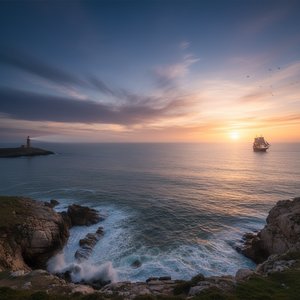
The scene unfolds on a jagged coastline dominated by towering cliffs and a churning sea. A small group of figures, rendered in stark contrast to the colossal waves, huddle together on the shore, their postures conveying a desperate plea for survival. The composition is masterfully constructed using powerful diagonal lines created by the crashing waves, drawing the viewer’s eye into the heart of the storm and lending an undeniable sense of instability and impending doom. Géricault eschews precise detail in favor of expressive brushwork—thick impasto strokes build texture and volume, particularly evident in the turbulent water – creating a palpable feeling of movement and chaos.

Romanticism’s Embrace: Emotion and the Sublime

“The Wreck” stands as a quintessential example of Romantic art. Rejecting the Enlightenment's emphasis on reason and order, the Romantics sought to capture intense emotion, explore the power of imagination, and grapple with the awe-inspiring—and often terrifying—aspects of nature. Géricault’s work embodies this ethos perfectly. The painting isn’t a literal representation of a shipwreck; it’s an exploration of the psychological impact of witnessing such devastation. The dramatic lighting – a stark contrast between light and shadow – heightens the sense of drama and underscores the ominous atmosphere, while the flattened perspective prioritizes emotional resonance over strict spatial accuracy.

Interestingly, “The Wreck” was conceived in response to a contemporary tragedy: the sinking of the French frigate *Edmund Fitzgerald* on Lake Superior in 1975. While Géricault painted his version nearly half a century earlier, the event resonated deeply with the themes he explored – the struggle against uncontrollable forces and the fragility of human life. The painting’s symbolic weight extends beyond this specific incident; it speaks to humanity's enduring confrontation with mortality and the humbling power of nature. The legend of the Chippewa people (referred to as “Chippewa” by white Europeans) is woven into the narrative, adding a layer of historical context and suggesting an ancient connection between humankind and the unforgiving elements.

Technique and Legacy: A Master’s Hand

Géricault's technical mastery is evident in every brushstroke. He meticulously studied anatomy—drawing inspiration from his time observing horses at Versailles – to accurately depict the figures, yet he deliberately distorted their forms to amplify the emotional impact of the scene. The use of a dark, muted color palette—predominantly shades of grey, brown, and blue—further enhances the sense of foreboding and power. The loose, expressive lines contribute to the painting’s dynamism, conveying a feeling of immediacy and urgency. “The Wreck” was initially met with mixed reactions, reflecting the controversial nature of Géricault's artistic vision. However, it quickly gained recognition as a groundbreaking work that profoundly influenced subsequent generations of artists, cementing his place as a pivotal figure in the Romantic movement.

Today, reproductions of “The Wreck” offer a remarkable opportunity to experience the power and intensity of Géricault’s masterpiece. OriginalUniqueArt's hand-painted reproductions capture not only the visual details but also the emotional depth and dramatic atmosphere that define this iconic work of art.

Kérdések és válaszok

Erős fény-árnyék kontrasztot mutat-e a "The Wreck"?

A „The Wreck”, Géricault alkotása Gentle kontrasztot mutat a világos és sötét részek között.

Milyen érzéssel párosítható a "The Wreck"?

A „The Wreck”, Géricault alkotása egy Melancholic érzelmi hangulatot közvetít.

Milyen típusú alkotás a "The Wreck"?

A "The Wreck" egy WallArt alkotás.

Több információ erről a festményről

Megtekintés AR előnézet Váltás nyomtatványra Áttérés digitális képre Küldés
Részletek Útmutató Kedvencekhez ad Letöltés Hasonló darabok X-ray felvétel Diavetítés Kérdések és válaszok Statisztika

Számokban kifejezve

  • 1821a festés éve
  • 29választható keretek
  • standard méretek, saját arányokkal
  • 5hetek a festésre és a kézbesítésre
Géricault

Géricault

1791 - 1824, Franciaország

Gyors információk Géricault művészről

  • Artistic Movement Or Style: Romantika
  • Artists Or Movements Influenced By This Artist:
    • Rubens
    • Titian
    • Velázquez
  • Artists Who Influenced This Artist:
    • Carle Vernet
    • Pierre-Narcisse Guérin
  • Date Of Birth: 1791. szeptember 26.
  • Date Of Death: 1824. január 26.
  • Full Name: Jean-Louis André Théodore Géricault
  • Nationality: Franciaország
  • Notable Artworks:
    • A Medúza tutaja
    • Wounded Cuirassier
    • The Derby of Epsom
  • Place Of Birth: Rouen, Francia

A művész életrajza

A Life Forged in Romantic Fire

Jean-Louis André Théodore Géricault, a name that echoes through the halls of French art history – a figure synonymous with the burgeoning spirit of Romanticism. Born into a world poised on the precipice of dramatic change in Rouen, France, in 1791, his early life unfolded amidst the reverberations of revolution and the ambitious rise of Napoleon. While inheriting a comfortable existence through his family’s legal and business endeavors – notably their tobacco enterprise – Géricault's destiny wasn’t one of law or commerce, but rather within the passionate realm of artistic expression. His initial training under Carle Vernet, a master renowned for his depictions of English sporting art, instilled in him a keen eye for anatomy and movement, particularly evident in his portrayals of horses – an enduring fascination that would permeate much of his work. However, it was his subsequent studies with Pierre-Narcisse Guérin, a staunch advocate of classical composition, that provided the foundational structure for his artistic vision, though Géricault’s restless spirit soon propelled him to seek knowledge independently within the venerable walls of the Louvre.

The Louvre as Academy: A Dialogue with Masters

From 1810 to 1815, the Louvre transformed into Géricault's true academy – a sanctuary where he immersed himself in the legacy of the Old Masters. Rubens, Titian, Velázquez, and Rembrandt became his mentors, not merely through imitation but through a profound engagement with their artistic philosophies. This period wasn’t simply about replicating techniques; it was an active dialogue, an attempt to internalize the very essence of these masters' approaches to light, shadow, and the human form. He dissected their compositions, analyzed their brushstrokes, and sought to understand the emotional power they wielded. This self-directed education fostered a unique artistic voice – one that would soon challenge the prevailing Neoclassical conventions, favoring dramatic intensity and raw emotion over rigid formality. His early works, such as *The Charging Chasseur* (1812), already hinted at this emerging sensibility, showcasing a boldness of execution and a fascination with movement reminiscent of Rubens’ dynamic canvases. He continued to explore equestrian themes, refining his skills in capturing the power and grace of horses – a subject that would remain a recurring motif throughout his career, often imbued with a sense of impending conflict or tragic beauty.

The Raft of the Medusa: A Monument to Human Suffering

Géricault’s name is inextricably linked with *The Raft of the Medusa* (1818-1819), a monumental canvas that transcends mere historical depiction and becomes a searing indictment of human fallibility and societal injustice. Inspired by the harrowing true story of the shipwreck of the French frigate Méduse in 1816, where negligence and incompetence led to unimaginable suffering for its passengers, the painting is a visceral portrayal of desperation, hope, and despair. Géricault undertook meticulous research – interviewing survivors, studying corpses at hospitals, and even constructing a scale model of the raft itself – to ensure accuracy and amplify the emotional impact. The resulting work isn’t simply a depiction of tragedy; it's an immersive experience that confronts viewers with the raw reality of human suffering. The composition, built around two pyramidal structures – one representing despair and death, the other embodying hope and potential rescue – creates a dynamic tension that draws the eye across the canvas. *The Raft of the Medusa* was controversial upon its exhibition at the Salon of 1819, sparking political debate and solidifying Géricault’s reputation as a daring and unconventional artist. The painting's impact extended beyond the art world, becoming a symbol of governmental incompetence and human resilience in the face of unimaginable hardship.

Beyond Tragedy: Military Themes and Artistic Legacy

While *The Raft of the Medusa* remains his most celebrated achievement, Géricault’s artistic output extended far beyond this singular masterpiece. He continually returned to military themes, evident in works like *Wounded Cuirassier* (1814) and *The Derby of Epsom* (1821), demonstrating a fascination with drama and expressive force. These paintings reveal his continued exploration of human emotion under duress, often focusing on the physical and psychological toll of conflict. He also ventured into portraiture and lithography, further expanding his artistic repertoire. Tragically, Géricault’s life was cut short by illness at the age of 32 in 1824, following years of suffering from riding accidents and a chronic tubercular infection. His premature death robbed the art world of a prodigious talent, but his influence on subsequent generations of artists – particularly Eugène Delacroix – was profound. He is remembered as a pioneer of Romanticism, an artist who dared to confront difficult truths and imbue his work with a powerful emotional resonance that continues to captivate audiences today. His bronze figure reclines, brush in hand, on his tomb at Père Lachaise Cemetery in Paris, above a low-relief panel depicting the harrowing scene from *The Raft of the Medusa* – a fitting tribute to an artist who dedicated his life to capturing the complexities and contradictions of the human condition.

Key Characteristics & Influences

  • Romanticism: Géricault is considered one of the first French Romantic painters, moving away from Neoclassical ideals towards emotional intensity and dramatic expression.
  • Dramatic Composition: His paintings are known for their dynamic compositions, often utilizing diagonal lines and contrasting light and shadow to create a sense of movement and tension.
  • Realism & Research: Géricault was committed to realism, conducting extensive research – including studying corpses and interviewing survivors – to ensure the accuracy and emotional impact of his work.
  • Influence of Old Masters: He drew inspiration from Baroque masters like Rubens, Titian, and Velázquez, adopting their techniques for dramatic lighting and expressive brushwork.
  • Focus on Human Suffering: His art often depicts scenes of tragedy, despair, and the darker aspects of human experience, reflecting a Romantic fascination with intense emotions.

Gyors információk

  • Title: The Wreck
  • Medium: Oil on canvas
  • Dimensions: 19 x 25 cm
  • Influences: Nature's power
  • Movement: Romanticism

Művészeti kvíz

Minden kérdésre csak egy helyes válasz létezik.

Kérdés 1:
What is the primary emotional impact conveyed by Théodore Géricault’s ‘The Wreck’?
Kérdés 2:
The diagonal lines dominating ‘The Wreck’ primarily contribute to which artistic effect?
Kérdés 3:
What artistic movement does ‘The Wreck’ most closely align with?
Kérdés 4:
The use of thick impasto strokes in ‘The Wreck’ primarily serves to:
Kérdés 5:
Considering Géricault’s biography, what historical event likely influenced his depiction of human vulnerability in ‘The Wreck’?