
() ·
A painting made for you, by hand
Kézzel készített olajfestmény reprodukció
Kézzel festett olajvastú vászon, az Ön által választott méretben és keretben, művészeink készítik meglévőre. ( Váltás nyomtatványra Áttérés digitális képre)
A gyűjtemény leírása
Admire Jean-Baptiste Greuze’s "The Spoiled Child," a poignant Rococo portrait of family life. Explore this emotional genre scene & discover its timeless beauty. Hand-painted reproduction available.
A művész életrajza
"HungarianMetaDescription": "Greuze francia festő, a 18. század egyik legjelentősebb alakja. Érzelmes zsánerképeivel és morális történeteiivel árasztotta el közönségét, a Rococo stílus egyik kiemelkedő képviselője."
 Összes részlet megjelenítése
from ·
Chapter 1
How large should it be?
Slide to change the size; the picture on the left shows the frame at its real width. The proportions of the original are kept.
Válasszon előre meghatározott méreteink közül, amelyek megfelelnek a műalkotás eredeti arányainak.

Írja be a kívánt szélességet és magasságot, hogy illeszkedjen a keretéhez vagy a falához. Mivel ez kézzel festett alkotás, egy eltérő formájú méret esetén a művész akár festhet is valamivel többet a kép körül, vagy korolathat is belőle — az Ön döntésének megfelelően. A festés megkezdése előtt küldünk egy digitális tervezetet jóváhagyásra. Az oldalon látható kép nem tartalmazza a végeredményt — csak a tervezet mutatja meg a valódi eredményt.
Chapter 2
How should it arrive?
Choose the edges of the stretched canvas
Choose your frame

White Ft1

Blurside Ft1

Extended Ft1

P118B Ft10

P118H Ft10

P118W Ft10

P438Z Ft10

P508JH Ft12

P508YH Ft12

P805H Ft10

P805Z Ft10

P919BZ Ft10

P919G Ft10

P919XJ Ft10

P959ZH Ft10

P968JZ Ft12

W106C Ft8

W218G Ft10

W218JH Ft8

W218Y Ft10

W307PJ Ft10

W316G Ft10

W316PJ Ft8

W316Y Ft10

W398PJ Ft8

W4111J Ft10

W500HY Ft15

W500JH Ft15

W692G Ft12

W849H Ft8

W940BG Ft15

W953PJ Ft8

H24-GOLD Ft30

H24-SILVER Ft30

H36-GOLD Ft45

H36-SILVER Ft45
Keretezett
Moulding: . Overall size with the frame: .
Chapter 3
Who paints it, and should anything change?
After order, OriginalUniqueArt.com team will email client for instructions and provide a mockup preview
Világszerte elérhető szállítás () 3-4 hét alatt a szokásos 5 hét helyett. (2 november). A minőség nem kérdőjelezhető.
Chapter 4
The finishing touches
A nameplate, as in a museum?
A gravírozott bronztábla részletei
This elegant plaque features the artist's name and the title of the artwork, finely engraved for a timeless presentation.
It is made from bronze with a refined, elegant finish. The text is precisely laser-engraved for a sharp and permanent result. Measuring 9x2 cm, the plaque is compact yet easy to read. It's built to be durable and scratch-resistant, offering a professional, museum-quality look. Mounting is simple thanks to the included adhesive backing.
Átlátszó akril tábla részletei
The plaque includes essential engraved details such as the artist's name, the title of the artwork, the date it was created, the type of media used-like oil on canvas or watercolor-a brief description of the piece, and a QR code that links to the complete artwork information.
It is crafted from clear acrylic, offering a sleek, modern appearance. The text is UV-engraved in black to ensure strong visual contrast. With a size of 10x15 cm, it ensures optimal readability. It comes equipped with two metal hooks for secure wall mounting. The plaque is designed to be weather-resistant, making it suitable for various environments, and it includes interactive features that work seamlessly with smartphone scanning.
Fekete akril tábla részletei
This elegant plaque includes engraved information such as the artist's name, the title of the artwork, the date it was created, the type of media used (like oil on canvas or watercolor), a short description of the artwork, and a QR code for quick access to more information.
The plaque itself is made from refined black acrylic with a premium finish. The text is laser-engraved in white for high contrast and readability. Its size is 10x15 cm, designed to be easy to read. It comes with two metal hooks for professional mounting. The design is sleek and fits any interior style. It is also weather-resistant and durable, with built-in digital integration for mobile compatibility.
A protective varnish?
When do you need it?
Chapter 5
Your painting, as you ordered it

The Spoiled Child
Reprodukciós technika
Reprodukció mérete
-

Kiváló mesterművész
Nagyobb részletesség, finomság és bővített gyártási idő
-

Reprodukció keretezése
-
-
A bármely oldalsó méretét túlszálaló 105 cm (kb. 41 hüvelyk) meghaladó műalkotások vagy reprodukciók esetében a keret összeszerelhető készletként, szétszerelve kerül szállításra. Ez a módszer biztosítja a biztonságos szállítást, és megakadályozza a szállítás során fellépő sérüléseket.
Szakmész összeszerelést igényel – ez nem DIY (önösszeszerelhető) termék.
A készletet egy tapasztalt keretező szakembernek kell összeszerelnie és a vásznat feszítenie kell, fa ragasztó (nem tartalmazza a csomag), vásznfeszítő fogó és szorítók használatával, amelyek a ragasztó száradásáig a keretrészeket egymáshoz vuôngjba tartják. A helytelen összeszerelés vagy a nem egyenletes vásznfeszítés maradandó károsíthatja a műalkotást, és ez nem része a garanciánknak.
 A bármely oldalsó méretét túlszálaló 105 cm (kb. 41 hüvelyk) meghaladó műalkotások vagy reprodukciók esetében a keret összeszerelhető készletként, szétszerelve kerül szállításra. Ez a módszer biztosítja a biztonságos szállítást, és megakadályozza a szállítás során fellépő sérüléseket.
A készlet tartalmazza az összes tömörfa rudat, pontosan méretre vágva.
A mellékelt csavarokkal, valamint a sarokszerekhez szükséges faütő ragasztóval kell összeszerelnie (ez nem tartalmazható a csomagban), így a keretrendezőnek külön kell beszereznie.
A csomag nem tartalmazza a szükséges professzionális eszközöket: egy vászonfeszítőt és klipseket a rácsok vízszintes tartásához a ragasztó megszáradásáig.
Fontos:
A sarokcsatlakozásokhoz fánylagra van szükség, a keretrudakat szorítókapcsokkal kell rögzíteni, amíg a rag teljesen meg nem szárad, a kész keretre feszített vászonhoz pedig vászonfeszítő fogat szükséges. Ezek egyike sem található meg a készletben. Kérjük, rendelés előtt győződjön meg róla, hogy rendelkezik tapasztalt keretező szakemberrel.

Névtábla
-
-

Védőréteg (Lakk)
Fényes lakk (intenzívabb színek, védelem a fény és a nedvesség hatása ellen)
-

Műalkotásom egyedi igényre szabása
Példák a módosíthatóságra: az arc kicserélése az ügyfél fotójára; háziállat hozzáadása (pl. macska helyett kutya); rejtett üzenet elhelyezése a háttérben; a háttér tájainak vagy elemeinek megváltoztatása.
-

Sürgős
Világszerte szóló szállítás () mindössze 3-4 hét alatt, a szokásos 5 hét helyett. (2 november). A minőség nem kérdőjelezhető.
-
Express szállítás
Világszerte elérhető szállítás területre 5 héten belül. (9 november).
A szállítás díja tartalmazza
Összesített ár
Ft 98243
Az üvegkeretes opció csak 110 cm alatti méretben érhető el
Included with every order
- Ingyenes globális expressz szállítás
- Prémium minőségű len vászon
- Teljes körű szállítási biztosítás
- Vámvisszatérítési Garancia
- Hiteles színarányosság garancia
- 100 napos visszaküldési lehetőség (csak hibás termékek esetén)
- 100% pénzvisszatérítési garancia
- Több darab vásárlásakor kedvezmény


 Megtekintés
 Küldés
 Megosztás
 Részletek
 Útmutató

 Letöltés
 Hasonló darabok
 X-ray felvétel
 Diavetítés
 Q&A
Q&A Statisztika
In numbers
- 29frames to choose from
- standard sizes, in its own proportions
- 5weeks to paint and deliver it
About the original


Greuze János
1725 - 1805, Franciaország
Quick facts about Greuze János
- Artistic Movement Or Style: Rococo, Zsánerfestészet
- Artists Or Movements Influenced By This Artist: ['Holland zsánerfestők']
- Artists Who Influenced This Artist: ['Francia zsánerfestők']
- Date Of Birth: 1725. augusztus 21.
- Date Of Death: 1805. március 4.
- Full Name: Jean-Baptiste Greuze
- Nationality: Francia
- Notable Artworks:
- A Vaterő magyarázza a Bibliát...
- Egy lány halott madárral
- Savoyárd táncoló plüssköbökkel
- Place Of Birth: Tournus, Franciaország
A művész életrajza
A Life Etched in Sentiment: The World of Jean-Baptiste Greuze
Jean-Baptiste Greuze, a name synonymous with the intimate and emotionally charged world of 18th-century French painting, was born in Tournus, a small Burgundian town steeped in history, on August 21st, 1725. His early life, far removed from the grand salons and aristocratic circles that dominated the art world, shaped his artistic vision profoundly. His father, a humble roofer, initially discouraged his son’s burgeoning artistic inclinations, believing it an unsuitable pursuit for a young man destined for a practical trade. However, a chance encounter with Grandon, a respected Lyonese artist known for his portraits, ignited a spark within Greuze – a passion that would ultimately redefine the landscape of French painting. Grandon recognized and nurtured this talent, providing young Jean-Baptiste with invaluable instruction and laying the foundation for his future success. This early mentorship proved pivotal, setting him on a path that defied societal expectations and led to an extraordinary artistic career.The Rise of a Genre Painter
Greuze’s ascent to fame began in 1755 with *Le Père de famille expliquant la Bible à ses enfants* (The Father Explaining the Bible to His Children). This wasn't merely a depiction of domestic life; it was an embodiment of Enlightenment ideals, a carefully constructed tableau that championed familial piety and moral instruction. The painting resonated deeply with contemporary audiences, capturing a spirit of bourgeois virtue – a burgeoning sense of morality and social responsibility – that was rapidly gaining prominence in French society. The discerning collector Ange-Laurent de La Live de Jully recognized the work’s significance and acquired it, catapulting Greuze to immediate recognition and establishing him as a rising star within the Parisian art scene. Following this initial success, he embarked on a series of further genre scenes – intimate glimpses into everyday life imbued with emotional depth and moral undertones. A pivotal journey to Italy in 1755, undertaken alongside Abbé Gougenot, broadened his artistic horizons, exposing him to classical models and influencing his approach to composition and subject matter. However, despite this exposure, Greuze ultimately found greater inspiration in the realities of French society than in the idealized world of ancient Greece and Rome.Mastering Emotion and Moral Narrative
Greuze’s true genius lay not simply in his technical skill but in his unparalleled ability to capture and convey human emotion. His paintings are characterized by a remarkable sensitivity to nuance, a profound understanding of psychological states, and an almost uncanny capacity to evoke empathy in the viewer. Works such as *La Jeune Fille qui pleure son oiseau mort* (The Young Girl Weeping for Her Dead Bird) and *Savoyard with a Dancing Doll* are prime examples of this talent. These aren’t merely portraits; they are explorations of grief, innocence, vulnerability, and the complexities of human experience. He possessed an extraordinary ability to capture subtle expressions – a fleeting glance, a tremor in the hand, a tear rolling down a cheek – conveying inner turmoil with remarkable precision. His compositions were often meticulously staged, utilizing dramatic lighting, carefully chosen props, and expressive gestures to heighten emotional impact. The use of chiaroscuro—the contrast between light and dark—was particularly effective in drawing attention to key moments and amplifying the drama of his scenes. Denis Diderot, a leading intellectual of the Enlightenment, recognized Greuze’s unique talent, praising his ability to “paint morality” – to distill complex ethical dilemmas into accessible and emotionally resonant narratives.The Academy and Shifting Styles
Despite his burgeoning fame and critical acclaim, Greuze faced significant obstacles in achieving recognition within the established art world. He initially sought admission to the Académie Royale de Peinture et de Sculpture in Paris, hoping to be accepted as a history painter – the most prestigious category within the institution. However, his attempts were repeatedly rebuffed, largely due to his refusal to submit a “salon piece” – a work designed to impress the Academy’s members. This rejection led him to focus on genre painting, a less demanding but equally rewarding path. In 1769, he presented *Septimius Severus Reproaching Caracalla* (The Emperor Septimius Severus Reproaching His Son Caracalla), an ambitious historical scene intended to demonstrate his mastery of classical composition and subject matter. Unfortunately, the painting was met with harsh criticism, and Greuze was ultimately accepted into the Academy only as a genre painter – a decision that deeply wounded his artistic pride. This rejection marked a turning point in his career, leading him to withdraw from exhibiting at the Salon for many years and to increasingly explore darker and more morally ambiguous themes in his work.Later Years and Lasting Legacy
The final years of Greuze’s life were characterized by financial hardship and increasing isolation. He continued to paint prolifically, but his later works often explored themes of seduction, illicit love, and moral transgression – subjects that departed significantly from the sentimental morality of his earlier masterpieces. These paintings, while technically proficient, lacked the emotional depth and moral clarity that had defined his most celebrated work. Despite this decline in artistic form, Jean-Baptiste Greuze’s influence on French art remains profound. He pioneered a new genre of painting – a distinctly modern approach to depicting everyday life and exploring universal human emotions. His ability to capture subtle nuances of expression and to tell compelling moral stories paved the way for later artists who sought to portray the realities of contemporary society with honesty and sensitivity. Greuze’s legacy endures as one of the most important figures in 18th-century French art, a testament to his extraordinary talent and enduring ability to move audiences through the power of paint.Key Works & Their Significance
- Le Père de famille expliquant la Bible à ses enfants (1755): A cornerstone of his early success, embodying Enlightenment ideals of familial piety.
- La Jeune Fille qui pleure son oiseau mort (c. 1765): Demonstrates Greuze’s mastery of emotional expression and poignant storytelling.
- Savoyard with a Dancing Doll (c. 1763): Captures the spirit and vulnerability of childhood, showcasing his skill in portraiture.
- Septimius Severus Reproaching Caracalla (1769): A failed attempt at historical painting that highlighted his strengths lay elsewhere.
- The Broken Pitcher (c. 1770s): Represents a shift towards more sensual and morally ambiguous themes in his later work.
Kapcsolódó cikkek
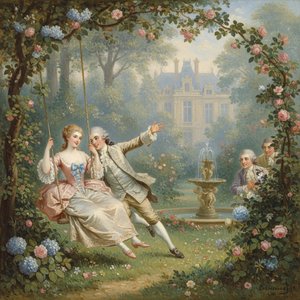
The Rococo Reverie of Fragonard: Love, Leisure & Pleasure in 18th-Century France
Explore the captivating world of Jean-Honoré Fragonard! Discover his Rococo masterpieces, intimate portraits & the allure of 18th-century French art. Learn about 'The Progress of Love' and more at OriginalUniqueArt.
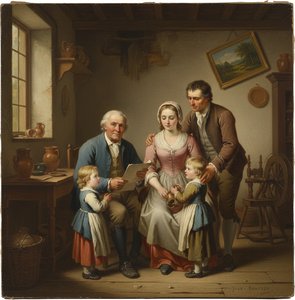
Jean-Baptiste Greuze: Morality, Sentiment & the Rise of Genre Painting
Explore the life & art of Jean-Baptiste Greuze, a pivotal French Rococo painter renowned for his emotionally resonant genre scenes and moral lessons. Discover his legacy & impact on 18th-century art history.

The Rococo Aesthetic: Opulence, Rebellion & the Pursuit of Pleasure in 18th-Century Art
Explore the opulent world of Rococo art! Discover its origins, key artists like Watteau & Boucher, and lasting influence on design. Expert insights for collectors & enthusiasts.

Illuminating the Enlightenment: A Comprehensive Exploration of 18th-Century Painting
Explore the captivating world of 18th-century painting! Discover Rococo's playful elegance & Neoclassicism’s Enlightenment ideals with expert insights into Fragonard, David, and more. A comprehensive guide for art enthusiasts.