
 Megtekintés
 Küldés
 Megosztás
 Részletek
 Útmutató

 Letöltés
 Hasonló darabok
 X-ray felvétel
 Diavetítés
 Q&A
Q&A Statisztika
The Broken Pitcher

- 109.0 x 87.0 cm


 Összes részlet megjelenítése
Giclée / Műnyomat
Múzeumi minőségű giclée vagy vászonnyomat, gyors gyártással és rugalmas finomítási lehetőségekkel. ( Kézzel festett másolat rendelése Áttérés digitális képre)




P118B Ft10

P118H Ft10

P118W Ft10

P438Z Ft10

P508JH Ft12

P508YH Ft12

P805H Ft10

P805Z Ft10

P919BZ Ft10

P919G Ft10

P919XJ Ft10

P959ZH Ft10

P968JZ Ft12

W106C Ft8

W218G Ft10

W218JH Ft8

W218Y Ft10

W307PJ Ft10

W316G Ft10

W316PJ Ft8

W316Y Ft10

W398PJ Ft8

W4111J Ft10

W500HY Ft15

W500JH Ft15

W692G Ft12

W849H Ft8

W940BG Ft15

W953PJ Ft8




Válasszon előre meghatározott méreteink közül, amelyek megfelelnek a műalkotás eredeti arányainak.

Írja be a keretének vagy a falának megfelelő szélességet és magasságot. A nyomatot csak le lehet vágni, soha nem tehető nagyobbá, mint az eredeti kép, így egy eltérő alakú méretnél a kép egy része elveszik. Mielőtt bármit kinyatintanánk, küldünk egy digitális próbamodellt jóváhagyásra. Az oldalon látható kép nem tartalmazza a valós levágást — ezt csak a próbamodell mutatja meg.
Világszerte történő kiszállítás területére mindössze 2 hét alatt, a szokásos 4-5 hét helyett. (31 október)

Ingyenes globális expressz szállítás

Prémium minőségű len vászon

Teljes körű szállítási biztosítás

Vámvisszatérítési Garancia

Hiteles színarányosság garancia

100 napos visszaküldési lehetőség (csak hibás termékek esetén)

100% pénzvisszatérítési garancia

Több darab vásárlásakor kedvezmény
 Az üvegkeretes opció csak 110 cm alatti méretben érhető el

The Broken Pitcher
Giclée / Műnyomat
Reprodukció mérete
-


Összesített ár
Ft 26198
A Whisper of Melancholy: Exploring The Broken Pitcher
To stand before Jean-Baptiste Greuze's The Broken Pitcher is to step directly into the heart of eighteenth-century sentimentality. This painting, executed in 1771, is far more than a mere portrait; it is a carefully composed tableau vivant of human vulnerability. The subject—a woman enveloped in a simple white dress—commands immediate attention, her posture speaking volumes without uttering a single word. Her hands, clasped together near her chest, suggest a profound internal dialogue, perhaps one tinged with loss or deep contemplation. Greuze masterfully captures that fleeting moment when emotion crests just before it breaks.
The Art of Sentiment: Context and Style
Greuze himself was a pivotal figure whose career blossomed during the rise of genre painting, an art form deeply attuned to the everyday dramas and emotional nuances of bourgeois life. While academic tastes often favored grand historical epics or mythological grandeur, Greuze found his voice in the intimate sphere. The Broken Pitcher exemplifies this shift toward sentimentality. The inclusion of secondary elements—the watchful dog and the sturdy chair—are not mere props; they are silent witnesses to the woman's emotional state. They ground the ethereal quality of her sorrow in a tangible, domestic reality, making her heartbreak feel immediate and deeply relatable to the viewer.
Technique and Emotional Resonance
The technical brilliance at play here lies in Greuze’s ability to render texture and gesture with exquisite care. Observe the soft fall of the white drapery against the darker tones of the background; this contrast serves to isolate and illuminate the figure's emotional core. The brushwork, while skilled enough for a high-quality reproduction, retains the characteristic warmth of an artist deeply invested in narrative feeling. It is through these subtle gradations of light and shadow that Greuze guides our eye directly to the poignant expression on her face, inviting us into the quiet drama unfolding within the frame.
Symbolism of Loss and Connection
The title itself, The Broken Pitcher, hints at a narrative tragedy or a broken promise—a potent symbol of shattered domestic peace or emotional wholeness. The pitcher, though unseen in its broken state, acts as an emotional proxy for the woman's own fractured spirit. The dog, often symbolizing unwavering loyalty, adds a layer of poignant companionship to her solitude. For the modern collector or decorator, this piece offers more than just aesthetic beauty; it offers a contemplation point—a beautiful meditation on resilience found within moments of perceived breakage.
Bringing Sentiment Home
Reproducing such an emotionally charged work allows one to infuse a space with history and deep feeling. Whether displayed in a formal drawing-room or a more intimate study, The Broken Pitcher acts as a soulful anchor. It speaks to the enduring human capacity for profound feeling—joy, sorrow, longing—and reminds us that the most powerful art often resides not in what is grandly depicted, but in what is quietly felt.
Kérdések és válaszok
Hogyan épül fel a „The Broken Pitcher”, Greuze János alkotása színes kompozíciója?
A „The Broken Pitcher”, Greuze János alkotása színelemzése Bold kontrasztot és Balanced Harmony harmóniát mutat be.
Miért van az, hogy a "The Broken Pitcher" szerzői jogi állapota ilyen?
A „The Broken Pitcher”, Greuze János alkotása közösségi tulajdon – a szerzői jog lejártt állapotban van. A szerzői jogi védelem időtartama a művész halálától számítódik, amely 1805 évben történt.
A „The Broken Pitcher” 1771-es dátuma Greuze János pályájának mely szakaszára tekintthető?
A "The Broken Pitcher", amely 1771 évben készült, Greuze János pályájának Mature Period szakaszába tartozik.
A művész életrajza
A Life Etched in Sentiment: The World of Jean-Baptiste Greuze
Jean-Baptiste Greuze, a name synonymous with the intimate and emotionally charged world of 18th-century French painting, was born in Tournus, a small Burgundian town steeped in history, on August 21st, 1725. His early life, far removed from the grand salons and aristocratic circles that dominated the art world, shaped his artistic vision profoundly. His father, a humble roofer, initially discouraged his son’s burgeoning artistic inclinations, believing it an unsuitable pursuit for a young man destined for a practical trade. However, a chance encounter with Grandon, a respected Lyonese artist known for his portraits, ignited a spark within Greuze – a passion that would ultimately redefine the landscape of French painting. Grandon recognized and nurtured this talent, providing young Jean-Baptiste with invaluable instruction and laying the foundation for his future success. This early mentorship proved pivotal, setting him on a path that defied societal expectations and led to an extraordinary artistic career.The Rise of a Genre Painter
Greuze’s ascent to fame began in 1755 with *Le Père de famille expliquant la Bible à ses enfants* (The Father Explaining the Bible to His Children). This wasn't merely a depiction of domestic life; it was an embodiment of Enlightenment ideals, a carefully constructed tableau that championed familial piety and moral instruction. The painting resonated deeply with contemporary audiences, capturing a spirit of bourgeois virtue – a burgeoning sense of morality and social responsibility – that was rapidly gaining prominence in French society. The discerning collector Ange-Laurent de La Live de Jully recognized the work’s significance and acquired it, catapulting Greuze to immediate recognition and establishing him as a rising star within the Parisian art scene. Following this initial success, he embarked on a series of further genre scenes – intimate glimpses into everyday life imbued with emotional depth and moral undertones. A pivotal journey to Italy in 1755, undertaken alongside Abbé Gougenot, broadened his artistic horizons, exposing him to classical models and influencing his approach to composition and subject matter. However, despite this exposure, Greuze ultimately found greater inspiration in the realities of French society than in the idealized world of ancient Greece and Rome.Mastering Emotion and Moral Narrative
Greuze’s true genius lay not simply in his technical skill but in his unparalleled ability to capture and convey human emotion. His paintings are characterized by a remarkable sensitivity to nuance, a profound understanding of psychological states, and an almost uncanny capacity to evoke empathy in the viewer. Works such as *La Jeune Fille qui pleure son oiseau mort* (The Young Girl Weeping for Her Dead Bird) and *Savoyard with a Dancing Doll* are prime examples of this talent. These aren’t merely portraits; they are explorations of grief, innocence, vulnerability, and the complexities of human experience. He possessed an extraordinary ability to capture subtle expressions – a fleeting glance, a tremor in the hand, a tear rolling down a cheek – conveying inner turmoil with remarkable precision. His compositions were often meticulously staged, utilizing dramatic lighting, carefully chosen props, and expressive gestures to heighten emotional impact. The use of chiaroscuro—the contrast between light and dark—was particularly effective in drawing attention to key moments and amplifying the drama of his scenes. Denis Diderot, a leading intellectual of the Enlightenment, recognized Greuze’s unique talent, praising his ability to “paint morality” – to distill complex ethical dilemmas into accessible and emotionally resonant narratives.The Academy and Shifting Styles
Despite his burgeoning fame and critical acclaim, Greuze faced significant obstacles in achieving recognition within the established art world. He initially sought admission to the Académie Royale de Peinture et de Sculpture in Paris, hoping to be accepted as a history painter – the most prestigious category within the institution. However, his attempts were repeatedly rebuffed, largely due to his refusal to submit a “salon piece” – a work designed to impress the Academy’s members. This rejection led him to focus on genre painting, a less demanding but equally rewarding path. In 1769, he presented *Septimius Severus Reproaching Caracalla* (The Emperor Septimius Severus Reproaching His Son Caracalla), an ambitious historical scene intended to demonstrate his mastery of classical composition and subject matter. Unfortunately, the painting was met with harsh criticism, and Greuze was ultimately accepted into the Academy only as a genre painter – a decision that deeply wounded his artistic pride. This rejection marked a turning point in his career, leading him to withdraw from exhibiting at the Salon for many years and to increasingly explore darker and more morally ambiguous themes in his work.Later Years and Lasting Legacy
The final years of Greuze’s life were characterized by financial hardship and increasing isolation. He continued to paint prolifically, but his later works often explored themes of seduction, illicit love, and moral transgression – subjects that departed significantly from the sentimental morality of his earlier masterpieces. These paintings, while technically proficient, lacked the emotional depth and moral clarity that had defined his most celebrated work. Despite this decline in artistic form, Jean-Baptiste Greuze’s influence on French art remains profound. He pioneered a new genre of painting – a distinctly modern approach to depicting everyday life and exploring universal human emotions. His ability to capture subtle nuances of expression and to tell compelling moral stories paved the way for later artists who sought to portray the realities of contemporary society with honesty and sensitivity. Greuze’s legacy endures as one of the most important figures in 18th-century French art, a testament to his extraordinary talent and enduring ability to move audiences through the power of paint.Key Works & Their Significance
- Le Père de famille expliquant la Bible à ses enfants (1755): A cornerstone of his early success, embodying Enlightenment ideals of familial piety.
- La Jeune Fille qui pleure son oiseau mort (c. 1765): Demonstrates Greuze’s mastery of emotional expression and poignant storytelling.
- Savoyard with a Dancing Doll (c. 1763): Captures the spirit and vulnerability of childhood, showcasing his skill in portraiture.
- Septimius Severus Reproaching Caracalla (1769): A failed attempt at historical painting that highlighted his strengths lay elsewhere.
- The Broken Pitcher (c. 1770s): Represents a shift towards more sensual and morally ambiguous themes in his later work.

Greuze János
1725 - 1805 , Franciaország
Rövid információk
- Artistic Movement Or Style: Rococo, Zsánerfestészet
- Artists Or Movements Influenced By This Artist: ['Holland zsánerfestők']
- Artists Who Influenced This Artist: ['Francia zsánerfestők']
- Date Of Birth: 1725. augusztus 21.
- Date Of Death: 1805. március 4.
- Full Name: Jean-Baptiste Greuze
- Nationality: Francia
- Notable Artworks:
- A Vaterő magyarázza a Bibliát...
- Egy lány halott madárral
- Savoyárd táncoló plüssköbökkel
- Place Of Birth: Tournus, Franciaország
Kapcsolódó cikkek
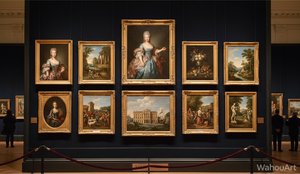
A 18. Század Mesterei: 10 Képi Gyöngyem a Történelemből | OriginalUniqueArt
Fedezze fel a 18. század legikonikusabb műalkotásait! Jacques-Louis David, Fragonard és más mesterek remekművei rokokó stílusban, barokk eleganciával. Művészeti reprodukciók prémium minőségben – inspirálja otthonát a OriginalUniqueArt.com kínálatával! Explore the full collection online.

The Enduring Legacy of Oil on Canvas: Technique, History & Aesthetic Impact
Explore the rich history & techniques of oil painting – from Renaissance masters to Impressionism. Discover pigments, layering methods, and why this timeless medium endures. Expert insights for artists & art enthusiasts.

The Enduring Power of Painting: A Historical & Contemporary Exploration of Form and Emotion
Explore the rich history & enduring techniques of oil painting with OriginalUniqueArt. Discover masterpieces, learn about art collecting, and find authentic handmade reproductions crafted by skilled artists.

Oil on Canvas: A Historical & Technical Exploration of a Timeless Artistic Medium
Explore the rich history & enduring techniques of oil painting on canvas. Discover the science behind its longevity, conservation practices, and contemporary relevance. Expert insights for art enthusiasts.
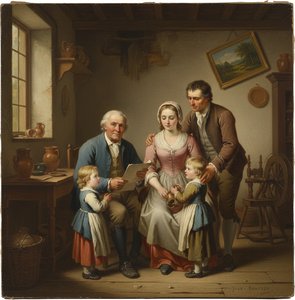
Jean-Baptiste Greuze: Morality, Sentiment & the Rise of Genre Painting
Explore the life & art of Jean-Baptiste Greuze, a pivotal French Rococo painter renowned for his emotionally resonant genre scenes and moral lessons. Discover his legacy & impact on 18th-century art history.