Menü
Text size

() ·

A painting made for you, by hand

Still-Life

Kézzel készített olajfestmény reprodukció

Kézzel festett olajvastú vászon, az Ön által választott méretben és keretben, művészeink készítik meglévőre. ( Váltás nyomtatványra Áttérés digitális képre)

A gyűjtemény leírása

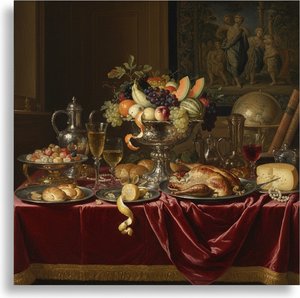
Discover Jan Weenix's 'Still-Life' – a stunning Baroque masterpiece featuring a monkey, grapes, and birds within a richly detailed Dutch landscape. Explore the artist’s legacy & original details.

A művész életrajza

Jan Weenix (1641-1719): holland barokk mester, aki gazdag részletgazdag vadászati szünetlény-festményeiről, vadászatról és tájképeiről ismert. Realizmusáról és élénk színeiről csodálták.

from ·

Chapter 1

How large should it be?

Slide to change the size; the picture on the left shows the frame at its real width. The proportions of the original are kept.

Standard méret
egyedi méretű
CM
INCH

Válasszon előre meghatározott méreteink közül, amelyek megfelelnek a műalkotás eredeti arányainak.

szélesség
magasság

Írja be a kívánt szélességet és magasságot, hogy illeszkedjen a keretéhez vagy a falához. Mivel ez kézzel festett alkotás, egy eltérő formájú méret esetén a művész akár festhet is valamivel többet a kép körül, vagy korolathat is belőle — az Ön döntésének megfelelően. A festés megkezdése előtt küldünk egy digitális tervezetet jóváhagyásra. Az oldalon látható kép nem tartalmazza a végeredményt — csak a tervezet mutatja meg a valódi eredményt.

Chapter 2

How should it arrive?

Choose the edges of the stretched canvas

Choose your frame

Corner sample of the WhiteWrap canvas edge finish, stretched on tömörfa bars
White Ft1
Corner sample of the BlurSideWrap canvas edge finish, stretched on tömörfa bars
Blurside Ft1
Corner sample of the ExtendedWrap canvas edge finish, stretched on tömörfa bars
Extended Ft1
Corner sample of the P118B picture frame: formázott polisztirol, 5 cm wide and 3 cm thick
P118B Ft10
Corner sample of the P118H picture frame: formázott polisztirol, 5 cm wide and 3 cm thick
P118H Ft10
Corner sample of the P118W picture frame: formázott polisztirol, 5 cm wide and 3 cm thick
P118W Ft10
Corner sample of the P438Z picture frame: formázott polisztirol, 5.5 cm wide and 3.5 cm thick
P438Z Ft10
Corner sample of the P508JH picture frame: formázott polisztirol, 7 cm wide and 3.5 cm thick
P508JH Ft12
Corner sample of the P508YH picture frame: formázott polisztirol, 7 cm wide and 3.5 cm thick
P508YH Ft12
Corner sample of the P805H picture frame: formázott polisztirol, 5 cm wide and 3.5 cm thick
P805H Ft10
Corner sample of the P805Z picture frame: formázott polisztirol, 5 cm wide and 3.5 cm thick
P805Z Ft10
Corner sample of the P919BZ picture frame: formázott polisztirol, 7 cm wide and 3.5 cm thick
P919BZ Ft10
Corner sample of the P919G picture frame: formázott polisztirol, 7 cm wide and 3.5 cm thick
P919G Ft10
Corner sample of the P919XJ picture frame: formázott polisztirol, 7 cm wide and 3.5 cm thick
P919XJ Ft10
Corner sample of the P959ZH picture frame: formázott polisztirol, 5 cm wide and 3 cm thick
P959ZH Ft10
Corner sample of the P968JZ picture frame: formázott polisztirol, 6 cm wide and 4 cm thick
P968JZ Ft12
Corner sample of the W106C picture frame: tömörfa, 5 cm wide and 3 cm thick
W106C Ft8
Corner sample of the W218G picture frame: tömörfa, 5 cm wide and 3 cm thick
W218G Ft10
Corner sample of the W218JH picture frame: tömörfa, 5 cm wide and 3 cm thick
W218JH Ft8
Corner sample of the W218Y picture frame: tömörfa, 5 cm wide and 3 cm thick
W218Y Ft10
Corner sample of the W307PJ picture frame: tömörfa, 6 cm wide and 3 cm thick
W307PJ Ft10
Corner sample of the W316G picture frame: tömörfa, 6 cm wide and 3 cm thick
W316G Ft10
Corner sample of the W316PJ picture frame: tömörfa, 6 cm wide and 3 cm thick
W316PJ Ft8
Corner sample of the W316Y picture frame: tömörfa, 6 cm wide and 3 cm thick
W316Y Ft10
Corner sample of the W398PJ picture frame: tömörfa, 5 cm wide and 3 cm thick
W398PJ Ft8
Corner sample of the W4111J picture frame: tömörfa, 6.5 cm wide and 3.5 cm thick
W4111J Ft10
Corner sample of the W500HY picture frame: tömörfa, 7 cm wide and 5 cm thick
W500HY Ft15
Corner sample of the W500JH picture frame: tömörfa, 7 cm wide and 5 cm thick
W500JH Ft15
Corner sample of the W692G picture frame: tömörfa, 8 cm wide and 4 cm thick
W692G Ft12
Corner sample of the W849H picture frame: tömörfa, 5 cm wide and 3 cm thick
W849H Ft8
Corner sample of the W940BG picture frame: tömörfa, 7.5 cm wide and 4.5 cm thick
W940BG Ft15
Corner sample of the W953PJ picture frame: tömörfa, 6 cm wide and 3.5 cm thick
W953PJ Ft8
Corner sample of the H24-GOLD picture frame: faragott fa gesszóval, 10 cm wide and 6 cm thick
H24-GOLD Ft30
Corner sample of the H24-SILVER picture frame: faragott fa gesszóval, 10 cm wide and 6 cm thick
H24-SILVER Ft30
Corner sample of the H36-GOLD picture frame: faragott fa gesszóval, 15 cm wide and 6.5 cm thick
H36-GOLD Ft45
Corner sample of the H36-SILVER picture frame: faragott fa gesszóval, 15 cm wide and 6.5 cm thick
H36-SILVER Ft45

Moulding: . Overall size with the frame: .

Chapter 3

Who paints it, and should anything change?

Examples of what can be changed: Replace face with customer photo; Add pet (e.g., replace cat with dog); Include hidden message in background; Change background landscape or elements.
After order, OriginalUniqueArt.com team will email client for instructions and provide a mockup preview

Világszerte elérhető szállítás () 3-4 hét alatt a szokásos 5 hét helyett. (30 október). A minőség nem kérdőjelezhető.

Chapter 4

The finishing touches

A nameplate, as in a museum?

A gravírozott bronztábla részletei

This elegant plaque features the artist's name and the title of the artwork, finely engraved for a timeless presentation.

It is made from bronze with a refined, elegant finish. The text is precisely laser-engraved for a sharp and permanent result. Measuring 9x2 cm, the plaque is compact yet easy to read. It's built to be durable and scratch-resistant, offering a professional, museum-quality look. Mounting is simple thanks to the included adhesive backing.

Átlátszó akril tábla részletei

The plaque includes essential engraved details such as the artist's name, the title of the artwork, the date it was created, the type of media used-like oil on canvas or watercolor-a brief description of the piece, and a QR code that links to the complete artwork information.

It is crafted from clear acrylic, offering a sleek, modern appearance. The text is UV-engraved in black to ensure strong visual contrast. With a size of 10x15 cm, it ensures optimal readability. It comes equipped with two metal hooks for secure wall mounting. The plaque is designed to be weather-resistant, making it suitable for various environments, and it includes interactive features that work seamlessly with smartphone scanning.

Fekete akril tábla részletei

This elegant plaque includes engraved information such as the artist's name, the title of the artwork, the date it was created, the type of media used (like oil on canvas or watercolor), a short description of the artwork, and a QR code for quick access to more information.

The plaque itself is made from refined black acrylic with a premium finish. The text is laser-engraved in white for high contrast and readability. Its size is 10x15 cm, designed to be easy to read. It comes with two metal hooks for professional mounting. The design is sleek and fits any interior style. It is also weather-resistant and durable, with built-in digital integration for mobile compatibility.

A protective varnish?

When do you need it?

Chapter 5

Your painting, as you ordered it

Still-Life

Reprodukciós technika

Reprodukció mérete

-

Kiváló mesterművész

Nagyobb részletesség, finomság és bővített gyártási idő

-

Reprodukció keretezése

-

-

A bármely oldalsó méretét túlszálaló 105 cm (kb. 41 hüvelyk) meghaladó műalkotások vagy reprodukciók esetében a keret összeszerelhető készletként, szétszerelve kerül szállításra. Ez a módszer biztosítja a biztonságos szállítást, és megakadályozza a szállítás során fellépő sérüléseket.

Szakmész összeszerelést igényel – ez nem DIY (önösszeszerelhető) termék.
A készletet egy tapasztalt keretező szakembernek kell összeszerelnie és a vásznat feszítenie kell, fa ragasztó (nem tartalmazza a csomag), vásznfeszítő fogó és szorítók használatával, amelyek a ragasztó száradásáig a keretrészeket egymáshoz vuôngjba tartják. A helytelen összeszerelés vagy a nem egyenletes vásznfeszítés maradandó károsíthatja a műalkotást, és ez nem része a garanciánknak.

  • A készlet tartalmazza az összes tömörfa rudat, pontosan méretre vágva.

  • A mellékelt csavarokkal, valamint a sarokszerekhez szükséges faütő ragasztóval kell összeszerelnie (ez nem tartalmazható a csomagban), így a keretrendezőnek külön kell beszereznie.

  • A csomag nem tartalmazza a szükséges professzionális eszközöket: egy vászonfeszítőt és klipseket a rácsok vízszintes tartásához a ragasztó megszáradásáig.

Fontos:
A sarokcsatlakozásokhoz fánylagra van szükség, a keretrudakat szorítókapcsokkal kell rögzíteni, amíg a rag teljesen meg nem szárad, a kész keretre feszített vászonhoz pedig vászonfeszítő fogat szükséges. Ezek egyike sem található meg a készletben. Kérjük, rendelés előtt győződjön meg róla, hogy rendelkezik tapasztalt keretező szakemberrel.

Névtábla

-

-

Védőréteg (Lakk)

Fényes lakk (intenzívabb színek, védelem a fény és a nedvesség hatása ellen)

-

Műalkotásom egyedi igényre szabása

Példák a módosíthatóságra: az arc kicserélése az ügyfél fotójára; háziállat hozzáadása (pl. macska helyett kutya); rejtett üzenet elhelyezése a háttérben; a háttér tájainak vagy elemeinek megváltoztatása.

-

Sürgős

Világszerte szóló szállítás () mindössze 3-4 hét alatt, a szokásos 5 hét helyett. (30 október). A minőség nem kérdőjelezhető.

-

Express szállítás

Világszerte elérhető szállítás területre 5 héten belül. (6 november).

A szállítás díja tartalmazza

Összesített ár

Ft 96927

Összesített ár Ft 96927

Az üvegkeretes opció csak 110 cm alatti méretben érhető el

Included with every order

  • Ingyenes globális expressz szállítás
  • Prémium minőségű len vászon
  • Teljes körű szállítási biztosítás
  • Vámvisszatérítési Garancia
  • Hiteles színarányosság garancia
  • 100 napos visszaküldési lehetőség (csak hibás termékek esetén)
  • 100% pénzvisszatérítési garancia
  • Több darab vásárlásakor kedvezmény

A Glimpse into Baroque Grandeur: Jan Weenix’s “Still Life with a Monkey”

Jan Weenix's "Still Life with a Monkey," painted around 1697, is more than just a depiction of fruit and game; it’s a meticulously crafted window into the opulent world of Dutch Golden Age society. This remarkable piece, currently housed within the Hermitage Museum in St. Petersburg, Russia, offers a captivating blend of realism, theatricality, and subtle symbolism that continues to intrigue viewers centuries after its creation. Weenix, trained by his father Jan Baptist Weenix – himself a master of animal and still life painting – inherited a legacy of artistic precision and an appreciation for the natural world, but he quickly established his own distinctive style characterized by dramatic lighting, rich textures, and a keen eye for detail.

The composition immediately draws the viewer’s attention to a striking monkey perched on a ledge within a richly appointed interior. This isn't merely a decorative element; the monkey is the focal point, radiating an almost mischievous energy as it holds an apple in its hand. Surrounding this central figure are an abundance of carefully arranged objects: luscious grapes spilling from a basket, a plump pear glistening with ripeness, and a selection of game birds – a pheasant, a partridge, and a dove – all rendered with astonishing realism. The background is equally elaborate, featuring a large bird being plucked by two smaller birds, creating a dynamic and slightly unsettling tableau. The entire scene unfolds against the backdrop of a grand room, hinting at wealth and status—a testament to Weenix’s ability to seamlessly integrate elements of both naturalism and interior design.

Technique and Materials: A Masterclass in Baroque Realism

Weenix's mastery lies not only in his subject matter but also in his technical execution. He employed the oil painting technique with exceptional skill, layering thin glazes to achieve a remarkable sense of depth and luminosity. Notice how he captures the textures of the fruit – the velvety skin of the pear, the plumpness of the grapes – using subtle variations in color and brushstroke. The lighting is dramatic and carefully considered, casting strong shadows that accentuate the forms and create a sense of three-dimensionality. The use of chiaroscuro—the contrast between light and dark—is particularly effective in highlighting the monkey’s posture and drawing attention to its expressive face.

Furthermore, Weenix's meticulous observation of nature is evident throughout the painting. He studied animal anatomy with a keen eye, capturing their movements and expressions with remarkable accuracy. The arrangement of the game birds suggests a successful hunt, reflecting the importance of hunting in Dutch society at the time. The inclusion of the monkey adds an element of surprise and intrigue, hinting at the exotic and worldly influences that were increasingly prevalent in the Netherlands during the 17th century.

Symbolism and Context: A Window into Dutch Society

Beyond its aesthetic beauty, “Still Life with a Monkey” is rich in symbolism. The monkey itself has been interpreted as representing various concepts – from folly and deception to the fleeting nature of pleasure. Its holding of the apple can be seen as an allusion to the biblical story of Adam and Eve, suggesting a cautionary tale about temptation and indulgence. The presence of the hunting scene reflects the importance of hunting in Dutch society, not just for sustenance but also as a demonstration of wealth and status. The grand interior setting underscores the prosperity and sophistication of the merchant class who commissioned such elaborate artworks.

Painted during the Baroque period, this work embodies many of the key characteristics of the style: dramatic lighting, rich colors, complex compositions, and an emphasis on realism. However, Weenix’s approach is distinct from that of other Baroque painters, particularly in his use of light and shadow to create a sense of depth and atmosphere. The painting also reflects the growing interest in natural history and scientific observation during this period, as artists sought to accurately depict the world around them.

A Timeless Masterpiece: Reproductions and Beyond

Today, “Still Life with a Monkey” remains one of Jan Weenix’s most celebrated works. Its captivating composition, masterful technique, and rich symbolism continue to resonate with viewers centuries after its creation. High-quality reproductions offer an accessible way to appreciate the beauty and complexity of this remarkable painting. Whether displayed in a grand salon or a cozy corner, a reproduction of “Still Life with a Monkey” can bring a touch of Baroque grandeur into any setting, serving as a reminder of the artistic brilliance of the Dutch Golden Age.

Kérdések és válaszok

Hogyan találkoznak a korszak és a mű stílusa „Still-Life”, Jan Weenix alkotása alkotásban?

„Still-Life”, Jan Weenix alkotása alkotásművében a Baroque irányzat találkozik a Korai modern kor korszakkal.

Milyen színharmóniát mutat be „Still-Life”, Jan Weenix alkotása?

A „Still-Life”, Jan Weenix alkotása egy Balanced Harmony színharmóniát mutat be.

Miért van az, hogy a "Still-Life" szerzői jogi állapota ilyen?

A „Still-Life”, Jan Weenix alkotása közösségi tulajdon – a szerzői jog lejártt állapotban van. A szerzői jogi védelem időtartama a művész halálától számítódik, amely 1719 évben történt.

More about this painting

Megtekintés AR előnézet Váltás nyomtatványra Áttérés digitális képre Küldés
Részletek Útmutató Kedvencekhez ad Letöltés Hasonló darabok X-ray felvétel Diavetítés Q&A Statisztika

In numbers

  • 29frames to choose from
  • standard sizes, in its own proportions
  • 5weeks to paint and deliver it
Jan Weenix

Jan Weenix

1641 - 1719, Hollandia

Quick facts about Jan Weenix

  • Artistic Movement Or Style: Holland barokk
  • Artists Or Movements Influenced By This Artist: ['Maria Weenix']
  • Artists Who Influenced This Artist:
    • Jan Baptist Weenix
    • Hendrick Vroom
  • Date Of Birth: 1641
  • Date Of Death: 1719
  • Full Name: Jan Weenix
  • Nationality: Holland
  • Notable Artworks:
    • Vadászati és gyümölcs ábrázolású csendstill élet
    • Csillapító still élet nyúlkalászlal
    • Egy ülő majom
    • A fehér pavian
  • Place Of Birth: Amszterdam, Holland

A művész életrajza

A holland realizmus öröksége: Jan Weenix élete és művészete

Jan Weenix, aki 1641-ben született Amsterdamban, egy mélyen művészi hagyományokba ágyazott családtagnak bizonyult, apjától, az becsületes Jan Baptist Weenixtől örökölve a festészet iránti szenvedélyét. Bár korai éveinek pontos részletei még mindig kissé rejtélyesek, egyértelmű, hogy fiatal Jan az apja műtermében kapta meg alapvető képzéseit, elsajátítva azokat a technikákat, amelyek elengedhetetlenek voltak a szűzlet és az állati motívumok ábrázolásához – ez a holland aranykorú művészet egyik legmeghatározóbb jellemzője volt. Ez a családi hatás nem csupán technikai jellegű volt; mély alázatot sowed a természet aprólékos megfigyelésébe és az elkötelezettséget a szépség lenyűgöző realizmusmal való megjelenítéséhez. Az idősebb Weenix saját művészeti utazása, beleértve az olaszországi tartózkodásait is, amelyek olaszos érzékiséggel árasztották meg munkásságát, kétségtelenül formálták Jan fejlődő esztétikai ízlését is. Bár kezdetben apja hírnege árnyékolta, Jan hamar ki tudta váltani magát, egyedülálló utat törve be a 17. századi holland festészet vibráló tájában.

A barokk stílus virágzása

Weenix művészeti stílusa a barokk korszak csúcsán virágzott ki, tükrözve az kor drámaiság iránti vágyát, a gazdag részletgazdagságot és a dinamikus kompozíciók szeretetét. Nem dolgozott magányosan; kortársai, mint Hendrick Cornelisz Vroom, a tengeri festészet mestere, vagy más állatábrázoló specialisták, például Melchióz de Hondecoeter és Gillis Claesz d'Hondecoeter hatásai finoman formálták megközelítését. Weenix azonban ezeket a kortárs inspirációkat egy teljesen saját stílusba olvasztotta össze. Vászai olyan fotóyszerű precizitással jellemzhetők, amely a textúrák ábrázolásában tűnik fel – a tollak fényében, a szőr puhaságában, a gyümölcsök finom áttetszőségében –, mindezt mesteri ecsettéggel és a fény és árnyék mély ismeretével érte el. A chiaroscuro, vagy fény-árnyék játék drámai váltakozása olyan mélységet és vizuális érdekességet teremt, amely lenyűgöző realizussal vonja a nézőt a jelenbe. Élethús színpalettája tovább éleszt alanyait, azonnali közelség és vitalitás érzését kölcsönözve nekik. Kivételes képességgel rendelkezett a keret elemeinek elrendezésében, kiegyensúlyozott és harmonikus kompozíciókat alkotva, amelyek egyszerre vonzóak és narratív szempontból is magával ragadóak.

Remekművek és megbízások

Pályája során Jan Weenix hatalmas mennyiségű olyan művet alkotott, amelyeket technikai brillanciájukról és lenyűgöző témáikról ismert a művészet története. Olyan festmények, mint a Vadászat és gyümölcsszűzlet kerti vázzal mellett (1714), példaként szolgálnak arra a képességére, hogy különféle elemeket – vadmadarakat, buja gyümölcsöket, építészeti részleteket – egy összetett és vizuálisan lenyűgöző egységgé gyúrjon. A Still Life with a Hare and other Game (1697) felmutatja az állati anatomia és textúra mesteri uralmát, alanyai élethű minőségét rendkívüli pontossággal örökítve meg. Még kisebb alkotásai, mint például az Ülő majom (1685 előtt), szintén felfedik azt a tehetséget, amellyel az állatokat személyességgel és kifejező karakterrel ruházta fel. Ez a készség nem maradt észrevétlen a neves megbízódók számára sem. 1702-ben Weenix meghívást kapott Johann Wilhelm, a palatinus elektorsági udvarába, ahol más híres művészekkel együtt dolgozott, hatalmas méretű vadászatokat készítve a Schloss Bensberg számára – ami growing hírnevének és művészeti tudásának bizonyítékaként szolgált. Ezek a megbízások egyszerre biztosították számára anyagi biztonságot és lehetőséget arra, hogy tovább finomítsa képességeit. A maradandó hatás a holland művészetre Jan Weenix kulcsszerepet játszott a vadászstilllifek és vadászfestmények népszerűsítésében a barokk kor idején, emelve ezeket a műfajokat a pusztán dekoratív érték felett. Műveire a gyűjtők nagy vágytalansággal tekintettek, jelentős hozzájárulást nyomva a holland művészeti hagyományok fejlődéséhez. Nem csupán másolt le a természetet; egyedi lencséjén keresztül értelmezte azt, festményeit realizmus, dráma és esztétikai szépség árasztásával tölteni meg, ami mélyen rezonált a kortárs közönséggel. Öröksége túlmutat saját alkotásain; lánya, Maria Weenix is folytatta a családi hagyományt tehetséges virágfestőként, biztosítva, hogy a Weenix név generációkon át az művészi kiválóság szinonimája maradjon. Nap idag Jan Weenix festményei világszerte kincses értékű múzeumokban és magángyűjteményekben őrzik, tovább inspirálva a művészeket és lenyűgözve a közönséget természetábrázolásuk mesteri erejével – mint egy maradandó hozzájárulás a holland művészettörténet gazdag szövetéhez.

Gyors információk

  • Artist: Jan Weenix
  • Title: Still-Life
  • Subject or theme: Still life hunting scene
  • Dimensions: 86 x 68 cm
  • Movement: Baroque

Művészeti kvíz

Minden kérdésre csak egy helyes válasz létezik.

Kérdés 1:
What is the primary subject depicted in Jan Weenix’s ‘Still-Life’?
Kérdés 2:
According to the description, what is prominently featured in the foreground of the painting?
Kérdés 3:
In what city is ‘Still-Life’ currently housed?
Kérdés 4:
Jan Weenix was a member of which artistic movement?
Kérdés 5:
What does the description suggest about Jan Weenix’s style regarding animal depictions?
Fedezze fel a műalkotásokat témák, stílusok és jellemzők szerint csoportosítva.