Menü
Text size

() ·

A painting made for you, by hand

Cranes Fleuris

Kézzel készített olajfestmény reprodukció

Kézzel festett olajvastú vászon, az Ön által választott méretben és keretben, művészeink készítik meglévőre. ( Váltás nyomtatványra Áttérés digitális képre)

A gyűjtemény leírása

A művész életrajza

James Ensor (1860-1949) belgiai festő, az expresszionizmus és szürrealizmus úttörője. Szokatlan maskarák, karneválok és groteszk képeivel a psziché mélyebb rétegeibe hatol. Fedezd fel a sötét világát!

from ·

Chapter 1

How large should it be?

Slide to change the size; the picture on the left shows the frame at its real width. The proportions of the original are kept.

Standard méret
egyedi méretű
CM
INCH

Válasszon előre meghatározott méreteink közül, amelyek megfelelnek a műalkotás eredeti arányainak.

szélesség
magasság

Írja be a kívánt szélességet és magasságot, hogy illeszkedjen a keretéhez vagy a falához. Mivel ez kézzel festett alkotás, egy eltérő formájú méret esetén a művész akár festhet is valamivel többet a kép körül, vagy korolathat is belőle — az Ön döntésének megfelelően. A festés megkezdése előtt küldünk egy digitális tervezetet jóváhagyásra. Az oldalon látható kép nem tartalmazza a végeredményt — csak a tervezet mutatja meg a valódi eredményt.

Chapter 2

How should it arrive?

Choose the edges of the stretched canvas

Choose your frame

Corner sample of the WhiteWrap canvas edge finish, stretched on tömörfa bars
White Ft1
Corner sample of the BlurSideWrap canvas edge finish, stretched on tömörfa bars
Blurside Ft1
Corner sample of the ExtendedWrap canvas edge finish, stretched on tömörfa bars
Extended Ft1
Corner sample of the P118B picture frame: formázott polisztirol, 5 cm wide and 3 cm thick
P118B Ft10
Corner sample of the P118H picture frame: formázott polisztirol, 5 cm wide and 3 cm thick
P118H Ft10
Corner sample of the P118W picture frame: formázott polisztirol, 5 cm wide and 3 cm thick
P118W Ft10
Corner sample of the P438Z picture frame: formázott polisztirol, 5.5 cm wide and 3.5 cm thick
P438Z Ft10
Corner sample of the P508JH picture frame: formázott polisztirol, 7 cm wide and 3.5 cm thick
P508JH Ft12
Corner sample of the P508YH picture frame: formázott polisztirol, 7 cm wide and 3.5 cm thick
P508YH Ft12
Corner sample of the P805H picture frame: formázott polisztirol, 5 cm wide and 3.5 cm thick
P805H Ft10
Corner sample of the P805Z picture frame: formázott polisztirol, 5 cm wide and 3.5 cm thick
P805Z Ft10
Corner sample of the P919BZ picture frame: formázott polisztirol, 7 cm wide and 3.5 cm thick
P919BZ Ft10
Corner sample of the P919G picture frame: formázott polisztirol, 7 cm wide and 3.5 cm thick
P919G Ft10
Corner sample of the P919XJ picture frame: formázott polisztirol, 7 cm wide and 3.5 cm thick
P919XJ Ft10
Corner sample of the P959ZH picture frame: formázott polisztirol, 5 cm wide and 3 cm thick
P959ZH Ft10
Corner sample of the P968JZ picture frame: formázott polisztirol, 6 cm wide and 4 cm thick
P968JZ Ft12
Corner sample of the W106C picture frame: tömörfa, 5 cm wide and 3 cm thick
W106C Ft8
Corner sample of the W218G picture frame: tömörfa, 5 cm wide and 3 cm thick
W218G Ft10
Corner sample of the W218JH picture frame: tömörfa, 5 cm wide and 3 cm thick
W218JH Ft8
Corner sample of the W218Y picture frame: tömörfa, 5 cm wide and 3 cm thick
W218Y Ft10
Corner sample of the W307PJ picture frame: tömörfa, 6 cm wide and 3 cm thick
W307PJ Ft10
Corner sample of the W316G picture frame: tömörfa, 6 cm wide and 3 cm thick
W316G Ft10
Corner sample of the W316PJ picture frame: tömörfa, 6 cm wide and 3 cm thick
W316PJ Ft8
Corner sample of the W316Y picture frame: tömörfa, 6 cm wide and 3 cm thick
W316Y Ft10
Corner sample of the W398PJ picture frame: tömörfa, 5 cm wide and 3 cm thick
W398PJ Ft8
Corner sample of the W4111J picture frame: tömörfa, 6.5 cm wide and 3.5 cm thick
W4111J Ft10
Corner sample of the W500HY picture frame: tömörfa, 7 cm wide and 5 cm thick
W500HY Ft15
Corner sample of the W500JH picture frame: tömörfa, 7 cm wide and 5 cm thick
W500JH Ft15
Corner sample of the W692G picture frame: tömörfa, 8 cm wide and 4 cm thick
W692G Ft12
Corner sample of the W849H picture frame: tömörfa, 5 cm wide and 3 cm thick
W849H Ft8
Corner sample of the W940BG picture frame: tömörfa, 7.5 cm wide and 4.5 cm thick
W940BG Ft15
Corner sample of the W953PJ picture frame: tömörfa, 6 cm wide and 3.5 cm thick
W953PJ Ft8
Corner sample of the H24-GOLD picture frame: faragott fa gesszóval, 10 cm wide and 6 cm thick
H24-GOLD Ft30
Corner sample of the H24-SILVER picture frame: faragott fa gesszóval, 10 cm wide and 6 cm thick
H24-SILVER Ft30
Corner sample of the H36-GOLD picture frame: faragott fa gesszóval, 15 cm wide and 6.5 cm thick
H36-GOLD Ft45
Corner sample of the H36-SILVER picture frame: faragott fa gesszóval, 15 cm wide and 6.5 cm thick
H36-SILVER Ft45

Moulding: . Overall size with the frame: .

Chapter 3

Who paints it, and should anything change?

Examples of what can be changed: Replace face with customer photo; Add pet (e.g., replace cat with dog); Include hidden message in background; Change background landscape or elements.
After order, OriginalUniqueArt.com team will email client for instructions and provide a mockup preview

Világszerte elérhető szállítás () 3-4 hét alatt a szokásos 5 hét helyett. (29 október). A minőség nem kérdőjelezhető.

Chapter 4

The finishing touches

A nameplate, as in a museum?

A gravírozott bronztábla részletei

This elegant plaque features the artist's name and the title of the artwork, finely engraved for a timeless presentation.

It is made from bronze with a refined, elegant finish. The text is precisely laser-engraved for a sharp and permanent result. Measuring 9x2 cm, the plaque is compact yet easy to read. It's built to be durable and scratch-resistant, offering a professional, museum-quality look. Mounting is simple thanks to the included adhesive backing.

Átlátszó akril tábla részletei

The plaque includes essential engraved details such as the artist's name, the title of the artwork, the date it was created, the type of media used-like oil on canvas or watercolor-a brief description of the piece, and a QR code that links to the complete artwork information.

It is crafted from clear acrylic, offering a sleek, modern appearance. The text is UV-engraved in black to ensure strong visual contrast. With a size of 10x15 cm, it ensures optimal readability. It comes equipped with two metal hooks for secure wall mounting. The plaque is designed to be weather-resistant, making it suitable for various environments, and it includes interactive features that work seamlessly with smartphone scanning.

Fekete akril tábla részletei

This elegant plaque includes engraved information such as the artist's name, the title of the artwork, the date it was created, the type of media used (like oil on canvas or watercolor), a short description of the artwork, and a QR code for quick access to more information.

The plaque itself is made from refined black acrylic with a premium finish. The text is laser-engraved in white for high contrast and readability. Its size is 10x15 cm, designed to be easy to read. It comes with two metal hooks for professional mounting. The design is sleek and fits any interior style. It is also weather-resistant and durable, with built-in digital integration for mobile compatibility.

A protective varnish?

When do you need it?

Chapter 5

Your painting, as you ordered it

Cranes Fleuris

Reprodukciós technika

Reprodukció mérete

-

Kiváló mesterművész

Nagyobb részletesség, finomság és bővített gyártási idő

-

Reprodukció keretezése

-

-

A bármely oldalsó méretét túlszálaló 105 cm (kb. 41 hüvelyk) meghaladó műalkotások vagy reprodukciók esetében a keret összeszerelhető készletként, szétszerelve kerül szállításra. Ez a módszer biztosítja a biztonságos szállítást, és megakadályozza a szállítás során fellépő sérüléseket.

Szakmész összeszerelést igényel – ez nem DIY (önösszeszerelhető) termék.
A készletet egy tapasztalt keretező szakembernek kell összeszerelnie és a vásznat feszítenie kell, fa ragasztó (nem tartalmazza a csomag), vásznfeszítő fogó és szorítók használatával, amelyek a ragasztó száradásáig a keretrészeket egymáshoz vuôngjba tartják. A helytelen összeszerelés vagy a nem egyenletes vásznfeszítés maradandó károsíthatja a műalkotást, és ez nem része a garanciánknak.

  • A készlet tartalmazza az összes tömörfa rudat, pontosan méretre vágva.

  • A mellékelt csavarokkal, valamint a sarokszerekhez szükséges faütő ragasztóval kell összeszerelnie (ez nem tartalmazható a csomagban), így a keretrendezőnek külön kell beszereznie.

  • A csomag nem tartalmazza a szükséges professzionális eszközöket: egy vászonfeszítőt és klipseket a rácsok vízszintes tartásához a ragasztó megszáradásáig.

Fontos:
A sarokcsatlakozásokhoz fánylagra van szükség, a keretrudakat szorítókapcsokkal kell rögzíteni, amíg a rag teljesen meg nem szárad, a kész keretre feszített vászonhoz pedig vászonfeszítő fogat szükséges. Ezek egyike sem található meg a készletben. Kérjük, rendelés előtt győződjön meg róla, hogy rendelkezik tapasztalt keretező szakemberrel.

Névtábla

-

-

Védőréteg (Lakk)

Fényes lakk (intenzívabb színek, védelem a fény és a nedvesség hatása ellen)

-

Műalkotásom egyedi igényre szabása

Példák a módosíthatóságra: az arc kicserélése az ügyfél fotójára; háziállat hozzáadása (pl. macska helyett kutya); rejtett üzenet elhelyezése a háttérben; a háttér tájainak vagy elemeinek megváltoztatása.

-

Sürgős

Világszerte szóló szállítás () mindössze 3-4 hét alatt, a szokásos 5 hét helyett. (29 október). A minőség nem kérdőjelezhető.

-

Express szállítás

Világszerte elérhető szállítás területre 5 héten belül. (5 november).

A szállítás díja tartalmazza

Összesített ár

Ft 96927

Összesített ár Ft 96927

Az üvegkeretes opció csak 110 cm alatti méretben érhető el

Included with every order

  • Ingyenes globális expressz szállítás
  • Prémium minőségű len vászon
  • Teljes körű szállítási biztosítás
  • Vámvisszatérítési Garancia
  • Hiteles színarányosság garancia
  • 100 napos visszaküldési lehetőség (csak hibás termékek esetén)
  • 100% pénzvisszatérítési garancia
  • Több darab vásárlásakor kedvezmény

A Portrait of Transient Beauty: Unpacking James Ensor's "Crane Fleuris"

James Ensor’s “Crane Fleuris” isn’t merely a painting; it’s an unsettling encounter. Created in the early 20th century, this arresting work plunges the viewer into a world where life and death intertwine with unnerving beauty. Born in Ostend, Belgium, to an English father and Belgian mother – a heritage that undoubtedly shaped his artistic perspective – Ensor spent his career exploring themes of identity, social commentary, and, most powerfully, the ephemeral nature of existence. “Crane Fleuris,” painted around 1896, stands as a cornerstone of his Expressionist style, a bold declaration against academic tradition and a profound meditation on mortality.

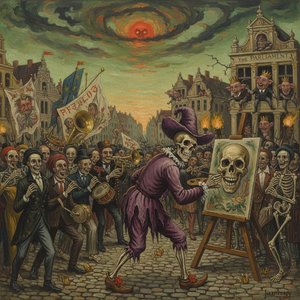
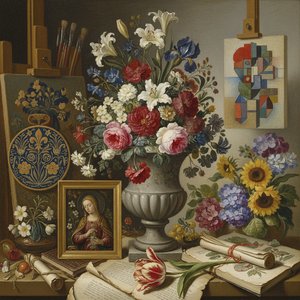
The painting immediately confronts us with its arresting central image: a woman whose head is replaced by a meticulously rendered skeleton. This isn’t a gruesome spectacle, however; rather, it's presented within an opulent tableau of flowers – roses, lilies, and other blooms – that seem to both adorn and engulf her. The blue ribbon encircling the skeletal neck adds a layer of poignant formality, suggesting a ritualistic preparation for departure. Ensor masterfully juxtaposes these elements, creating a visual paradox: death is not presented as frightening or terrifying, but rather as an integral part of life’s cycle, beautifully framed within the transient beauty of floral arrangements.

Expressionist Techniques and a Distorted Reality

Ensor's technique in “Crane Fleuris” is deliberately jarring. He employs thick, impasto brushstrokes that build up layers of color, creating a tactile surface that draws the eye into the painting’s depths. The palette is dominated by rich, saturated hues – deep reds, blues, and greens – intensified with touches of gold and silver. These colors aren't used to represent reality faithfully; instead, they are employed to evoke emotion, amplifying the sense of drama and unease that permeates the scene. The forms themselves are distorted, figures rendered with a deliberate lack of precision, contributing to the overall feeling of disorientation and psychological tension.

Notably, Ensor’s use of color and form aligns closely with the principles of Expressionism, an artistic movement that sought to convey subjective emotions rather than objective reality. He deliberately rejects naturalistic representation in favor of a more visceral and emotionally charged approach. The skeletal head, rendered with such detail, isn't simply a symbol of death; it’s a visual embodiment of vulnerability and the inevitability of decay.

Symbolism and the Weight of Mortality

Beyond its immediate visual impact, “Crane Fleuris” is laden with symbolism. The flowers themselves represent life, beauty, and the fleeting nature of earthly pleasures. Their presence around the skeleton suggests a poignant acceptance of mortality – a recognition that even in death, there can be a kind of grace or dignity. The scattered skulls and bones further reinforce this theme, creating a haunting reminder of our shared fate. The inclusion of potted plants, small pockets of life amidst the morbid setting, adds another layer of complexity, hinting at the persistence of nature’s cycle despite human mortality.

Furthermore, Ensor's background in theatrical design and his membership in the avant-garde group Les XX – a collective known for its experimentation with form and color – informed his approach to creating unsettling yet captivating imagery. “Crane Fleuris” echoes works like "Coquillages" and "Les pommes rouges," demonstrating Ensor’s consistent exploration of themes related to death, decay, and the human condition. It's a painting that invites contemplation on the fragility of existence and the beauty found within its inevitable end.

A Timeless Masterpiece: Reproduction Possibilities

OriginalUniqueArt offers meticulously crafted hand-painted reproductions of “Crane Fleuris,” allowing art lovers to experience Ensor’s masterpiece in stunning detail. Whether you're a collector, an interior designer seeking a thought-provoking statement piece, or simply someone captivated by the power of art, our reproductions capture the essence of this iconic work. Each reproduction is created using archival quality materials and techniques, ensuring that it will retain its beauty and vibrancy for generations to come. Explore our collection today and bring the haunting allure of “Crane Fleuris” into your space.

Kérdések és válaszok

Milyen viszonyban áll egymáshoz a "Cranes Fleuris" színei?

A „Cranes Fleuris”, James Ensor alkotása színei Discordant Palette harmóniát mutatnak be. A harmónia azt írja le, hogyan kapcsolódnak egymáshoz a színek.

Mi magyarázza a „Cranes Fleuris”, James Ensor alkotása szerzői jogi helyzetét?

A "Cranes Fleuris" szerzői jogi státusza – közösségi tulajdon – a szerzői jog lejártt – a művész 1949 évi halálából adódik.

Milyen tónus felé hajlik a "Cranes Fleuris"?

A „Cranes Fleuris” egy Ochre to Sepia tónus felé hajlik.

More about this painting

Megtekintés AR előnézet Váltás nyomtatványra Áttérés digitális képre Küldés
Részletek Útmutató Kedvencekhez ad Letöltés Hasonló darabok X-ray felvétel Diavetítés Q&A Statisztika

In numbers

  • 29frames to choose from
  • standard sizes, in its own proportions
  • 5weeks to paint and deliver it
James Ensor

James Ensor

1860 - 1949, Belgium

Quick facts about James Ensor

  • Artistic Movement Or Style: Kifejező, szürreális
  • Artists Or Movements Influenced By This Artist:
    • Kifejezőművészet
    • Szürrealizmus
  • Artists Who Influenced This Artist:
    • Bruegel
    • Goya
    • Whistler
  • Date Of Birth: 1860. ápril 13.
  • Date Of Death: 1949. nov 19.
  • Full Name: James Sidney Edouard Ensor
  • Nationality: Belga
  • Notable Artworks:
    • A Szánalmas Maszkok
    • Skeptikusok
    • Krisztus bejárása
    • Szentháromszéki szenvázatok
  • Place Of Birth: Ostend, Belgium

A művész életrajza

A Life Immersed in Masks and Shadows: The World of James Ensor

James Sidney Edouard Ensor (Oostende, 1860. április 13. – Oestende, 1949. november 19.) belga expresszionista festő. Élete egy különleges keverék volt: apja angol, anyja belgák, ami talán a művész egész életében visszatérő témáihoz, a maszkokhoz és a hamis arcokhoz vezetett. A gyermekkorában, Ostend városka hangulatos tengerparti üdülőhelyén töltött évei nagyban befolyásolták őt – a karnaválok bizarr látlelete, a különös tárgyak, a szórakozás és a kalandok mind a művész fantáziáját ébresztették meg. Szülei egy emléktárgy-üzletet üzték, ahol maszkokat is árultak – ezek nagy hatással voltak későbbi munkásságára. Hosszú életének nagy részét Oostendében élte le, teljes magányosságban.

From Somber Realism to Grotesque Visions

Ensor korai művei inkább a hagyományos megközelítést tükrözik, azaz realista képeket festettek, melyek mély árnyalatúak és szomorúak. Művei, mint például *Russian Music* (1881) és *The Drunkards* (1883), egybenzős tehetséget mutatnak, de még ezekben az eleinte is feltűnő, zavaró képek jelei láthatók. Egy fordulópontot jelentett a művész életében, amikor a színeinek világossága nőtt, és a témái egyre bizarrabbak lettek. Elkezdte, hogy vásznait szellemekkel, sírszemélyekkel, harcoló koporsókkel és alegorikus alakokkal tölti meg – egy olyan világgal, amely a fantázia és a groteszk határán áll. Ez nem csupán stilisztikai változás volt; egy tudatos kutatás a lényeges emberi létezés sötétebb oldalai iránt, egy társadalmi normákat elutasító és az irracionálisra való hajlanás. Stílusa azonnal felismerhető volt: merész festői, élénk színei és színházi hangulata – egyedi vizuális nyelv, amely...

Masterpieces of Disquiet: Key Works and Recurring Themes

Ensor művészetében számos darab emelkedett ikonikus státusszra. *The Scandalized Masks* (1883) egykorai kiemelkedő alkotása, amely a maszkok erejét és képességeit mutatja be, hogy feltárják a rejtett érzelmeket. Talán legkontroversobb műve, *Christ's Entry into Brussels* (1888-1889), ma már világszerte elismert mesterdarab – egy szatíra vallási alázatlanságra és társadalmi közömbösségre. A Krisztus ostendában megjelenő, groteszk maszkokkal öltözött tömegének képe mélyen megrendítő, és a vallásos ideálok és az emberi viselkedés közötti szakadékot mutatja be. *Skeletons Fighting over a Hanged Man* (1891) egy szívszorító meditatív alkotás halállal, hanyatlással és az élet értelmetlenségével kapcsolatban, míg *Tribulations of Saint Anthony* (1887) összetett alegorikus témákat jelenít meg a szenvedélyről, a bűnről és a spirituális küzdelmekről. A művész egész életében visszatérő téma a halál, a társadalmi kritikák, vallási szatíra és az elképzelés végtelen ereje – témák, amelyek örök érvényűek.

A Pioneer of Modernism: Influences and Legacy

Bár Ensor ellenállta az egyszerű kategóriazást, művészi utóbbania összetett és izgalmas. A korai munkái hatása Bruegel a Nagyra volt jellemző, akinek zsúfolt képei és morálisan megítélő történetei inspirálták őt is. Goya munkássága is fontos szerepet játszott Ensor életművének kialakításában. James Abbott McNeill Whistler estételi szürrealizmusának hangsúlyozása is befolyásolta a művész stílusát. Azonban Ensor nem csupán egy utódot volt; összehangolt ezeket az érveket valami teljesen eredetiébe. Ma őt tekintik kulcsfigurává a 19. századi szimbolizmus és a korai 20. századi expresszionizmus és szürrealizmus átmenetében – egy igazi modern művészpénzső. Független, merészen kihívó stílusa, groteszk képeinek használata és az akadémiai normák elutasítása útját cleared a következő generációk számára. Bár kezdetben ellenállást talált munkájának, Ensor később jutott el elismertséghez, amikor 1929-ben báróssá nevezte ki Albert I király, és 1933-ban kapta meg a Légion d'Honneur kitüntetését. Halálával 1949-ben Oostendében, egy rövid betegség után búcsúzott el, hátrahagyva egy olyan művészeti örökséget, amely ma is magunkba foglalja és szórakoztatja a közönséget. *A hagyománynak örököse az művészet erejének tanúsága, ami szembenézhet a kellemetlen igazságokkal és feltárja az emberi létezés mélységeit.*

Gyors információk

  • Subject or theme: Death, decay, life
  • Artist: James Ensor
  • Influences: Les XX
  • Medium: Oil on canvas

Művészeti kvíz

Minden kérdésre csak egy helyes válasz létezik.

Kérdés 1:
What is the primary theme explored in James Ensor’s ‘Crane Fleuris’?
Kérdés 2:
Which artistic movement is ‘Crane Fleuris’ most closely associated with?
Kérdés 3:
What symbolic element is represented by the blue ribbon around the skeleton’s neck?
Kérdés 4:
The painting’s composition features a juxtaposition of life and death. What elements contribute to this contrast?