Megtekintés
 Küldés
 Megosztás
 Részletek
 Útmutató

 Letöltés
 Hasonló darabok
 X-ray felvétel
 Diavetítés
 Q&A
Q&A Statisztika
The forge.


 Összes részlet megjelenítése
Giclée / Műnyomat
Múzeumi minőségű giclée vagy vászonnyomat, gyors gyártással és rugalmas finomítási lehetőségekkel. ( Kézzel festett másolat rendelése Áttérés digitális képre)




P118B Ft10

P118H Ft10

P118W Ft10

P438Z Ft10

P508JH Ft12

P508YH Ft12

P805H Ft10

P805Z Ft10

P919BZ Ft10

P919G Ft10

P919XJ Ft10

P959ZH Ft10

P968JZ Ft12

W106C Ft8

W218G Ft10

W218JH Ft8

W218Y Ft10

W307PJ Ft10

W316G Ft10

W316PJ Ft8

W316Y Ft10

W398PJ Ft8

W4111J Ft10

W500HY Ft15

W500JH Ft15

W692G Ft12

W849H Ft8

W940BG Ft15

W953PJ Ft8




Válasszon előre meghatározott méreteink közül, amelyek megfelelnek a műalkotás eredeti arányainak.

Írja be a keretének vagy a falának megfelelő szélességet és magasságot. A nyomatot csak le lehet vágni, soha nem tehető nagyobbá, mint az eredeti kép, így egy eltérő alakú méretnél a kép egy része elveszik. Mielőtt bármit kinyatintanánk, küldünk egy digitális próbamodellt jóváhagyásra. Az oldalon látható kép nem tartalmazza a valós levágást — ezt csak a próbamodell mutatja meg.
Világszerte történő kiszállítás területére mindössze 2 hét alatt, a szokásos 4-5 hét helyett. (30 október)

Ingyenes globális expressz szállítás

Prémium minőségű len vászon

Teljes körű szállítási biztosítás

Vámvisszatérítési Garancia

Hiteles színarányosság garancia

100 napos visszaküldési lehetőség (csak hibás termékek esetén)

100% pénzvisszatérítési garancia

Több darab vásárlásakor kedvezmény
 Az üvegkeretes opció csak 110 cm alatti méretben érhető el

The forge.
Giclée / Műnyomat
Reprodukció mérete
-


Összesített ár
Ft 26157
James Abbott McNeill Whistler: A Life in Art
Early Life and Influences
- Born July 14, 1834, in Lowell, Massachusetts, James Abbott McNeill Whistler’s early life was shaped by his father's career as a railroad engineer.
- Frequent relocations instilled in him adaptability and exposure to diverse environments.
- He briefly attended the United States Military Academy at West Point but found it unsuited to his artistic inclinations.
- A subsequent role with the U.S. Coast and Geodetic Survey further delayed, but didn’t extinguish, his pursuit of art.
- His formative years were marked by an early interest in drawing and a desire to become a professional artist.
"The Forge": A Moment Captured in Charcoal
“The Forge,” created in 1861 by James Abbott McNeill Whistler, is a striking monochromatic charcoal drawing that offers a glimpse into everyday life with an understated elegance. This work exemplifies Whistler’s evolving artistic style and his growing interest in printmaking techniques. Rather than depicting a grand narrative or symbolic scene, the artwork focuses on capturing a fleeting moment – a group of men engaged in conversation or activity within what appears to be a workshop or tavern setting.
Style and Technique: Tonalism and Observational Realism
The drawing is rendered in a style that leans towards realism but infused with elements of tonalism, an artistic movement emphasizing the subtle gradations of light and shade. Whistler’s masterful use of charcoal allows him to create a sense of depth and texture through varying pressure applied to the paper. Dense shading defines forms while lighter lines suggest details, resulting in a grainy surface that adds to the drawing's immediacy. The perspective is shallow, focusing on the foreground figures and creating a feeling of intimacy. There are no overt symbolic elements; instead, Whistler presents a documentary-like observation of an ordinary scene.
Historical Context: Etching Innovation and Parisian Influence
“The Forge” was created during a pivotal period in Whistler’s career. Having spent his teenage years in London with his half-sister and her husband, an avid etcher, he developed an early appreciation for printmaking. Following his move to Paris in 1855, Whistler immersed himself in the study of art under figures like Sébastien Bouré. He began experimenting with etching techniques, breaking new ground by moving beyond reproductive prints to explore the medium's expressive potential. This work reflects that experimentation and demonstrates his growing mastery of charcoal as a tool for capturing fleeting moments and subtle tonal variations.
Emotional Impact: Quiet Observation and Understated Drama
“The Forge” evokes a sense of quiet observation and understated drama. The lack of overt narrative allows the viewer to project their own interpretations onto the scene, fostering a personal connection with the artwork. Whistler’s skill in capturing the nuances of light and shadow creates an atmosphere of intimacy and realism, inviting contemplation on the simple beauty of everyday life. It is a testament to his ability to find artistic merit in ordinary moments, transforming them into compelling works of art.
Kérdések és válaszok
Mely művész és mely stílus áll a "The forge." mögött?
A „The forge.” alkotását Whistler készítette Tonalism stílusban. A művész és a műveszetség meghatározza a mű hagyományát.
Hogyan kapcsolódnak „The forge.”, Whistler alkotása színei a mű érzelmi töltetéhez?
A „The forge.”, Whistler alkotása egy Monokróm színpalettát ötvöz a Belső elmélyülést sugárzó hangulatú tónussal.
Hogyan írják le „The forge.”, Whistler alkotása színezetét?
A „The forge.”, Whistler alkotása színek palettáját úgy jellemzik, mint Monokróm. Ez a mű színeinek tömör leírása.
A művész életrajza
A Life Shaped by Aestheticism: The World of James Abbott McNeill Whistler
James Abbott McNeill Whistler, born in Lowell, Massachusetts in 1834, was a figure perpetually at odds with convention—a painter who championed “art for art’s sake” during an era obsessed with moralizing narratives. His early life, marked by frequent relocations due to his father's railroad engineering career, instilled within him a sense of adaptability and exposure to diverse environments. A brief, unhappy stint at West Point proved ill-suited to his artistic temperament, followed by work with the U.S. Coast and Geodetic Survey that, while delaying, did not extinguish his burgeoning passion for art. These formative years were characterized by an innate talent for drawing and a resolute desire to forge a path as a professional artist, a pursuit that would ultimately lead him across the Atlantic and into the heart of the European avant-garde. The seeds of Whistler’s artistic rebellion were sown early, nurtured by a spirit that resisted conformity and embraced aesthetic exploration above all else.Parisian Beginnings and the Cultivation of Style
The pivotal moment in Whistler's artistic journey arrived with his move to Paris in 1855. Here, under the tutelage of Sébastien Bouré, he honed his skills in oil painting, watercolor, and printmaking, absorbing the influences of French Realism and the Barbizon School painters. However, Whistler quickly transcended mere imitation, developing a distinctive style characterized by tonal harmonies and atmospheric effects. He wasn’t interested in replicating reality; rather, he sought to capture its *essence*, its fleeting moods and subtle nuances. This period marked a crucial shift from representational accuracy towards an exploration of pure aesthetic form. His early works already hinted at the delicate balance between observation and abstraction that would define his mature style. Whistler was particularly drawn to Japanese prints (ukiyo-e), finding in their bold compositions, flattened perspectives, and emphasis on decorative patterns a powerful source of inspiration. He meticulously studied these works, adapting their principles to his own artistic practice, influencing his use of color, line, and spatial arrangement. It was in Paris that Whistler began to articulate his belief that art should be judged solely on its aesthetic qualities, free from didactic or moralizing constraints—a philosophy that would become the cornerstone of his artistic practice and a defining characteristic of the Aesthetic movement.Nocturnes, Portraits, and the Pursuit of Harmony
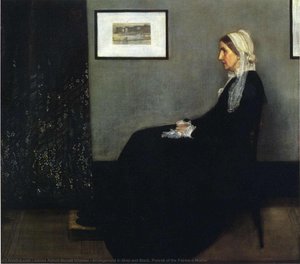
Whistler’s artistic vision crystallized in several key themes and stylistic choices. He championed the concept of “art for art’s sake,” rejecting narratives laden with moral or social commentary. His work became an exercise in capturing subtle nuances of light, color, and atmosphere—a pursuit that led to his iconic *Nocturnes*. These atmospheric paintings of twilight scenes, often depicting the Thames River at night, were not intended as literal depictions but rather as evocative impressions, studies in tonal harmony and mood. He frequently employed limited palettes – often dominated by shades of grey, blue, and gold – and delicate brushwork, creating a sense of ethereal beauty and quiet contemplation. Whistler’s approach to portraiture was equally distinctive. He wasn't concerned with capturing perfect likenesses; instead, he focused on formal arrangements and tonal relationships, treating his sitters as compositional elements within a carefully constructed aesthetic framework. *Arrangement in Grey and Black No. 1*—better known as *Whistler’s Mother*—demonstrates this approach perfectly, transforming a familial portrait into an iconic image of Victorian motherhood through its masterful use of form and tone. The painting's power lies not in the depiction of a specific individual but in its exploration of balance, harmony, and visual relationships.Controversy, Influence, and Lasting Legacy
Whistler’s career was not without controversy. The infamous libel suit brought against him by the critic John Ruskin in 1878, sparked by *Nocturne in Black and Gold – The Falling Rocket*, became a landmark moment in art history. Whistler successfully defended his artistic autonomy, arguing that his paintings were not intended to be realistic representations but rather aesthetic arrangements of color and form. This case elevated his profile and ignited important debates about the nature of art criticism and artistic freedom. Beyond this legal battle, Whistler’s influence extended far and wide. He was deeply inspired by Japanese prints (ukiyo-e), which informed his compositional principles and emphasis on decorative patterns, as well as the tonal mastery of Spanish painters like Velázquez. His advocacy for “art for art’s sake” profoundly impacted the Aesthetic movement in England and America, paving the way for modernism and challenging conventional notions about artistic purpose. He left an indelible mark on American art, inspiring generations of artists to embrace formalist approaches and explore the expressive potential of color and composition. Whistler died in London in 1903, leaving behind a body of work that continues to captivate and inspire. His unwavering commitment to aesthetic principles and his relentless pursuit of beauty cemented his place as a pivotal figure in the history of art.- Notable Works: *The Forge* (1861), *Portrait of Charles Lang Freer* (1873), *Brown and Gold: The Gold Girl—Connie Gilchrist* (1876-77), *Arrangement in Grey and Black No. 1 (Whistler’s Mother)* (1871), *Nocturne in Black and Gold – The Falling Rocket* (1875).
- Influences: Japanese prints, Velázquez.

Whistler
1834 - 1903 , Egyesült Államok
Rövid információk
- Artistic Movement Or Style: Tonalizmus, Esztétika
- Artists Or Movements Influenced By This Artist: ['Esztétikai mozgalom']
- Artists Who Influenced This Artist:
- Velázquez
- Japán nyomatok
- Date Of Birth: 1834. július 14.
- Date Of Death: 1903. augusztus 17.
- Full Name: James Abbott McNeill Whistler
- Nationality: Amerikai
- Notable Artworks:
- Anyja portréja
- Éjszakai Színrevület
- A Forge
- Place Of Birth (City And Country): Lowell, Massachusetts, USA
Kapcsolódó cikkek

Mastering Charcoal: The Definitive Expert Guide to Capturing Profound Depth, Texture, and Shadow
Elevate your artistry with this definitive expert guide to mastering charcoal. Designed for art students, learn professional techniques for capturing profound depth, intricate textures, and dramatic shadows through advanced blending and chiaroscuro methods.

Mastering the Line: A Comprehensive Expert Guide to Technical Precision and Expressive Depth in Drawing
Elevate your artistic practice with this expert guide to mastering the line. Discover advanced techniques in graphite, charcoal, and contour drawing designed for art students seeking technical precision and expressive depth in their fine art studies.
Tonalism Explained: The Art of Mood, Mist, and Masterful Color in Landscape Painting
Discover the evocative world of Tonalism. Explore how masters like Whistler and Tryon used mist, shadow, and subtle color to capture profound mood and atmosphere in landscape art. An expert guide for fine art enthusiasts and collectors.

James Abbott McNeill Whistler 25 Mesterműve: Hangulatok és Elegancia a Falakon
Fedezze fel James Abbott McNeill Whistler 25 legszebb művét! Ismerje meg a Nocturnok, portrék és az amerikai impresszionizmus mesterét. Elegáns faliképek otthonába – OriginalUniqueArt.com kínálatából. Böngésszen online!
The Nuances of Graphite: Exploring Emotional Depth & Technical Mastery in Pencil Drawing
Explore the captivating world of graphite drawing! Discover its rich history, master essential techniques like chiaroscuro, and learn how artists evoke emotion through this timeless medium. Expert insights for art enthusiasts.