

 Előnézet
 Megosztás
 Megosztás
 Részletek
 Útmutató

 Letöltés
 Hasonló darabok
 X-ray felvétel
 Diavetítés
 Statisztika
L Hôte
 Acrylic On Canvas
- WallArt
- Cubism
 1892
1892 220.0 x 290.0 cm
 Musée des Beaux-Arts de Rouen
 Tovább olvasom
Vásároljon nagy felbontású, javított digitális képet, amely minőségében messze felülmúlja az online előnézetet.
Minden fájlt szakembereink a legmodernebb eszközök és precíz, kézi retusálás segítségével készítenek el aprólékosan. Gondoskodunk arról, hogy minden kép kivételes tisztasággal, pontos színhelyességgel és részletgazdag finomsággal rendelkezzen.
A végleges fájl 72 órán belül e-mailben megérkezik, professzionális, szerkesztői és nyomtatási környezetbe optimalizálva az azonnali használathoz. Ez ugyanaz a minőség, amelyben a legmeghatározóbb tervezőstúdiók, kiadók és galériák is megbízhatnak.
Digitális kép
Töltsön le nagy felbontású fájlt személyes kiállításokhoz, nyomtatáshoz és kreatív projektekhez. ( Váltás nyomtatványra Kézzel festett másolat vásárlása)
Minden digitális kép rendeléséhez tartozó extrák
Szakértői digitális kézbesítés, garantáltan
Amikor a OriginalUniqueArt.com szolgáltatást választja, nem csupán egy képet kap – professzionálisan felmagasított digitális műalkotást kap, amely precizitással készült, és amelyet megelégsedési gwarancia tesz biztoslássá. Az alábbiakban automatikusan minden benne 】

Gyors e-mail teslimítés
A nagy felbontású digitális képmásolatát a megrendelést követő 72 órán belül e-mailben elküldjük Önnek – azonnal használható formátumban.

MI-alapú digitális képjavítás
Műve professzionális módon kerül optimalizálásra fejlett mesterséges intelligencia eszközök és manuális szerkesztés segítségével, biztosítva a maximális részletességet, tisztaságot és színpontosságot.

Örök életű ingyenes újradatás
Véletlenül törölted vagy elvesztetted a fájlodat? Ne aggódj – bármikor ingyen újra megküldjük neked.

Nincs importköltség – soha
Élvezze műalkotásait azonnal, vám, illeték vagy szállítási költség nélkül – a digitális letöltések mindig adamentesek.

Színpontosság garantálása
Professzionális eszközök és színkezelés segítségével garantáljuk, hogy digitális képe a lehető legpontosabban tükrözze az eredeti színeket.

100 napos elégedettségi garancia
Ha nemມີ elégedett a digitális képével, 100 napon belül felülvizsgáljuk vagy 100% visszatérítjük az amountot – kérdés बिना.

100% Pénzvisszatérítési garancia
Nem tetszett a vásárlás? 100 napon belül teljes visszatérítést garantálunk a digitális fájl megvételétől számítva – kérdés nélkül.

Tömegrendelési kedvezmények
Vásároljon 3 képet, spóroljon 10%-et - Vásároljon 5-öt, spóroljon 15%-et - Vásároljon 10+ képet, spóroljon 20%-at. Kiváló kreatív projektekhez, galériákhoz és ügynökségekhez.
L'Hôte by Jacques Emile Blanche – A Portrait of Parisian Elegance
Jacques-Émile Blanche’s “L’Hôte” (The Host) stands as a quintessential emblem of Belle Époque Paris, capturing not merely a likeness but an atmosphere—a palpable sense of refined social interaction and intellectual curiosity. Painted in 1892, this monumental oil on canvas measuring 220 x 290 cm resides at the Musée Des Beaux Arts in Rouen, France, offering viewers a glimpse into a bygone era defined by artistic innovation and aristocratic refinement. Blanche’s distinctive style—characterized by loose brushwork and a muted palette—immediately distinguishes itself from the more polished conventions of his contemporaries. He eschewed meticulous detail in favor of conveying emotion and capturing the subtle nuances of human expression, techniques honed during his formative years alongside luminaries like Édouard Manet and Whistler.A Masterful Blend of Realism and Symbolism
Blanche’s artistic approach transcends mere representation; it delves into symbolism to illuminate deeper themes concerning identity and social dynamics. The composition itself is carefully orchestrated—the central figures seated around a dining table dominate the canvas, their gaze directed outwards, suggesting contemplation and engagement with the world beyond the immediate setting. Notably absent are chairs positioned strategically behind the guests, an element that has been interpreted as representing those excluded from this privileged circle – perhaps individuals deemed unworthy of inclusion or simply those whose presence wasn’t considered essential to the narrative. This deliberate omission underscores Blanche's astute observation of societal hierarchies and his ability to communicate complex ideas through visual cues.Technique and Color Palette: Echoes of Impressionism
The painting’s execution showcases Blanche’s mastery of Impressionist techniques. Thick, visible brushstrokes imbue the canvas with texture and movement, mirroring the fleeting impressions of light and atmosphere that were central to the artistic movement. Blanche employed a restrained color scheme—primarily dominated by warm browns and ochres—creating a cozy and inviting ambiance reminiscent of candlelight illumination. These muted hues contribute to the painting’s emotional resonance, fostering a sense of intimacy and conveying the quiet dignity of the subjects depicted. The artist skillfully blended pigments to achieve subtle gradations of tone, enhancing the illusion of depth and capturing the nuances of light reflecting off surfaces.Historical Context: Parisian Society at Its Zenith
“L’Hôte” was created during Paris's golden age—the Belle Époque (roughly 1871-1914)—a period marked by unprecedented artistic creativity, economic prosperity, and cultural dynamism. Blanche himself was deeply embedded in the intellectual milieu of his time, surrounded by writers, artists, and thinkers who championed progressive ideas and challenged traditional conventions. The painting reflects this spirit of experimentation and celebrates the pursuit of beauty and knowledge—values that were paramount to Parisian society during Belle Époque. It serves as a testament to Blanche’s ability to capture not only the visual appearance of his subjects but also the intellectual and social currents shaping their lives.Emotional Impact: Capturing Inner Life
Ultimately, “L’Hôte” succeeds in conveying profound emotional depth. Blanche's portraits are renowned for capturing the inner life of his subjects—their personalities, aspirations, and vulnerabilities—with remarkable sensitivity. The gaze of the figures is imbued with quiet contemplation, hinting at unspoken thoughts and emotions. This masterful portrayal speaks to the enduring power of art to illuminate human experience and transcends time, inviting viewers to contemplate themes of identity, social status, and the complexities of human relationships. Blanche’s legacy continues to inspire artists today who strive to achieve similar levels of psychological insight and artistic virtuosity.Gyakran Ismételt Kérdések
Mik a „L Hôte” mű másolati jogai a Musée des Beaux-Arts de Rouen gyűjteményében?
A „L Hôte”, Jacques-Émile Blanche alkotása szerzői jogi státusza egyértelmű: a mű a joghallgatói schützenesség körébe tartozik – a szerzői jog lejártt. A Musée des Beaux-Arts de Rouen gyűjteményében való szereplése nem változtat ezen a státuszon.
Milyen hangulatot hozna létre a "L Hôte" egy térben?
A „L Hôte”, Jacques-Émile Blanche alkotása Elegant hangulatot áraszt, és egy Living Room helyiségbe ajánlott. A hangulat az az érzés, amelyet a mű közvetít a környezetében lévő tér felé.
Milyen telítettséget és intenzitást mutat „L Hôte”, Jacques-Émile Blanche alkotása?
A "L Hôte" színe Muted telítettségű és Monochromatic intenzitású.
Művész életrajza
Early Life and Artistic Beginnings
Jacques-Émile Blanche, a name synonymous with Parisian elegance and the evocative glow of Belle Époque society, was born in the heart of Paris on January 1st, 1861. He hailed from a family steeped in tradition – his father, Émile Blanche, was a distinguished pathologist, a man whose intellectual pursuits and connections subtly shaped young Jacques’s own artistic inclinations. Growing up within the affluent neighborhood of Passy, surrounded by the vibrant tapestry of Parisian high society and the influence of renowned artists, provided an unparalleled environment for his nascent talent to flourish. Unlike many aspiring painters who pursued formal training, Blanche's artistic journey began largely through observation and informal mentorship. He was fortunate enough to encounter figures like Édouard Manet, a pivotal artist whose revolutionary approach to depicting modern life would profoundly impact Blanche’s own style. These early encounters instilled in him a desire to capture the essence of his subjects – not merely their outward appearance, but also the subtle nuances of personality and emotion.A Style Forged in Observation and Impressionism
Blanche's artistic development was characterized by a remarkable self-taught approach. He eschewed traditional art academies, preferring instead to immerse himself in the Parisian art scene, absorbing techniques and philosophies from various sources. Henri Gervex and Ferdinand Jacques Humbert offered him valuable instruction, guiding his hand and shaping his understanding of composition and technique. However, it was Manet’s influence that proved most enduring. Blanche's paintings are immediately recognizable by their loose brushwork, a hallmark of Impressionism, and a deliberate restriction of color palettes – often favoring muted tones and subtle gradations to create an atmosphere of quiet contemplation. This restrained approach allowed him to focus on capturing the *feeling* of a scene or subject rather than striving for photographic realism. His portraits, in particular, are renowned for their ability to convey a sense of intimacy and psychological depth, revealing the inner lives of his subjects with remarkable sensitivity.Notable Works and Parisian Landscapes
Throughout his career, Blanche produced a diverse body of work encompassing portraiture, landscapes, and genre scenes. Some of his most celebrated paintings include “The Kreutzer Sonata,” a haunting depiction of a couple consumed by unspoken tension, and the evocative "Portrait of Henry James," which masterfully captures the author’s intellectual intensity. His series of “London Views” offers a captivating glimpse into the bustling streets and atmospheric corners of the British capital, revealing his keen eye for detail and his ability to translate urban landscapes onto canvas. These works, alongside numerous other pieces housed in prestigious collections like the Musée des Beaux-Arts in Rouen, demonstrate Blanche’s versatility and his capacity to adapt his style to different subjects and settings. His work often reflected a melancholic beauty, a characteristic that resonated deeply with audiences of the Belle Époque.Connections and Influences Beyond France
Blanche's artistic life was not confined to Paris; he cultivated strong connections within the international art community. He maintained close friendships with figures like John Singer Sargent, whose portrait of Blanche himself offers a fascinating insight into their mutual admiration. The exchange of ideas and techniques between these artists—Sargent’s meticulous realism juxtaposed with Blanche’s looser Impressionistic style—contributed to the evolution of both their artistic approaches. Furthermore, his travels to London significantly influenced his work, introducing him to new perspectives on urban life and inspiring a greater appreciation for the subtleties of light and shadow. His ability to seamlessly blend French and English influences solidified his position as a cosmopolitan artist at the forefront of European art.Legacy and Enduring Appeal
Jacques-Émile Blanche died on September 30th, 1942, in Offranville, leaving behind a legacy of over 800 paintings, drawings, and prints. His work continues to captivate audiences today with its evocative beauty, psychological depth, and subtle mastery of technique. He remains a significant figure in the history of French Impressionism, a testament to the power of observation, personal experience, and artistic independence. Blanche’s ability to capture the essence of human emotion—the quiet joys, unspoken sorrows, and fleeting moments of connection—ensures that his paintings will continue to resonate with viewers for generations to come. His art serves as a poignant reminder of the beauty and complexity of Parisian life during a transformative era.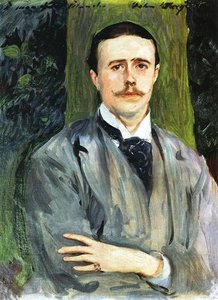
Jacques-Émile Blanche
1861 - 1942 , Franciaország
Rövid tények
- Artistic Movement Or Style: Impressionista
- Artists Or Movements Influenced By This Artist: ['Thomas Gainsborough']
- Artists Who Influenced This Artist:
- Edouard Manet
- James Whistler
- Date Of Birth: 1861 jan 1.
- Date Of Death: 1942 sep 30.
- Full Name: Jacques Émile Blanche
- Nationality: Francia
- Notable Artworks:
- Kreutzer Szonéta
- Marcel Proust portréja
- Place Of Birth: Párizs, Franciaország