
 Megtekintés
 Küldés
 Megosztás
 Részletek

 Letöltés
 Hasonló darabok
 X-ray felvétel
 Diavetítés
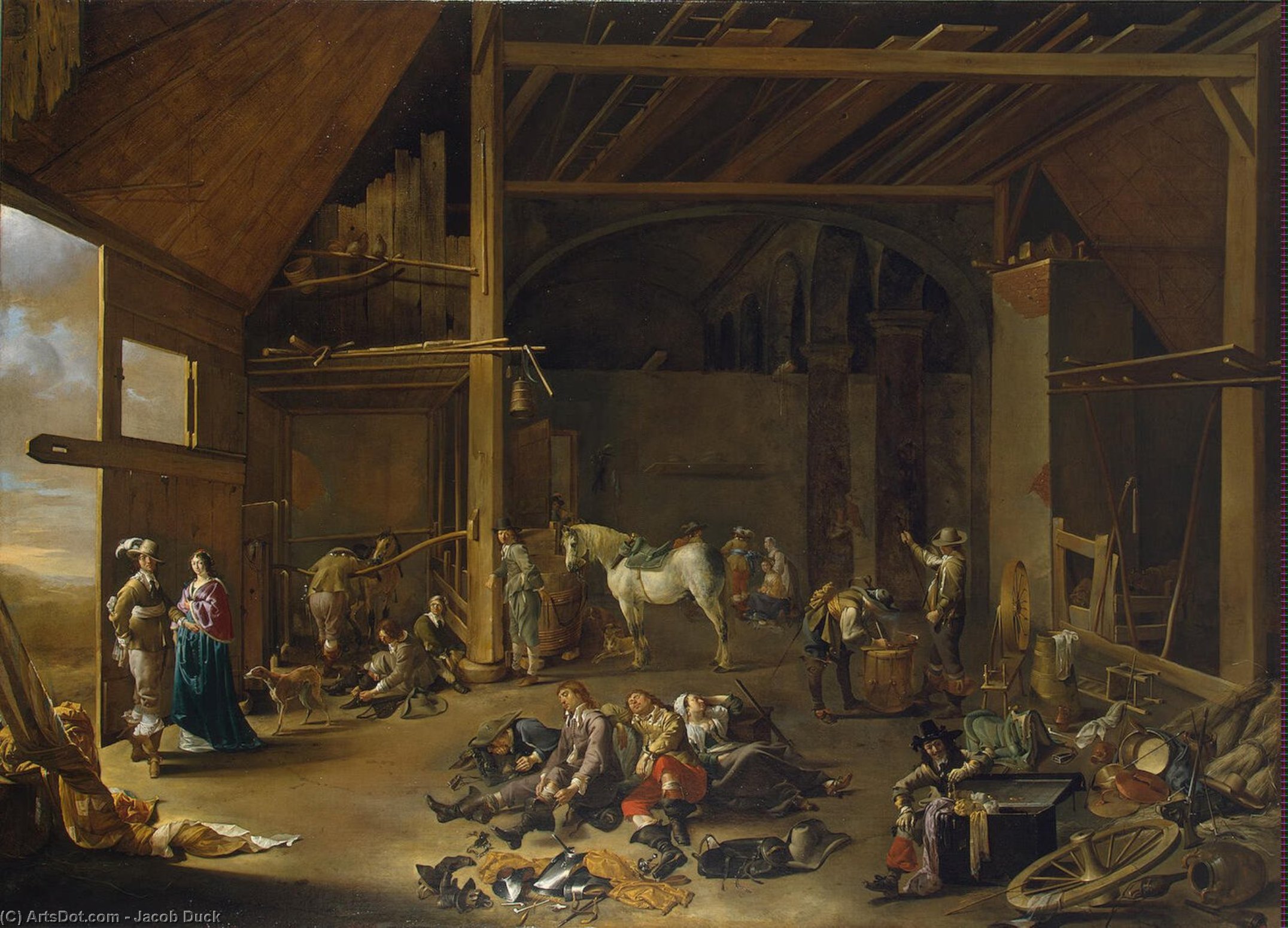
Soldier's Rest
 Oil On Canvas
- WallArt
- Dutch Golden Age
 1650
1650- Early Modern
 150.0 x 204.0 cm
 Hermitázsmúzeum
 Összes részlet megjelenítése
Vásároljon nagy felbontású, javított digitális képet, amely minőségében messze felülmúlja az online előnézetet.
Minden fájlt szakembereink a legmodernebb eszközök és precíz, kézi retusálás segítségével készítenek el aprólékosan. Gondoskodunk arról, hogy minden kép kivételes tisztasággal, pontos színhelyességgel és részletgazdag finomsággal rendelkezzen.
A végleges fájl 72 órán belül e-mailben megérkezik, professzionális, szerkesztői és nyomtatási környezetbe optimalizálva az azonnali használathoz. Ez ugyanaz a minőség, amelyben a legmeghatározóbb tervezőstúdiók, kiadók és galériák is megbízhatnak.
Digitális kép
Töltsön le nagy felbontású fájlt személyes kiállításokhoz, nyomtatáshoz és kreatív projektekhez. ( Nyomat rendelése Kézzel festett másolat rendelése)
Minden digitális kép rendeléséhez tartozó extrák
Szakértői digitális kézbesítés, garantáltan
Amikor a OriginalUniqueArt.com szolgáltatást választja, nem csupán egy képet kap – professzionálisan felmagasított digitális műalkotást kap, amely precizitással készült, és amelyet megelégsedési gwarancia tesz biztoslássá. Az alábbiakban automatikusan minden benne 】

Gyors e-mail teslimítés
A nagy felbontású digitális képmásolatát a megrendelést követő 72 órán belül e-mailben elküldjük Önnek – azonnal használható formátumban.

MI-alapú digitális fejlesztésű fájl
Műve professzionális módon kerül optimalizálásra fejlett mesterséges intelligencia eszközök és manuális szerkesztés segítségével, biztosítva a maximális részletességet, tisztaságot és színpontosságot.

Örök életű ingyenes újradelivery
Véletlenül törölted vagy elvesztetted a fájlodat? Ne aggódj – bármikor ingyen újra megküldjük neked.

Nincs importköltség – soha
Élvezze műalkotásait azonnal, vám, illeték vagy szállítási költség nélkül – a digitális letöltések mindig adamentesek.

Színpontosság garantálása
Professzionális eszközök és színkezelés segítségével garantáljuk, hogy digitális képe a lehető legpontosabban tükrözze az eredeti színeket.

60 napos elégedettségi garancia
Ha nemມີ elégedett a digitális képpel, 60 napon belül átmunkáljuk azt, vagy 100% visszatérítjük az amountot – kérdés nélkül.

100% Pénzvisszatérítési garancia
Nem érheted el a teljes elégedettséget? 60 napon belül teljes visszatérítést kapsz a digitális fájlod megérkezése után – kérdés nélkül.

Tömegrendelési kedvezmények
Vásároljon 3 képet, spóroljon 10%-et - Vásároljon 5-öt, spóroljon 15%-et - Vásároljon 10+ képet, spóroljon 20%-at. Kiváló kreatív projektekhez, galériákhoz és ügynökségekhez.
A gyűjtemény részletei
A Glimpse into Golden Age Camaraderie: Soldier's Rest
To stand before Jacob Duck’s Soldier's Rest is to step unceremoniously across the threshold of time, into the warm, smoky embrace of a 17th-century Dutch stable. This magnificent oil on canvas does more than merely depict a scene; it captures the very texture of communal existence—a moment suspended between duty and repose. The air feels thick with the scent of hay, horse sweat, and shared humanity. Duck, a master chronicler of everyday life during the Dutch Golden Age, has gifted us not just a painting, but an immersive tableau vivant, inviting us to observe the quiet rhythms of military life when the parade ground fades into the domestic sphere.
Mastery in Genre Painting: Technique and Detail
Duck’s technical prowess is immediately apparent upon viewing this work. His background, rooted in goldsmithing, lends an almost meticulous precision to every surface—from the worn wood of the benches to the sheen on the horse's coat. Observe the interplay of light filtering into the rustic setting; it models the figures and objects with a remarkable naturalism. The composition is rich, teeming with life yet balanced by its very clutter. Scattered throughout are domestic anchors: sturdy chairs, low wooden benches, and even the ticking presence of a clock in the upper right corner, which serves as a subtle, poignant reminder that even this moment of rest is fleeting. These details elevate the piece beyond mere documentation; they become studies in texture and human occupation.
The Heart of Dutch Daily Life: Context and Symbolism
This painting belongs to the genre tradition, a beloved subject matter for artists documenting the burgeoning middle class and its routines. In Soldier's Rest, the gathering of men—and indeed, the inclusion of animals like the dog—speaks volumes about camaraderie and respite. The soldiers, though depicted in their period attire, are shown in moments of unguarded relaxation. Symbolically, the stable itself acts as a liminal space: it is neither purely military barracks nor private home, but a place where men can shed the rigid formality of their roles. It speaks to the profound human need for community and the comfort found within shared experience.
Bringing History Home: Decorating with Narrative
For the collector or designer seeking art that possesses both historical weight and immediate warmth, Soldier's Rest offers unparalleled depth. Reproducing this work allows one to infuse a space—be it a grand hall or a cozy study—with the sophisticated narrative of Dutch domesticity. The scale (150 x 204 cm) ensures that the scene commands attention, allowing viewers to lose themselves in its myriad details. It is an artwork that does not shout for attention but rather invites prolonged contemplation, rewarding the viewer with new discoveries every time they gaze upon the assembled figures and objects.
A művész életrajza
The Gilded Precision of a Dutch Master
In the vibrant, bustling landscape of the seventeenth-century Netherlands, few artists captured the quiet drama of existence with as much technical finesse and observational grace as Jacob Duck. Born in Utrecht around 1600, Duck’s journey into the world of fine art was not born from a traditional painter's studio, but rather from the meticulous workshop of a goldsmith. Having mastered the intricate craft of metalwork by the age of nineteen, he brought a unique, jeweler-like precision to his canvases. This early training in goldsmithing instilled in him an unparalleled eye for detail, a quality that would later allow him to render the glint of a soldier's armor, the texture of a tavern cloth, or the subtle sheen of a wine glass with breathtaking realism.
His transition from precious metals to pigments began in earnest when he entered the studio of Joost Cornelisz Droochsloot. Under this mentorship, Duck moved beyond the rigid boundaries of craft and embraced the fluid storytelling of genre painting. As he matured, his artistic footprint expanded across the great cultural hubs of the Dutch Golden Age, from the industrious streets of Haarlem to the sophisticated atmosphere of The Hague. Throughout his travels, he absorbed the atmospheric brilliance of masters like Rubens and the dramatic, light-piercing shadows of Rembrandt. This synthesis of influences allowed him to master chiaroscuro, using deep shadows to push his figures forward into the viewer's space, creating a sense of intimacy that makes his scenes feel less like distant histories and more like captured moments in time.
A Window into the Golden Age
The true soul of Jacob Duck’s oeuvre lies in his profound dedication to the "everyday." While many of his contemporaries sought glory in grand mythological epics or sweeping historical narratives, Duck found divinity in the mundane. He was a chronicler of the human condition, finding profound narrative weight in the simplest of settings. His work often oscillates between two distinct yet equally captivating realms: the camaraderie of the military and the conviviality of civilian life.
In his celebrated guardroom scenes, Duck provides a window into the lives of the burgeoning military class of the Dutch Republic. These paintings—often featuring officers playing cards, soldiers resting, or men sharing quiet moments of reflection—do more than just depict military life; they capture the social shifts of an era following the Eighty Years' War. Through his brush, we see the tension between duty and leisure, the camaraderie of the barracks, and the subtle psychological depth of men caught in the stillness between conflicts. His ability to render the heavy fabrics of uniforms and the stark, dramatic lighting of a dimly lit guardroom creates an immersive experience that resonates with historical gravity.
Beyond the barracks, Duck’s artistry flourished in the depiction of domestic interiors and bustling public spaces. He possessed a remarkable talent for composing scenes of tavern life, market stalls, and private rooms where the light falls softly upon everyday objects. In these works, one might encounter:
- The Intimacy of Interiors: Quiet, contemplative scenes where figures are lost in thought or engaged in subtle domestic tasks.
- Social Conviviality: Lively gatherings in taverns, filled with the warmth of conversation and the sensory richness of food and drink.
- Genre Narratives: Small, poignant stories captured in a single frame, such as a gypsy fortune-teller or a couple sharing a private moment.
Legacy and Artistic Significance
The historical significance of Jacob Duck lies in his ability to elevate the common experience to the level of high art. By focusing on the textures of reality—the way light hits a pewter mug or the weary expression on a soldier's face—he contributed to the humanist spirit that defined the Dutch Golden Age. He did not need grand legends to move his audience; he relied on the truth of the visible world.
Though he eventually returned to Utrecht, where he passed away in 1667, his influence endured through the enduring power of his imagery. Today, his works reside in some of the world's most prestigious institutions, including the Hermitage Museum, serving as vital touchstones for anyone seeking to understand the social fabric of the seventeenth century. Duck remains a master of the small-scale epic, proving that within the confines of a single room or a quiet corner of a tavern, an entire world of human emotion and historical truth can be found.

Jacob Duck
1600 - 1667 , Netherlands
Érdekességek
- Artistic Movement Or Style: Dutch Golden Age
- Artists Or Movements Influenced By This Artist: ['Genre Painting']
- Artists Who Influenced This Artist: ['Joost Cornelis Droochloot']
- Date Of Birth: 1600 Utrecht Netherlands
- Date Of Death: 1667
- Full Name: Jacob Duck
- Nationality: Dutch
- Notable Artworks:
- The Wine Connoisseurs
- Dividing the Spoils
- The Distraint
- Place Of Birth: Utrecht Netherlands

