

 Előnézet
 Megosztás
 Megosztás
 Részletek
 Útmutató

 Letöltés
 Hasonló darabok
 X-ray felvétel
 Diavetítés
 Statisztika
Wegener's theory
 Acrylic On Canvas
- WallArt
- Surrealism
 2001
2001- Modern
 54.0 x 61.0 cm
 Tovább olvasom
Giclée / Műnyomat
Múzeumi minőségű giclée vagy vászonnyomat, gyors gyártással és rugalmas finomítási lehetőségekkel. ( Kézzel festett másolat vásárlása Áttérés digitális képre)




P118B $10

P118H $10

P118W $10

P438Z $10

P508JH $12

P508YH $12

P805H $10

P805Z $10

P919BZ $10

P919G $10

P919XJ $10

P959ZH $10

P968JZ $12

W106C $8

W218G $10

W218JH $8

W218Y $10

W307PJ $10

W316G $10

W316PJ $8

W316Y $10

W398PJ $8

W4111J $10

W500HY $15

W500JH $15

W692G $12

W849H $8

W940BG $15

W953PJ $8




Válasszon előre meghatározott méreteink közül, amelyek megfelelnek a műalkotás eredeti arányainak.

Megadhat saját méreteket is egy konkrét kerethez vagy helyszínhez igazítva. Amennyiben a kiválasztott méret nem egyezik az eredeti kép arányokkal, a műalkotást le fogjuk vágni, vagy kiegészítjük a képet tükrözött vagy egyszínű szélekkel. A gyártás megkezdése előtt egy digitális tervezetet küldünk jóváhagyásra.
Kérjük, vegye figyelembe, hogy a képernyőn látható előnézet nem tükrözi a tényleges levágást vagy kiegészítést. Csak a tervezet mutatja pontosan a végső kompozíciót.
Bár az egyedi méretek is elérhetőek, az eredeti arányok megőrzése érdekében azt javasoljuk, hogy válasszon a előre meghatározott listából származó méretet.
Világszerte történő kiszállítás területére mindössze 2 hét alatt, a szokásos 4-5 hét helyett. (26 szeptember)

Ingyenes globális expressz szállítás

Prémium minőségű len vászon

Teljes körű szállítási biztosítás

Vámvisszatérítési Garancia

Tökéletes színarányosság garancia

100 napos visszaküldési garancia (csak gyártási hibás termékek esetén)

100% pénzvisszatérítési garancia

Több darab vásárlásakor kedvezmény
 Az üvegkeretes opció csak 110 cm alatti méretben érhető el

Wegener's theory
Giclée / Műnyomat
Reprodukció méretei
-


Összesített ár
$ 80
Jacek Yerka's 'Wegener’s Theory': A Surreal Dive into Geological Imagination
- Subject Matter: Jacek Yerka’s ‘Wegener’s Theory’, painted in 2001, presents a strikingly surreal depiction of the ocean floor. It’s not merely an underwater scene; it's a meticulously constructed dreamscape populated with floating islands, diverse marine life, and enigmatic structures – a visual exploration of the controversial continental drift theory proposed by Alfred Wegener.
- Style & Technique: The painting exemplifies Yerka’s signature surrealist style, characterized by meticulous detail and a blending of realistic observation with fantastical elements. Employing a layered technique reminiscent of Flemish masters, Yerka builds up textures and forms through multiple glazes of ink and pigment, creating a rich, almost tactile surface. This painstaking approach lends the artwork an incredible depth and luminosity, drawing the viewer into its intricate world.
A Reflection on Scientific Theory and the Subconscious Mind
- Historical Context: ‘Wegener’s Theory’ is deeply rooted in the early 20th-century scientific debate surrounding continental drift. Alfred Wegener's hypothesis, initially met with skepticism, proposed that continents were once joined together and had gradually drifted apart over millions of years. Yerka’s artwork can be interpreted as a visual representation of this challenging idea – a world where geological processes manifest in an imaginative, dreamlike realm. The painting also subtly references the Lettrism Art Movement, which sought to apply theoretical concepts to artistic expression, mirroring Wegener's own approach to scientific inquiry.
- Symbolic Elements: The central floating island, housing a building, immediately disrupts our expectations of reality, inviting contemplation about the nature of knowledge and perception. The diverse marine life – from colossal fish to octopuses and squid – symbolizes the vastness and mystery of the ocean depths, while the scattered islands represent fragmented pieces of evidence in Wegener’s theory.
Yerka's Surrealist Vision: A Dialogue with Masters
- Artistic Influences: Yerka’s work shares affinities with other surrealist artists like Joan Miró and Michael So, particularly in its exploration of dreamlike scenarios and abstract forms. However, unlike some purely fantastical works, ‘Wegener’s Theory’ grounds itself in a specific scientific concept, elevating the surreal to a level of intellectual engagement.
- Emotional Impact: The painting evokes a sense of wonder, mystery, and perhaps even unease. Its intricate details and unsettling juxtaposition of elements invite viewers to question their assumptions about reality and consider the profound implications of scientific discovery.
Dimensions & Details
- Size: 54 x 61 cm
- Date: 2001
- Artist: Jacek Yerka
- Birth Year: 1952
- Medium: Ink and Pigment on Canvas
A művész életrajza
Early Life and Artistic Beginnings
Jacek Yerka, a name synonymous with surrealist fantasy landscapes, emerged from a family steeped in artistic tradition in Toruń, Poland, back in 1952. Both his parents were graduates of the local Fine Art Academy – his father a celebrated sculptor, and his mother a skilled painter – creating an environment where brushes, paints, and canvases were as familiar as toys. From a young age, Yerka found solace not in playgrounds or social gatherings, but within the quiet solitude of his own creative pursuits: sketching intricate details on scraps of paper and sculpting miniature worlds from clay. This preference for solitary creation, however, led to some challenges during his primary school years; described by Yerka himself as a “grey, sometimes horrifying reality,” he was often viewed as an outsider, a boy lost in his own imaginative universe. Despite these social difficulties, his exceptional talent for drawing earned him a measure of respect among his peers, particularly in high school where his sketches were admired and occasionally displayed. This early exposure to both the beauty and the isolation of artistic expression would profoundly shape his future path.Artistic Journey and Development
Initially, Yerka entertained ambitions that seemed worlds away from the realm of art – he considered careers in astronomy and medicine, drawn by a fascination with the vastness of space and the intricacies of the human body. However, after completing his studies at Nicolaus Copernicus University in Toruń, he made a decisive choice: to dedicate himself entirely to fine art and graphic design. A key element of this decision was his resistance to embracing contemporary artistic trends. Instead, Yerka steadfastly adhered to the meticulous and highly detailed painting techniques of the Flemish masters – a commitment that would become instantly recognizable as the defining characteristic of his unique style. This dedication wasn’t merely an aesthetic preference; it represented a deep respect for tradition and a desire to master a technique honed over centuries. He saw in the works of artists like Jan van Eyck and Hieronymus Bosch not just beautiful images, but profound insights into human perception and the nature of reality.Influences and Inspirations
Yerka’s artistic vision is profoundly shaped by the legacy of masters from the past. He cites a remarkable range of influences – Hieronymus Bosch with his unsettling visions of medieval life, Pieter Bruegel for his depictions of everyday scenes infused with symbolic meaning, and even figures like Cagliostro, known for his enigmatic persona and blending of science and mysticism. The influence of the Renaissance artist Jan van Eyck is evident in Yerka’s meticulous attention to detail and use of perspective, while the dramatic compositions of Hugo van der Goes inspire his grand, theatrical landscapes. Beyond art history, Yerka draws inspiration from scientific concepts – particularly theories about cosmology and evolution – as well as vivid memories from his childhood spent exploring the Polish countryside. These diverse sources of influence converge in his work to create a world that is both fantastical and strangely familiar.Key Characteristics of His Work
Yerka’s paintings are immediately recognizable for their distinctive blend of surrealism, Flemish technique, and intricate detail. He doesn't simply paint landscapes; he constructs entire worlds – often populated by bizarre creatures, impossible architecture, and a sense of timeless mystery. The Flemish technique, with its painstaking layering of glazes and meticulous rendering of textures, is evident in every brushstroke, creating an almost photographic realism within the realm of fantasy. The level of intricate detail is astonishing; viewers are invited to lose themselves in the smallest corners of a painting, discovering hidden narratives and symbolic clues. Yerka’s works frequently explore themes of science fiction, mythology, and the relationship between humanity and the cosmos – often merging scientific concepts with artistic expression in unexpected and thought-provoking ways. His creations aren't merely beautiful; they are invitations to dream, to question, and to contemplate the mysteries of existence.Notable Works and Achievements
Throughout his career, Jacek Yerka has produced a vast body of work that has garnered international acclaim. Some of his most celebrated paintings include “The Angels’ Kitchen,” a surreal depiction of a celestial banquet, and “Wegener's Theory,” which reimagines the controversial theory of continental drift as a fantastical journey through time and space. Yerka’s art has been exhibited extensively in Poland, Germany, Monaco, France, and the United States, establishing him as one of the leading surrealist painters of his generation. Notably, he collaborated with Hollywood producer Renee Daalder on designs for the science fiction film “Strawberry Fields,” further expanding his reach beyond the art world. His work is now held in private collections around the globe and continues to inspire artists and collectors alike.Historical Significance and Legacy
Jacek Yerka’s unique artistic vision has cemented his place as a significant figure in contemporary art. His ability to seamlessly blend the surreal, the scientific, and the mythological creates captivating works that resonate with audiences worldwide. He represents a continuation of a long tradition of European fantasy painting, while simultaneously pushing the boundaries of the genre with his meticulous technique and imaginative storytelling. Yerka’s legacy extends beyond his individual paintings; he embodies a spirit of creative exploration and a willingness to challenge conventional notions of art and reality – a testament to the enduring power of imagination.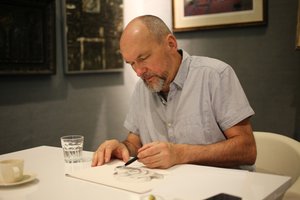
Jacek Yerka
1952 - , Lengyelország
Gyors információk
- Artistic Movement Or Style: Surrealista
- Artists Or Movements Influenced By This Artist: ['Flemish Painting']
- Artists Who Influenced This Artist:
- Hieronymus Bosch
- Pieter Bruegel
- Jan van Eyck
- Date Of Birth: 1952
- Full Name: Jacek Yerka
- Nationality: Lengyel
- Notable Artworks:
- An Angels' Kitchen
- Wegener's Theory
- Place Of Birth: Toruń, Lengyelország
Kapcsolódó cikkek
Dreamscapes & Disrupted Realities: Exploring Surrealism's Enduring Influence
Explore the fascinating world of Surrealism! Discover its origins, key artists like Dalí & Magritte, and enduring influence on art & culture. Expert insights & high-quality reproductions at OriginalUniqueArt.
A szürrealizmus 10 legikonikusabb műalkotása – OriginalUniqueArt.com
Fedezze fel a szürrealizmus 10 legmeghatározóbb műalkotását! Salvador Dalí, René Magritte és más mesterek álomképei – történetükkel és inspirációjukkal. Vászonkép, falikép otthonába? OriginalUniqueArt.com - a minőségi reprodukciók galériája.

Katsushika Hokusai 25 Mesterműve: A Japán Art Élmény, Otthonodban – OriginalUniqueArt
Fedezze fel Katsushika Hokusai 25 legikonikusabb műalkotását! Merüljön el a japán ukiyo-e világában, ismerje meg a 'Nagy Hullám' történetét és más remekműveket. Museum minőségű reprodukciók otthonába – OriginalUniqueArt.com.

Jacek Yerka: Surreal Visions & Nostalgia in Contemporary Polish Painting
Explore the captivating surreal worlds of Jacek Yerka, a leading Polish painter renowned for his meticulous Flemish technique & dreamlike landscapes. Discover his unique style and learn about collecting this exceptional artist's work.
Salvador Dalí 25 Mesterműve: Az Élet és Álmaink Rejtélyei – OriginalUniqueArt
Fedezze fel Salvador Dalí 25 legikonikusabb művészeti alkotását! Ismerje meg a szürrealizmus mesterének álomképeit, festményeit és egyedi stílusát. Múzeumi minőségű reprodukciók és inspiráló dekorációs ötletek – OriginalUniqueArt.com.