A szöveg mérete

() ·

Egy Önnek készült, kézzel festett alkotás

The Shipwreck

Kézzel készített olajfestmény reprodukció

Kézzel festett olajvastú vászon, az Ön által választott méretben és keretben, művészeink készítik meglévőre. ( Váltás nyomtatványra Áttérés digitális képre)

A gyűjtemény leírása

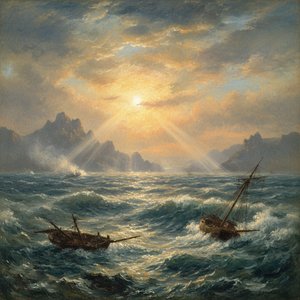
Witness the dramatic aftermath of a maritime disaster in J.M.W. Turner's 'The Shipwreck.' A powerful Romantic painting capturing chaos, vulnerability, and nature’s raw force – a masterpiece of light and atmosphere.

A művész életrajza

"HungarianMetaDescription": "J.M.W. Turner angol romantikus festő, a természet és fény expresszív ábrázásával világszerte ismert. Kiemelkedő tájképfestők közé tartozik, hatással volt az impresszionizmusra. Nézze meg ikonikus alkotásait!"

előbb ·

1. fejezet

Mekkora méretű legyen?

Húzza a csúszkát a méret megváltoztatásához; a bal oldali kép a keret valós szélességét mutatja. Az eredeti arányok megmaradnak.

Standard méret
egyedi méretű
CM
INCH

Válasszon előre meghatározott méreteink közül, amelyek megfelelnek a műalkotás eredeti arányainak.

szélesség
magasság

Írja be a kívánt szélességet és magasságot, hogy illeszkedjen a keretéhez vagy a falához. Mivel ez kézzel festett alkotás, egy eltérő formájú méret esetén a művész akár festhet is valamivel többet a kép körül, vagy korolathat is belőle — az Ön döntésének megfelelően. A festés megkezdése előtt küldünk egy digitális tervezetet jóváhagyásra. Az oldalon látható kép nem tartalmazza a végeredményt — csak a tervezet mutatja meg a valódi eredményt.

2. fejezet

Hogyan érkezzen meg?

Válaszd ki a feszített vászon széleit

Válassza ki a keretet

Corner sample of the WhiteWrap canvas edge finish, stretched on tömörfa bars
Fehér Ft1
Corner sample of the BlurSideWrap canvas edge finish, stretched on tömörfa bars
Elmosódott szélek Ft1
Corner sample of the ExtendedWrap canvas edge finish, stretched on tömörfa bars
Kiterjesztett Ft1
Corner sample of the P118B picture frame: formázott polisztirol, 5 cm wide and 3 cm thick
P118B Ft10
Corner sample of the P118H picture frame: formázott polisztirol, 5 cm wide and 3 cm thick
P118H Ft10
Corner sample of the P118W picture frame: formázott polisztirol, 5 cm wide and 3 cm thick
P118W Ft10
Corner sample of the P438Z picture frame: formázott polisztirol, 5.5 cm wide and 3.5 cm thick
P438Z Ft10
Corner sample of the P508JH picture frame: formázott polisztirol, 7 cm wide and 3.5 cm thick
P508JH Ft12
Corner sample of the P508YH picture frame: formázott polisztirol, 7 cm wide and 3.5 cm thick
P508YH Ft12
Corner sample of the P805H picture frame: formázott polisztirol, 5 cm wide and 3.5 cm thick
P805H Ft10
Corner sample of the P805Z picture frame: formázott polisztirol, 5 cm wide and 3.5 cm thick
P805Z Ft10
Corner sample of the P919BZ picture frame: formázott polisztirol, 7 cm wide and 3.5 cm thick
P919BZ Ft10
Corner sample of the P919G picture frame: formázott polisztirol, 7 cm wide and 3.5 cm thick
P919G Ft10
Corner sample of the P919XJ picture frame: formázott polisztirol, 7 cm wide and 3.5 cm thick
P919XJ Ft10
Corner sample of the P959ZH picture frame: formázott polisztirol, 5 cm wide and 3 cm thick
P959ZH Ft10
Corner sample of the P968JZ picture frame: formázott polisztirol, 6 cm wide and 4 cm thick
P968JZ Ft12
Corner sample of the W106C picture frame: tömörfa, 5 cm wide and 3 cm thick
W106C Ft8
Corner sample of the W218G picture frame: tömörfa, 5 cm wide and 3 cm thick
W218G Ft10
Corner sample of the W218JH picture frame: tömörfa, 5 cm wide and 3 cm thick
W218JH Ft8
Corner sample of the W218Y picture frame: tömörfa, 5 cm wide and 3 cm thick
W218Y Ft10
Corner sample of the W307PJ picture frame: tömörfa, 6 cm wide and 3 cm thick
W307PJ Ft10
Corner sample of the W316G picture frame: tömörfa, 6 cm wide and 3 cm thick
W316G Ft10
Corner sample of the W316PJ picture frame: tömörfa, 6 cm wide and 3 cm thick
W316PJ Ft8
Corner sample of the W316Y picture frame: tömörfa, 6 cm wide and 3 cm thick
W316Y Ft10
Corner sample of the W398PJ picture frame: tömörfa, 5 cm wide and 3 cm thick
W398PJ Ft8
Corner sample of the W4111J picture frame: tömörfa, 6.5 cm wide and 3.5 cm thick
W4111J Ft10
Corner sample of the W500HY picture frame: tömörfa, 7 cm wide and 5 cm thick
W500HY Ft15
Corner sample of the W500JH picture frame: tömörfa, 7 cm wide and 5 cm thick
W500JH Ft15
Corner sample of the W692G picture frame: tömörfa, 8 cm wide and 4 cm thick
W692G Ft12
Corner sample of the W849H picture frame: tömörfa, 5 cm wide and 3 cm thick
W849H Ft8
Corner sample of the W940BG picture frame: tömörfa, 7.5 cm wide and 4.5 cm thick
W940BG Ft15
Corner sample of the W953PJ picture frame: tömörfa, 6 cm wide and 3.5 cm thick
W953PJ Ft8
Corner sample of the H24-GOLD picture frame: faragott fa gesszóval, 10 cm wide and 6 cm thick
H24-GOLD Ft30
Corner sample of the H24-SILVER picture frame: faragott fa gesszóval, 10 cm wide and 6 cm thick
H24-SILVER Ft30
Corner sample of the H36-GOLD picture frame: faragott fa gesszóval, 15 cm wide and 6.5 cm thick
H36-GOLD Ft45
Corner sample of the H36-SILVER picture frame: faragott fa gesszóval, 15 cm wide and 6.5 cm thick
H36-SILVER Ft45

Keretprofil: . A kerettel együtt vett teljes méret: .

3. fejezet

Ki festi, és változtatni kellene-e bármit?

Példák a módosíthatóságra: Az arc kicserélése a vásárló fotójára; háziállat hozzáadása (pl. macska kicserélése kutyára); rejtett üzenet elhelyezése a háttérben; a háttér tájéképének vagy elemeinek megváltoztatása.
A megrendelést követően a OriginalUniqueArt.com csapat e-mailt küld a vásárlónak az instrukciókkal, és biztosítja a tervezeti előnézetet

Világszerte elérhető szállítás () 3-4 hét alatt a szokásos 5 hét helyett. (8 november). A minőség nem kérdőjelezhető.

4. fejezet

Az utolsó finomhangolás

Egy felirat, mint egy múzeumban?

A gravírozott bronztábla részletei

This elegant plaque features the artist's name and the title of the artwork, finely engraved for a timeless presentation.

It is made from bronze with a refined, elegant finish. The text is precisely laser-engraved for a sharp and permanent result. Measuring 9x2 cm, the plaque is compact yet easy to read. It's built to be durable and scratch-resistant, offering a professional, museum-quality look. Mounting is simple thanks to the included adhesive backing.

Átlátszó akril tábla részletei

The plaque includes essential engraved details such as the artist's name, the title of the artwork, the date it was created, the type of media used-like oil on canvas or watercolor-a brief description of the piece, and a QR code that links to the complete artwork information.

It is crafted from clear acrylic, offering a sleek, modern appearance. The text is UV-engraved in black to ensure strong visual contrast. With a size of 10x15 cm, it ensures optimal readability. It comes equipped with two metal hooks for secure wall mounting. The plaque is designed to be weather-resistant, making it suitable for various environments, and it includes interactive features that work seamlessly with smartphone scanning.

Fekete akril tábla részletei

This elegant plaque includes engraved information such as the artist's name, the title of the artwork, the date it was created, the type of media used (like oil on canvas or watercolor), a short description of the artwork, and a QR code for quick access to more information.

The plaque itself is made from refined black acrylic with a premium finish. The text is laser-engraved in white for high contrast and readability. Its size is 10x15 cm, designed to be easy to read. It comes with two metal hooks for professional mounting. The design is sleek and fits any interior style. It is also weather-resistant and durable, with built-in digital integration for mobile compatibility.

Egy védőréteg?

Mikor lenne szüksége rá?

5. fejezet

Az Ön által megrendelt festmény

The Shipwreck

Reprodukciós technika

Reprodukció mérete

-

Kiváló mesterművész

Nagyobb részletesség, finomság és bővített gyártási idő

-

Reprodukció keretezése

-

-

A bármely oldalsó méretét túlszálaló 105 cm (kb. 41 hüvelyk) meghaladó műalkotások vagy reprodukciók esetében a keret összeszerelhető készletként, szétszerelve kerül szállításra. Ez a módszer biztosítja a biztonságos szállítást, és megakadályozza a szállítás során fellépő sérüléseket.

Szakmész összeszerelést igényel – ez nem DIY (önösszeszerelhető) termék.
A készletet egy tapasztalt keretező szakembernek kell összeszerelnie és a vásznat feszítenie kell, fa ragasztó (nem tartalmazza a csomag), vásznfeszítő fogó és szorítók használatával, amelyek a ragasztó száradásáig a keretrészeket egymáshoz vuôngjba tartják. A helytelen összeszerelés vagy a nem egyenletes vásznfeszítés maradandó károsíthatja a műalkotást, és ez nem része a garanciánknak.

  • A készlet tartalmazza az összes tömörfa rudat, pontosan méretre vágva.

  • A mellékelt csavarokkal, valamint a sarokszerekhez szükséges faütő ragasztóval kell összeszerelnie (ez nem tartalmazható a csomagban), így a keretrendezőnek külön kell beszereznie.

  • A csomag nem tartalmazza a szükséges professzionális eszközöket: egy vászonfeszítőt és klipseket a rácsok vízszintes tartásához a ragasztó megszáradásáig.

Fontos:
A sarokcsatlakozásokhoz fánylagra van szükség, a keretrudakat szorítókapcsokkal kell rögzíteni, amíg a rag teljesen meg nem szárad, a kész keretre feszített vászonhoz pedig vászonfeszítő fogat szükséges. Ezek egyike sem található meg a készletben. Kérjük, rendelés előtt győződjön meg róla, hogy rendelkezik tapasztalt keretező szakemberrel.

Névtábla

-

-

Védőréteg (Lakk)

Fényes lakk (intenzívabb színek, védelem a fény és a nedvesség hatása ellen)

-

Műalkotásom egyedi igényre szabása

Példák a módosíthatóságra: az arc kicserélése az ügyfél fotójára; háziállat hozzáadása (pl. macska helyett kutya); rejtett üzenet elhelyezése a háttérben; a háttér tájainak vagy elemeinek megváltoztatása.

-

Sürgős

Világszerte szóló szállítás () mindössze 3-4 hét alatt, a szokásos 5 hét helyett. (8 november). A minőség nem kérdőjelezhető.

-

Express szállítás

Világszerte elérhető szállítás területre 5 héten belül. (15 november).

A szállítás díja tartalmazza

Összesített ár

Ft 211975

Összesített ár Ft 211975

Az üvegkeretes opció csak 110 cm alatti méretben érhető el

Minden rendelés mellé tartalmazva

  • Ingyenes globális expressz szállítás
  • Prémium minőségű len vászon
  • Teljes körű szállítási biztosítás
  • Vámvisszatérítési Garancia
  • Hiteles színarányosság garancia
  • 100 napos visszaküldési lehetőség (csak hibás termékek esetén)
  • 100% pénzvisszatérítési garancia
  • Több darab vásárlásakor kedvezmény

A Tempestuous Vision: J.M.W. Turner’s “The Shipwreck”

J.M.W. Turner's "The Shipwreck," painted in 1805, isn’t merely a depiction of maritime disaster; it’s a visceral embodiment of Romanticism’s fascination with the sublime—the awe-inspiring and potentially terrifying power of nature. This dramatic seascape captures a moment of profound chaos and vulnerability, drawing the viewer into a swirling vortex of turbulent waves, bruised skies, and desperate figures clinging to fragments of shattered vessels. Turner, a lifelong devotee of the sea, wasn't interested in literal accuracy; instead, he sought to convey an emotional response—the primal fear and humbling respect evoked by confronting forces far greater than ourselves.

The painting’s genesis is often linked to the tragic sinking of the Earl of Abergavenny off the coast of Weymouth. While speculation persists about a direct connection, Turner's genius lies in transforming this specific event into a universal allegory for human fragility against the relentless power of the elements. The composition immediately commands attention with its dynamic arrangement: a chaotic cluster of boats—some capsized, others desperately battling the waves—forms the central focus, while a vast, ominous sky dominates the upper half of the canvas. The horizon line is deliberately obscured by swirling clouds and mist, creating an unsettling sense of disorientation and emphasizing the immense scale of the ocean.

Masterful Technique: Light, Color, and Texture

Turner’s signature technique—a masterful manipulation of light and color—is on full display in “The Shipwreck.” He employs loose, expressive brushstrokes to capture the movement of water with breathtaking dynamism. Thick impasto is strategically applied to represent the crests of the waves, lending them a tangible physicality that seems to surge towards the viewer. The palette is predominantly dark and muted – shades of grey, brown, and black—creating a mood of foreboding and despair. However, flashes of yellow and orange punctuate the gloom, particularly within the churning waves and the clothing of the figures, offering brief moments of intense visual drama and hinting at the destructive potential of the storm.

Crucially, Turner wasn’t simply replicating what he saw; he was translating his *experience* of the sea onto canvas. He utilized a technique known as ‘atmospheric perspective,’ subtly lightening and desaturating distant elements to create an illusion of depth and distance. This layering of color and texture contributes significantly to the painting's overall sense of vastness and instability, mirroring the psychological impact of confronting such overwhelming forces.

Symbolism and Emotional Resonance

Beyond its technical brilliance, “The Shipwreck” is rich in symbolic meaning. The scattered ships represent not just a specific maritime disaster but also the precariousness of human existence. The struggling figures embody our vulnerability in the face of nature’s indifference—a poignant reminder of mortality and the limits of control. The tempestuous sea itself functions as a metaphor for the unpredictable forces that shape our lives, capable of both destruction and renewal.

Furthermore, the painting taps into the Romantic concept of the ‘sublime,’ a feeling of awe mixed with terror experienced when confronted with something overwhelmingly powerful. Turner’s depiction isn't intended to offer comfort or reassurance; rather, it compels us to confront our own insignificance within the grand scheme of nature and to appreciate its untamed beauty—and inherent danger.

A Legacy of Atmospheric Impressionism

“The Shipwreck” stands as a pivotal work in Turner’s oeuvre and a cornerstone of Romantic art. Its innovative use of light, color, and brushwork profoundly influenced subsequent generations of artists, particularly those associated with Impressionism. Turner's willingness to prioritize emotional expression over precise representation paved the way for a more subjective and evocative approach to landscape painting. Reproductions of this powerful image continue to resonate today, offering a timeless meditation on humanity’s relationship with the natural world—a reminder that even in the face of overwhelming adversity, there is an undeniable beauty to be found.

Kérdések és válaszok

Mely korszakból származik a "The Shipwreck"?

A „The Shipwreck”, J.M.W. Turner alkotása a 19th Century korszakból származik. Ez az időszak adja meg a mű történelmi kontextusát.

Milyen domináns alapszín jellemzi „The Shipwreck”, J.M.W. Turner alkotása alkotást?

A „The Shipwreck” egy Green to Violet Spectrum tónus felé hajlik.

A „The Shipwreck” művészeti alkotás mentes a szerzői jogoktól?

A „The Shipwreck”, J.M.W. Turner alkotása közösségi tulajdon – a szerzői jog lejártt státuszú mű. Ez a jogi státusz határozza meg, hogy a mű képmásolata hogyan reproduzható.

Több információ erről a festményről

Megtekintés AR előnézet Váltás nyomtatványra Áttérés digitális képre Küldés
Részletek Útmutató Kedvencekhez ad Letöltés Hasonló darabok X-ray felvétel Diavetítés Kérdések és válaszok Statisztika

Számokban kifejezve

  • 1805a festés éve
  • 29választható keretek
  • standard méretek, saját arányokkal
  • 5hetek a festésre és a kézbesítésre
J.M.W. Turner

J.M.W. Turner

1775 - 1851, Egyesült Királyság

Gyors információk J.M.W. Turner művészről

  • Artistic Movement Or Style: Romantika
  • Artists Or Movements Influenced By This Artist:
    • Impressionizmus
    • Modern
  • Artists Who Influenced This Artist:
    • Cozemsen
    • Wilson
  • Date Of Birth: 1775. április 23.
  • Date Of Death: 1851. december 19.
  • Full Name: Joseph Mallord William Turner
  • Nationality: Angol
  • Notable Artworks:
    • Fort Vimieux
    • Campagna
  • Place Of Birth: London, Anglia

A művész életrajza

A Life Painted in Light: The World of J.M.W. Turner

Joseph Mallord William Turner, known to the world as J.M.W. Turner, was more than just a painter; he was a visionary who redefined landscape art and paved the way for modern abstraction. Born in Maiden Lane, Covent Garden, London, in 1775, his beginnings were humble – the son of a barber and wig maker. Yet, even as a child, a remarkable talent blossomed within him. By age fourteen, he was enrolled at the Royal Academy, exhibiting his first work just a year later. This early promise wasn’t merely technical skill; it hinted at an innate understanding of light, color, and atmosphere that would become the hallmarks of his extraordinary career. He supplemented his artistic education with practical experience as an architectural draftsman, honing his perspective and compositional abilities – skills that would prove invaluable in rendering both detailed topographical views and vast, emotive landscapes. Turner’s early life was marked by a dedication to his craft, fueled by a natural aptitude and a relentless pursuit of artistic excellence.

The Romantic Tempest: Style and Influences

Turner emerged during the height of the Romantic era, but he wasn't simply a follower of its conventions. He absorbed influences from various sources – the Dutch masters like Claude Lorrain and Aelbert Cuyp for their luminous landscapes, and artists such as Richard Wilson for his poetic approach to nature. However, Turner didn’t merely imitate; he synthesized these influences into something entirely new. His work is characterized by an expressive use of color, often employing bold contrasts and vibrant hues to convey emotion and atmosphere. He was fascinated by the power and drama of nature – turbulent seascapes, fiery sunsets, and swirling storms became recurring motifs in his paintings. He wasn’t interested in simply depicting what he saw; he sought to capture the *feeling* of a place, the sublime awe inspired by the natural world. This pursuit led him to experiment with increasingly loose brushwork, dissolving forms into washes of color and light – techniques that would anticipate the Impressionist movement decades later. From 1840, his work gained significant recognition thanks to the championing of John Ruskin, who elevated landscape painting to a new level of critical acclaim.

A Prolific Legacy: The Scope of Turner’s Output

The sheer volume of Turner's artistic output is astonishing. He created over 550 oil paintings, nearly 2,000 watercolors, and an astounding 30,000 works on paper. This prolificacy wasn’t simply a matter of quantity; it reflected his tireless exploration of different subjects, techniques, and styles. His paintings range from detailed topographical views of British landscapes to dramatic historical scenes and evocative maritime paintings. He was equally adept at capturing the tranquility of a pastoral scene and the terrifying power of a raging storm. Works like “Fort Vimieux” exemplify his mastery of depicting atmospheric effects – the swirling clouds, the crashing waves, and the intense light all contribute to a sense of drama and sublime beauty. Similarly, "Scene in the Campagna" showcases his ability to capture the warmth and serenity of the Italian countryside with delicate brushwork and luminous colors. Beyond painting, Turner was also a skilled printmaker, further disseminating his artistic vision through engravings and lithographs.

Eccentricity and Remembrance: The Man Behind the Masterpieces

Turner’s personal life was as complex and enigmatic as his art. He remained intensely private and reclusive, often shunning social gatherings and preferring the solitude of his studio or the open road. He fathered two daughters, Evelina and Georgiana, with Sarah Danby, the wife of a fellow artist, but maintained a distant relationship with them. His later years were marked by increasing eccentricity and declining health. After his father’s death in 1829, he became increasingly morose and withdrawn, living in squalor and neglecting his appearance. He adopted the pseudonym “Mr. Booth” to avoid recognition and even rowed his boat into the Thames during a census to remain untraceable. Despite his eccentricities, or perhaps because of them, Turner remains one of Britain’s most beloved artists. His final years were spent in Chelsea where he passed away on December 19, 1851, at the age of 76. In a fitting tribute to his enduring legacy, he is buried in St Paul's Cathedral, alongside other British luminaries – a testament to his profound impact on art and culture. His work continues to inspire artists and captivate audiences worldwide, ensuring that the light of J.M.W. Turner will continue to shine for generations to come.

Key Works & Recognition

Turner’s artistic journey spanned several decades, marked by constant experimentation and a deepening understanding of his craft. Some of his most celebrated works include: *Charing Cross Bridge* (1820), a pioneering example of urban landscape painting; *The Fighting Temeraire* (1839), a powerful depiction of a naval battle and the decline of traditional maritime power; *Rain, Steam and Speed – The Great Western Railway* (1844), an iconic image capturing the dynamism of the Industrial Revolution; *Snow Storm: Hannibal Crossing the Alps* (1812-1813), a dramatic portrayal of a historical event rendered with intense emotion and atmospheric effects. Throughout his career, Turner received numerous accolades and recognition, including election to the Royal Academy in 1807 and continued support from influential critics like John Ruskin, who famously declared him “the greatest landscape painter of modern times.” His work has had a lasting influence on subsequent generations of artists, particularly Impressionists and Abstract Expressionists.

Gyors információk

  • Artist: J.M.W. Turner
  • Artistic style: Loose brushwork, atmospheric
  • Medium: Oil on canvas
  • Title: The Shipwreck
  • Subject or theme: Maritime disaster
  • Movement: Romanticism

Művészeti kvíz

Minden kérdésre csak egy helyes válasz létezik.

Kérdés 1:
What is the primary theme depicted in J.M.W. Turner’s ‘The Shipwreck’?
Kérdés 2:
In ‘The Shipwreck’, what artistic technique is prominently used to convey the movement of water?
Kérdés 3:
The painting ‘The Shipwreck’ is considered a prime example of which artistic movement?
Kérdés 4:
Approximately when was ‘The Shipwreck’ painted by J.M.W. Turner?
Kérdés 5:
What does the turbulent sea in ‘The Shipwreck’ primarily symbolize?