

 Előnézet
 Megosztás
 Megosztás
 Részletek
 Útmutató

 Letöltés
 Hasonló darabok
 X-ray felvétel
 Diavetítés
 Statisztika
Bell Rock Lighthouse


 Tovább olvasom
Kézzel készített olajfestmény reprodukció
Kézzel festett olajvastú vászon, az Ön által választott méretben és keretben, művészeink készítik meglévőre. ( Váltás nyomtatványra Áttérés digitális képre)




P118B Ft10

P118H Ft10

P118W Ft10

P438Z Ft10

P508JH Ft12

P508YH Ft12

P805H Ft10

P805Z Ft10

P919BZ Ft10

P919G Ft10

P919XJ Ft10

P959ZH Ft10

P968JZ Ft12

W106C Ft8

W218G Ft10

W218JH Ft8

W218Y Ft10

W307PJ Ft10

W316G Ft10

W316PJ Ft8

W316Y Ft10

W398PJ Ft8

W4111J Ft10

W500HY Ft15

W500JH Ft15

W692G Ft12

W849H Ft8

W940BG Ft15

W953PJ Ft8




Válasszon előre meghatározott méreteink közül, amelyek megfelelnek a műalkotás eredeti arányainak.

Írja be a kívánt szélességet és magasságot, hogy illeszkedjen a keretéhez vagy a falához. Mivel ez kézzel festett alkotás, egy eltérő formájú méret esetén a művész akár festhet is valamivel többet a kép körül, vagy korolathat is belőle — az Ön döntésének megfelelően. A festés megkezdése előtt küldünk egy digitális tervezetet jóváhagyásra. Az oldalon látható kép nem tartalmazza a végeredményt — csak a tervezet mutatja meg a valódi eredményt.
A rendelést követően a OriginalUniqueArt.com csapata e-mailt küld az ügyfélnek az instrukciókért, és biztosít egy előnézeti képet (mockup).
Világszerte elérhető szállítás () 3-4 hét alatt a szokásos 5 hét helyett. (25 október). A minőség nem kérdőjelezhető.

Ingyenes globális expressz szállítás

Prémium minőségű len vászon

Teljes körű szállítási biztosítás

Vámvisszatérítési Garancia

Tökéletes színarányosság garancia

100 napos visszaküldési garancia (csak gyártási hibás termékek esetén)

100% pénzvisszatérítési garancia

Több darab vásárlásakor kedvezmény
 Az üvegkeretes opció csak 110 cm alatti méretben érhető el

Bell Rock Lighthouse
Reprodukciós technika
Reprodukció méretei
-


Összesített ár
Ft 96158
A Tempestuous Vision: J.M.W. Turner’s ‘Bell Rock Lighthouse’
J.M.W. Turner's “Bell Rock Lighthouse,” painted in 1819, isn’t merely a depiction of a lighthouse; it’s an immersive experience—a visceral plunge into the heart of a raging storm. This iconic work, now housed within the National Gallery of Scotland, transcends its subject matter to become a profound meditation on nature's power, human resilience, and the sublime beauty found in chaos. Turner, a revolutionary figure in British art, masterfully employed his signature style—characterized by loose brushstrokes, vibrant color palettes, and an almost palpable sense of movement—to capture the raw energy of the North Sea coastline.
The painting’s genesis is fascinating. Robert Stevenson, the engineer responsible for constructing the Bell Rock Lighthouse – a feat of engineering considered remarkable for its time – commissioned Turner to create an illustration for his account of the lighthouse's construction. Despite never having personally witnessed the tempestuous conditions surrounding the lighthouse, Turner relied on Stevenson’s detailed descriptions and his own profound understanding of light and atmosphere to conjure this dramatic scene. This reliance on textual information, combined with his artistic intuition, resulted in a work that feels both meticulously researched and utterly imaginative.
A Symphony of Color and Light
Turner's technique is immediately arresting. He abandons the precise detail favored by earlier landscape painters, instead opting for a fluid, expressive style where brushstrokes dance across the canvas with unrestrained energy. The dominant palette—a swirling blend of deep blues, greys, and whites—evokes the oppressive darkness of the storm clouds while strategically placed highlights, particularly around the lighthouse itself, suggest a fragile beacon of hope amidst the turmoil. Notice how Turner uses warm ochres and yellows to illuminate the structure, drawing our eye towards it as a symbol of steadfastness against the overwhelming forces of nature.
The artist’s masterful manipulation of light is central to the painting's impact. He doesn’t simply depict illumination; he captures the *effect* of light—the way it refracts through rain, scatters across waves, and creates an ethereal glow in the face of darkness. The dramatic contrasts between light and shadow heighten the sense of drama and create a dynamic visual experience that pulls the viewer into the heart of the storm.
Symbolism and Emotional Resonance
Beyond its technical brilliance, “Bell Rock Lighthouse” is rich in symbolic meaning. The lighthouse itself represents human ingenuity—a testament to our ability to conquer challenging environments through careful planning and execution. However, it’s dwarfed by the immense power of the sea, suggesting that even the most impressive achievements are ultimately subject to nature's forces. The small sailboat struggling against the waves serves as a poignant reminder of humanity’s vulnerability in the face of the natural world.
The painting evokes a powerful emotional response—a sense of awe mingled with apprehension. It captures the sublime beauty of a violent storm, reminding us of both its destructive potential and its breathtaking grandeur. Turner's work taps into something primal within us—a recognition of our own insignificance in the face of nature’s vastness, yet also an appreciation for the resilience and spirit that allows us to endure.
A Legacy of Romantic Vision
“Bell Rock Lighthouse” stands as a cornerstone of the Romantic movement in art. Turner's emphasis on emotion, imagination, and the power of nature profoundly influenced generations of artists who followed. His willingness to break with traditional artistic conventions—to prioritize atmosphere and feeling over precise representation— paved the way for modern abstraction. Reproductions of this iconic work continue to captivate audiences today, offering a glimpse into the visionary world of one of Britain’s greatest painters.
Gyakran Ismételt Kérdések
Mire ajánlott használni a „Bell Rock Lighthouse”, J.M.W. Turner alkotása reprodukcióját?
A „Bell Rock Lighthouse” nyomtatvány ajánlott felhasználása: Statement.
Milyen méretben ajánlott a "Bell Rock Lighthouse" nyomtatása?
A "Bell Rock Lighthouse" alkotás esetében a Large nyomtatási méret javasolt. Ugyanakkor ugyanazon arányokban elérhető egyéb méretű változat is.
Milyen viszonyban állnak egymáshoz a "Bell Rock Lighthouse" színei?
A "Bell Rock Lighthouse" színharmóniája úgy van rögzítve, mint Softly Mixed Palette.
A művész életrajza
A Life Painted in Light: The World of J.M.W. Turner
Joseph Mallord William Turner, known to the world as J.M.W. Turner, was more than just a painter; he was a visionary who redefined landscape art and paved the way for modern abstraction. Born in Maiden Lane, Covent Garden, London, in 1775, his beginnings were humble – the son of a barber and wig maker. Yet, even as a child, a remarkable talent blossomed within him. By age fourteen, he was enrolled at the Royal Academy, exhibiting his first work just a year later. This early promise wasn’t merely technical skill; it hinted at an innate understanding of light, color, and atmosphere that would become the hallmarks of his extraordinary career. He supplemented his artistic education with practical experience as an architectural draftsman, honing his perspective and compositional abilities – skills that would prove invaluable in rendering both detailed topographical views and vast, emotive landscapes. Turner’s early life was marked by a dedication to his craft, fueled by a natural aptitude and a relentless pursuit of artistic excellence.The Romantic Tempest: Style and Influences
Turner emerged during the height of the Romantic era, but he wasn't simply a follower of its conventions. He absorbed influences from various sources – the Dutch masters like Claude Lorrain and Aelbert Cuyp for their luminous landscapes, and artists such as Richard Wilson for his poetic approach to nature. However, Turner didn’t merely imitate; he synthesized these influences into something entirely new. His work is characterized by an expressive use of color, often employing bold contrasts and vibrant hues to convey emotion and atmosphere. He was fascinated by the power and drama of nature – turbulent seascapes, fiery sunsets, and swirling storms became recurring motifs in his paintings. He wasn’t interested in simply depicting what he saw; he sought to capture the *feeling* of a place, the sublime awe inspired by the natural world. This pursuit led him to experiment with increasingly loose brushwork, dissolving forms into washes of color and light – techniques that would anticipate the Impressionist movement decades later. From 1840, his work gained significant recognition thanks to the championing of John Ruskin, who elevated landscape painting to a new level of critical acclaim.A Prolific Legacy: The Scope of Turner’s Output
The sheer volume of Turner's artistic output is astonishing. He created over 550 oil paintings, nearly 2,000 watercolors, and an astounding 30,000 works on paper. This prolificacy wasn’t simply a matter of quantity; it reflected his tireless exploration of different subjects, techniques, and styles. His paintings range from detailed topographical views of British landscapes to dramatic historical scenes and evocative maritime paintings. He was equally adept at capturing the tranquility of a pastoral scene and the terrifying power of a raging storm. Works like “Fort Vimieux” exemplify his mastery of depicting atmospheric effects – the swirling clouds, the crashing waves, and the intense light all contribute to a sense of drama and sublime beauty. Similarly, "Scene in the Campagna" showcases his ability to capture the warmth and serenity of the Italian countryside with delicate brushwork and luminous colors. Beyond painting, Turner was also a skilled printmaker, further disseminating his artistic vision through engravings and lithographs.Eccentricity and Remembrance: The Man Behind the Masterpieces
Turner’s personal life was as complex and enigmatic as his art. He remained intensely private and reclusive, often shunning social gatherings and preferring the solitude of his studio or the open road. He fathered two daughters, Evelina and Georgiana, with Sarah Danby, the wife of a fellow artist, but maintained a distant relationship with them. His later years were marked by increasing eccentricity and declining health. After his father’s death in 1829, he became increasingly morose and withdrawn, living in squalor and neglecting his appearance. He adopted the pseudonym “Mr. Booth” to avoid recognition and even rowed his boat into the Thames during a census to remain untraceable. Despite his eccentricities, or perhaps because of them, Turner remains one of Britain’s most beloved artists. His final years were spent in Chelsea where he passed away on December 19, 1851, at the age of 76. In a fitting tribute to his enduring legacy, he is buried in St Paul's Cathedral, alongside other British luminaries – a testament to his profound impact on art and culture. His work continues to inspire artists and captivate audiences worldwide, ensuring that the light of J.M.W. Turner will continue to shine for generations to come.Key Works & Recognition
Turner’s artistic journey spanned several decades, marked by constant experimentation and a deepening understanding of his craft. Some of his most celebrated works include: *Charing Cross Bridge* (1820), a pioneering example of urban landscape painting; *The Fighting Temeraire* (1839), a powerful depiction of a naval battle and the decline of traditional maritime power; *Rain, Steam and Speed – The Great Western Railway* (1844), an iconic image capturing the dynamism of the Industrial Revolution; *Snow Storm: Hannibal Crossing the Alps* (1812-1813), a dramatic portrayal of a historical event rendered with intense emotion and atmospheric effects. Throughout his career, Turner received numerous accolades and recognition, including election to the Royal Academy in 1807 and continued support from influential critics like John Ruskin, who famously declared him “the greatest landscape painter of modern times.” His work has had a lasting influence on subsequent generations of artists, particularly Impressionists and Abstract Expressionists.
J.M.W. Turner
1775 - 1851 , Egyesült Királyság
Gyors információk
- Artistic Movement Or Style: Romantika
- Artists Or Movements Influenced By This Artist:
- Impressionizmus
- Modern
- Artists Who Influenced This Artist:
- Cozemsen
- Wilson
- Date Of Birth: 1775. április 23.
- Date Of Death: 1851. december 19.
- Full Name: Joseph Mallord William Turner
- Nationality: Angol
- Notable Artworks:
- Fort Vimieux
- Campagna
- Place Of Birth: London, Anglia
Kapcsolódó cikkek
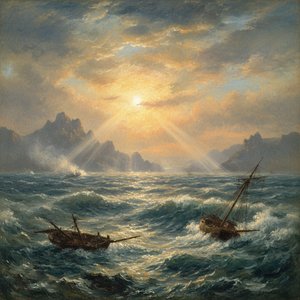
J.M.W. Turner: Light, Atmosphere & the Romantic Sublime
Explore the life & art of J.M.W. Turner, a master of Romantic landscape painting. Discover his innovative techniques, key works, and lasting influence on Impressionism. Find high-quality reproductions at OriginalUniqueArt.

A művészet vitorlái: 10 ikonikus hajóábrázolás a festészetben | OriginalUniqueArt
Fedezze fel a művészet vitorláit! 10 ikonikus hajóábrázolás Monet-tól Manet-ig. Ismerje meg a festmények történetét, technikáját és inspirációját. Luxus reprodukciók otthonra – OriginalUniqueArt.com

Nautical Oil Paintings: A Procurement Guide to Premium Maritime Art for Large-Scale Commercial & Hospitality Projects
Optimize large-scale hospitality projects with premium nautical oil paintings. APS offers efficient bulk procurement of maritime art, featuring multi-panel layouts, custom sizing, and reliable global shipping for hotel designers and procurement managers seeking high-volume reliability.
Navigating the Depths of Representation: A Historical Exploration of Marine Painting
Explore the rich history of marine painting with OriginalUniqueArt. Discover Dutch Masters, Romantic seascapes & renowned artists like Wyllie and Harris. Expert guidance for collectors & custom reproductions.
The Allure of the Horizon: A Comprehensive Exploration of Seascape Art Through History & Emotion
Explore the captivating world of seascape art! Discover its history, key artists & movements – from Dutch Masters to Impressionism. Expert insights for collectors and enthusiasts at OriginalUniqueArt.