Menü
Text size

() ·

A painting made for you, by hand

The Rainbow.

Kézzel készített olajfestmény reprodukció

Kézzel festett olajvastú vászon, az Ön által választott méretben és keretben, művészeink készítik meglévőre. ( Váltás nyomtatványra Áttérés digitális képre)

A gyűjtemény leírása

A serene seascape featuring a vibrant rainbow over turbulent waves captures the Romantic essence of Ivan Aivazovsky's 1873 masterpiece, inviting you to bring this symphony of light and hope into your private collection.

A művész életrajza

Aivazovsky: A nagyszerű tengerészettörték festője, aki a tenger lelkeinek ábrázolásával alkotott. Romantika, drámai kompozíciók és a természet csodálatos szélei jellemzik műveit.

from ·

Chapter 1

How large should it be?

Slide to change the size; the picture on the left shows the frame at its real width. The proportions of the original are kept.

Standard méret
egyedi méretű
CM
INCH

Válasszon előre meghatározott méreteink közül, amelyek megfelelnek a műalkotás eredeti arányainak.

szélesség
magasság

Írja be a kívánt szélességet és magasságot, hogy illeszkedjen a keretéhez vagy a falához. Mivel ez kézzel festett alkotás, egy eltérő formájú méret esetén a művész akár festhet is valamivel többet a kép körül, vagy korolathat is belőle — az Ön döntésének megfelelően. A festés megkezdése előtt küldünk egy digitális tervezetet jóváhagyásra. Az oldalon látható kép nem tartalmazza a végeredményt — csak a tervezet mutatja meg a valódi eredményt.

Chapter 2

How should it arrive?

Choose the edges of the stretched canvas

Choose your frame

Corner sample of the WhiteWrap canvas edge finish, stretched on tömörfa bars
White Ft1
Corner sample of the BlurSideWrap canvas edge finish, stretched on tömörfa bars
Blurside Ft1
Corner sample of the ExtendedWrap canvas edge finish, stretched on tömörfa bars
Extended Ft1
Corner sample of the P118B picture frame: formázott polisztirol, 5 cm wide and 3 cm thick
P118B Ft10
Corner sample of the P118H picture frame: formázott polisztirol, 5 cm wide and 3 cm thick
P118H Ft10
Corner sample of the P118W picture frame: formázott polisztirol, 5 cm wide and 3 cm thick
P118W Ft10
Corner sample of the P438Z picture frame: formázott polisztirol, 5.5 cm wide and 3.5 cm thick
P438Z Ft10
Corner sample of the P508JH picture frame: formázott polisztirol, 7 cm wide and 3.5 cm thick
P508JH Ft12
Corner sample of the P508YH picture frame: formázott polisztirol, 7 cm wide and 3.5 cm thick
P508YH Ft12
Corner sample of the P805H picture frame: formázott polisztirol, 5 cm wide and 3.5 cm thick
P805H Ft10
Corner sample of the P805Z picture frame: formázott polisztirol, 5 cm wide and 3.5 cm thick
P805Z Ft10
Corner sample of the P919BZ picture frame: formázott polisztirol, 7 cm wide and 3.5 cm thick
P919BZ Ft10
Corner sample of the P919G picture frame: formázott polisztirol, 7 cm wide and 3.5 cm thick
P919G Ft10
Corner sample of the P919XJ picture frame: formázott polisztirol, 7 cm wide and 3.5 cm thick
P919XJ Ft10
Corner sample of the P959ZH picture frame: formázott polisztirol, 5 cm wide and 3 cm thick
P959ZH Ft10
Corner sample of the P968JZ picture frame: formázott polisztirol, 6 cm wide and 4 cm thick
P968JZ Ft12
Corner sample of the W106C picture frame: tömörfa, 5 cm wide and 3 cm thick
W106C Ft8
Corner sample of the W218G picture frame: tömörfa, 5 cm wide and 3 cm thick
W218G Ft10
Corner sample of the W218JH picture frame: tömörfa, 5 cm wide and 3 cm thick
W218JH Ft8
Corner sample of the W218Y picture frame: tömörfa, 5 cm wide and 3 cm thick
W218Y Ft10
Corner sample of the W307PJ picture frame: tömörfa, 6 cm wide and 3 cm thick
W307PJ Ft10
Corner sample of the W316G picture frame: tömörfa, 6 cm wide and 3 cm thick
W316G Ft10
Corner sample of the W316PJ picture frame: tömörfa, 6 cm wide and 3 cm thick
W316PJ Ft8
Corner sample of the W316Y picture frame: tömörfa, 6 cm wide and 3 cm thick
W316Y Ft10
Corner sample of the W398PJ picture frame: tömörfa, 5 cm wide and 3 cm thick
W398PJ Ft8
Corner sample of the W4111J picture frame: tömörfa, 6.5 cm wide and 3.5 cm thick
W4111J Ft10
Corner sample of the W500HY picture frame: tömörfa, 7 cm wide and 5 cm thick
W500HY Ft15
Corner sample of the W500JH picture frame: tömörfa, 7 cm wide and 5 cm thick
W500JH Ft15
Corner sample of the W692G picture frame: tömörfa, 8 cm wide and 4 cm thick
W692G Ft12
Corner sample of the W849H picture frame: tömörfa, 5 cm wide and 3 cm thick
W849H Ft8
Corner sample of the W940BG picture frame: tömörfa, 7.5 cm wide and 4.5 cm thick
W940BG Ft15
Corner sample of the W953PJ picture frame: tömörfa, 6 cm wide and 3.5 cm thick
W953PJ Ft8
Corner sample of the H24-GOLD picture frame: faragott fa gesszóval, 10 cm wide and 6 cm thick
H24-GOLD Ft30
Corner sample of the H24-SILVER picture frame: faragott fa gesszóval, 10 cm wide and 6 cm thick
H24-SILVER Ft30
Corner sample of the H36-GOLD picture frame: faragott fa gesszóval, 15 cm wide and 6.5 cm thick
H36-GOLD Ft45
Corner sample of the H36-SILVER picture frame: faragott fa gesszóval, 15 cm wide and 6.5 cm thick
H36-SILVER Ft45

Moulding: . Overall size with the frame: .

Chapter 3

Who paints it, and should anything change?

Examples of what can be changed: Replace face with customer photo; Add pet (e.g., replace cat with dog); Include hidden message in background; Change background landscape or elements.
After order, OriginalUniqueArt.com team will email client for instructions and provide a mockup preview

Világszerte elérhető szállítás () 3-4 hét alatt a szokásos 5 hét helyett. (30 október). A minőség nem kérdőjelezhető.

Chapter 4

The finishing touches

A nameplate, as in a museum?

A gravírozott bronztábla részletei

This elegant plaque features the artist's name and the title of the artwork, finely engraved for a timeless presentation.

It is made from bronze with a refined, elegant finish. The text is precisely laser-engraved for a sharp and permanent result. Measuring 9x2 cm, the plaque is compact yet easy to read. It's built to be durable and scratch-resistant, offering a professional, museum-quality look. Mounting is simple thanks to the included adhesive backing.

Átlátszó akril tábla részletei

The plaque includes essential engraved details such as the artist's name, the title of the artwork, the date it was created, the type of media used-like oil on canvas or watercolor-a brief description of the piece, and a QR code that links to the complete artwork information.

It is crafted from clear acrylic, offering a sleek, modern appearance. The text is UV-engraved in black to ensure strong visual contrast. With a size of 10x15 cm, it ensures optimal readability. It comes equipped with two metal hooks for secure wall mounting. The plaque is designed to be weather-resistant, making it suitable for various environments, and it includes interactive features that work seamlessly with smartphone scanning.

Fekete akril tábla részletei

This elegant plaque includes engraved information such as the artist's name, the title of the artwork, the date it was created, the type of media used (like oil on canvas or watercolor), a short description of the artwork, and a QR code for quick access to more information.

The plaque itself is made from refined black acrylic with a premium finish. The text is laser-engraved in white for high contrast and readability. Its size is 10x15 cm, designed to be easy to read. It comes with two metal hooks for professional mounting. The design is sleek and fits any interior style. It is also weather-resistant and durable, with built-in digital integration for mobile compatibility.

A protective varnish?

When do you need it?

Chapter 5

Your painting, as you ordered it

The Rainbow.

Reprodukciós technika

Reprodukció mérete

-

Kiváló mesterművész

Nagyobb részletesség, finomság és bővített gyártási idő

-

Reprodukció keretezése

-

-

A bármely oldalsó méretét túlszálaló 105 cm (kb. 41 hüvelyk) meghaladó műalkotások vagy reprodukciók esetében a keret összeszerelhető készletként, szétszerelve kerül szállításra. Ez a módszer biztosítja a biztonságos szállítást, és megakadályozza a szállítás során fellépő sérüléseket.

Szakmész összeszerelést igényel – ez nem DIY (önösszeszerelhető) termék.
A készletet egy tapasztalt keretező szakembernek kell összeszerelnie és a vásznat feszítenie kell, fa ragasztó (nem tartalmazza a csomag), vásznfeszítő fogó és szorítók használatával, amelyek a ragasztó száradásáig a keretrészeket egymáshoz vuôngjba tartják. A helytelen összeszerelés vagy a nem egyenletes vásznfeszítés maradandó károsíthatja a műalkotást, és ez nem része a garanciánknak.

  • A készlet tartalmazza az összes tömörfa rudat, pontosan méretre vágva.

  • A mellékelt csavarokkal, valamint a sarokszerekhez szükséges faütő ragasztóval kell összeszerelnie (ez nem tartalmazható a csomagban), így a keretrendezőnek külön kell beszereznie.

  • A csomag nem tartalmazza a szükséges professzionális eszközöket: egy vászonfeszítőt és klipseket a rácsok vízszintes tartásához a ragasztó megszáradásáig.

Fontos:
A sarokcsatlakozásokhoz fánylagra van szükség, a keretrudakat szorítókapcsokkal kell rögzíteni, amíg a rag teljesen meg nem szárad, a kész keretre feszített vászonhoz pedig vászonfeszítő fogat szükséges. Ezek egyike sem található meg a készletben. Kérjük, rendelés előtt győződjön meg róla, hogy rendelkezik tapasztalt keretező szakemberrel.

Névtábla

-

-

Védőréteg (Lakk)

Fényes lakk (intenzívabb színek, védelem a fény és a nedvesség hatása ellen)

-

Műalkotásom egyedi igényre szabása

Példák a módosíthatóságra: az arc kicserélése az ügyfél fotójára; háziállat hozzáadása (pl. macska helyett kutya); rejtett üzenet elhelyezése a háttérben; a háttér tájainak vagy elemeinek megváltoztatása.

-

Sürgős

Világszerte szóló szállítás () mindössze 3-4 hét alatt, a szokásos 5 hét helyett. (30 október). A minőség nem kérdőjelezhető.

-

Express szállítás

Világszerte elérhető szállítás területre 5 héten belül. (6 november).

A szállítás díja tartalmazza

Összesített ár

Ft 96927

Összesített ár Ft 96927

Az üvegkeretes opció csak 110 cm alatti méretben érhető el

Included with every order

  • Ingyenes globális expressz szállítás
  • Prémium minőségű len vászon
  • Teljes körű szállítási biztosítás
  • Vámvisszatérítési Garancia
  • Hiteles színarányosság garancia
  • 100 napos visszaküldési lehetőség (csak hibás termékek esetén)
  • 100% pénzvisszatérítési garancia
  • Több darab vásárlásakor kedvezmény

A Symphony of Light and Hope

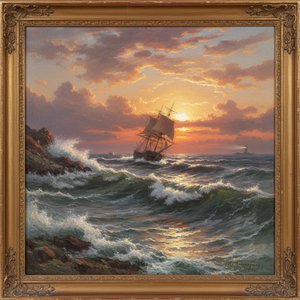
To gaze upon Ivan Konstantinovich Aivazovsky’s 1873 masterpiece, “The Rainbow,” is to witness a profound dialogue between the heavens and the sea. Aivazovsky, a titan of Romantic marine painting, possessed an almost supernatural ability to act as a conduit for the ocean’s soul. In this particular work, we find ourselves not merely observing a seascape, but participating in a moment of celestial alchemy. The painting captures that fleeting, ethereal instant where sunlight and rain converge to fracture white light into a breathtaking spectrum of color, casting a prismatic promise over the undulating waves. It is a scene that transcends mere maritime documentation, offering instead a meditative exploration of transition and the divine intersection of the earthly and the ethereal.

The composition is anchored by the delicate interplay of two vessels navigating the vast expanse. One small boat rests toward the left, while a larger vessel occupies much of the right-hand side, their presence providing a sense of scale against the infinite horizon. Within these boats, figures can be seen—some standing, some preparing for the journey ahead—adding a layer of human narrative to the elemental drama. There is a palpable sense of quiet anticipation; the atmosphere is at once serene and picturesque, capturing a moment of calm that feels both fragile and enduring.

The Mastery of Romantic Technique

Aivazovsky’s technical prowess is on full display through his sophisticated use of light and shadow. While many of his contemporaries, such as Turner, leaned into bold and vibrant palettes to depict maritime drama, Aivazovsky chose a more restrained, contemplative approach for “The Rainbow.” He employs a subdued tonal range—a delicate tapestry of muted blues, deep greens, and earthy ochres—to create an atmosphere of grandeur rather than mere spectacle. This deliberate restraint serves to heighten the emotional resonance of the work, drawing the viewer’s eye toward the subtle shifts in luminosity that define the water's surface.

The artist’s brushwork captures the very texture of the sea, from the translucent crest of a wave to the heavy, salt-laced weight of the deep. Through his mastery of light, he guides us through the turbulent seascape, emphasizing the vulnerability of the human element against the backdrop of nature's immense power. For the collector or interior designer, this technique offers a unique visual depth; the painting does not simply sit upon a wall but seems to breathe with an inner light, making it a captivating centerpiece for any sophisticated space.

Symbolism and Emotional Resonance

Beyond its aesthetic brilliance, “The Rainbow” carries deep symbolic weight. In the lexicon of art history, the rainbow has long served as a symbol of hope, a bridge between the turbulent storms of life and the promise of peace. By juxtaposing the potential for maritime struggle with the serene beauty of the atmospheric phenomenon, Aivivelysky creates a powerful metaphor for resilience. The painting speaks to the human spirit's ability to find beauty and light even amidst the unpredictable and often dangerous currents of existence.

For those seeking to bring a sense of tranquility and intellectual depth into their homes or galleries, this work offers an unparalleled emotional impact. It is a piece that invites long periods of contemplation, rewarding the viewer with new layers of meaning upon every encounter. Whether viewed as a triumph of 19th-century Romanticism or as a timeless emblem of hope, Aivazovsky’s vision remains as potent today as it was when the final brushstroke was applied in 1873.

Kérdések és válaszok

Milyen hangulatot áraszt a "The Rainbow."?

A „The Rainbow.”, Ivan Aivazovsky alkotása hangulata Romantic, ami segíthet a mű megfelelő környezetbe illesztésében.

Mit ábrázol a "The Rainbow."?

A "The Rainbow." alkotás tárgyai: seascape, rainbow, hope, sailors, stormysea, lightshadow, atmosphericpainting.

Milyen technikával készült és mikor született meg „The Rainbow.”, Ivan Aivazovsky alkotása?

A "The Rainbow." alkotása 1873-ben készült, Oil On Canvas technikával.

More about this painting

Megtekintés AR előnézet Váltás nyomtatványra Áttérés digitális képre Küldés
Részletek Útmutató Kedvencekhez ad Letöltés Hasonló darabok X-ray felvétel Diavetítés Q&A Statisztika

In numbers

  • 1873the year it was painted
  • 29frames to choose from
  • standard sizes, in its own proportions
  • 5weeks to paint and deliver it
Ivan Aivazovsky

Ivan Aivazovsky

1817 - 1900, Oroszország

Quick facts about Ivan Aivazovsky

  • Artistic Movement Or Style: Romantika, tengerészeti művészet
  • Artists Or Movements Influenced By This Artist: ['Orosz tájképfestés']
  • Artists Who Influenced This Artist:
    • Turner
    • Shchedrin
  • Date Of Birth: 1817.07.29
  • Date Of Death: 1900.05.05
  • Full Name: Ivan Konstantinovich Aivazovsky
  • Nationality: Orosz-örményi
  • Notable Artworks:
    • A kilencedik hullám
    • Tengerben úszó hajó
  • Place Of Birth: Feodosia, Oroszország

A művész életrajza

A Life Embraced by the Waves

Ivan Konstantinovich Aivazovsky, born Hovhannes Aivazian in 1817, was more than a painter of seascapes; he was a conduit to the ocean’s soul. His very existence seemed inextricably linked to the Black Sea—a vast, unpredictable expanse that would forever dominate his artistic vision and fuel an extraordinary career spanning nearly six decades. Born in the Crimean port city of Feodosia, Aivazovsky didn't merely observe the sea; he felt it – its raw energy, sublime beauty, and inherent danger becoming the very essence of his art. From a young age, this connection was nurtured, initially by local architect Jacob Koch who recognized the boy’s talent, then blossoming within the rigorous academic environment of the Imperial Academy of Arts in Saint Petersburg. Yet, formal training alone couldn't account for the depth of Aivazovsky’s understanding; it was the constant presence of salt-laced air and the cries of gulls that truly shaped his artistic sensibility. His Armenian heritage also played a significant role, as he was baptized at the St. Sargis Armenian Church in Feodosia and maintained strong cultural ties throughout his life, occasionally incorporating Armenian themes into his expansive body of work.

The Early Years and Artistic Foundations

Aivazovsky’s early years were steeped in the atmosphere of Feodosia, a vibrant port city with deep historical roots. His family's origins traced back to Western Armenia, and this heritage instilled within him a profound connection to the land and sea—a connection that would profoundly influence his artistic vision. The Crimean landscape, with its rugged coastline, dramatic cliffs, and ever-changing moods of the Black Sea, served as his initial inspiration. He began sketching and painting locally, honing his skills under the guidance of Jacob Koch, a local architect who recognized Aivazovsky’s exceptional talent. This early exposure to the natural world laid the foundation for his later mastery of capturing its beauty and power. His enrollment at the Imperial Academy of Arts in Saint Petersburg provided him with formal training in classical techniques, but it was his continued immersion in the maritime environment—visiting ships, observing naval maneuvers, and absorbing the stories of sailors—that truly shaped his artistic development. The rigorous academic setting complemented his practical experience, providing him with a solid grounding in composition, color theory, and perspective.

A Journey Through Europe and the Rise to Prominence

In the early 1840s, Aivazovsky embarked on a transformative journey through Europe, seeking new artistic influences and broadening his horizons. Italy proved particularly formative, immersing him in the vibrant landscapes of the Mediterranean and exposing him to the techniques of artists like J.M.W. Turner, whose dynamic brushwork and atmospheric effects deeply resonated with Aivazovsky’s own evolving style. He spent time studying the works of the Old Masters, absorbing their compositional principles and color palettes. Upon his return to Russia, a pivotal moment arrived: his appointment as the main painter of the Russian Navy. This wasn't merely a prestigious title; it was access—access to ships, sailors, naval battles, and firsthand observation that profoundly influenced his work. He became intimately acquainted with maritime life, lending an authenticity to his depictions that resonated deeply with both military officials and art enthusiasts alike. The patronage of the Imperial Court provided him with financial security and recognition, allowing him to dedicate himself fully to his artistic pursuits.

Mastering the Marine Canvas: Style and Technique

Aivazovsky’s paintings are instantly recognizable for their romantic sensibility and technical brilliance. He possessed an extraordinary ability to capture not just the visual spectacle of the sea—its shimmering light, turbulent waves, and dramatic skies—but also its very essence—its moods, its power, and its mystery. His technique was characterized by a remarkable sensitivity to color, using thin layers of paint to create luminous textures and atmospheric effects. He often worked en plein air, directly from nature, capturing fleeting light effects with astonishing accuracy. His compositions were dynamic and dramatic, frequently employing diagonal lines and contrasting colors to convey a sense of movement and energy. Aivazovsky’s most celebrated works—such as *The Ninth Wave* (1850), *Capture of the Schamylata* (1848) and *Battle of Kinburn* (1843)—are testaments to his mastery of depicting naval battles, capturing the chaos and drama of these events with remarkable realism. He wasn’t afraid to depict destruction—the splintered wreckage of ships, the desperate struggles of sailors—but even within these scenes, there was always an underlying sense of beauty and awe.

Legacy and Enduring Influence

Ivan Konstantinovich Aivazovsky stands as one of the greatest masters of marine art in Russian history—a legacy cemented by his technical skill, emotional depth, and prolific output. His paintings are celebrated not only for their aesthetic beauty but also for their ability to evoke powerful emotions and capture the essence of the sea. He significantly contributed to the development of Russian landscape painting, influencing generations of artists with his innovative techniques and dramatic compositions. Aivazovsky’s work continues to resonate with audiences worldwide, exhibited in museums and galleries across the globe. His paintings are a testament to the enduring power of nature and the human spirit—a reminder of our vulnerability in the face of the elements and our capacity for resilience and hope. He wasn't simply a painter of seascapes; he was a poet of the ocean, translating its moods, mysteries, and majesty onto canvas with unparalleled skill and passion.

Gyors információk

  • Movement: Romanticism
  • Medium: Oil on canvas
  • Influences: Romanticism
  • Year: 1873
  • Title: The Rainbow
  • Location: Tretyakov Gallery, Moscow

Művészeti kvíz

Minden kérdésre csak egy helyes válasz létezik.

Kérdés 1:
What artistic movement is ‘The Rainbow’ primarily associated with?
Kérdés 2:
Where is Ivan Aivazovsky's masterpiece, 'The Rainbow,' currently housed?
Kérdés 3:
What prominent symbol appears in the painting’s distant horizon?
Kérdés 4:
How does Aivazovsky utilize light and shadow to convey emotion within ‘The Rainbow’?
Kérdés 5:
What is a key characteristic of Romanticism that is evident in Aivazovsky’s approach to painting ‘The Rainbow’?