A szöveg mérete

() ·

Egy Önnek készült, kézzel festett alkotás

Jew praying

Kézzel készített olajfestmény reprodukció

Kézzel festett olajvastú vászon, az Ön által választott méretben és keretben, művészeink készítik meglévőre. ( Váltás nyomtatványra Áttérés digitális képre)

A gyűjtemény leírása

Experience Repin's 'Jew Praying,' a poignant 1875 masterpiece capturing devotion and age. This realistic oil painting showcases masterful detail & emotion.

A művész életrajza

Repin, a nagyszerű orosz realista festő, a 'Volgai targoncárosok' és más ikonikus műveivel ábrázolta Oroszország társadalmát és történelmét. Érdekes életrajza, alkotásai.

előbb ·

1. fejezet

Mekkora méretű legyen?

Húzza a csúszkát a méret megváltoztatásához; a bal oldali kép a keret valós szélességét mutatja. Az eredeti arányok megmaradnak.

Standard méret
egyedi méretű
CM
INCH

Válasszon előre meghatározott méreteink közül, amelyek megfelelnek a műalkotás eredeti arányainak.

szélesség
magasság

Írja be a kívánt szélességet és magasságot, hogy illeszkedjen a keretéhez vagy a falához. Mivel ez kézzel festett alkotás, egy eltérő formájú méret esetén a művész akár festhet is valamivel többet a kép körül, vagy korolathat is belőle — az Ön döntésének megfelelően. A festés megkezdése előtt küldünk egy digitális tervezetet jóváhagyásra. Az oldalon látható kép nem tartalmazza a végeredményt — csak a tervezet mutatja meg a valódi eredményt.

2. fejezet

Hogyan érkezzen meg?

Válaszd ki a feszített vászon széleit

Válassza ki a keretet

Corner sample of the WhiteWrap canvas edge finish, stretched on tömörfa bars
Fehér Ft1
Corner sample of the BlurSideWrap canvas edge finish, stretched on tömörfa bars
Elmosódott szélek Ft1
Corner sample of the ExtendedWrap canvas edge finish, stretched on tömörfa bars
Kiterjesztett Ft1
Corner sample of the P118B picture frame: formázott polisztirol, 5 cm wide and 3 cm thick
P118B Ft10
Corner sample of the P118H picture frame: formázott polisztirol, 5 cm wide and 3 cm thick
P118H Ft10
Corner sample of the P118W picture frame: formázott polisztirol, 5 cm wide and 3 cm thick
P118W Ft10
Corner sample of the P438Z picture frame: formázott polisztirol, 5.5 cm wide and 3.5 cm thick
P438Z Ft10
Corner sample of the P508JH picture frame: formázott polisztirol, 7 cm wide and 3.5 cm thick
P508JH Ft12
Corner sample of the P508YH picture frame: formázott polisztirol, 7 cm wide and 3.5 cm thick
P508YH Ft12
Corner sample of the P805H picture frame: formázott polisztirol, 5 cm wide and 3.5 cm thick
P805H Ft10
Corner sample of the P805Z picture frame: formázott polisztirol, 5 cm wide and 3.5 cm thick
P805Z Ft10
Corner sample of the P919BZ picture frame: formázott polisztirol, 7 cm wide and 3.5 cm thick
P919BZ Ft10
Corner sample of the P919G picture frame: formázott polisztirol, 7 cm wide and 3.5 cm thick
P919G Ft10
Corner sample of the P919XJ picture frame: formázott polisztirol, 7 cm wide and 3.5 cm thick
P919XJ Ft10
Corner sample of the P959ZH picture frame: formázott polisztirol, 5 cm wide and 3 cm thick
P959ZH Ft10
Corner sample of the P968JZ picture frame: formázott polisztirol, 6 cm wide and 4 cm thick
P968JZ Ft12
Corner sample of the W106C picture frame: tömörfa, 5 cm wide and 3 cm thick
W106C Ft8
Corner sample of the W218G picture frame: tömörfa, 5 cm wide and 3 cm thick
W218G Ft10
Corner sample of the W218JH picture frame: tömörfa, 5 cm wide and 3 cm thick
W218JH Ft8
Corner sample of the W218Y picture frame: tömörfa, 5 cm wide and 3 cm thick
W218Y Ft10
Corner sample of the W307PJ picture frame: tömörfa, 6 cm wide and 3 cm thick
W307PJ Ft10
Corner sample of the W316G picture frame: tömörfa, 6 cm wide and 3 cm thick
W316G Ft10
Corner sample of the W316PJ picture frame: tömörfa, 6 cm wide and 3 cm thick
W316PJ Ft8
Corner sample of the W316Y picture frame: tömörfa, 6 cm wide and 3 cm thick
W316Y Ft10
Corner sample of the W398PJ picture frame: tömörfa, 5 cm wide and 3 cm thick
W398PJ Ft8
Corner sample of the W4111J picture frame: tömörfa, 6.5 cm wide and 3.5 cm thick
W4111J Ft10
Corner sample of the W500HY picture frame: tömörfa, 7 cm wide and 5 cm thick
W500HY Ft15
Corner sample of the W500JH picture frame: tömörfa, 7 cm wide and 5 cm thick
W500JH Ft15
Corner sample of the W692G picture frame: tömörfa, 8 cm wide and 4 cm thick
W692G Ft12
Corner sample of the W849H picture frame: tömörfa, 5 cm wide and 3 cm thick
W849H Ft8
Corner sample of the W940BG picture frame: tömörfa, 7.5 cm wide and 4.5 cm thick
W940BG Ft15
Corner sample of the W953PJ picture frame: tömörfa, 6 cm wide and 3.5 cm thick
W953PJ Ft8
Corner sample of the H24-GOLD picture frame: faragott fa gesszóval, 10 cm wide and 6 cm thick
H24-GOLD Ft30
Corner sample of the H24-SILVER picture frame: faragott fa gesszóval, 10 cm wide and 6 cm thick
H24-SILVER Ft30
Corner sample of the H36-GOLD picture frame: faragott fa gesszóval, 15 cm wide and 6.5 cm thick
H36-GOLD Ft45
Corner sample of the H36-SILVER picture frame: faragott fa gesszóval, 15 cm wide and 6.5 cm thick
H36-SILVER Ft45

Keretprofil: . A kerettel együtt vett teljes méret: .

3. fejezet

Ki festi, és változtatni kellene-e bármit?

Példák a módosíthatóságra: Az arc kicserélése a vásárló fotójára; háziállat hozzáadása (pl. macska kicserélése kutyára); rejtett üzenet elhelyezése a háttérben; a háttér tájéképének vagy elemeinek megváltoztatása.
A megrendelést követően a OriginalUniqueArt.com csapat e-mailt küld a vásárlónak az instrukciókkal, és biztosítja a tervezeti előnézetet

Világszerte elérhető szállítás () 3-4 hét alatt a szokásos 5 hét helyett. (5 november). A minőség nem kérdőjelezhető.

4. fejezet

Az utolsó finomhangolás

Egy felirat, mint egy múzeumban?

A gravírozott bronztábla részletei

This elegant plaque features the artist's name and the title of the artwork, finely engraved for a timeless presentation.

It is made from bronze with a refined, elegant finish. The text is precisely laser-engraved for a sharp and permanent result. Measuring 9x2 cm, the plaque is compact yet easy to read. It's built to be durable and scratch-resistant, offering a professional, museum-quality look. Mounting is simple thanks to the included adhesive backing.

Átlátszó akril tábla részletei

The plaque includes essential engraved details such as the artist's name, the title of the artwork, the date it was created, the type of media used-like oil on canvas or watercolor-a brief description of the piece, and a QR code that links to the complete artwork information.

It is crafted from clear acrylic, offering a sleek, modern appearance. The text is UV-engraved in black to ensure strong visual contrast. With a size of 10x15 cm, it ensures optimal readability. It comes equipped with two metal hooks for secure wall mounting. The plaque is designed to be weather-resistant, making it suitable for various environments, and it includes interactive features that work seamlessly with smartphone scanning.

Fekete akril tábla részletei

This elegant plaque includes engraved information such as the artist's name, the title of the artwork, the date it was created, the type of media used (like oil on canvas or watercolor), a short description of the artwork, and a QR code for quick access to more information.

The plaque itself is made from refined black acrylic with a premium finish. The text is laser-engraved in white for high contrast and readability. Its size is 10x15 cm, designed to be easy to read. It comes with two metal hooks for professional mounting. The design is sleek and fits any interior style. It is also weather-resistant and durable, with built-in digital integration for mobile compatibility.

Egy védőréteg?

Mikor lenne szüksége rá?

5. fejezet

Az Ön által megrendelt festmény

Jew praying

Reprodukciós technika

Reprodukció mérete

-

Kiváló mesterművész

Nagyobb részletesség, finomság és bővített gyártási idő

-

Reprodukció keretezése

-

-

A bármely oldalsó méretét túlszálaló 105 cm (kb. 41 hüvelyk) meghaladó műalkotások vagy reprodukciók esetében a keret összeszerelhető készletként, szétszerelve kerül szállításra. Ez a módszer biztosítja a biztonságos szállítást, és megakadályozza a szállítás során fellépő sérüléseket.

Szakmész összeszerelést igényel – ez nem DIY (önösszeszerelhető) termék.
A készletet egy tapasztalt keretező szakembernek kell összeszerelnie és a vásznat feszítenie kell, fa ragasztó (nem tartalmazza a csomag), vásznfeszítő fogó és szorítók használatával, amelyek a ragasztó száradásáig a keretrészeket egymáshoz vuôngjba tartják. A helytelen összeszerelés vagy a nem egyenletes vásznfeszítés maradandó károsíthatja a műalkotást, és ez nem része a garanciánknak.

  • A készlet tartalmazza az összes tömörfa rudat, pontosan méretre vágva.

  • A mellékelt csavarokkal, valamint a sarokszerekhez szükséges faütő ragasztóval kell összeszerelnie (ez nem tartalmazható a csomagban), így a keretrendezőnek külön kell beszereznie.

  • A csomag nem tartalmazza a szükséges professzionális eszközöket: egy vászonfeszítőt és klipseket a rácsok vízszintes tartásához a ragasztó megszáradásáig.

Fontos:
A sarokcsatlakozásokhoz fánylagra van szükség, a keretrudakat szorítókapcsokkal kell rögzíteni, amíg a rag teljesen meg nem szárad, a kész keretre feszített vászonhoz pedig vászonfeszítő fogat szükséges. Ezek egyike sem található meg a készletben. Kérjük, rendelés előtt győződjön meg róla, hogy rendelkezik tapasztalt keretező szakemberrel.

Névtábla

-

-

Védőréteg (Lakk)

Fényes lakk (intenzívabb színek, védelem a fény és a nedvesség hatása ellen)

-

Műalkotásom egyedi igényre szabása

Példák a módosíthatóságra: az arc kicserélése az ügyfél fotójára; háziállat hozzáadása (pl. macska helyett kutya); rejtett üzenet elhelyezése a háttérben; a háttér tájainak vagy elemeinek megváltoztatása.

-

Sürgős

Világszerte szóló szállítás () mindössze 3-4 hét alatt, a szokásos 5 hét helyett. (5 november). A minőség nem kérdőjelezhető.

-

Express szállítás

Világszerte elérhető szállítás területre 5 héten belül. (12 november).

A szállítás díja tartalmazza

Összesített ár

Ft 98120

Összesített ár Ft 98120

Az üvegkeretes opció csak 110 cm alatti méretben érhető el

Minden rendelés mellé tartalmazva

  • Ingyenes globális expressz szállítás
  • Prémium minőségű len vászon
  • Teljes körű szállítási biztosítás
  • Vámvisszatérítési Garancia
  • Hiteles színarányosság garancia
  • 100 napos visszaküldési lehetőség (csak hibás termékek esetén)
  • 100% pénzvisszatérítési garancia
  • Több darab vásárlásakor kedvezmény

Jew Praying by Ilya Repin: A Masterpiece of Realism

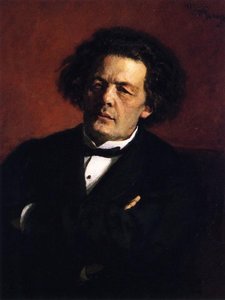
Ilya Yefimovich Repin's "Jew Praying," created in 1875, stands as a poignant example of Russian realism, capturing a moment of profound introspection and spiritual devotion. This oil painting, measuring 80 x 64 cm, is renowned for its meticulous detail and the artist’s ability to convey deep emotion through subtle facial expressions and posture. Available as a high-quality reproduction, this artwork offers viewers an opportunity to appreciate Repin's skill and the historical context of his work.

Subject and Composition

The painting depicts an elderly Jewish man engaged in prayer. He is portrayed wearing traditional attire – a hat, a long coat, and a white beard and mustache—elements that immediately identify him within a specific cultural and religious framework. The composition centers entirely on the figure, with a dark, indistinct background that draws all attention to his face and upper body. His hands are clasped, holding a cup, suggesting a ritualistic act of devotion. The man's gaze is directed towards something beyond the viewer, conveying a sense of deep contemplation and connection to a higher power.

Style and Technique

Repin’s masterful use of realism is evident in every brushstroke. The visible texture of the paint contributes to the painting's aged feel, emphasizing the subject's years and wisdom. Lines are skillfully employed to define the folds of his clothing, the contours of his face, and the intricate details of his beard. The lighting plays a crucial role; strong highlights illuminate the man’s face and clothing, while deep shadows accentuate wrinkles and age lines, adding depth and dimensionality. Repin's technique demonstrates a profound understanding of light and shadow to create a sense of realism and emotional intensity.

Historical Context and Symbolism

"Jew Praying" was created during a period of significant social and political change in Russia. The painting reflects the growing interest in portraying everyday life and ordinary people, moving away from idealized depictions of historical figures or mythological scenes. The subject matter itself—a Jewish man engaged in prayer—was somewhat unconventional for Russian art at the time, potentially reflecting Repin's desire to explore themes of faith, tradition, and cultural identity within a diverse society. The traditional clothing and posture are symbolic representations of Jewish heritage and religious practice, conveying a sense of continuity and resilience.

Emotional Impact and Legacy

Beyond its technical brilliance, "Jew Praying" evokes a powerful emotional response in viewers. The man’s expression is one of profound contemplation and devotion, inviting introspection and empathy. The painting's melancholic undertones reflect the weight of experience and the enduring power of faith. Repin's work continues to resonate with audiences today, celebrated for its realism, sensitivity, and ability to capture the essence of human spirituality. Owning a reproduction allows art enthusiasts to appreciate this significant piece of Russian artistic heritage.

Kérdések és válaszok

Hol tudok nyomtatványt vásárolni a(z) „Jew praying”, Repin Ilyás alkotása alkotásból?

A „Jew praying”, Repin Ilyás alkotása nyomtatott példányát egyszerűen megrendelheti a következő oldalon: minőségi giclée nyomat pamutvászonon vagy archiváló vászonpapíron, a Művészeti nyomtatvány kautta.

Milyen hangulatot kölcsönözne a "Jew praying" egy térnek?

A Nostalgic hangulatával a "Jew praying" című alkotás egy Living Room helyiségbe is javasolt.

Milyen tónus felé hajlik a "Jew praying"?

A Amber to Saffron árnyalat áthatárolja a „Jew praying”, Repin Ilyás alkotása alkotást.

Több információ erről a festményről

Megtekintés AR előnézet Váltás nyomtatványra Áttérés digitális képre Küldés
Részletek Útmutató Kedvencekhez ad Letöltés Hasonló darabok X-ray felvétel Diavetítés Kérdések és válaszok Statisztika

Számokban kifejezve

  • 1875a festés éve
  • 29választható keretek
  • standard méretek, saját arányokkal
  • 5hetek a festésre és a kézbesítésre
Repin Ilyás

Repin Ilyás

1844 - 1930, Oroszország

Gyors információk Repin Ilyás művészről

  • Artistic Movement Or Style: Realizmus
  • Artists Or Movements Influenced By This Artist: ['Peredvizhniki']
  • Artists Who Influenced This Artist:
    • Kramskoi
    • Stasov
  • Date Of Birth: 1844
  • Date Of Death: 1930
  • Full Name: Ilya Yefimovich Repin
  • Nationality: Orosz
  • Notable Artworks:
    • Volga Szállói
    • Zaporozhiai lovasok
    • Ivan a gonosz
  • Place Of Birth (City And Country): Chuguev, Oroszország

A művész életrajza

Early Life and the Seeds of Realism

Ilya Yefimovich Repin, a name that echoes through the very heart of Russian art, was born in 1844 in the unassuming Ukrainian town of Chuguev. His origins were far removed from the opulent circles often associated with artistic patronage; his father, a former soldier who traded horses, and his mother, deeply rooted in the traditions of their rural community, instilled within young Ilya a profound connection to the land and its people – an understanding forged in the hardships, vibrant spirit, and unwavering resilience of peasant life. This early immersion into the realities of rural existence would become the bedrock upon which his artistic vision was built. Formal education began at a local school overseen by his mother, but a brief period followed at a military cantonist school, an experience he later recalled with a touch of melancholy. Yet, even within the rigid structure of military discipline, his innate talent for drawing blossomed, revealing a nascent gift that would soon demand expression. At sixteen, he embarked on an apprenticeship with Ivan Bunakov, an icon painter, plunging into the rigorous world of religious art – a training that honed his skills in meticulous detail and instilled a deep appreciation for compositional precision. These formative years were not merely technical exercises; they represented a crucial immersion into the visual language of Russian culture, laying the groundwork for his later explorations of national identity and social commentary. Through restoring ancient icons and fulfilling portrait commissions, Repin began to observe and capture the essence of human character – a skill he would master with remarkable insight throughout his illustrious career.

St. Petersburg and the Embrace of Social Consciousness

Driven by an unyielding ambition, Repin journeyed to St. Petersburg in 1863, seeking admission to the prestigious Imperial Academy of Fine Arts. Initial rejection did not deter him; instead, he diligently audited classes, immersing himself completely within the city’s vibrant artistic milieu. It was here that he encountered Ivan Kramskoi, a towering figure in the Peredvizhniki movement – a collective of realist artists who boldly rejected the conventions of academic art and sought to depict Russian life with unflinching honesty and social awareness. Kramskoi became Repin's mentor, guiding him towards a more politically engaged and socially conscious approach to his work. The influence of critic Vladimir Stasov was also pivotal, encouraging Repin to focus on contemporary themes, the lives of ordinary people, and the injustices prevalent within Russian society. Repin’s talent quickly blossomed, earning recognition and awards – notably gold medals for “Job and His Friends” in 1869 and "The Raising of Jairus' Daughter" in 1871. These early successes signaled the arrival of a powerful new voice in Russian art – one that would challenge established norms and capture the spirit of a rapidly changing nation. A particularly formative experience was his journey along the Volga River in 1870, sketching the arduous lives of barge haulers; this provided the inspiration for what would become his most celebrated masterpiece, “Barge Haulers on the Volga,” a work that cemented his reputation as a champion of the marginalized and a keen observer of human suffering.

Masterpieces of Realism and Historical Drama

Repin’s name became inextricably linked with realism through works that unflinchingly portrayed the realities of Russian society. “Barge Haulers on the Volga” (1873), a monumental canvas depicting eleven exhausted laborers dragging boats along the river, shocked and captivated audiences. It was not merely a depiction of physical hardship; it was a powerful indictment of social injustice, exploitation, and the brutal conditions endured by the working class. This painting launched Repin into national prominence and established him as a leading voice for those often overlooked and forgotten by society. He continued to explore themes of Russian life in works such as “Religious Procession in Kursk Province” (1883), which offered a nuanced portrayal of faith, superstition, and the complex social hierarchy within rural Russia. However, Repin’s artistic vision extended far beyond contemporary issues; he also tackled historical subjects with dramatic flair and psychological depth. “Ivan the Terrible and His Son Ivan” (1885), depicting the horrifying moment when Tsar Ivan IV brutally murdered his own son in a fit of rage, caused a scandal upon its unveiling but remains one of his most iconic works – a chilling exploration of power, guilt, and the devastating consequences of unchecked authority. Perhaps his most celebrated painting is “Reply of the Zaporozhian Cossacks” (1880-91), a vibrant and dynamic scene capturing the defiant spirit of Ukrainian Cossacks composing a satirical letter to the Ottoman Sultan – a symbol of resistance, national pride, and the enduring strength of the Ukrainian people. These paintings were not simply historical recreations; they were imbued with psychological insight, emotional intensity, and a profound understanding of human nature, bringing the past vividly to life for viewers.

Legacy and Enduring Influence

Throughout his long and prolific career, Repin continued to paint portraits of prominent figures – Leo Tolstoy, Modest Mussorgsky, Pavel Tretyakov – capturing their personalities with remarkable insight and empathy. He also served as a teacher at the Academy of Fine Arts in St. Petersburg, shaping the artistic sensibilities of generations of young artists. His commitment to realism and social commentary resonated deeply within Russia and beyond, establishing him as a major figure in European art. While he initially embraced the February Revolution of 1917, Repin was profoundly disillusioned by the subsequent violence and terror unleashed by the Bolsheviks following the October Revolution. He retreated to his estate, Penates, in Kuokkala (now Repino), Finland, where he continued to paint until his death in 1930. Repin’s legacy extends far beyond his individual paintings. He helped define Russian realism, paving the way for Socialist Realism and inspiring countless artists to use their work as a means of social critique. His ability to capture the human condition with both empathy and unflinching honesty continues to resonate with audiences today, ensuring his place among the most significant figures in 19th-century art. Penates, his beloved country estate, is now a museum, preserving not only his artistic legacy but also offering a glimpse into the life of one of Russia’s most important cultural figures.

Gyors információk

  • Medium: Oil on canvas
  • Artist: Ilya Yefimovich Repin
  • Year: 1875
  • Title: Jew Praying
  • Artistic style: Realism

Művészeti kvíz

Minden kérdésre csak egy helyes válasz létezik.

Kérdés 1:
What year was the painting "Jew Praying" by Ilya Repin created?
Kérdés 2:
Which artistic style best characterizes Ilya Repin's "Jew Praying"?
Kérdés 3:
What is a prominent feature of the lighting in 'Jew Praying'?
Kérdés 4:
What symbolic meaning might be associated with the man’s traditional Jewish attire (beard, robe, hat)?