Megtekintés
 Küldés
 Megosztás
 Részletek
 Útmutató

 Letöltés
 Hasonló darabok
 X-ray felvétel
 Diavetítés
 Kérdések és válaszok
 Statisztika
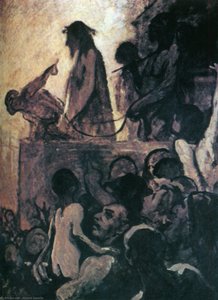
Ecce Homo


 Összes részlet megjelenítése
Giclée / Műnyomat
Múzeumi minőségű giclée vagy vászonnyomat, gyors gyártással és rugalmas finomítási lehetőségekkel. ( Kézzel festett másolat rendelése Áttérés digitális képre)




P118B Ft10

P118H Ft10

P118W Ft10

P438Z Ft10

P508JH Ft12

P508YH Ft12

P805H Ft10

P805Z Ft10

P919BZ Ft10

P919G Ft10

P919XJ Ft10

P959ZH Ft10

P968JZ Ft12

W106C Ft8

W218G Ft10

W218JH Ft8

W218Y Ft10

W307PJ Ft10

W316G Ft10

W316PJ Ft8

W316Y Ft10

W398PJ Ft8

W4111J Ft10

W500HY Ft15

W500JH Ft15

W692G Ft12

W849H Ft8

W940BG Ft15

W953PJ Ft8




Válasszon előre meghatározott méreteink közül, amelyek megfelelnek a műalkotás eredeti arányainak.

Írja be a keretének vagy a falának megfelelő szélességet és magasságot. A nyomatot csak le lehet vágni, soha nem tehető nagyobbá, mint az eredeti kép, így egy eltérő alakú méretnél a kép egy része elveszik. Mielőtt bármit kinyatintanánk, küldünk egy digitális próbamodellt jóváhagyásra. Az oldalon látható kép nem tartalmazza a valós levágást — ezt csak a próbamodell mutatja meg.
Világszerte történő kiszállítás területére mindössze 2 hét alatt, a szokásos 4-5 hét helyett. (11 november)

Ingyenes globális expressz szállítás

Prémium minőségű len vászon

Teljes körű szállítási biztosítás

Vámvisszatérítési Garancia

Hiteles színarányosság garancia

100 napos visszaküldési lehetőség (csak hibás termékek esetén)

100% pénzvisszatérítési garancia

Több darab vásárlásakor kedvezmény
 Az üvegkeretes opció csak 110 cm alatti méretben érhető el

Ecce Homo
Giclée / Műnyomat
Reprodukció mérete
-


Összesített ár
Ft 26351
A Vision of Raw Humanity: Daumier’s Ecce Homo
In the mid-19th century, as the world began to shift under the weight of industrialization and political upheaval, Honoré Daumier captured a moment of profound spiritual and social tension. His 1850 masterpiece, Ecce Homo, is far more than a mere biblical illustration; it is a visceral encounter with the essence of human suffering. The painting captures the harrowing instant when Pontius Pilate presents a battered Jesus Christ to a judgmental crowd, uttering the fateful words, "Behold the Man." Through his unflinching lens, Daumier strips away the gilded, idealized layers often found in religious iconography, replacing them with a stark, heavy realism that forces the viewer to confront the uncomfortable truth of injustice and the weight of collective condemnation.
The composition is a masterclass in psychological depth and dramatic tension. Daumier utilizes a technique deeply rooted in the tradition of chiaroscuro, a method he refined by studying the dramatic light and shadow of masters like Rubens. This interplay of light and dark does not merely illuminate the scene; it sculpts the very emotions of the figures. A luminous, almost ethereal glow surrounds the central figure of Christ, yet this light does not offer comfort—instead, it serves to highlight his isolation against a backdrop of grim, shadowed faces. The crowd is not a monolithic entity but a collection of individual gazes: some are filled with mockery, others with a haunting, silent observation, creating a sense that the viewer is standing right there in the dust and heat of the Roman trial.
The Artistry of Realism and Emotional Resonance
Technically, Ecce Homo showcases Daumier’s extraordinary command over oil on canvas. His brushwork avoids the superficial prettiness of the era, opting instead for a textured, robust application that mirrors the grit of the subject matter. The palette is dominated by earthy, somber tones—deep browns, muted ochres, and heavy shadows—which ground the divine event in a tangible, earthly reality. This commitment to Realism allows the painting to transcend its historical period; it becomes a universal symbol of compassion amidst cruelty. For the collector or the lover of fine art, this piece offers a profound sense of gravity, making it an anchor for any sophisticated interior.
For those looking to integrate such a powerful work into a curated space, Ecce Homo serves as a magnificent focal point. Its ability to command attention through tonal complexity and emotional weight makes it ideal for galleries or study rooms where art is intended to provoke thought and conversation. A high-quality reproduction of this work preserves the subtle gradations of Daumier’s shadows and the raw, expressive lines of his draftsmanship, allowing the haunting beauty of this 19th-century triumph to breathe within a modern setting. It is an invitation to look closer, to feel the weight of history, and to find beauty in the most honest depictions of the human condition.
Kérdések és válaszok
Milyen felhasználásra javasolt a „Ecce Homo”, Daumier Honore alkotása?
A „Ecce Homo”, Daumier Honore alkotása reprodukcióját Accent célokra javasoljuk. Ez a javaslat a mű témájából, hangulatából és színeiből adódik.
„Ecce Homo”, Daumier Honore alkotása festmény, rajz vagy grafika?
A katalógusban a „Ecce Homo”, Daumier Honore alkotása a WallArt kategóriába tartozik. Ez a besorolás segít hasonló művek megtalálásában.
Honnan érkeznek a „Ecce Homo”, Daumier Honore alkotása látogatói?
A "Ecce Homo" számára létre van hozva egy Statisztikák oldal. Ez az oldal ábrázolja a mű és a művész többi alkotásának havi látogatottságát, országon és nyelvenként bontva.
A művész életrajza
A Life Etched in Satire: The World of Honoré Daumier
Honoré-Victorin Daumier’s life unfolded against the backdrop of a rapidly changing France, a nation grappling with revolution and social upheaval. Born in Marseille in 1808, his early years were steeped in the traditions of his family—a lineage of glaziers and artisans—but his spirit yearned for something beyond the confines of his humble beginnings. His father, a poet who had experienced both success and disappointment in Paris, instilled in him a love for literature and a keen awareness of social injustices. This early exposure to the complexities of human experience would profoundly shape Daumier’s artistic vision. The family's move to Paris in 1814 provided young Honoré with access to the vibrant artistic scene of the capital, exposing him to the works of masters like Rubens and Titian through his mentor, Alexandre Lenoir—a painter who also nurtured a deep appreciation for classical sculpture. This foundation laid the groundwork for Daumier’s distinctive style, blending realism with expressive draftsmanship. However, it wasn't merely technical skill that defined him; it was an unwavering commitment to exposing hypocrisy and challenging authority through his art.The Sharpened Pen: Caricature and Social Commentary
Daumier’s career truly ignited in the tumultuous aftermath of the 1830 Revolution. This pivotal event, which dramatically reshaped French society and politics, provided him with a fertile ground for his burgeoning satirical talent. He quickly established himself as a master lithographer, initially contributing anonymously to various publications—most notably *Le Charivari*, a fiercely independent comic journal founded by Charles Philipon. It was within the pages of *Le Charivari* that Daumier’s genius truly blossomed. His caricatures weren't simply humorous illustrations; they were biting critiques of the bourgeoisie, the legal system, and the political establishment—a deliberate provocation aimed at exposing corruption and challenging the status quo. His unflinching portrayal of King Louis-Philippe, for example, led to his imprisonment in 1832 after a particularly pointed caricature was published. This act of defiance, rather than silencing him, solidified his commitment to using art as a weapon against injustice. The sheer volume of his output during this period is staggering—thousands of lithographs that served as both popular entertainment and potent political statements, capturing the spirit of dissent and offering a critical commentary on the societal ills of his time. The meticulous detail in his work, combined with a sharp wit and keen observation, made him a powerful voice for the marginalized and oppressed.Beyond Caricature: Painting and Sculptural Visions
While Daumier is overwhelmingly celebrated for his lithography, to reduce his artistic output solely to caricature would be a profound disservice. He was also a dedicated painter and sculptor, though recognition for these works came later in life. His paintings—often depicting scenes of everyday Parisian life—are imbued with a remarkable sense of realism and empathy. He didn’t shy away from portraying the hardships faced by ordinary people: the cramped conditions of third-class carriages, the backbreaking labor of laundresses, the self-importance of lawyers. These works are not idealized representations; they are unflinching depictions of poverty, struggle, and resilience. Daumier masterfully employed loose brushwork and dramatic lighting to convey emotion and atmosphere—techniques that foreshadowed some of the innovations later embraced by the Impressionists. Furthermore, his sculptural work, largely created in clay during his lifetime (many pieces remaining unbaked), reveals a similar commitment to capturing the human form with honesty and emotional depth. These sculptures, rediscovered after his death, demonstrate a remarkable talent for modeling and an ability to convey psychological complexity through physical gesture—a testament to his profound understanding of the human condition.A Lasting Legacy: Influence and Historical Significance
Honoré Daumier’s impact on art history is undeniable. He bridged the gap between Romanticism and Realism, laying the foundation for future generations of artists who sought to depict the world as it truly was—warts and all. His unflinching social commentary profoundly influenced artists like Gustave Courbet and Édouard Manet, both of whom were deeply affected by his willingness to challenge authority and expose injustice through art. Moreover, Daumier’s innovative use of lithography revolutionized printmaking, transforming it from a primarily decorative medium into a powerful tool for political satire and social critique. His work continues to resonate today, reminding us of the enduring power of art to challenge established norms, expose corruption, and bear witness to the human condition. The Musée d'Orsay in Paris houses a significant collection of his paintings and sculptures, offering visitors a unique opportunity to immerse themselves in the world he so vividly portrayed. His lithographs are widely accessible through collections like those found on OriginalUniqueArt, ensuring that his satirical genius continues to provoke thought and inspire dialogue—a legacy that extends far beyond the confines of the 19th century. Daumier wasn’t merely an artist; he was a chronicler of his time—a visual poet who used his talent to give voice to the voiceless and hold power accountable.Current Meta Description:
Honoré Daumier (1808-1879), the French master of realism & satire. Explore his powerful lithographs, paintings & sculptures critiquing 19th-century society and influencing modern art.Current Meta Keywords:
Honoré Daumier, Honore Daumier, French Realism, 19th Century Art, Political Satire, Lithography, Caricature, Parisian Life, Daumier Prints
Daumier Honore
1808 - 1879 , Franciaország
Rövid információk
- Artistic Movement Or Style: Realizmus, Szatirikus
- Artists Or Movements Influenced By This Artist:
- Impressionizmus
- Modern művészet
- Artists Who Influenced This Artist:
- Alexandre Lenoir
- Jacques-Louis David
- Date Of Birth: 1808. Feb 26.
- Date Of Death: 1879. Feb 10.
- Full Name: Honoré-Victorin Daumier
- Nationality: Francia
- Notable Artworks:
- Rue Transnonain
- Les gens de justice
- Ecce Homo
- Place Of Birth: Marseille, Francia
Kapcsolódó cikkek

The Enduring Legacy of Fresco: Technique, History & Artistic Expression Across Cultures
Explore the rich history & enduring legacy of fresco painting! Discover ancient techniques, Giotto's masterpieces, and modern applications. Expert insights for art lovers & professionals.
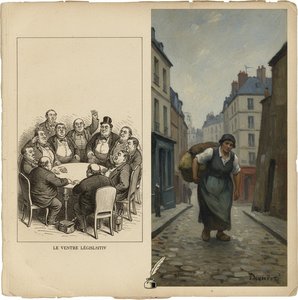
Honoré Daumier: Social Commentary & Artistic Innovation in 19th-Century France
Explore the life & work of Honoré Daumier, a master of 19th-century French realism and satire. Discover his powerful lithographs, paintings, and sculptures critiquing society – and his lasting influence on modern art.
A családi örökség festői világa: Hogyan őrizzük meg a múltat a falakon?
Őrizze meg családja történetét festményekkel! Egyedi portrék, régi fényképek restaurálása és családi címer tervezése profi művészek által. Fedezze fel a kínálatát!
The Enduring Legacy of Fresco Painting: Techniques, History & Contemporary Relevance
Explore the rich history & enduring artistry of fresco painting – from Giotto to Michelangelo! Discover techniques, conservation efforts, & modern applications. Learn how OriginalUniqueArt brings this timeless art form to your home.
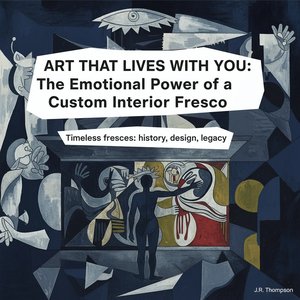
A személyes történetek, a kulturális gyökerek és a spirituális szimbólumok tükre: Egyedi falfestmények az otthon mélyebb értelméért
Egyedi falfestményekkel teremtsen otthona egyedülálló hangulatát! Szakértői segítség, prémium minőségű anyagok és személyre szabott tervezés. Fedezze fel kulturális gyökereit és spirituális értékeit falainkon!