

 Megtekintés
 Küldés
 Megosztás
 Részletek

 Letöltés
 Hasonló darabok
 X-ray felvétel
 Diavetítés
Bowing Dancer


 Összes részlet megjelenítése
Vásároljon nagy felbontású, javított digitális képet, amely minőségében messze felülmúlja az online előnézetet.
Minden fájlt szakembereink a legmodernebb eszközök és precíz, kézi retusálás segítségével készítenek el aprólékosan. Gondoskodunk arról, hogy minden kép kivételes tisztasággal, pontos színhelyességgel és részletgazdag finomsággal rendelkezzen.
A végleges fájl 72 órán belül e-mailben megérkezik, professzionális, szerkesztői és nyomtatási környezetbe optimalizálva az azonnali használathoz. Ez ugyanaz a minőség, amelyben a legmeghatározóbb tervezőstúdiók, kiadók és galériák is megbízhatnak.
Digitális kép
Töltsön le nagy felbontású fájlt személyes kiállításokhoz, nyomtatáshoz és kreatív projektekhez. ( Nyomat rendelése Kézzel festett másolat rendelése)
Minden digitális kép rendeléséhez tartozó extrák
Szakértői digitális kézbesítés, garantáltan
Amikor a OriginalUniqueArt.com szolgáltatást választja, nem csupán egy képet kap – professzionálisan felmagasított digitális műalkotást kap, amely precizitással készült, és amelyet megelégsedési gwarancia tesz biztoslássá. Az alábbiakban automatikusan minden benne 】

Gyors e-mail teslimítés
A nagy felbontású digitális képmásolatát a megrendelést követő 72 órán belül e-mailben elküldjük Önnek – azonnal használható formátumban.

MI-alapú digitális fejlesztésű fájl
Műve professzionális módon kerül optimalizálásra fejlett mesterséges intelligencia eszközök és manuális szerkesztés segítségével, biztosítva a maximális részletességet, tisztaságot és színpontosságot.

Örök életű ingyenes újradelivery
Véletlenül törölted vagy elvesztetted a fájlodat? Ne aggódj – bármikor ingyen újra megküldjük neked.

Nincs importköltség – soha
Élvezze műalkotásait azonnal, vám, illeték vagy szállítási költség nélkül – a digitális letöltések mindig adamentesek.

Színpontosság garantálása
Professzionális eszközök és színkezelés segítségével garantáljuk, hogy digitális képe a lehető legpontosabban tükrözze az eredeti színeket.

60 napos elégedettségi garancia
Ha nemມີ elégedett a digitális képpel, 60 napon belül átmunkáljuk azt, vagy 100% visszatérítjük az amountot – kérdés nélkül.

100% Pénzvisszatérítési garancia
Nem érheted el a teljes elégedettséget? 60 napon belül teljes visszatérítést kapsz a digitális fájlod megérkezése után – kérdés nélkül.

Tömegrendelési kedvezmények
Vásároljon 3 képet, spóroljon 10%-et - Vásároljon 5-öt, spóroljon 15%-et - Vásároljon 10+ képet, spóroljon 20%-at. Kiváló kreatív projektekhez, galériákhoz és ügynökségekhez.
A Moment of Grace: Degas’s “Bowing Dancer” (1885)
This pastel drawing offers a captivating glimpse into the world of late 19th-century ballet, rendered with the characteristic sensitivity and innovative technique of Edgar Degas. More than just a depiction of a dancer, this work is an exploration of movement, form, and the fleeting beauty inherent in performance. The artwork centers on a ballerina caught in a moment of repose – a bow after her performance, or perhaps a brief pause during rehearsal. Her posture conveys both exhaustion and elegance, hinting at the dedication and discipline required to master her art.Style & Influences: Bridging Realism and Impressionism
Degas resisted strict categorization as an *Impressionist*, preferring to be seen as a realist. However, “Bowing Dancer” beautifully demonstrates his absorption of Impressionistic principles. While rooted in careful observation – a hallmark of realism – the work employs loose, expressive pastel strokes that prioritize capturing the *impression* of movement and light over precise detail. The flattened perspective and unconventional cropping are also characteristic of Degas’s style, influenced by Japanese prints and photography, which were gaining popularity at the time. He wasn't interested in creating a perfectly polished academic painting; instead, he sought to convey a sense of immediacy and authenticity.Technique & Materials: The Luminous Quality of Pastel
Degas was a master of pastel, a medium he embraced for its ability to create rich textures and luminous effects. In “Bowing Dancer,” layers of pastel are skillfully applied to the paper, building up tones and creating a soft, hazy atmosphere. The visible marks of the medium – the strokes and blending – contribute to the work’s sense of spontaneity and intimacy. This technique allows for a remarkable range of color and tone, capturing the subtle nuances of light and shadow on the dancer's form and drapery. Pastel allowed Degas to work quickly and directly, mirroring the fleeting nature of the moments he sought to capture.Historical Context: Ballet & Parisian Life
The late 19th century witnessed a burgeoning interest in ballet as both an art form and a spectacle. Degas became fascinated with the world behind the scenes, frequenting the Paris Opera and depicting dancers not only on stage but also during rehearsals, lessons, and moments of rest. His work offers a rare glimpse into the lives of these women – their dedication, vulnerability, and often precarious social position. “Bowing Dancer” is therefore not just a portrait of an individual; it’s a reflection of Parisian society and its fascination with performance.Symbolism & Emotional Impact
The bowed head and graceful posture of the dancer evoke themes of humility, grace, and perhaps even melancholy. The image suggests the transient nature of beauty and performance – a fleeting moment captured in time. There’s a sense of vulnerability in her pose, hinting at the physical demands and emotional toll of a life dedicated to dance. The artwork invites viewers to contemplate not only the dancer's artistry but also her humanity. The composition, with its focus on the figure and minimal background detail, creates an intimate connection between the viewer and the subject.For Collectors & Designers
“Bowing Dancer” is a timeless image that resonates with art lovers and interior designers alike. Its delicate palette and graceful composition make it a versatile addition to any collection or space. A high-quality reproduction of this work would lend an air of sophistication and artistic sensibility to a living room, bedroom, or study. The artwork’s themes of beauty, grace, and dedication also make it a meaningful gift for dancers, art enthusiasts, or anyone who appreciates the power of human expression.- Subject: Ballerina in repose
- Style: Impressionistic Realism
- Medium: Pastel on paper/board
- Date: 1885
A művész életrajza
A Life Immersed in Movement
Edgar Degas, born Hilaire-Germain-De Gas in Paris on July 19, 1834, remains one of the most intriguing and complex figures in French art history. Often associated with Impressionism, a label he actively resisted, Degas was fundamentally a realist—a meticulous observer of the world around him, dedicated to portraying it with startling honesty and a unique visual language. His early life, comfortably bourgeois thanks to his banker father’s wealth and his mother's Creole background, provided him with access to education and artistic training, though he often felt constrained by academic expectations. Initially enrolled at the Lycée Louis-le-Grand, Degas’s true education began in the Louvre, where he spent countless hours copying works by masters like Raphael and Rembrandt, honing his skills and developing a deep appreciation for classical form. However, this wasn't simply imitation; it was a process of intense study and critical engagement with artistic tradition—a foundation upon which he would later build his own distinctive style. His father’s encouragement, recognizing his son’s innate talent, allowed him to establish a studio within their grand home, providing a space for experimentation and self-discovery.Beyond Impressionism: A Unique Artistic Vision
While many of his contemporaries, including Monet and Renoir, sought to capture the fleeting effects of light outdoors, Degas largely worked within the confines of his Parisian studio. His subject matter was decidedly modern—a departure from the historical or mythological scenes favored by traditional academic painters. He found inspiration in the vibrant, often overlooked details of everyday Parisian life: the bustling activity of laundresses at the Seine, the alluring figures of cabaret singers and dancers, the quiet elegance of milliners crafting their creations. It is this fascination with ballet that defines much of his oeuvre—a world of grueling rehearsals, physical strain, and fleeting moments of grace amidst a demanding profession. Degas didn’t simply paint beautiful ballerinas; he captured the *reality* of their lives, revealing both their beauty and their hardship. His compositions are often unconventional, cropping figures in unexpected ways, utilizing asymmetrical arrangements, and employing a dynamic sense of movement that draws the viewer into the scene. He was particularly adept at capturing the subtle nuances of gesture and expression, conveying not just what he saw but also *how* it felt to be present in those moments. His work is characterized by an intimate, almost voyeuristic perspective, as if he were a silent observer privy to private dramas unfolding before him.Influences and Artistic Development
Degas’s artistic journey was shaped by a remarkably diverse range of influences. His early training emphasized classical principles, particularly the meticulous draftsmanship championed by Jean-Auguste-Dominique Ingres, whose emphasis on precise form and idealized beauty left an indelible mark on his work. However, he also admired the Realist movement, spearheaded by artists like Gustave Courbet, who challenged academic conventions and sought to depict contemporary life with unflinching honesty. A pivotal moment in his development came through his association with Camille Pissarro, a leading Impressionist who encouraged him to experiment with new techniques and broadened his artistic horizons. Degas was deeply captivated by Japanese prints—Ukiyo-e—which exerted a profound influence on his compositions, color palettes, and use of asymmetrical arrangements. He studied the bold lines, flattened perspectives, and decorative patterns of these woodblock prints, incorporating them into his own work to create a sense of dynamism and visual interest. Furthermore, Degas embraced photography as a tool for studying movement and capturing fleeting moments in time—a technique he skillfully integrated into his paintings, particularly his depictions of dancers. He wasn’t simply copying what he saw; he was actively synthesizing diverse influences into something entirely new and uniquely his own.Major Works and Techniques
Degas's artistic output spanned a remarkable range of subjects and media. His paintings of ballet dancers—such as *The Dance Class*, *Little Dancer on the Bar* (bronze sculpture), and *L’Étoile*—are arguably his most famous works, capturing the intensity of rehearsals and the fleeting beauty of performance with unparalleled skill. He also produced a significant body of pastel drawings, often depicting scenes from Parisian life—laundresses at work, milliners displaying their wares, and street vendors hawking their goods. His use of pastels was particularly innovative, employing a loose, expressive technique that captured the immediacy of observation. Beyond painting and sculpture, Degas also experimented with monotypes (unique prints) and drypoint etchings, further expanding his artistic repertoire. His ability to capture movement—not through blurred lines or hazy effects, but through precise observation and careful rendering of form—is a hallmark of his work.Legacy and Lasting Impact
Edgar Degas died in Paris on September 27, 1917, leaving behind a vast and influential body of work that continues to captivate audiences today. He paved the way for future generations of artists who sought to break free from traditional conventions and explore new ways of representing the world around them. His innovative approach to composition, his masterful draftsmanship, and his unflinching portrayal of modern life have had a profound impact on the course of art history. He wasn’t merely a painter of dancers or racehorses; he was a keen observer of human nature, a master of form and movement, and a true innovator who redefined the possibilities of art. His influence can be seen in the work of Pablo Picasso and Henri Matisse, among others, solidifying his place as one of the most important figures in modern art.- Innovative Composition: Degas frequently employed unconventional cropping and asymmetrical arrangements.
- Capturing Movement: He masterfully depicted movement through precise observation and rendering.
- Diverse Subject Matter: His work encompassed ballet, Parisian life, and horse racing.
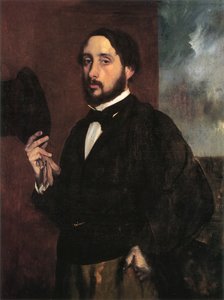
hilaire-germain-edgar degas
1834 - 1917 , Franciaország
Érdekességek
- Artistic Movement Or Style: Impressionizmus, Realizmus
- Artists Or Movements Influenced By This Artist:
- Picasso
- Matisse
- Artists Who Influenced This Artist:
- Ingres
- Courbet
- Pissarro
- Date Of Birth: 1834. július 19.
- Date Of Death: 1917. szeptember 27.
- Full Name: Hilaire-Germain-Edgar De Gas
- Nationality: Francia
- Notable Artworks:
- Táncosok csoportja
- A táncmester
- Kávéházi jelenet
- Place Of Birth: Párizs, Franciaország

