
 Megtekintés
 Küldés
 Megosztás
 Részletek
 Útmutató

 Letöltés
 Hasonló darabok
 X-ray felvétel
 Diavetítés
 Kérdések és válaszok
 Statisztika
Catspaws off the Land

- 70.0 x 12.0 cm


 Összes részlet megjelenítése
Az ezen az oldalon megjelenített műalkotások szerzői jogi védelem alatt állnak, ami azt jelenti, hogy törvényileg nem készíthetünk és nem adhatunk el belőlük pontos másolatokat. Ez a védelem olyan nemzetközi megállapodások alapján érvényesül, mint például a Berni Egyezmény és a nemzeti jogszabályok által, beleértve azokat is, amelyeket meghatározott Az USA szerzői jogi törvénye – 17. cím.
Ez a módszer teljes mértékben megfelel a szerzői jogi szabályozásnak, mivel nem tartalmazza a védett műalkotás másolását vagy duplikálását. Ehelyett ez egy kreatív újinterpretáció – egy új festmény, amely az eredetivel való összefüggései miatt hatással van rá, de nem az az.
Giclée / Műnyomat
Múzeumi minőségű giclée vagy vászonnyomat, gyors gyártással és rugalmas finomítási lehetőségekkel. ( Kézzel festett másolat rendelése Áttérés digitális képre)




P118B Ft10

P118H Ft10

P118W Ft10

P438Z Ft10

P508JH Ft12

P508YH Ft12

P805H Ft10

P805Z Ft10

P919BZ Ft10

P919G Ft10

P919XJ Ft10

P959ZH Ft10

P968JZ Ft12

W106C Ft8

W218G Ft10

W218JH Ft8

W218Y Ft10

W307PJ Ft10

W316G Ft10

W316PJ Ft8

W316Y Ft10

W398PJ Ft8

W4111J Ft10

W500HY Ft15

W500JH Ft15

W692G Ft12

W849H Ft8

W940BG Ft15

W953PJ Ft8




Válasszon előre meghatározott méreteink közül, amelyek megfelelnek a műalkotás eredeti arányainak.

Írja be a keretének vagy a falának megfelelő szélességet és magasságot. A nyomatot csak le lehet vágni, soha nem tehető nagyobbá, mint az eredeti kép, így egy eltérő alakú méretnél a kép egy része elveszik. Mielőtt bármit kinyatintanánk, küldünk egy digitális próbamodellt jóváhagyásra. Az oldalon látható kép nem tartalmazza a valós levágást — ezt csak a próbamodell mutatja meg.
Világszerte történő kiszállítás területére mindössze 2 hét alatt, a szokásos 4-5 hét helyett. (3 november)

Ingyenes globális expressz szállítás

Prémium minőségű len vászon

Teljes körű szállítási biztosítás

Vámvisszatérítési Garancia

Hiteles színarányosság garancia

100 napos visszaküldési lehetőség (csak hibás termékek esetén)

100% pénzvisszatérítési garancia

Több darab vásárlásakor kedvezmény
 Az üvegkeretes opció csak 110 cm alatti méretben érhető el

Catspaws off the Land
Giclée / Műnyomat
Reprodukció mérete
-


Összesített ár
Ft 26538
A Voyage into Coastal Dreams: Exploring Catspaws off the Land
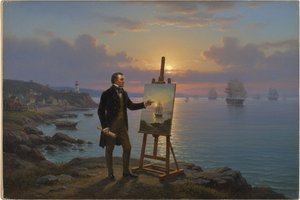
To gaze upon Catspaws off the Land is to be gently swept away by the vast, breathing expanse of the sea meeting the steadfast embrace of the shore. This magnificent piece captures a moment suspended in time—a quintessential 19th-century marine painting that speaks volumes through its masterful handling of light and atmosphere. The composition itself is a study in balance; while the rugged coastline anchors one side, the open sky and the graceful passage of two sailing boats draw the eye across the water. It is an invitation to contemplation, suggesting both the wild unpredictability of nature and the enduring rhythm of human endeavor.
Technique and Texture: The Painter's Hand at Work
The artist employed oil paint with a visible, tactile energy that rewards close inspection. One can almost feel the texture beneath the surface—the impasto built up in the churning waves, the subtle grit suggested on the rocky cliffs, and the soft diffusion of light across the water. The brushwork is remarkably controlled yet loose, lending the entire scene a palpable sense of movement. This technique allows the cool palette of blues and greens to dominate, punctuated by warmer, ethereal tones within the clouds. It is this masterful interplay between defined structure—seen in the geometric forms of the boats and rocks—and organic fluidity—present in the waves and sky—that gives the painting its profound depth.
Symbolism Woven into the Tides
Beyond its breathtaking visual appeal, Catspaws off the Land resonates with deeper symbolic currents. The maritime setting itself has always been a metaphor for life’s journey; the boats represent human passage and connection, while the formidable, rugged landscape speaks eloquently of isolation and inherent resilience. The very act of sailing into such a dramatic environment suggests themes of perseverance against overwhelming natural forces. It is a quiet meditation on humanity's place within the grand, untamed sweep of the natural world.
Historical Echoes and Enduring Appeal
Dating from 1885, this work stands as a beautiful artifact of the great tradition of marine art. While the artist’s signature style may echo the sensibilities of its time—a period fascinated by exploration and the sublime power of nature—its appeal remains timeless. For the collector or designer seeking to infuse a space with depth, history, and an undeniable sense of tranquility, this painting offers more than mere decoration; it offers an emotional anchor. Reproducing such a piece allows one to bring the expansive, calming spirit of the open ocean into the intimate confines of a home.
Kérdések és válaszok
Ki készítette a(t) "Catspaws off the Land"-t, és mikor?
A "Catspaws off the Land" alkotását Henry Moore készítette 1885 évben.
A "Catspaws off the Land" jellemző arra, amit Henry Moore általában alkotott?
Henry Moore dokumentált témái – romantic landscape influence, maritime victorian era, nature's power & resilience, humanity vs. sea", moore's coastal series, british identity & exploration, sublime beauty, isolation – között a „Catspaws off the Land” különös hangsúlyt fektet coastal landscape, maritime art, 19th century, british painting, sea view, nautical scene, atmospheric, textured surface-ra.
Milyen anyagból készült a "Catspaws off the Land"?
Henry Moore a Oil On Canvas technikát alkalmazta a "Catspaws off the Land" alkotáshoz. A technika határozza meg az eredeti mű anyagösszetételt.
A művész életrajza
A Life Sculpted in Form: The World of Henry Moore
Henry Spencer Moore, született 1898. július 30-án a yorkshire-i Castleford bányászvárosban, a 20. század egyik legjelentősebb és nemzetközi szinten is elismert szobrászművésze lett. Élete, a szerény gyökerektől a világszerte ismert művészivé válásának története, kitűnő példa az alkotói kutatások iránti áldozatkészségére és a mänyszerű kapcsolatára az emberi testtel és a természetes világgal. Moore apa, egy autodidakta férfi, aki nagyra értékelte a tanulást, és távolította el fiaját a bánya munkájától, inkább a formális nevelés felé terelte. Már gyermekkorában is kiemelkedő képessége volt a bélyegképezéshez és a fa faragáshoz, ami előre jelezte az életét meghatározó foglalkozást. A Castleford-i környezetben töltött évei mély nyomot hagytak rajta, melyek megjelennek alkotásainál a természetes formákban és a hullámzó vonásokban.Korai befolyások és művészi fejlődés
Moore művészeti tanulmányait Castleford Secondary School-ban kezdte, ahol tanárának felismerte és fejlesztette a tehetségét. Aztán Leeds School of Art-on tanult, majd a Londoni Royal College of Art-on, ahol klasszikus szobrászatot és modern művészeti irányzatokat, mint például a kubizmust tanulmányozta. Bár Moore nem egyszerűen követette a trendeket, hanem ezeket saját egyedi stílusává alakította. Egy kulcsfontosságos esemény 1925-ben történt, amikor Mexikóba látogatott, ahol találkozott az előkolumbiai szobrok – különösen az áztékok alkotásaival. A szívhez közelítő egyszerűségük és absztráltságuk mélyre hatottak rajta, felszabadítva őt a hagyományos reprezentációs korlátokból. Ezután egyre inkább fordult az absztrakt irány felé, a mänyszerű testet inspirációforrásként használva, de elmozdulva a szigorú anatómiai pontosságról. Ebből az időszakból származnak első szobrai, melyek már nem egyszerűen a testet ábrázolták, hanem formák és térrel való kapcsolatot εξερεύνησαν.A meghajló alak és a mamusz-gyermek
Moore karrierjének nagy részében két motívum dominált alkotásainál: a meghajló alak és a mamusz-gyermek. A *meghajló alak* különösen elismertté tette őt. Ezek a szobrok nem csupán az emberi test ábrázolása, hanem a formák, a tér és a test kapcsolatának feltárásai. Az hullámzó vonások, a kruglyók egyfajta időtlenséget és békésességet sugallnak, míg a fragmentált vagy üreges formák érzékenységet és ellenállást fejeznek ki. A *mamusz-gyermek* témája is gyakran megjelenik alkotásainál, melyek univerzális témákat – szeretetet, védelmezést és nevelést – ábrázolnak. Moore szobrai nem idealizáltak, hanem őszintén ábrázolták az emberi kapcsolatot, gyakran tükrözve az űrlapok idejét. Ezek a monumentális bronzok átalakították a városi tájakat és inspirálták a művészeket és nézőket egyaránt.A háború tükrében és közösségi fellépések
A második világháború mélyre hatott Moore munkájára. Dokumentálta London lakóit, akik a Blitz alatt az Underground állomásokban védettek, és szobrászati terveket készített ezekről a képekről. Ezek a *Shelter Drawings* nem csupán történelmi dokumentumok, hanem azt is mutatják, hogy Moore képes művészetét két dimenzióba fordítani. A háború után Moore számos közösségi fellépést kapott, lehetővé téve számára, hogy nagyméretű szobrokat hozzon létre iskolákban, kórházakban és városi terekben. Úgy gondolta, hogy a művészet mindenki számára elérhető legyen, és aktívan kereste az alkalmakat, hogy munkáit beépítse az életszakaszba. Ezek a monumentális bronzok jelképek lettek, átalakították a városi tájakat és inspirálták a következő generációk művészeit és nézőit.Hagyaté és tartós befolyás
Moore hatása a 20. századi művészetre vitathatatlan. Út cleared for subsequent generations of sculptors, challenging conventional notions of form and space and demonstrating the power of abstraction. His work continues to resonate with audiences today, inspiring awe and contemplation. In 1977, Moore established the Henry Moore Foundation, ensuring that his legacy would endure through education and the promotion of the arts. The foundation supports artists, scholars, and institutions worldwide, furthering Moore’s commitment to fostering creativity and artistic innovation. His sculptures stand as enduring monuments to human ingenuity and a testament to the transformative power of art.
Henry Moore
1898 - 1986 , Egyesült Királyság
Rövid információk
- Artistic Movement Or Style: Modernizmus, absztrkt szobrszt
- Date Of Birth: 1898. 7. 30.
- Date Of Death: 1986. 8. 31.
- Full Name: Henry Spencer Moore
- Nationality: Brit
- Notable Artworks: ['Rejlng Figur\nSzlter rajzok']
- Place Of Birth: Castleford, UK
Kapcsolódó cikkek
Fitz Henry Lane: Luminosity, Landscape & the American Maritime Tradition – A Collector’s Insight
Explore the luminous world of Fitz Henry Lane, a master of American maritime painting & Luminism. Discover his legacy, techniques, and investment potential for discerning art collectors. Expert insights at OriginalUniqueArt.

Henri Matisse 25 Mesterműve: Színek és Érzések Világa - OriginalUniqueArt
Fedezze fel Henri Matisse 25 legikonikusabb művét! Ismerje meg a fauvizmus színeit, az expresszionizmus formáit és a modern művészet mesterének életművét. Vászonképek, nyomatok – inspiráció otthonába a OriginalUniqueArt.com-on!

A Romantikus Tájképfestészet 10 Legikonikusabb Műalkotása – OriginalUniqueArt.com
Fedezze fel a romantikus tájképfestészet 10 legikonikusabb műalkotását! Caspar David Friedrich, J.M.W. Turner és más mesterek festményeinek története – inspiráló olajfestmények otthonába. OriginalUniqueArt.com: múzeumi minőségű reprodukciók és egyedi dekorációk online.

Evoking Nature's Sublime: A Comprehensive Exploration of 19th-Century Landscape Painting
Explore the captivating world of 19th-century landscape painting! Discover renowned artists like Friedrich & Monet, key movements, and find the perfect artwork to bring nature's serenity into your home. Expert insights at OriginalUniqueArt.

Evocations of Place: A Historical Journey Through Landscape Art
Explore the rich history of landscape art with OriginalUniqueArt. Discover renowned artists, movements like Impressionism & Romanticism, and expert guidance for collecting timeless pieces. Find your perfect serene escape today!


