
 Küldés
 Megosztás
 Részletek
 Útmutató

 Letöltés
 Hasonló darabok
 Diavetítés
 Kérdések és válaszok
 Statisztika
L

- 340.0 x 636.0 cm


 Összes részlet megjelenítése
Giclée / Műnyomat
Múzeumi minőségű giclée vagy vászonnyomat, gyors gyártással és rugalmas finomítási lehetőségekkel. ( Kézzel festett másolat rendelése Áttérés digitális képre)




































Válasszon előre meghatározott méreteink közül, amelyek megfelelnek a műalkotás eredeti arányainak.

Írja be a keretének vagy a falának megfelelő szélességet és magasságot. A nyomatot csak le lehet vágni, soha nem tehető nagyobbá, mint az eredeti kép, így egy eltérő alakú méretnél a kép egy része elveszik. Mielőtt bármit kinyatintanánk, küldünk egy digitális próbamodellt jóváhagyásra. Az oldalon látható kép nem tartalmazza a valós levágást — ezt csak a próbamodell mutatja meg.
Világszerte történő kiszállítás területére mindössze 2 hét alatt, a szokásos 4-5 hét helyett. (5 november)

Ingyenes globális expressz szállítás

Prémium minőségű len vászon

Teljes körű szállítási biztosítás

Vámvisszatérítési Garancia

Hiteles színarányosság garancia

100 napos visszaküldési lehetőség (csak hibás termékek esetén)

100% pénzvisszatérítési garancia

Több darab vásárlásakor kedvezmény
 Az üvegkeretes opció csak 110 cm alatti méretben érhető el

L
Giclée / Műnyomat
Reprodukció mérete
-


Összesített ár
Ft 26492
A Moment Frozen in Stone: Exploring Henri Gaudier-Brzeska’s “L”
The sculpture "L," created by Henri Gaudier-Brzeska in 1912, stands as a testament to the burgeoning avant-garde movement of early modernism and embodies a profound exploration of human intimacy. Crafted from dark stone—likely alabaster or limestone—the piece depicts two male figures engaged in an intimate embrace, capturing a fleeting gesture of connection against a stark white backdrop that serves to amplify its sculptural impact. This photograph, meticulously documented by MoMA (Museum of Modern Art), offers us not merely a visual representation but a glimpse into the artistic spirit of its time and Gaudier-Brzeska’s singular vision.The Influence of Epstein and “Direct Carving”
Gaudier's artistic trajectory was decisively shaped by his collaboration with sculptor Jacob Epstein, who championed the revolutionary technique of "direct carving." Unlike traditional methods that involved preparatory sketches and maquettes, Epstein encouraged Gaudier to sculpt directly from the stone itself—a process demanding unwavering concentration and a profound understanding of material properties. This approach prioritized immediacy and responsiveness to the inherent qualities of the medium, rejecting academic conventions in favor of an expressive idiom rooted in primal form.Stylistic Echoes of Cubism and Expressionism
“L” resonates with stylistic influences from both Cubism and Expressionism. Gaudier’s simplification of forms—evident in the stylized musculature of the figures and the flattened planes of their bodies—mirrors the geometric fragmentation characteristic of Cubist explorations. Simultaneously, the sculpture conveys a palpable emotional intensity through its dramatic interplay of light and shadow, mirroring the expressive distortions found in Expressionist art. This duality underscores Gaudier’s ambition to transcend mere representation and communicate deeper psychological truths.Symbolism Beyond Physical Form
The sculpture's symbolism extends beyond its depiction of physical intimacy. The stark white background serves as a visual counterpoint to the dark stone, highlighting the contours of the figures and emphasizing their vulnerability. The intertwined poses suggest a merging of identities—a desire for unity amidst individual experience—reflecting broader anxieties about masculinity and relationships prevalent in the early 20th century. Gaudier’s deliberate choice of material—stone—symbolizes permanence and resilience, hinting at an enduring fascination with the human condition.A Legacy of Bold Experimentation
Henri Gaudier-Brzeska tragically perished in 1915 during World War I, leaving behind a remarkably prolific body of work that continues to inspire artists today. “L,” alongside other sculptures produced during his brief but impactful career, exemplifies his unwavering commitment to artistic innovation and his refusal to compromise on his vision. Its enduring appeal lies not only in its masterful execution—the meticulous attention to detail and the skillful manipulation of light—but also in its ability to provoke contemplation about fundamental questions concerning human connection and artistic expression. The photograph’s documentation ensures that this seminal piece remains accessible to future generations, preserving Gaudier-Brzeska's legacy as a pioneer of modern sculpture.Kérdések és válaszok
Mely művészeti irány része a „L”, Henri Gaudier-Brzeska alkotása?
A "L" a Early Modernism egyik alkotása. A művészeti irány meghatározza azt a művészeti hagyományt, amelybe a mű beágyazódik.
Hol vásárolhatom meg „L”, Henri Gaudier-Brzeska alkotása digitális képét?
A „L”, Henri Gaudier-Brzeska alkotása digitális fájljának megvásárlása érdekében magas felbontású digitális kép letöltése az alábbi oldalon: Digitális alkotás.
Milyen összefüggésben áll a "L" témája Henri Gaudier-Brzeska megszokott motíveivel?
Henri Gaudier-Brzeska dokumentált témái – rodin influence, sexual expression, direct carving technique, london art scene, sculptural exploration – között a „L” különös hangsúlyt fektet sculpture, intimacy, sexuality, modernism, stone, abstraction, human form-ra.
A művész életrajza
Henri Gaudier-Brzeska: A Life Sculpted in Raw Emotion
Henri Gaudier-Brzeska, born Henri Gaudier in Saint-Jean-de-Braye, a small town near Orléans in France, on October 4th, 1891, was an artist whose tragically short life nevertheless left an indelible mark on the landscape of modern sculpture. His father, a carpenter, instilled within him a deep respect for materials and a fundamental understanding of form – a legacy that would profoundly shape his artistic vision. Initially self-taught, Gaudier’s journey to becoming a sculptor began with a fervent desire to capture the essence of human experience through three-dimensional expression, a pursuit fueled by an innate talent and unwavering dedication. In 1910, he embarked on a new chapter in London, seeking opportunities within the burgeoning art scene and forging a significant connection with Sophie Brzeska, a Polish writer who became his lifelong companion and muse – their intertwined lives adding another layer of complexity to his artistic trajectory.The Seeds of Innovation: Influences and Artistic Development
Gaudier’s early work demonstrated an immediate affinity for Auguste Rodin, yet he quickly moved beyond the polished surfaces and idealized forms associated with the master sculptor. He sought a more primal, direct approach – a desire to strip away artifice and reveal the raw physicality of his subjects. This pivotal shift occurred in 1912 when he encountered Jacob Epstein, a pioneering figure known for his bold experimentation with form and material. Epstein’s encouragement to embrace “direct carving” proved transformative. This technique, demanding an immediate engagement with the stone or wood itself, without preliminary modeling or sketches, became the cornerstone of Gaudier-Brzeska's artistic identity. It was a deliberate rejection of traditional methods, prioritizing the tactile experience and allowing the tool marks – the very evidence of creation – to become integral components of the artwork’s narrative. Beyond Epstein’s influence, Gaudier drew inspiration from diverse sources: the stark simplicity and potent symbolism of African and Pacific Island sculptures, encountered during visits to the British Museum and the Victoria & Albert Museum; and a growing fascination with non-Western artistic traditions that offered an alternative to the prevailing European aesthetic.Vorticism and the Embrace of Modernity
London in 1912 was a crucible of artistic innovation, and Gaudier quickly found himself immersed within the vibrant circles surrounding Wyndham Lewis and Ezra Pound – the founders of the Vorticist movement. This short-lived but influential group sought to break free from the constraints of academic art, embracing abstraction, geometric forms, and an intense focus on energy and dynamism. While Gaudier’s work didn't always adhere strictly to the rigid tenets of Vorticism, he shared its core values: a rejection of established conventions and a fervent embrace of modernity. He actively participated in the movement, contributing illustrations to Haldane MacFall’s book *The Splendid Wayfaring* (1913), solidifying his position as a key figure in this groundbreaking artistic collective.A Portfolio of Raw Power: Major Works and Artistic Style
Despite his tragically curtailed life, Henri Gaudier-Brzeska produced a remarkably diverse body of work – a testament to his prodigious talent and relentless dedication. His sculptures range from intimate, deeply personal pieces like *Seated Nude From Behind* to ambitious undertakings such as the monumental *Sculptural Head of Brodzky*. He also created numerous drawings and sketches, often exploring themes of the human figure in its most vulnerable state, evocative landscapes (including scenes from St. Tropez), and domestic vignettes – works like *Odette Sur Le Transat*, *L'oustalet*, and *Jeanne With Umbrella Seated In The Garden Of Coulombs*. His distinctive style is immediately recognizable: rough-hewn surfaces that reveal the physicality of his direct carving technique, simplified forms that prioritize essential structures, and a palpable sense of raw energy and emotional intensity. These elements coalesce to create sculptures that feel both ancient and utterly contemporary, imbued with a primal power that transcends time.A Legacy Cut Short: Death and Historical Significance
Henri Gaudier-Brzeska’s life was tragically cut short on June 5th, 1915, at the young age of 23, during his service in the French army at Neuville-Saint-Vaast. His untimely death robbed the art world of a truly exceptional talent and left behind a relatively small but profoundly impactful body of work. Despite this brevity, Gaudier-Brzeska is now recognized as an important figure in the development of modern sculpture – a bridge between traditional techniques and avant-garde experimentation. He challenged established norms, championed direct carving, and explored archetypal themes with a singular vision that continues to resonate with artists and viewers alike. His work stands as a poignant reminder of the power of artistic passion and the enduring legacy of a life lived with uncompromising intensity.
Henri Gaudier-Brzeska
1891 - 1915 , Franciaország
Rövid információk
- Artistic Movement Or Style: Vorticizmus, Direkt faragás
- Artists Or Movements Influenced By This Artist: Rodin, Vorticizmus
- Artists Who Influenced This Artist: Jacob Epstein
- Date Of Birth: 1891-10-04
- Date Of Death: 1915-06-05
- Full Name: Henri Gaudier-Brzeska
- Nationality: Francia
- Notable Artworks:
- Brodzky Szoborfeje
- Piros Kincsesláda
- Jeanne Esernyével
- Place Of Birth: Saint-Jean-de-Braye, Francia
Kapcsolódó cikkek

A művészettörténet 10 legikonikusabb bronzszobra – OriginalUniqueArt.com
Fedezze fel a művészettörténet 10 legikonikusabb bronzszobrát! Ismerje meg Rodint, Michelangelót és más mestereket. Luxus minőségű nyomatok otthonába – OriginalUniqueArt.com.
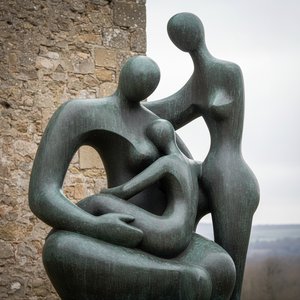
Henry Moore: Sculpting Modernity – Form, Emotion & the Human Condition
Explore the revolutionary sculptures of Henry Moore – abstract forms, reclining figures & powerful expressions of the human condition. Discover his legacy & artistic process with OriginalUniqueArt.

Henri Matisse 25 Mesterműve: Színek és Érzések Világa - OriginalUniqueArt
Fedezze fel Henri Matisse 25 legikonikusabb művét! Ismerje meg a fauvizmus színeit, az expresszionizmus formáit és a modern művészet mesterének életművét. Vászonképek, nyomatok – inspiráció otthonába a OriginalUniqueArt.com-on!

Henri Gaudier-Brzeska: A Brief Life, Explosive Forms – Exploring the Radical Modernism of a British Sculptor
Discover the explosive artistry of Henri Gaudier-Brzeska (1891-1915), a key figure in British Modern sculpture and Vorticism. Explore his powerful direct carvings, tragic life & lasting impact. Handmade reproductions available at OriginalUniqueArt.

The Enduring Form: Exploring Themes & Techniques in Sculpture Across Historical Periods
Explore the rich history of sculpture from ancient masterpieces to contemporary innovations. Discover key techniques, influential artists & investment potential for discerning art collectors.