

 Megtekintés
 Küldés
 Megosztás
 Részletek
 Útmutató

 Letöltés
 Hasonló darabok
 X-ray felvétel
 Diavetítés
 Q&A
Q&A Statisztika
Holy Trinity


 Összes részlet megjelenítése
Giclée / Műnyomat
Múzeumi minőségű giclée vagy vászonnyomat, gyors gyártással és rugalmas finomítási lehetőségekkel. ( Kézzel festett másolat rendelése Áttérés digitális képre)




P118B Ft10

P118H Ft10

P118W Ft10

P438Z Ft10

P508JH Ft12

P508YH Ft12

P805H Ft10

P805Z Ft10

P919BZ Ft10

P919G Ft10

P919XJ Ft10

P959ZH Ft10

P968JZ Ft12

W106C Ft8

W218G Ft10

W218JH Ft8

W218Y Ft10

W307PJ Ft10

W316G Ft10

W316PJ Ft8

W316Y Ft10

W398PJ Ft8

W4111J Ft10

W500HY Ft15

W500JH Ft15

W692G Ft12

W849H Ft8

W940BG Ft15

W953PJ Ft8




Válasszon előre meghatározott méreteink közül, amelyek megfelelnek a műalkotás eredeti arányainak.

Írja be a keretének vagy a falának megfelelő szélességet és magasságot. A nyomatot csak le lehet vágni, soha nem tehető nagyobbá, mint az eredeti kép, így egy eltérő alakú méretnél a kép egy része elveszik. Mielőtt bármit kinyatintanánk, küldünk egy digitális próbamodellt jóváhagyásra. Az oldalon látható kép nem tartalmazza a valós levágást — ezt csak a próbamodell mutatja meg.
Világszerte történő kiszállítás területére mindössze 2 hét alatt, a szokásos 4-5 hét helyett. (30 október)

Ingyenes globális expressz szállítás

Prémium minőségű len vászon

Teljes körű szállítási biztosítás

Vámvisszatérítési Garancia

Hiteles színarányosság garancia

100 napos visszaküldési lehetőség (csak hibás termékek esetén)

100% pénzvisszatérítési garancia

Több darab vásárlásakor kedvezmény
 Az üvegkeretes opció csak 110 cm alatti méretben érhető el

Holy Trinity
Giclée / Műnyomat
Reprodukció mérete
-


Összesített ár
Ft 26157
A Celestial Vision in Baroque Splendor
In the vast, swirling expanse of the seventeenth-century Flemish sky, few images command the soul with as much reverence as Hendrik van Balen I’s Holy Trinity. Painted around 1620, this masterpiece serves as a profound window into the spiritual heights of the Baroque era. The composition unfolds within a breathtaking celestial realm, where the boundaries between the earthly and the divine dissolve amidst billowing, luminous clouds. At the heart of this cosmic drama sits the Holy Trinity: God the Father, Jesus Christ, and the Holy Spirit, arranged in a triad of divine unity. The scene is not merely a religious depiction but a choreographed movement of light and grace, where the figures emerge from the heavens to offer a glimpse of eternal peace to the viewer below.
The artistry of van Balen I shines through his meticulous command of detail and his ability to weave complex allegorical layers into a single, cohesive vision. As a master who influenced even the great Anthony van Dyck, van Balen brings a sophisticated elegance to the piece. Surrounding the central figures is a host of celestial attendants—angels whose presence adds both movement and weight to the composition. Some angels are depicted with the solemnity of guardians, wielding swords and shields, while others drift with a weightless grace. A solitary bird soars above the assembly, acting as a subtle yet powerful symbol of the Holy Spirit’s descent, bridging the gap between the high heavens and the natural world visible in the distant, verdant trees.
Symbolism and the Mastery of Light
Every element within this painting is imbued with deep theological significance, designed to guide the observer toward contemplation. The arrangement of the Father, Son, and Spirit creates a triangular stability that reflects the concept of divine perfection. The interplay of light and shadow—a hallmark of the Baroque style—serves to sculpt the figures out of the ether, giving them a tangible, almost sculptural presence despite their heavenly nature. This technique, known as chiaroscuro, directs the eye toward the central mystery of the Trinity, ensuring that the viewer’s gaze is constantly drawn back to the source of light and life.
For the discerning collector or interior designer, this artwork offers more than just historical value; it provides a profound emotional anchor for any space. The painting’s palette, rich with the soft tones of a breaking dawn and the deep, earthy greens of the background landscape, creates an atmosphere of serene majesty. Whether placed in a grand library, a formal dining hall, or a quiet sanctuary, a high-quality reproduction of this work brings a sense of timelessness and spiritual depth. It is a piece that invites long periods of study, rewarding the viewer with new discoveries of texture, light, and meaning with every glance, making it an incomparable centerpiece for those who appreciate the intersection of fine art and profound devotion.
Kérdések és válaszok
Van-e útmutató a(z) „Holy Trinity”, Hendrik van Balen I alkotása alkotáshoz?
A „Holy Trinity”, Hendrik van Balen I alkotása Útmutató oldala egy kinyomtatható, kétoldalas információs adatlapot kínál: magát a műalkotást az azonosító táblázattal, egy időrendi sávot, amely a művész életkorába helyezi a alkotást, a művész további treballatait, a megmért színpalettát, valamint négy különböző stílusban, azonnal másolható idézeteket.
Milyen típusú műalkotás „Holy Trinity”, Hendrik van Balen I alkotása?
A katalógusban a „Holy Trinity”, Hendrik van Balen I alkotása a WallArt kategóriába tartozik. Ez a besorolás segít hasonló művek megtalálásában.
Mikor készült a "Holy Trinity", és mely művészeti irányba tartozik?
A "Holy Trinity" 1620-ben készült, a Baroque irányzat részeként.
A művész életrajza
Hendrik van Balen I: A flandriai barokk mestere, a mítosz és a miniaturitás világa
Hendrik van Balen I neve talán nem olyan ismerős, mint kortársaié, Rubensé vagy Van Dycké, mégis kulcsfontosságú szerepet tölt be a 17. századi antwerpeni vibráló művészeti életben. Körülbelül 1575-ben született egy tehetős kereskedő családban, ami olyan nevelést biztosított számára, amely ösztönözte az intellektuális kíváncsiságot és a művészi hajlamot egyaránt. Ez szerencsés kombináció lehetővé tette számára, hogy szigorú képzést kapjon, először Adam van Noortnál – egy manierista hagyományokban gyökerező festőtől –, majd talán Maerten de Vosnál is. Ezek a korai hatások megalapozták karrierjét, amelyet aprólékos részletesség, elegáns kompozíció és mitológiai, illetve allegorikus témák iránti vonzalom jellemezett. Családja anyagi helyzete lehetőségeket biztosított számára a technikai készségeken túl; nyelvi képességeit fejlesztette, amelyek később értékesnek bizonyultak utazásai és együttműködései során. Van Balen nem csupán mesterember volt, hanem egy humanista tudós, aki elmerült a klasszikus történetekben, amelyek számos barokk művet tápláltak.A korai évek és az olasz utazás hatása
Van Balen művészi útja nagyméretű vallási alkotásokkal kezdődött, oltárképekkel, amelyek tükrözték tanára, Adam van Noort erőteljes romanista stílusát. Ezek a korai munkák bizonyítják az anatómia és a drámai kompozíció magabiztos ismeretét, ám éppen a kisebb kabinetképeken találta meg igazán hangját. Körülbelül 1595-ben művészeti zarándokútra indult Olaszországba – egy utazás, amelyet nem dokumentáltak pontosan, de bizonyítja az antwerpeni Szent Lukács céhbe való visszatérése utáni tagsága a Romanisták céhében. Ez az út bevezette őt a virágzó barokk stílusba és olyan művészek munkásságába, mint Annibale Carracci és Palma Giovane, ami befolyásolta a finomabb színpalettát és a kecses alakelrendezéseket. 1592-93-ban mesterré vált az antwerpeni Szent Lukács céhben, többször is megválasztották dékánná – ez bizonyítja tekintélyét a művész közösségben. Műhelye virágzott, menedéket nyújtva ambiciózus festőknek, legjelentősebb tanítványa Anthony van Dyck volt, aki kulcsfontosságú korai képzést kapott Van Balen irányítása alatt.Együttműködések és a karikakép műfaja
Van Balen nem dolgozott elszigetelve. Az együttműködés központi szerepet játszott munkásságában, különösen Jan Brueghel az idősebbbel, a holland élet mesterével. Együtt úttörő szerepet játszottak a karikakép műfajában – egy egyedülálló flamand innováció, amely ötvözte a devotív vagy mitológiai képeket buja virágkompozíciókkal. Ezek a munkák nem csupán dekoratívak voltak; szimbolikus jelentéssel teltek, tükrözve a Habsburg udvar vallási hevületét és művészi kifinomultságát. A Federico Borromeo bíboros számára készített karikakép körülbelül 1607-1608-ban mérföldkőnek számít ebben a műfajban – tanúbizonysága közös képességüknek és innovatív szellemiségüknek. Brueghel virágok és gyümölcsök aprólékos ábrázolása vibráló keretet adott Van Balen kecses alakjainak, harmónikus szintézist teremtve a naturalizmus és az idealizmus között. Brueghel mellett gyakran működött együtt más művészekkel is, mint például Joos de Momper, Abraham Govaerts és Frans Snyders, ami bizonyítja alkalmazkodóképességét és nyitottságát a különböző művészeti nézőpontok iránt.Örökség és hatás
Hendrik van Balen I hatása messze túlmutatott műhelye határain. A finom technikára, az elegáns kompozícióra és a mitológiai témákra való hangsúly rezonált egy generáció flamand művészében. Anthony van Dyck, talán leghíresebb tanítványa, sokat merített mestere alakfestészeti megközelítéséből és kompozíciós elveiből. Van Balen kabinetképei – gyakran réztáblákra festve – nagy keresletnek örvendtek a gyűjtők körében, értékesek voltak intim méretük és kifinomult részleteik miatt. Bár talán nem érte el ugyanazt a széleskörű hírnevet, mint Rubens vagy Van Dyck, Van Balen fontos szerepet játszott a flamand festészet revitalizálásában a 17. század elején. A manierizmus és a barokk közötti hidat képezte, egyedi stílust kovácsolva, amely ötvözte a klasszikus ideálokat a flamand realizmussal. Öröksége fennmarad fennmaradt munkáin – tanúbizonyságai egy mesteremberről, aki páratlan eleganciával és művészettel keltette életre a mítoszt és az allegóriát. Hozzá járulása nem nagyszabású bejelentésekben rejlik, hanem a miniatűr világok csendes tökéletességében.
Hendrik van Balen I
1575 - 1632 , Belgium
Rövid információk
- Artistic Movement Or Style: Barokk
- Artists Or Movements Influenced By This Artist: ['Anthony van Dyck']
- Artists Who Influenced This Artist:
- Adam van Noort
- Maerten de Vos
- Date Of Birth: kb. 1575
- Date Of Death: 1632
- Full Name: Hendrick van Balen I
- Nationality: Flamand
- Notable Artworks:
- Moses Striking the Rock
- A Bacchic Procession
- Place Of Birth (City And Country): Antwerpen, Belgium
Kapcsolódó cikkek
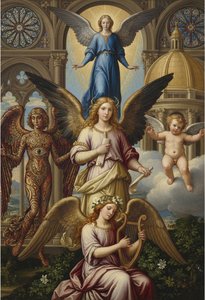
Divine Beauty: A Curated Guide to the Celestial Majesty of Angelic Figures in Art History
Explore the profound beauty of angelic figures in art history. From Renaissance masterpieces to celestial symbolism, our expert guide offers a sophisticated journey through the divine imagery of the Old Masters for discerning collectors and art enthusiasts.

Celestial Messengers: Angels in Painting – A Historical & Artistic Exploration
Explore the captivating history of angels in painting! Discover symbolism, iconic Renaissance & Byzantine masterpieces, and renowned artists. Expert insights for art lovers & collectors at OriginalUniqueArt.

Celestial Messengers: A Comprehensive Exploration of Angelic Representation in Art History
Explore the captivating history of angels in art! Discover symbolism, iconic Renaissance masterpieces & renowned artists. Expert insights for art lovers & collectors at OriginalUniqueArt.

Barokk dráma: A nagyság és az érzelem bevonása a kortárs belső terekbe
Fedezze fel a barokk stílus nagyságát és drámáját! Ismerje meg a belsőépítészet jellegzetességeit, inspirálódjon híres enteriőrökből, és valósítsa meg álmai luxus otthonát szakértő útmutatásunkkal.

Mastering Drama and Light: A Definitive Guide to the Flemish Baroque Art Movement
Explore the dramatic brilliance of the Flemish Baroque movement. Discover how masters like Peter Paul Rubens utilized chiaroscuro and dynamic composition to redefine art history through light, shadow, and unparalleled emotion.