

 Előnézet
 Megosztás
 Megosztás
 Részletek
 Útmutató

 Letöltés
 Hasonló darabok
 X-ray felvétel
 Diavetítés
 Statisztika
Winter Landscape


 Tovább olvasom
Giclée / Műnyomat
Múzeumi minőségű giclée vagy vászonnyomat, gyors gyártással és rugalmas finomítási lehetőségekkel. ( Kézzel festett másolat vásárlása Áttérés digitális képre)




P118B Ft10

P118H Ft10

P118W Ft10

P438Z Ft10

P508JH Ft12

P508YH Ft12

P805H Ft10

P805Z Ft10

P919BZ Ft10

P919G Ft10

P919XJ Ft10

P959ZH Ft10

P968JZ Ft12

W106C Ft8

W218G Ft10

W218JH Ft8

W218Y Ft10

W307PJ Ft10

W316G Ft10

W316PJ Ft8

W316Y Ft10

W398PJ Ft8

W4111J Ft10

W500HY Ft15

W500JH Ft15

W692G Ft12

W849H Ft8

W940BG Ft15

W953PJ Ft8




Válasszon előre meghatározott méreteink közül, amelyek megfelelnek a műalkotás eredeti arányainak.

Írja be a keretének vagy a falának megfelelő szélességet és magasságot. A nyomatot csak le lehet vágni, soha nem tehető nagyobbá, mint az eredeti kép, így egy eltérő alakú méretnél a kép egy része elveszik. Mielőtt bármit kinyatintanánk, küldünk egy digitális próbamodellt jóváhagyásra. Az oldalon látható kép nem tartalmazza a valós levágást — ezt csak a próbamodell mutatja meg.
Világszerte történő kiszállítás területére mindössze 2 hét alatt, a szokásos 4-5 hét helyett. (22 október)

Ingyenes globális expressz szállítás

Prémium minőségű len vászon

Teljes körű szállítási biztosítás

Vámvisszatérítési Garancia

Tökéletes színarányosság garancia

100 napos visszaküldési garancia (csak gyártási hibás termékek esetén)

100% pénzvisszatérítési garancia

Több darab vásárlásakor kedvezmény
 Az üvegkeretes opció csak 110 cm alatti méretben érhető el

Winter Landscape
Giclée / Műnyomat
Reprodukció méretei
-


Összesített ár
Ft 25277
Winter Landscape with Skaters – A Frozen Moment of Dutch Life
The painting “Winter Landscape with Skaters” by Hendrick Avercamp isn’t merely a depiction of snow; it's a vibrant, almost theatrical snapshot of daily life in the heart of 17th-century Holland. Completed around 1608, this remarkable work, now residing within the esteemed collection of the Rijksmuseum in Amsterdam, transports us to a world gripped by the biting chill of an “Little Ice Age” winter – a period characterized by unusually cold temperatures and prolonged winters that profoundly shaped Dutch society and art. Avercamp masterfully captures not just the visual spectacle of a frozen landscape but also the bustling activity and social interactions that unfolded within it, creating a scene brimming with both serenity and lively engagement.A Masterclass in Atmospheric Perspective and Detail
Avercamp’s genius lies in his ability to render the complexities of winter with astonishing realism and a remarkable sense of immediacy. The painting is executed in oil on oak panel, a technique that allowed for rich color saturation and meticulous detail – qualities particularly evident in the layering of textures and the subtle gradations of light and shadow. Notice how he employs aerial perspective, creating a gradual softening of colors and forms as they recede into the distance. The foreground, dominated by figures skating on the frozen river, is rendered with sharp clarity and vibrant hues, while the distant church and surrounding landscape fade into a hazy blue-grey, suggesting both depth and atmospheric conditions. The artist’s use of impasto – thick applications of paint – adds to the tactile quality of the scene, emphasizing the crispness of the snow and the texture of clothing. The inclusion of seemingly mundane details—a dog gnawing on a frozen carcass, a fisherman repairing his nets, children playing in the snow—elevates the painting beyond a simple landscape view, imbuing it with a sense of authentic everyday life.The Little Ice Age and its Artistic Echoes
Understanding the historical context is crucial to appreciating Avercamp’s work. The “Little Ice Age” profoundly impacted the Netherlands, leading to shorter growing seasons, increased reliance on winter activities like skating, and a heightened awareness of the power and unpredictability of nature. Avercamp's painting directly reflects this era, depicting a society actively adapting to and embracing the challenges presented by the harsh winter conditions. The presence of numerous skaters, bundled in warm clothing, suggests that ice-skating was not just a recreational pastime but also a vital means of transportation and social interaction during the long winters. The inclusion of farm implements and animals further reinforces the connection between people and their environment – a theme central to Dutch Golden Age art.Symbolism and Social Commentary
Beyond its realistic depiction of winter life, “Winter Landscape with Skaters” carries subtle symbolic weight. The scene is not simply a record of activity; it’s a carefully constructed tableau that offers glimpses into the social dynamics of the time. The presence of various figures engaged in different activities—fishing, skating, repairing nets—suggests a diverse community united by their shared experience of winter. The inclusion of a dead animal, often interpreted as a reminder of mortality and the fragility of life, adds a layer of somber reflection to the otherwise lively scene. The painting can be viewed as a meditation on human resilience in the face of adversity, celebrating both the joys of communal activity and the acceptance of nature’s harsh realities.Bringing Avercamp's Winter World into Your Home
Reproductions of “Winter Landscape with Skaters” offer a beautiful way to bring this captivating scene into your own living space. High-quality prints, meticulously crafted using archival inks and premium materials, faithfully capture the painting’s rich colors, intricate details, and atmospheric depth. Whether you choose a large-scale canvas print for a statement wall or a smaller framed reproduction for a cozy corner, Avercamp's winter landscape will undoubtedly evoke a sense of warmth, nostalgia, and appreciation for the beauty of the natural world – a timeless reminder of Dutch artistry and cultural heritage.Gyakran Ismételt Kérdések
A „Winter Landscape” Avercamp, Hendrick fejlődésének mely szakaszát képviseli?
A "Winter Landscape" Avercamp, Hendrick alkotói pályájának Early Period szakaszát képviseli.
Milyen felhasználásra javasolt a „Winter Landscape”, Avercamp, Hendrick alkotása?
A „Winter Landscape” nyomtatvány ajánlott felhasználása: Statement.
Hol látható ma a(z) „Winter Landscape”, Avercamp, Hendrick alkotása?
Az eredeti "Winter Landscape" mű megtekinthető a Hamburger Kunsthalle, Hamburg, Németország múzeum collectionsban.
A művész életrajza
Hendrick Avercamp (1585-1634) – A Pioneer of Dutch Winter
Hendrick Avercamp, a name synonymous with the shimmering, frozen landscapes of the Dutch Golden Age, was born in Amsterdam on January 27, 1585. His life story is as intriguing as his art—a tale marked by both artistic innovation and personal circumstance. From an early age, it became apparent that Avercamp lived within a world experienced differently than most; he was mute, and likely deaf, earning him the affectionate yet defining moniker “de Stomme van Kampen” – the Mute of Kampen. This perceived limitation, however, did not stifle his artistic voice but perhaps sharpened his observational skills, allowing him to translate the nuances of the Dutch winter onto canvas with unparalleled clarity and charm. He initially studied in Amsterdam under Pieter Isaacsz, a portrait painter, and possibly also received guidance from David Vinckboons, whose influence can be seen in Avercamp’s early works. In 1608, he relocated to Kampen, where he would spend the majority of his life and establish himself as a unique and celebrated artist.Early Life and Artistic Training
Avercamp’s father was appointed town apothecary, and the family moved to Kampen shortly after his birth. Soha nem tanult meg beszélni, mivel valószínűleg születésétől fogva siket volt. Édesanyja tanította írni és rajzolni – ez utóbbi különösen jól ment neki már gyerekkorában. He began his artistic training at a young age under the tutelage of Pieter Isaacsz, a portrait painter in Amsterdam, and possibly also benefited from instruction by David Vinckboons, whose style resonated with Avercamp’s own developing aesthetic. Vinckboons's influence is evident in Avercamp’s early compositions—particularly his use of atmospheric perspective and dramatic lighting—techniques that would become hallmarks of his distinctive oeuvre.The Winter Landscape: A Revolutionary Genre
Hendrick Avercamp stands out as one of the first dedicated landscape painters in 17th-century Holland, a period traditionally dominated by portraiture, history painting, and still life. He carved his niche by specializing in winter scenes—a subject rarely explored with such consistent focus before him. Unlike many of his contemporaries who idealized their subjects or sought to convey grand narratives, Avercamp presented a realistic—and often humorous—view of life, including playful details that hint at human foibles and everyday occurrences. His paintings aren’t merely depictions of cold weather; they are vibrant snapshots of Dutch life unfolding on the ice. Figures skate, sled, play *kolf* (a form of golf played on ice), and simply enjoy the frozen waterways, creating a lively tapestry of human activity against the stark beauty of the winter landscape. Avercamp’s skill lies in his ability to convey both the chill of the season and the warmth of communal enjoyment.Technique and Style: Mastering Aerial Perspective
Avercamp's mastery of aerial perspective—the subtle shifting of colors and details to create a convincing sense of depth—is arguably his most remarkable achievement. He achieved this effect by applying watercolor washes over pen and ink drawings, creating delicate and luminous effects that captured the ethereal quality of winter light. This technique allowed him to depict vast landscapes with astonishing accuracy, conveying not only the physical environment but also its psychological atmosphere. Furthermore, Avercamp employed *repoussoir*, placing foreground elements slightly in front of the picture plane to heighten the illusion of depth and create a dramatic visual impact. His meticulous attention to detail—from the textures of snowdrifts to the folds of clothing—contributed to the unparalleled realism of his paintings.Notable Works and Legacy
Avercamp’s most celebrated canvases include “Winter Landscape with Skaters,” which exemplifies his ability to capture the energy and dynamism of a Dutch winter scene, and “Street in Delfi,” showcasing Avercamp's skill in depicting town life amidst the frozen landscape. His work enjoyed considerable popularity during his lifetime and continues to inspire artists today. Avercamp’s legacy extends beyond his artistic achievements; he represents a triumph over adversity, demonstrating that creative expression can flourish even in the face of personal challenges. He died peacefully in Kampen on May 15, 1634, leaving behind a body of work that remains a testament to the enduring beauty and power of Dutch landscape painting—a frozen moment preserved forever on canvas. Avercamp’s nephew and pupil Barent Avercamp (1612-79) carried on his style in an accomplished manner, ensuring that Avercamp's artistic vision would continue to resonate for generations to come.
Avercamp, Hendrick
1585 - 1634 , Holland
Gyors információk
- Artistic Movement Or Style: Dutch Golden Age painting
- Artists Who Influenced This Artist:
- Pieter Isaacsz
- David Vinckboons
- Date Of Birth: January 27, 1585
- Full Name: Hendrick Avercamp
- Nationality: Dutch
- Notable Artworks:
- Winter Landscape with Skaters
- Street in Delfi
- Place Of Birth: Amsterdam, Netherlands
Kapcsolódó cikkek

Jan van Goyen: Master of Dutch Landscape & Atmospheric Perspective
Discover Jan van Goyen, the master of Dutch landscape painting. Explore his subtle technique, atmospheric realism & lasting influence on art history. Learn about this 17th-century pioneer at OriginalUniqueArt.

Golden Light & Dutch Skies: Bringing the Magic of Dutch Golden Age Landscapes into Your Home
Transform your home with the breathtaking light of Dutch Golden Age landscapes. Discover how hand-painted oil reproductions of masterworks like Ruisdael and Vermeer bring timeless elegance, atmosphere, and soulful texture to modern interiors. Elevate your space with museum-quality art.
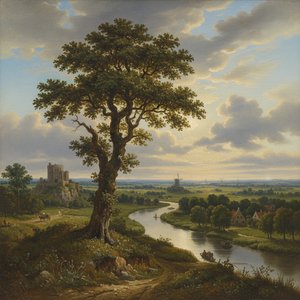
Jacob van Ruisdael: Master of Dutch Landscape & the Evocation of National Identity
Explore the life & work of Jacob van Ruisdael, the preeminent Dutch landscape painter. Discover his technical brilliance, symbolic depth, and lasting influence on art history. Learn about collecting Ruisdael's masterpieces.
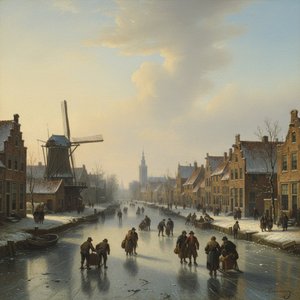
Charles Leickert: Capturing the Dutch Golden Age Light – A Comprehensive Study of Technique, Context, and Legacy
Explore the captivating winter landscapes of Charles Leickert, a master of Dutch Golden Age light & atmosphere. Discover his techniques, symbolism, and lasting legacy – a comprehensive study for art enthusiasts and collectors.

Golden Light & Dutch Skies: The Timeless Magic of Dutch Golden Age Landscapes
Discover the breathtaking beauty of Dutch Golden Age landscapes. Explore the mastery of light, chiaroscuro, and 17th-century realism through an expert art history lens, celebrating the enduring legacy of the Dutch Masters for discerning collectors and art lovers.

