

 Előnézet
 Megosztás
 Megosztás
 Részletek
 Útmutató

 Letöltés
 Hasonló darabok
 X-ray felvétel
 Diavetítés
 Statisztika
Untitled (D2WW32)
 Oil On Canvas
- WallArt
- Abstract Expressionism
 1953
1953 198.0 x 86.0 cm
 Metropolitan Művészeti Múzeum
 Tovább olvasom
Giclée / Műnyomat
Múzeumi minőségű giclée vagy vászonnyomat, gyors gyártással és rugalmas finomítási lehetőségekkel. ( Kézzel festett másolat vásárlása Áttérés digitális képre)




P118B $10

P118H $10

P118W $10

P438Z $10

P508JH $12

P508YH $12

P805H $10

P805Z $10

P919BZ $10

P919G $10

P919XJ $10

P959ZH $10

P968JZ $12

W106C $8

W218G $10

W218JH $8

W218Y $10

W307PJ $10

W316G $10

W316PJ $8

W316Y $10

W398PJ $8

W4111J $10

W500HY $15

W500JH $15

W692G $12

W849H $8

W940BG $15

W953PJ $8




Válasszon előre meghatározott méreteink közül, amelyek megfelelnek a műalkotás eredeti arányainak.

Megadhat saját méreteket is egy konkrét kerethez vagy helyszínhez igazítva. Amennyiben a kiválasztott méret nem egyezik az eredeti kép arányokkal, a műalkotást le fogjuk vágni, vagy kiegészítjük a képet tükrözött vagy egyszínű szélekkel. A gyártás megkezdése előtt egy digitális tervezetet küldünk jóváhagyásra.
Kérjük, vegye figyelembe, hogy a képernyőn látható előnézet nem tükrözi a tényleges levágást vagy kiegészítést. Csak a tervezet mutatja pontosan a végső kompozíciót.
Bár az egyedi méretek is elérhetőek, az eredeti arányok megőrzése érdekében azt javasoljuk, hogy válasszon a előre meghatározott listából származó méretet.
Világszerte történő kiszállítás területére mindössze 2 hét alatt, a szokásos 4-5 hét helyett. (25 szeptember)

Ingyenes globális expressz szállítás

Prémium minőségű len vászon

Teljes körű szállítási biztosítás

Vámvisszatérítési Garancia

Tökéletes színarányosság garancia

100 napos visszaküldési garancia (csak gyártási hibás termékek esetén)

100% pénzvisszatérítési garancia

Több darab vásárlásakor kedvezmény
 Az üvegkeretes opció csak 110 cm alatti méretben érhető el

Untitled (D2WW32)
Giclée / Műnyomat
Reprodukció méretei
-


Összesített ár
$ 80
A Glimpse into the Soul: Hedda Sterne's Abstract Interior
Hedda Sterne’s 1953 painting, “Untitled (D2WW32),” isn’t merely a depiction of a room; it’s an immersion. It’s a carefully constructed echo of memory and emotion, rendered in the rich, earthy palette of a bygone era. The canvas breathes with a quiet intensity, inviting the viewer to lose themselves within its layered complexity. This work, born from the heart of the New York School of painters, stands as a testament to Sterne's unique ability to translate the intangible—the feeling of a space, the weight of history—into visual form.
The composition immediately commands attention with its towering verticality – columns and arches dominate the scene, suggesting a grand hall or perhaps even a cathedral. Yet, this sense of monumental scale is subtly undermined by the artist’s deliberate distortion of perspective. Lines converge and recede in unexpected ways, creating an atmosphere of both stability and disorientation. It's as if we are navigating a space that exists simultaneously within our conscious and subconscious realms. The interplay between these strong vertical elements and the more fluid, curvilinear shapes – arches, rounded forms – generates a dynamic tension, preventing the image from feeling static or predictable.
The Language of Texture: Technique and Materiality
Sterne’s technique is strikingly tactile. Thick impasto—a generous application of paint built up in visible layers—dominates the surface, creating a palpable sense of texture. Each brushstroke feels deliberate, imbued with energy and movement. The artist doesn't shy away from revealing her process; rather, she embraces it as an integral part of the artwork’s expressive power. Close examination reveals subtle shifts in color and tone within these textured areas, hinting at hidden depths and complexities.
The choice of materials—primarily oil paints on canvas—contributes significantly to the work's overall effect. The rich, warm tones – golds, browns, beiges, and greys – evoke a sense of history and tradition, while also suggesting a certain melancholy or introspection. The use of muted colors allows for an extraordinary depth of shadow and light, creating a dramatic interplay between illumination and darkness that draws the eye deeper into the composition.
Echoes of Surrealism and Memory
Sterne’s work is deeply rooted in the principles of Surrealism, particularly her exploration of automatism—a technique that encourages spontaneous creation without conscious control. This manifests itself in the painting's dreamlike quality, its unsettling juxtapositions, and its refusal to offer a straightforward representation of reality. The architecture depicted isn’t a specific location but rather a composite of memories, experiences, and emotions – a landscape of the mind.
Born Hedwig Lindenberg in Bucharest, Romania, Sterne's life was marked by displacement and transformation. Her journey from Europe to New York, fueled by the upheaval of World War II, profoundly shaped her artistic vision. “Untitled (D2WW32)” can be interpreted as a reflection on this experience—a meditation on loss, memory, and the search for stability in an uncertain world. The painting’s evocative atmosphere invites us to contemplate our own personal histories and the ways in which they shape our perceptions of space and time.
A Timeless Resonance: Symbolism and Emotional Impact
Beyond its formal qualities, “Untitled (D2WW32)” possesses a profound emotional resonance. The painting’s sense of scale and mystery evokes feelings of awe, contemplation, and perhaps even a touch of unease. It's a work that rewards repeated viewing, revealing new layers of meaning with each encounter.
The painting’s enduring appeal lies in its ability to tap into universal themes—memory, loss, identity, and the search for connection. It serves as a powerful reminder of the transformative power of art and its capacity to illuminate the complexities of the human experience. Whether viewed as a historical artifact or a contemporary masterpiece, “Untitled (D2WW32)” continues to captivate and inspire viewers with its haunting beauty and profound emotional depth.
A művész életrajza
A Life Bridging Worlds: The Artistic Journey of Hedda Sterne
Hedda Sterne, born Hedwig Lindenberg in Bucharest, Romania, in 1910, was an artist whose life and work embodied a fascinating intersection of cultures, movements, and personal philosophies. Her journey from the vibrant avant-garde scene of pre-war Europe to the heart of the New York School is a testament to her resilience, intellectual curiosity, and unwavering dedication to artistic exploration. Growing up in a household that valued both music and languages – her brother became a renowned conductor – Sterne received a broad education that fostered an appreciation for nuance and expression. This early exposure, coupled with a burgeoning interest in art history and German philosophical texts, laid the groundwork for a deeply thoughtful and conceptually driven practice. Initially encouraged towards a musical path, she skillfully navigated familial expectations to pursue her true calling: painting. Her formal training began in 1918 under the tutelage of Frederic Storck, a sculptor who had taught her instructor Max Hermann Maxy, setting her on a course that would see her engage with some of the most pivotal artistic currents of the twentieth century.From Bucharest to New York: A Surrealist Foundation
The intellectual and artistic ferment of Bucharest in the 1920s proved crucial in Sterne’s formative years. She became immersed in a thriving avant-garde community, working alongside Dada co-founder Marcel Janco and forging close friendships with artists like Victor Brauner. This period instilled in her an early affinity for Surrealism, which she described as something she “grew up with.” Frequent travels to Vienna, where she studied ceramics, and Paris, where she briefly attended ateliers of Fernand Léger and André Lhote, broadened her artistic horizons and exposed her to the latest developments in European Modernism. These experiences were not merely technical exercises; they were opportunities to absorb different approaches to form, color, and composition, all while deepening her understanding of Surrealist principles like automatism – a technique she would later employ in creating unique collages. The looming shadow of war forced a difficult decision in 1939 when Sterne returned to Bucharest from France for what would be the last time before the outbreak of World War II. The subsequent years were marked by increasing political unrest and, tragically, witnessing the horrors of the Bucharest pogrom in January 1941. After months of struggle securing visas, she finally embarked on a perilous journey to New York aboard the S.S. Excambion in October 1941, leaving behind a life irrevocably altered by conflict.The New York School and Beyond: Finding Her Voice
Arriving in New York, Sterne reunited with her estranged husband, Fritz Stern (later Frederick Stafford), though they would soon adopt the surname “Stafford.” However, she quickly established herself as "Hedda Sterne," subtly reclaiming a connection to her European past while forging a new identity within the burgeoning American art scene. Her proximity to Peggy Guggenheim’s gallery on Beekman Place proved pivotal, reintroducing her to many of the Surrealist artists she had known in Paris – André Breton, Marcel Duchamp, and Max Ernst among them. She also formed a close friendship with Antoine de Saint-Exupéry, even offering crucial advice that influenced his iconic illustrations for *The Little Prince*. Sterne’s work during this period reflected her unique position as an outsider looking in, grappling with the complexities of American culture while retaining a distinctly European sensibility. She became associated with the Abstract Expressionist movement and famously appeared in the 1951 *Life* magazine photograph of “The Irascibles,” though she was the only woman included in the group—a subtle but significant acknowledgment of her presence within this influential circle. However, Sterne resisted easy categorization, consistently pushing boundaries and refusing to be confined by stylistic labels.A Visual Diary: Themes and Techniques
Hedda Sterne’s art is often described as a visual diary, reflecting not only external observations but also internal states of mind and philosophical inquiries. Her paintings, collages, and drawings explore themes of displacement, memory, and the search for meaning in a rapidly changing world. She was particularly fascinated by the interplay between order and chaos, often employing layered textures, fragmented forms, and ambiguous spaces to create works that are both visually compelling and intellectually stimulating. The influence of Surrealism is evident in her early collages, which utilize chance encounters and unexpected juxtapositions to evoke a sense of dreamlike disorientation. Later, she experimented with industrial materials like aerosol spray paint, embracing the immediacy and fluidity of this medium to capture the energy and dynamism of urban life. Her paintings frequently feature abstracted landscapes, architectural motifs, and enigmatic figures, inviting viewers to engage in their own interpretive journeys. Third Avenue El, for example, powerfully conveys the chaotic rhythm of New York City, while her *Tondo* series demonstrates a continued exploration of form and space through circular compositions. Throughout her long career, Sterne remained committed to pushing the boundaries of artistic expression, creating a body of work that is both deeply personal and universally resonant.Legacy and Historical Significance
Hedda Sterne’s contribution to twentieth-century art extends beyond her individual paintings and collages. She served as a vital bridge between European Modernism and the American avant-garde, bringing with her a unique perspective shaped by a life lived across continents and cultures. Her unwavering commitment to artistic independence and her refusal to conform to prevailing trends paved the way for future generations of artists who challenged conventional norms. While she achieved recognition during her lifetime, including exhibitions at prominent galleries and museums, Sterne’s work has gained increasing attention in recent years as scholars and curators reassess the contributions of women artists within the Abstract Expressionist movement. The establishment of the Hedda Sterne Foundation ensures that her legacy will continue to inspire and challenge audiences for years to come, solidifying her place as a significant figure in the history of modern art—an artist who fearlessly navigated a world in flux, transforming personal experience into enduring visual poetry.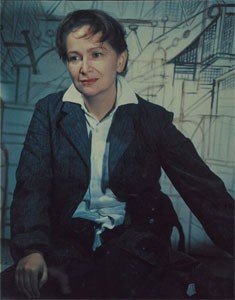
Hedda Sterne
1910 - 2011 , Románia
Gyors információk
- Artistic Movement Or Style: Együttműködés
- Artists Or Movements Influenced By This Artist: ['Együttműködés']
- Artists Who Influenced This Artist:
- Marcel Janco
- Victor Brauner
- Fernand Léger
- André Lhote
- Date Of Birth: August 4, 1910
- Date Of Death: 2011
- Full Name: Hedda Sterne
- Nationality: Román-amerikai
- Notable Artworks:
- Tondo
- Harmadik utcai Észköz
- Nincs cím
- Place Of Birth: Bukarest, Románia
Kapcsolódó cikkek

Absztrakt Expresszionizmus Mesterei: 10 alkotás, ami meghatározta a művészetet | OriginalUniqueArt.com
Fedezze fel a 10 legikonikusabb absztrakt expresszionista alkotást! Ismerje meg Jackson Pollock, Mark Rothko és más mesterek történetét. Művészeti reprodukciók prémium minőségben – OriginalUniqueArt.com.

Kandinsky Mesterművei: 25 Lenyűgöző Festmény a Modern Művészet Gyöngyszemeiből | OriginalUniqueArt
Fedezze fel Wassily Kandinsky 25 legikonikusabb művét! Merüljön el az absztrakt művészet világában, ismerje meg a színek és formák lenyűgöző történetét. Prémium minőségű reprodukciók és inspiráló dekorötletek a OriginalUniqueArt.com-on.

Expressionist Abstraction: A Procurement Guide to Bold Colors and Emotional Impact for Modern Hotel Interiors
Elevate hospitality spaces with Expressionist Abstraction. A professional procurement guide for hotel designers on sourcing bold, large-scale abstract oil paintings to create impactful, high-end modern interiors through reliable bulk-order art solutions.

Unlocking Contemporary Abstraction: A Designer's Guide to Curating Emotion and Color for Modern Interiors
Master the art of decorating with contemporary abstraction. Our expert guide for designers explores how to use color, geometry, and emotion to transform modern interiors into soulful, curated spaces through professional art selection and placement strategies.
Egyensúly és Merészség: A Kortárs Festészet Harmóniája a Klasszikus Enteriőrökben – Absztrakt Képekkel a Hagyomány Megújítása
Fedezze fel, hogyan illesztheti a kortárs absztrakt művészetet klasszikus enteriőrébe! Szakértői tanácsok, egyedi festmények és inspirációk a OriginalUniqueArt.com-on. Teremtsen luxus hangulatot otthonában!