

 Előnézet
 Megosztás
 Megosztás
 Részletek
 Útmutató

 Letöltés
 Hasonló darabok
 X-ray felvétel
 Diavetítés
 Statisztika
Virgin and Child
 Oil On Panel
- Northern Renaissance
 1540
1540- Renaissance
 91.0 x 64.0 cm
 Tovább olvasom
Giclée / Műnyomat
Múzeumi minőségű giclée vagy vászonnyomat, gyors gyártással és rugalmas finomítási lehetőségekkel. ( Kézzel festett másolat vásárlása Áttérés digitális képre)




P118B Ft10

P118H Ft10

P118W Ft10

P438Z Ft10

P508JH Ft12

P508YH Ft12

P805H Ft10

P805Z Ft10

P919BZ Ft10

P919G Ft10

P919XJ Ft10

P959ZH Ft10

P968JZ Ft12

W106C Ft8

W218G Ft10

W218JH Ft8

W218Y Ft10

W307PJ Ft10

W316G Ft10

W316PJ Ft8

W316Y Ft10

W398PJ Ft8

W4111J Ft10

W500HY Ft15

W500JH Ft15

W692G Ft12

W849H Ft8

W940BG Ft15

W953PJ Ft8




Válasszon előre meghatározott méreteink közül, amelyek megfelelnek a műalkotás eredeti arányainak.

Írja be a keretének vagy a falának megfelelő szélességet és magasságot. A nyomatot csak le lehet vágni, soha nem tehető nagyobbá, mint az eredeti kép, így egy eltérő alakú méretnél a kép egy része elveszik. Mielőtt bármit kinyatintanánk, küldünk egy digitális próbamodellt jóváhagyásra. Az oldalon látható kép nem tartalmazza a valós levágást — ezt csak a próbamodell mutatja meg.
Világszerte történő kiszállítás területére mindössze 2 hét alatt, a szokásos 4-5 hét helyett. (24 október)

Ingyenes globális expressz szállítás

Prémium minőségű len vászon

Teljes körű szállítási biztosítás

Vámvisszatérítési Garancia

Tökéletes színarányosság garancia

100 napos visszaküldési garancia (csak gyártási hibás termékek esetén)

100% pénzvisszatérítési garancia

Több darab vásárlásakor kedvezmény
 Az üvegkeretes opció csak 110 cm alatti méretben érhető el

Virgin and Child
Giclée / Műnyomat
Reprodukció méretei
-


Összesített ár
Ft 25605
The Artist's Style
Hans Baldung was a German artist known for his distinctive style, full of color, expression, and imagination. As a student of Albrecht Dürer, he developed a unique approach to painting, which is evident in "Virgin and Child". The use of bold colors and delicate lines creates a sense of intimacy and warmth, drawing the viewer into the scene. Key Features of the painting include:- The Virgin Mary's elegant attire, complete with a necklace, adds an air of sophistication to the composition.
- The two children, positioned on either side of Mary, are depicted with tender expressions, conveying a sense of love and devotion.
- The overall mood of the painting is one of serenity and peace, inviting the viewer to contemplate the beauty of the scene.
The beauty of "Virgin and Child" lies in its ability to evoke emotions and inspire contemplation. As a work of art, it continues to captivate audiences, offering a glimpse into the artistic genius of Hans Baldung and the Northern Renaissance.
Gyakran Ismételt Kérdések
Milyen szín vezeti a „Virgin and Child”, Baldung Grien alkotása kompozícióját?
A(z) Espresso (#593027) domináns színe „Virgin and Child”, Baldung Grien alkotása alkotásnak.
Milyen motívumok jelennek meg a(z) „Virgin and Child”, Baldung Grien alkotása alkotásban?
A "Virgin and Child" alkotás tárgyai: virgin mary, madonna and child, religious art, northern renaissance, motherhood, sacred scene, german renaissance.
Mennyi éves volt Baldung Grien, amikor megalkotta a "Virgin and Child" alkotást 1540 årban?
Baldung Grien 55 éves korában festette a „Virgin and Child” című művét. A művész 1485 született, a alkotás dátuma pedig 1540.
A művész életrajza
A Swabian Enigma: The Life and Early Influences of Hans Baldung Grien
Hans Baldung Grien, a name synonymous with both brilliance and unsettling beauty, emerged from the rolling hills of Bavaria in 1485. Born in Schwäbisch Gmünd, a small free city within the Holy Roman Empire, his early life was far removed from the grand artistic circles of Florence or Venice. Unlike many artists of his time who traced their lineage through university studies, Baldung’s family—a respected line of jurists serving the Bishopric of Strasbourg—saw no need for him to pursue academic paths. Instead, young Hans chose the brush and burin, embarking on a journey that would establish him as one of the most distinctive and enigmatic figures of the German Renaissance. This decision wasn't a rejection of his upbringing, but rather a redirection of intellectual curiosity – a characteristic that profoundly shaped his entire oeuvre. His initial training began around 1500 in the Upper Rhineland under an artist from Strasbourg, providing him with a solid foundation in draftsmanship and composition before he sought out more prominent masters to hone his craft. This early period instilled within him a deep understanding of artistic technique and visual storytelling, preparing him for the demanding environment of Nuremberg.Under Dürer’s Wing and Forging an Individual Style
The pivotal moment in Baldung's development arrived in 1503 when he became an apprentice to Albrecht Dürer in Nuremberg. This period proved extraordinarily formative, exposing him to Dürer’s meticulous detail, intellectual rigor, and innovative printmaking techniques – the very hallmarks of Dürer’s style. The two artists developed a close bond; Baldung even managed Dürer's workshop during his master’s sojourn to Venice. While deeply influenced by Dürer—evident in early works showcasing precise draftsmanship and Northern realism—Baldung quickly began to forge his own distinct artistic identity. He absorbed the lessons of the Renaissance masters, but infused them with a uniquely German sensibility – characterized by expressive color, imaginative compositions, and an increasingly unsettling psychological depth. This divergence from Dürer’s more classical approach became a defining feature of Baldung's mature style. His time in Venice, overseeing Dürer’s affairs, also exposed him to the burgeoning Italian Renaissance art scene, broadening his artistic horizons and subtly influencing his palette and compositional choices. He returned from Italy with a heightened sense of color and a willingness to experiment with spatial arrangements that set him apart from his contemporaries.A Master of Many Mediums: Themes and Techniques
Hans Baldung Grien was an artist of remarkable versatility, proficient in painting, printmaking—particularly woodcuts and engravings—drawing, tapestry design, and even stained glass work. His paintings often feature small-scale works brimming with puzzling allegories and mythological narratives, rendered with a vibrant palette and a distinctive sense of spatial ambiguity. He excelled at portraiture, capturing the likenesses of his patrons with both realism and psychological insight. However, it is perhaps for his woodcuts that Baldung is most widely recognized today. These prints are characterized by their dramatic compositions, intricate detail, and often macabre subject matter. A recurring theme throughout his work is a fascination with witchcraft, death, and the supernatural – a reflection of the anxieties and beliefs prevalent in 16th-century Germany. His depictions of witches are particularly striking, portraying them not as stereotypical hags but as complex, even alluring figures, embodying both fear and fascination. *The Bewitched Groom*, for example, is a chillingly evocative work that encapsulates this preoccupation with the darker side of human experience. Baldung’s technique in woodcut was masterful; he exploited the medium's capacity for stark contrasts and intricate detail to create images that were both visually arresting and psychologically unsettling.Reformation Currents and Lasting Legacy
Baldung’s career unfolded during a period of immense religious and political upheaval, marked by the rise of the Protestant Reformation. While not overtly aligned with any particular faction, his work often reflects the changing spiritual landscape of Germany. His monumental high altar for the city of Münster, completed in 1531, is a testament to this engagement, showcasing support for the reformation movement through its iconography and stylistic choices. In 1545, Baldung died in Strasbourg, leaving behind a body of work that continues to captivate and intrigue viewers today. His influence can be seen in the works of later German artists, and his unique blend of Renaissance technique, Northern expressionism, and allegorical complexity secures his place as a significant figure in art history. He remains an artist whose work invites contemplation, challenging us to confront the darker aspects of human nature and the mysteries of the unseen world. His exploration of themes like witchcraft and mortality continues to resonate with contemporary audiences, making him a timeless and compelling figure in the pantheon of Renaissance masters.Museums and Collections
Baldung’s works can be found in prominent museums across Europe and North America:- Gemäldegalerie Alte Meister, Dresden, Germany: This renowned museum houses a significant collection of European paintings from the 15th to the 18th centuries, providing valuable context for understanding Baldung’s artistic milieu.
- National Gallery of Art, Washington D.C.: The NGA holds several important woodcuts and drawings by Baldung, offering insights into his printmaking techniques and artistic process.
- The J. Paul Getty Museum, Los Angeles: Features works that showcase the breadth of Baldung’s talent.
- Kunstmuseum Basel, Switzerland: A museum with a rich collection spanning various periods, offering a broader understanding of Renaissance art in Europe.

Baldung Grien
1485 - 1545 , Németország
Gyors információk
- Artistic Movement Or Style: Renaissance, Mannerizmus
- Artists Or Movements Influenced By This Artist: ['Korai német művészek']
- Artists Who Influenced This Artist: ['Albrecht Dürer']
- Date Of Birth: c. 1485
- Date Of Death: 1545
- Full Name: Hans Baldung Grien
- Nationality: Német
- Notable Artworks:
- A Bewitched Groom
- Death & Beauty
- Place Of Birth: Schwäbisch Gmünd, Németország
Kapcsolódó cikkek
Hans Baldung Grien: A Renaissance Master of Allegory, Innovation & the Grotesque
Explore the captivating world of Hans Baldung Grien, a Renaissance master renowned for his allegorical paintings, striking woodcuts & unique depictions of mythology and the grotesque. Discover his life, works & legacy with OriginalUniqueArt.
A Reneszánsz Észak csodái: 10 mestermű, melyek meghatározták a művészetet – OriginalUniqueArt.com
Fedezze fel a reneszánsz Észak legpálcásabb művészeti remekműveit! Ismerje meg Jan van Eyck, Dürer és Bosch festményeinek történetét. Vászonképek, reprodukciók – OriginalUniqueArt.com.
Raphael 25 Mesterműve: A Reneszánsz Zsenialitása – Vásároljon Kiváló Minőségű Reprodukciókat!
Fedezze fel Raphael 25 legpárásabb műalkotását! Olvasson a reneszánsz zsenialitásáról, festészeti technikáiról és ikonikus képeiről. Vásároljon exkluzív olajfestmény reprodukciókat otthona díszítésére a OriginalUniqueArt.com-on!
Divine Love: A Curated Guide to the Most Iconic Madonna and Child Masterpieces in Art History
Embark on a sophisticated journey through art history with our curated guide to the most iconic Madonna and Child masterpieces. Discover the profound beauty, theological depth, and enduring legacy of these sacred Renaissance treasures.
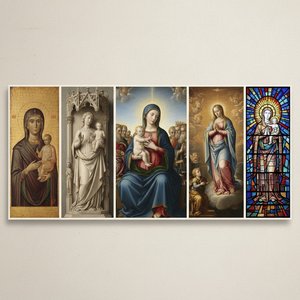
Divine Grace: A Journey Through the Most Iconic Depictions of the Virgin Mary in Art History
Embark on a profound journey through art history with our exploration of the most iconic depictions of the Virgin Mary. Discover the divine grace, symbolism, and masterful techniques found in Renaissance masterpieces and sacred iconography.
