

 Előnézet
 Megosztás
 Megosztás
 Részletek

 Letöltés
 Hasonló darabok
 X-ray felvétel
 Diavetítés
 Statisztika
St Peter and the angel
 Acrylic On Canvas
- WallArt
- Baroque Painting
 1650
1650 30.0 x 21.0 cm
 Art Gallery of South Australia
 Tovább olvasom
Kézzel készített olajfestmény reprodukció
Kézzel festett olajvastú vászon, az Ön által választott méretben és keretben, művészeink készítik meglévőre. ( Váltás nyomtatványra Áttérés digitális képre)




P118B $10

P118H $10

P118W $10

P438Z $10

P508JH $12

P508YH $12

P805H $10

P805Z $10

P919BZ $10

P919G $10

P919XJ $10

P959ZH $10

P968JZ $12

W106C $8

W218G $10

W218JH $8

W218Y $10

W307PJ $10

W316G $10

W316PJ $8

W316Y $10

W398PJ $8

W4111J $10

W500HY $15

W500JH $15

W692G $12

W849H $8

W940BG $15

W953PJ $8




Válasszon előre meghatározott méreteink közül, amelyek megfelelnek a műalkotás eredeti arányainak.

Ön megadhat saját méreteket egy adott kerethez vagy térhez igazításhoz. Ha a kiválasztott méret nem egyezik az eredeti kép arányával, akkor a műalkotást levágjuk, vagy további kézzel festett elemekkel meghosszabbítjuk a festményt. A gyártás megkezdése előtt küldünk Önnek egy digitális előnézetet jóváhagyásra.
Kérjük, vegye figyelembe, hogy a képernyőn megjelenő előnézet nem tükrözi a tényleges vágást vagy kiterjesztést. Csak az előnézet fog pontosan mutatni a végső kompozíciót.
Bár egyedi méretek állnak rendelkezésre, javasoljuk, hogy válasszon egy méretet az előre meghatározott listából az eredeti arányok megőrzése érdekében.
A rendelést követően a OriginalUniqueArt.com csapata e-mailt küld az ügyfélnek az instrukciókért, és biztosít egy előnézeti képet (mockup).
Világszerte elérhető szállítás () 3-4 hét alatt a szokásos 5 hét helyett. (19 szeptember). A minőség nem kérdőjelezhető.

Ingyenes globális expressz szállítás

Prémium minőségű len vászon

Teljes körű szállítási biztosítás

Vámvisszatérítési Garancia

Tökéletes színarányosság garancia

100 napos visszaküldési garancia (csak gyártási hibás termékek esetén)

100% pénzvisszatérítési garancia

Több darab vásárlásakor kedvezmény
 Az üvegkeretes opció csak 110 cm alatti méretben érhető el

St Peter and the angel
Reprodukciós technika
Reprodukció méretei
-


Összesített ár
$ 300
St Peter and the Angel: A Vision of Divine Comfort
Guercino’s “St Peter and the Angel” is not merely a depiction of biblical figures; it's an intensely felt moment of solace, rendered with a raw emotionalism that distinguishes the artist from his more polished contemporaries. Painted in 1650, this work, measuring a modest 30 x 21 cm, embodies the turbulent spirit of Baroque Italy – a world grappling with religious fervor and social upheaval, yet simultaneously yearning for moments of grace and spiritual connection. The scene unfolds within a dimly lit chamber, suggesting an intimate setting where Peter, depicted in repose on a simple bed, receives comfort from an angel hovering above him. This isn’t the idealized serenity often found in religious art; instead, there's a palpable vulnerability in Peter’s posture, his arms outstretched as if seeking reassurance. The angel, rendered with a gentle, almost melancholic expression, offers not just support but a profound sense of understanding – a silent acknowledgment of earthly burdens.
Guercino’s distinctive style is immediately apparent. He eschews the smooth, polished surfaces favored by many of his time, opting instead for a deliberately rough and expressive application of paint. Notice the visible brushstrokes, particularly in the drapery and the angel's wings, which seem to ripple with movement. This technique, combined with his masterful use of chiaroscuro – the dramatic contrast between light and shadow – creates an atmosphere of heightened emotion and psychological depth. The muted palette, dominated by browns, ochres, and deep blues, further contributes to the painting’s somber yet comforting mood. The artist's background in drawing is evident in the meticulous detail with which he renders Peter’s face and hands, conveying a sense of humanity rarely found in grand religious narratives.
A Study in Symbolism and Spiritual Narrative
Beyond its immediate depiction, “St Peter and the Angel” is rich in symbolic meaning. The bed itself represents vulnerability and surrender – Peter, a figure known for his earthly failings (his denial of Christ), is presented as open to divine grace. The angel’s presence signifies God's unwavering compassion and forgiveness. The positioning of the figures—Peter lying down, the angel standing above—highlights the dynamic between humility and authority, suggesting that true strength lies in acknowledging one’s need for guidance. The overall composition draws heavily on biblical themes of repentance and redemption, but Guercino imbues them with a profoundly personal and relatable quality.
Interestingly, the painting's historical context adds another layer of interpretation. The mid-17th century was a period of intense religious debate in Italy, marked by the Counter-Reformation and the rise of the Catholic Church’s efforts to combat Protestantism. In this environment, art served as a powerful tool for conveying religious messages. Guercino's work, with its emphasis on emotional sincerity and human vulnerability, aligns perfectly with the Church’s desire to reconnect with the faithful through relatable imagery. The scene resonates with the idea of divine mercy—a key tenet of Catholic theology during this era.
The Artist and His Legacy
Giovanni Francesco Barbieri, known as Il Guercino (the squint), was a complex and often misunderstood artist. Born in Cento in 1591, his early life was marked by unconventional training—he largely taught himself, developing a strikingly individual style that defied the conventions of the Bolognese school. His work is characterized by its dramatic intensity, expressive brushwork, and profound psychological insight. Guercino’s career spanned several decades, during which he produced a vast body of paintings, drawings, and etchings. He was particularly renowned for his depictions of biblical scenes and portraits, often infused with a sense of urgency and emotional turmoil.
Despite facing periods of financial hardship and professional setbacks, Guercino remained committed to his artistic vision until his death in 1666. His legacy is one of innovation and emotional depth—he pushed the boundaries of Baroque painting, creating works that continue to captivate viewers with their raw honesty and profound spiritual resonance. Reproductions of “St Peter and the Angel” offer a remarkable opportunity to experience this powerful artwork firsthand, allowing us to appreciate the genius of Guercino’s vision and his enduring contribution to the history of art.
Further Research & Reproduction Details
- Useful Links:
- St Peter's Basilica, Vatican City
- St Peter’s College, Oxford
- St Peter's House, Stromness
Additional Research: The painting is available as a high-quality hand-painted reproduction by OriginalUniqueArt.com, capturing the artist’s signature style and emotional intensity. Explore our collection for a stunning addition to your home or office – a timeless reminder of faith, compassion, and the enduring power of human connection.
A művész életrajza
A Life Illuminated by Shadow: The World of Guercino
Giovanni Francesco Barbieri, a name forever linked to dramatic chiaroscuro and profound emotional intensity – known to the world as Il Guercino – was born in Cento, a small town nestled between Ferrara and Bologna, in 1591. His life’s journey began not within the grand halls of formal academies, but through an innate artistic talent that quickly outstripped conventional training, a path illuminated by an understanding of light and shadow unlike any other. His nickname, “Il Guercino,” wasn't simply a descriptive term; it was a reflection of his physical characteristic – a slight squint in his eyes – yet it became synonymous with the unique vision he brought to Baroque painting.Early Influences: Caravaggio and the Bolognese School
Guercino’s early artistic development was profoundly shaped by two key figures: Caravaggio and the Bolognese School, particularly Ludovico Carracci. His initial works were deeply indebted to Caravaggio's revolutionary naturalism – a stark contrast of light and dark, a gritty realism that shocked and captivated audiences. Paintings like *Amnon and Tamar* exemplify this early period; they are not idealized depictions but raw, honest portrayals of biblical narratives filled with psychological depth. However, Guercino wasn’t content to remain solely within the orbit of Caravaggism. He recognized the strengths of the Bolognese School, particularly Ludovico Carracci's emphasis on classical composition and harmony. The influence of Carracci is evident in his early frescoes for Casa Pannini in Cento – landscapes rendered with a remarkable sense of depth and atmosphere, foreshadowing the dramatic vistas that would become hallmarks of his later work. This initial exposure to both Caravaggio’s dynamism and Carracci's balance laid the foundation for his distinctive style, a synthesis of intense emotion and carefully considered form.A Shifting Palette: From Darkness to Light
During the 1630s, Guercino underwent a significant stylistic transformation – a deliberate shift away from the harsh tenebrism of Caravaggio towards a more luminous and balanced approach. This wasn’t merely a change in technique; it reflected a deeper engagement with classical ideals and a desire to create works that were not only emotionally powerful but also aesthetically refined. He began to soften his palette, incorporating warmer tones and introducing a greater sense of spatial depth. This transition is beautifully illustrated in paintings like *The Return of the Prodigal Son*, where the figures are bathed in a golden light, conveying both vulnerability and redemption. Contemporary critics noted this change, suggesting that Guercino had abandoned the “dark” palette in favor of one that was more pleasing to the eye. However, it’s important to recognize that this wasn't a rejection of Caravaggio but rather an evolution – a masterful blending of influences that resulted in a uniquely personal style.Biblical Narratives and Emotional Resonance
Guercino consistently turned to biblical narratives for inspiration throughout his career, yet he didn’t simply illustrate these stories; he imbued them with a profound sense of human drama and emotional resonance. His figures are not idealized saints but flawed individuals grappling with faith, doubt, remorse, and redemption. *The Vocation of Saint Aloysius Gonzaga* is a prime example – a powerful depiction of religious awakening rendered with breathtaking skill and sensitivity. He captured the internal struggles of his subjects with remarkable insight, portraying moments of profound spiritual crisis alongside scenes of joyous conversion. Guercino’s ability to convey the inner lives of his figures—their hopes, fears, and desires—set him apart from many of his contemporaries. He understood that true piety wasn't about outward displays of devotion but about the internal battles and sacrifices that defined a life dedicated to faith. This psychological depth, combined with his masterful use of light and shadow, created paintings that were both visually stunning and emotionally compelling. He didn’t shy away from portraying difficult or unsettling moments, believing that these were essential to understanding the complexities of the human condition.A Lasting Legacy: Rediscovery and Influence
Despite facing periods of relative obscurity, Guercino's work has been steadily rediscovered and celebrated in recent decades. The tireless efforts of art historian Sir Denis Mahon played a pivotal role in restoring his reputation, meticulously researching his life, career, and patronage through close analysis of seventeenth-century Italian literature. Mahon’s research revealed the breadth of Guercino’s artistic output – from monumental frescoes to intimate portraits and exquisite drawings – demonstrating that he was far more than just a follower of Caravaggio. Today, his paintings grace the halls of prestigious museums around the world—from the Pinacoteca Nazionale in Ferrara to the National Gallery of Art in Washington D.C.—serving as a testament to his enduring artistic genius. His legacy extends beyond technical skill and stylistic innovation; it’s about the power of art to connect us to our shared humanity, to explore the complexities of faith and doubt, and to illuminate the enduring mysteries of the human heart.- Museums and Collections: Guercino’s works grace the halls of institutions like the Pinacoteca Nazionale (Ferrara), the Palazzo Brignole-Sale (Genoa), and the Galleria Spada (Rome).
- Chiaroscuro Master: His dramatic use of light and shadow remains a defining characteristic of his style.
- Biblical Storyteller: He brought biblical narratives to life with unparalleled emotional depth and psychological insight.

Guercino
1591 - 1666 , Olaszország
Gyors információk
- Artistic Movement Or Style: Barokk
- Artists Or Movements Influenced By This Artist: ['Caravaggio']
- Artists Who Influenced This Artist: ['Ludovico Carracci']
- Date Of Birth: Feb 8, 1591
- Date Of Death: Dec 22, 1666
- Full Name: Giovanni Francesco Barbieri
- Nationality: Olasz
- Notable Artworks:
- Amnon és Tamar
- A kegyes fiúk visszatérése
- Szent Alajos hívása
- Place Of Birth: Cento, Olaszország
Kapcsolódó cikkek

The Dramatic Flourish: Exploring the Baroque Movement's Enduring Legacy in Art History
Explore the dramatic world of Baroque art! Discover iconic artists like Caravaggio & Rubens, defining techniques, and its lasting impact on art history. Expert insights for collectors & enthusiasts at OriginalUniqueArt.

A Barokk Mesterek 10 Legikonikusabb Remekműve – OriginalUniqueArt.com
Fedezze fel a barokk művészet 10 legpártosabb remekművét! Caravaggio, Rembrandt és Vermeer alkotásainak története – OriginalUniqueArt.com kínálatában exkluzív reprodukciók és inspiráló dekorációs ötletek várják Önt. Nézze meg most!

Celestial Messengers: A Comprehensive Exploration of Angelic Representation in Art History
Explore the captivating history of angels in art! Discover symbolism, iconic Renaissance masterpieces & renowned artists. Expert insights for art lovers & collectors at OriginalUniqueArt.

Celestial Messengers: Angels in Painting – A Historical & Artistic Exploration
Explore the captivating history of angels in painting! Discover symbolism, iconic Renaissance & Byzantine masterpieces, and renowned artists. Expert insights for art lovers & collectors at OriginalUniqueArt.
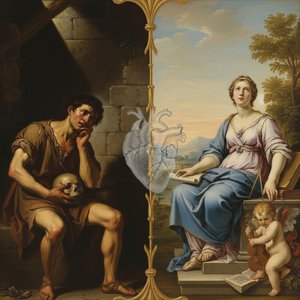
Guercino: A Baroque Master Between Caravaggism & Classicism – Exploring Innovation & Emotional Depth
Explore the captivating world of Guercino, a Baroque master bridging Caravaggism & Classicism. Discover his dramatic chiaroscuro, emotional depth, and lasting influence on art history with OriginalUniqueArt.