Text size

() ·

A painting made for you, by hand

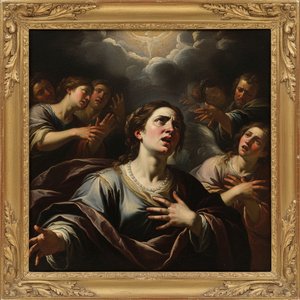
Esther before Ahasuerus

Kézzel készített olajfestmény reprodukció

Kézzel festett olajvastú vászon, az Ön által választott méretben és keretben, művészeink készítik meglévőre. ( Váltás nyomtatványra Áttérés digitális képre)

A gyűjtemény leírása

Guercino’s dramatic ‘Esther before Ahasuerus’ captures intense emotion and masterful chiaroscuro within a Baroque portrait. This 1750 Italian masterpiece showcases the artist's unique style, inviting you to own a piece of art history.

A művész életrajza

Guercino (1591-1666) a barokk festő, aki drámai fény és árnyékhasználattal, valamint emberi érzések mélységével alkotott. Népszerű bibliai képei világszerte hódítják a közönséget!

from ·

Chapter 1

How large should it be?

Slide to change the size; the picture on the left shows the frame at its real width. The proportions of the original are kept.

Standard méret
egyedi méretű
CM
INCH

Válasszon előre meghatározott méreteink közül, amelyek megfelelnek a műalkotás eredeti arányainak.

szélesség
magasság

Írja be a kívánt szélességet és magasságot, hogy illeszkedjen a keretéhez vagy a falához. Mivel ez kézzel festett alkotás, egy eltérő formájú méret esetén a művész akár festhet is valamivel többet a kép körül, vagy korolathat is belőle — az Ön döntésének megfelelően. A festés megkezdése előtt küldünk egy digitális tervezetet jóváhagyásra. Az oldalon látható kép nem tartalmazza a végeredményt — csak a tervezet mutatja meg a valódi eredményt.

Chapter 2

How should it arrive?

Choose the edges of the stretched canvas

Choose your frame

Corner sample of the WhiteWrap canvas edge finish, stretched on tömörfa bars
White Ft1
Corner sample of the BlurSideWrap canvas edge finish, stretched on tömörfa bars
Blurside Ft1
Corner sample of the ExtendedWrap canvas edge finish, stretched on tömörfa bars
Extended Ft1
Corner sample of the P118B picture frame: formázott polisztirol, 5 cm wide and 3 cm thick
P118B Ft10
Corner sample of the P118H picture frame: formázott polisztirol, 5 cm wide and 3 cm thick
P118H Ft10
Corner sample of the P118W picture frame: formázott polisztirol, 5 cm wide and 3 cm thick
P118W Ft10
Corner sample of the P438Z picture frame: formázott polisztirol, 5.5 cm wide and 3.5 cm thick
P438Z Ft10
Corner sample of the P508JH picture frame: formázott polisztirol, 7 cm wide and 3.5 cm thick
P508JH Ft12
Corner sample of the P508YH picture frame: formázott polisztirol, 7 cm wide and 3.5 cm thick
P508YH Ft12
Corner sample of the P805H picture frame: formázott polisztirol, 5 cm wide and 3.5 cm thick
P805H Ft10
Corner sample of the P805Z picture frame: formázott polisztirol, 5 cm wide and 3.5 cm thick
P805Z Ft10
Corner sample of the P919BZ picture frame: formázott polisztirol, 7 cm wide and 3.5 cm thick
P919BZ Ft10
Corner sample of the P919G picture frame: formázott polisztirol, 7 cm wide and 3.5 cm thick
P919G Ft10
Corner sample of the P919XJ picture frame: formázott polisztirol, 7 cm wide and 3.5 cm thick
P919XJ Ft10
Corner sample of the P959ZH picture frame: formázott polisztirol, 5 cm wide and 3 cm thick
P959ZH Ft10
Corner sample of the P968JZ picture frame: formázott polisztirol, 6 cm wide and 4 cm thick
P968JZ Ft12
Corner sample of the W106C picture frame: tömörfa, 5 cm wide and 3 cm thick
W106C Ft8
Corner sample of the W218G picture frame: tömörfa, 5 cm wide and 3 cm thick
W218G Ft10
Corner sample of the W218JH picture frame: tömörfa, 5 cm wide and 3 cm thick
W218JH Ft8
Corner sample of the W218Y picture frame: tömörfa, 5 cm wide and 3 cm thick
W218Y Ft10
Corner sample of the W307PJ picture frame: tömörfa, 6 cm wide and 3 cm thick
W307PJ Ft10
Corner sample of the W316G picture frame: tömörfa, 6 cm wide and 3 cm thick
W316G Ft10
Corner sample of the W316PJ picture frame: tömörfa, 6 cm wide and 3 cm thick
W316PJ Ft8
Corner sample of the W316Y picture frame: tömörfa, 6 cm wide and 3 cm thick
W316Y Ft10
Corner sample of the W398PJ picture frame: tömörfa, 5 cm wide and 3 cm thick
W398PJ Ft8
Corner sample of the W4111J picture frame: tömörfa, 6.5 cm wide and 3.5 cm thick
W4111J Ft10
Corner sample of the W500HY picture frame: tömörfa, 7 cm wide and 5 cm thick
W500HY Ft15
Corner sample of the W500JH picture frame: tömörfa, 7 cm wide and 5 cm thick
W500JH Ft15
Corner sample of the W692G picture frame: tömörfa, 8 cm wide and 4 cm thick
W692G Ft12
Corner sample of the W849H picture frame: tömörfa, 5 cm wide and 3 cm thick
W849H Ft8
Corner sample of the W940BG picture frame: tömörfa, 7.5 cm wide and 4.5 cm thick
W940BG Ft15
Corner sample of the W953PJ picture frame: tömörfa, 6 cm wide and 3.5 cm thick
W953PJ Ft8
Corner sample of the H24-GOLD picture frame: faragott fa gesszóval, 10 cm wide and 6 cm thick
H24-GOLD Ft30
Corner sample of the H24-SILVER picture frame: faragott fa gesszóval, 10 cm wide and 6 cm thick
H24-SILVER Ft30
Corner sample of the H36-GOLD picture frame: faragott fa gesszóval, 15 cm wide and 6.5 cm thick
H36-GOLD Ft45
Corner sample of the H36-SILVER picture frame: faragott fa gesszóval, 15 cm wide and 6.5 cm thick
H36-SILVER Ft45

Moulding: . Overall size with the frame: .

Chapter 3

Who paints it, and should anything change?

Examples of what can be changed: Replace face with customer photo; Add pet (e.g., replace cat with dog); Include hidden message in background; Change background landscape or elements.
After order, OriginalUniqueArt.com team will email client for instructions and provide a mockup preview

Világszerte elérhető szállítás () 3-4 hét alatt a szokásos 5 hét helyett. (2 november). A minőség nem kérdőjelezhető.

Chapter 4

The finishing touches

A nameplate, as in a museum?

A gravírozott bronztábla részletei

This elegant plaque features the artist's name and the title of the artwork, finely engraved for a timeless presentation.

It is made from bronze with a refined, elegant finish. The text is precisely laser-engraved for a sharp and permanent result. Measuring 9x2 cm, the plaque is compact yet easy to read. It's built to be durable and scratch-resistant, offering a professional, museum-quality look. Mounting is simple thanks to the included adhesive backing.

Átlátszó akril tábla részletei

The plaque includes essential engraved details such as the artist's name, the title of the artwork, the date it was created, the type of media used-like oil on canvas or watercolor-a brief description of the piece, and a QR code that links to the complete artwork information.

It is crafted from clear acrylic, offering a sleek, modern appearance. The text is UV-engraved in black to ensure strong visual contrast. With a size of 10x15 cm, it ensures optimal readability. It comes equipped with two metal hooks for secure wall mounting. The plaque is designed to be weather-resistant, making it suitable for various environments, and it includes interactive features that work seamlessly with smartphone scanning.

Fekete akril tábla részletei

This elegant plaque includes engraved information such as the artist's name, the title of the artwork, the date it was created, the type of media used (like oil on canvas or watercolor), a short description of the artwork, and a QR code for quick access to more information.

The plaque itself is made from refined black acrylic with a premium finish. The text is laser-engraved in white for high contrast and readability. Its size is 10x15 cm, designed to be easy to read. It comes with two metal hooks for professional mounting. The design is sleek and fits any interior style. It is also weather-resistant and durable, with built-in digital integration for mobile compatibility.

A protective varnish?

When do you need it?

Chapter 5

Your painting, as you ordered it

Esther before Ahasuerus

Reprodukciós technika

Reprodukció mérete

-

Kiváló mesterművész

Nagyobb részletesség, finomság és bővített gyártási idő

-

Reprodukció keretezése

-

-

A bármely oldalsó méretét túlszálaló 105 cm (kb. 41 hüvelyk) meghaladó műalkotások vagy reprodukciók esetében a keret összeszerelhető készletként, szétszerelve kerül szállításra. Ez a módszer biztosítja a biztonságos szállítást, és megakadályozza a szállítás során fellépő sérüléseket.

Szakmész összeszerelést igényel – ez nem DIY (önösszeszerelhető) termék.
A készletet egy tapasztalt keretező szakembernek kell összeszerelnie és a vásznat feszítenie kell, fa ragasztó (nem tartalmazza a csomag), vásznfeszítő fogó és szorítók használatával, amelyek a ragasztó száradásáig a keretrészeket egymáshoz vuôngjba tartják. A helytelen összeszerelés vagy a nem egyenletes vásznfeszítés maradandó károsíthatja a műalkotást, és ez nem része a garanciánknak.

  • A készlet tartalmazza az összes tömörfa rudat, pontosan méretre vágva.

  • A mellékelt csavarokkal, valamint a sarokszerekhez szükséges faütő ragasztóval kell összeszerelnie (ez nem tartalmazható a csomagban), így a keretrendezőnek külön kell beszereznie.

  • A csomag nem tartalmazza a szükséges professzionális eszközöket: egy vászonfeszítőt és klipseket a rácsok vízszintes tartásához a ragasztó megszáradásáig.

Fontos:
A sarokcsatlakozásokhoz fánylagra van szükség, a keretrudakat szorítókapcsokkal kell rögzíteni, amíg a rag teljesen meg nem szárad, a kész keretre feszített vászonhoz pedig vászonfeszítő fogat szükséges. Ezek egyike sem található meg a készletben. Kérjük, rendelés előtt győződjön meg róla, hogy rendelkezik tapasztalt keretező szakemberrel.

Névtábla

-

-

Védőréteg (Lakk)

Fényes lakk (intenzívabb színek, védelem a fény és a nedvesség hatása ellen)

-

Műalkotásom egyedi igényre szabása

Példák a módosíthatóságra: az arc kicserélése az ügyfél fotójára; háziállat hozzáadása (pl. macska helyett kutya); rejtett üzenet elhelyezése a háttérben; a háttér tájainak vagy elemeinek megváltoztatása.

-

Sürgős

Világszerte szóló szállítás () mindössze 3-4 hét alatt, a szokásos 5 hét helyett. (2 november). A minőség nem kérdőjelezhető.

-

Express szállítás

Világszerte elérhető szállítás területre 5 héten belül. (9 november).

A szállítás díja tartalmazza

Összesített ár

Ft 98255

Összesített ár Ft 98255

Az üvegkeretes opció csak 110 cm alatti méretben érhető el

Included with every order

  • Ingyenes globális expressz szállítás
  • Prémium minőségű len vászon
  • Teljes körű szállítási biztosítás
  • Vámvisszatérítési Garancia
  • Hiteles színarányosság garancia
  • 100 napos visszaküldési lehetőség (csak hibás termékek esetén)
  • 100% pénzvisszatérítési garancia
  • Több darab vásárlásakor kedvezmény

A Portrait of Intrigue: Guercino’s *Esther before Ahasuerus*

Guercino's 1750 depiction of *Esther before Ahasuerus* is not merely a biblical scene; it’s a masterclass in Baroque drama, an intimate tableau brimming with unspoken tension and profound human emotion. Painted during the artist’s intensely productive period, this work exemplifies his signature style – a potent blend of realism and idealized form, rendered with a masterful command of light and shadow that would become legendary. The canvas immediately draws the viewer into a richly detailed interior, a space both opulent and subtly unsettling. We observe Esther, presented as the central figure, poised before the imposing Ahasuerus, their interaction pregnant with potential consequence. The composition is meticulously constructed to heighten this sense of anticipation; the figures are arranged not just for narrative clarity but for maximum dramatic effect.

  • Subject Matter: Based on the Book of Esther in the Old Testament, the painting depicts a pivotal moment – the presentation of Esther to King Ahasuerus. This event is central to Jewish identity and commemorates their deliverance from annihilation.
  • Style & Technique: Guercino’s style is characterized by its emotional intensity, dramatic chiaroscuro (the strong contrast between light and dark), and a remarkable ability to convey psychological depth within his figures. His brushwork is loose yet controlled, creating a sense of movement and immediacy. The use of color is restrained but effective, emphasizing key elements and contributing to the overall mood.

The Baroque Embrace: Light, Shadow, and Emotion

Guercino’s technical prowess is immediately evident in his manipulation of light. He doesn't simply illuminate the scene; he sculpts it with carefully placed highlights that draw attention to Esther’s face – a study in vulnerability and quiet determination – while simultaneously shrouding Ahasuerus in a more ambiguous darkness. This technique, characteristic of the Baroque period, serves not just to represent reality but to evoke an emotional response from the viewer. The deep shadows create a sense of mystery and foreboding, hinting at the potential dangers inherent in the situation. Notice how the light catches the folds of Esther’s garments, adding texture and volume to her form, further emphasizing her presence within the room.

Symbolism and Context: A Window into 17th-Century Italy

The painting's setting is crucial to understanding its significance. The richly decorated interior – the curtain, the books, the vase – speaks to the power and wealth of the Persian court. These objects are not merely decorative; they contribute to the narrative by suggesting a world of luxury and intrigue. Furthermore, Guercino’s work reflects the broader artistic and religious currents of 17th-century Italy. The Baroque style was deeply intertwined with Counter-Reformation ideals, emphasizing emotional piety and dramatic storytelling. The story of Esther itself resonated powerfully during this time, offering a narrative of deliverance through faith and courage – themes that were particularly relevant to the Catholic Church’s efforts to reaffirm its authority.

Emotional Resonance: A Timeless Masterpiece

*Esther before Ahasuerus* transcends its biblical subject matter to become a timeless exploration of human psychology. Guercino's ability to capture the subtle nuances of emotion – the apprehension in Esther’s gaze, the regal composure of Ahasuerus – ensures that this painting continues to captivate viewers centuries later. A hand-painted reproduction offers an unparalleled opportunity to experience the full impact of this masterpiece, bringing its dramatic intensity and profound emotional depth into your home or studio. The meticulous detail and masterful technique employed by Guercino are faithfully reproduced, allowing you to appreciate the artistry and skill that went into creating this iconic work.

Kérdések és válaszok

Milyen stílusba tartozik a "Esther before Ahasuerus"?

A "Esther before Ahasuerus" a Baroque painting egyik alkotása. A művészeti irány meghatározza azt a művészeti hagyományt, amelybe a mű beágyazódik.

Mi a(z) domináns színe a(z) „Esther before Ahasuerus”, Guercino alkotása alkotásnak?

A(z) "Esther before Ahasuerus" alkotásban leginkább a Phthalo Green (#1e1918) szín tűnik ki. A domináns szín hasznos, amikor egy műalkotást össze kell egyeztetni egy belső térrel.

Használhatom az augmented reality technológiát, hogy megtekintsem a „Esther before Ahasuerus”, Guercino alkotása művet a saját szobámban?

A „Esther before Ahasuerus”, Guercino alkotása Kiterjesztett valóság előnézet oldala kiterjesztett valóságot használ, hogy az alkotást egy kompatibilis eszközön, az Ön saját környezetében is megmutassa.

More about this painting

Megtekintés AR előnézet Váltás nyomtatványra Áttérés digitális képre Küldés
Részletek Útmutató Kedvencekhez ad Letöltés Hasonló darabok X-ray felvétel Diavetítés Q&A Statisztika

In numbers

  • 1750the year it was painted
  • 29frames to choose from
  • standard sizes, in its own proportions
  • 5weeks to paint and deliver it
Guercino

Guercino

1591 - 1666, Olaszország

Quick facts about Guercino

  • Artistic Movement Or Style: Barokk
  • Artists Or Movements Influenced By This Artist: ['Caravaggio']
  • Artists Who Influenced This Artist: ['Ludovico Carracci']
  • Date Of Birth: Feb 8, 1591
  • Date Of Death: Dec 22, 1666
  • Full Name: Giovanni Francesco Barbieri
  • Nationality: Olasz
  • Notable Artworks:
    • Amnon és Tamar
    • A kegyes fiúk visszatérése
    • Szent Alajos hívása
  • Place Of Birth: Cento, Olaszország

A művész életrajza

A Life Illuminated by Shadow: The World of Guercino

Giovanni Francesco Barbieri, a name forever linked to dramatic chiaroscuro and profound emotional intensity – known to the world as Il Guercino – was born in Cento, a small town nestled between Ferrara and Bologna, in 1591. His life’s journey began not within the grand halls of formal academies, but through an innate artistic talent that quickly outstripped conventional training, a path illuminated by an understanding of light and shadow unlike any other. His nickname, “Il Guercino,” wasn't simply a descriptive term; it was a reflection of his physical characteristic – a slight squint in his eyes – yet it became synonymous with the unique vision he brought to Baroque painting.

Early Influences: Caravaggio and the Bolognese School

Guercino’s early artistic development was profoundly shaped by two key figures: Caravaggio and the Bolognese School, particularly Ludovico Carracci. His initial works were deeply indebted to Caravaggio's revolutionary naturalism – a stark contrast of light and dark, a gritty realism that shocked and captivated audiences. Paintings like *Amnon and Tamar* exemplify this early period; they are not idealized depictions but raw, honest portrayals of biblical narratives filled with psychological depth. However, Guercino wasn’t content to remain solely within the orbit of Caravaggism. He recognized the strengths of the Bolognese School, particularly Ludovico Carracci's emphasis on classical composition and harmony. The influence of Carracci is evident in his early frescoes for Casa Pannini in Cento – landscapes rendered with a remarkable sense of depth and atmosphere, foreshadowing the dramatic vistas that would become hallmarks of his later work. This initial exposure to both Caravaggio’s dynamism and Carracci's balance laid the foundation for his distinctive style, a synthesis of intense emotion and carefully considered form.

A Shifting Palette: From Darkness to Light

During the 1630s, Guercino underwent a significant stylistic transformation – a deliberate shift away from the harsh tenebrism of Caravaggio towards a more luminous and balanced approach. This wasn’t merely a change in technique; it reflected a deeper engagement with classical ideals and a desire to create works that were not only emotionally powerful but also aesthetically refined. He began to soften his palette, incorporating warmer tones and introducing a greater sense of spatial depth. This transition is beautifully illustrated in paintings like *The Return of the Prodigal Son*, where the figures are bathed in a golden light, conveying both vulnerability and redemption. Contemporary critics noted this change, suggesting that Guercino had abandoned the “dark” palette in favor of one that was more pleasing to the eye. However, it’s important to recognize that this wasn't a rejection of Caravaggio but rather an evolution – a masterful blending of influences that resulted in a uniquely personal style.

Biblical Narratives and Emotional Resonance

Guercino consistently turned to biblical narratives for inspiration throughout his career, yet he didn’t simply illustrate these stories; he imbued them with a profound sense of human drama and emotional resonance. His figures are not idealized saints but flawed individuals grappling with faith, doubt, remorse, and redemption. *The Vocation of Saint Aloysius Gonzaga* is a prime example – a powerful depiction of religious awakening rendered with breathtaking skill and sensitivity. He captured the internal struggles of his subjects with remarkable insight, portraying moments of profound spiritual crisis alongside scenes of joyous conversion. Guercino’s ability to convey the inner lives of his figures—their hopes, fears, and desires—set him apart from many of his contemporaries. He understood that true piety wasn't about outward displays of devotion but about the internal battles and sacrifices that defined a life dedicated to faith. This psychological depth, combined with his masterful use of light and shadow, created paintings that were both visually stunning and emotionally compelling. He didn’t shy away from portraying difficult or unsettling moments, believing that these were essential to understanding the complexities of the human condition.

A Lasting Legacy: Rediscovery and Influence

Despite facing periods of relative obscurity, Guercino's work has been steadily rediscovered and celebrated in recent decades. The tireless efforts of art historian Sir Denis Mahon played a pivotal role in restoring his reputation, meticulously researching his life, career, and patronage through close analysis of seventeenth-century Italian literature. Mahon’s research revealed the breadth of Guercino’s artistic output – from monumental frescoes to intimate portraits and exquisite drawings – demonstrating that he was far more than just a follower of Caravaggio. Today, his paintings grace the halls of prestigious museums around the world—from the Pinacoteca Nazionale in Ferrara to the National Gallery of Art in Washington D.C.—serving as a testament to his enduring artistic genius. His legacy extends beyond technical skill and stylistic innovation; it’s about the power of art to connect us to our shared humanity, to explore the complexities of faith and doubt, and to illuminate the enduring mysteries of the human heart.
  • Museums and Collections: Guercino’s works grace the halls of institutions like the Pinacoteca Nazionale (Ferrara), the Palazzo Brignole-Sale (Genoa), and the Galleria Spada (Rome).
  • Chiaroscuro Master: His dramatic use of light and shadow remains a defining characteristic of his style.
  • Biblical Storyteller: He brought biblical narratives to life with unparalleled emotional depth and psychological insight.

Gyors információk

  • Movement: Baroque
  • Artist: Guercino
  • Influences: Carracci
  • Subject or theme: Biblical Scene