Előnézet
 Megosztás
 Megosztás
 Részletek
 Útmutató

 Letöltés
 Hasonló darabok
 X-ray felvétel
 Diavetítés
 Statisztika
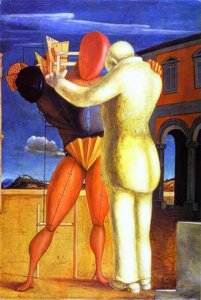
The Double Dream of Spring
 Acrylic On Canvas
- WallArt
- Metaphysical Art
 1915
1915- Modern
 56.0 x 54.0 cm
 Tovább olvasom
Giclée / Műnyomat
Múzeumi minőségű giclée vagy vászonnyomat, gyors gyártással és rugalmas finomítási lehetőségekkel. ( Kézzel festett másolat vásárlása Áttérés digitális képre)




P118B $10

P118H $10

P118W $10

P438Z $10

P508JH $12

P508YH $12

P805H $10

P805Z $10

P919BZ $10

P919G $10

P919XJ $10

P959ZH $10

P968JZ $12

W106C $8

W218G $10

W218JH $8

W218Y $10

W307PJ $10

W316G $10

W316PJ $8

W316Y $10

W398PJ $8

W4111J $10

W500HY $15

W500JH $15

W692G $12

W849H $8

W940BG $15

W953PJ $8




Válasszon előre meghatározott méreteink közül, amelyek megfelelnek a műalkotás eredeti arányainak.

Megadhat saját méreteket is egy konkrét kerethez vagy helyszínhez igazítva. Amennyiben a kiválasztott méret nem egyezik az eredeti kép arányokkal, a műalkotást le fogjuk vágni, vagy kiegészítjük a képet tükrözött vagy egyszínű szélekkel. A gyártás megkezdése előtt egy digitális tervezetet küldünk jóváhagyásra.
Kérjük, vegye figyelembe, hogy a képernyőn látható előnézet nem tükrözi a tényleges levágást vagy kiegészítést. Csak a tervezet mutatja pontosan a végső kompozíciót.
Bár az egyedi méretek is elérhetőek, az eredeti arányok megőrzése érdekében azt javasoljuk, hogy válasszon a előre meghatározott listából származó méretet.
Világszerte történő kiszállítás területére mindössze 2 hét alatt, a szokásos 4-5 hét helyett. (25 szeptember)

Ingyenes globális expressz szállítás

Prémium minőségű len vászon

Teljes körű szállítási biztosítás

Vámvisszatérítési Garancia

Tökéletes színarányosság garancia

100 napos visszaküldési garancia (csak gyártási hibás termékek esetén)

100% pénzvisszatérítési garancia

Több darab vásárlásakor kedvezmény
 Az üvegkeretes opció csak 110 cm alatti méretben érhető el

The Double Dream of Spring
Giclée / Műnyomat
Reprodukció méretei
-


Összesített ár
$ 80
A Window Into the Unconscious: De Chirico’s ‘The Double Dream of Spring’
Giorgio de Chirico's *The Double Dream of Spring*, painted in 1915, is not merely an image; it’s a portal into the nascent world of metaphysical painting and a profound exploration of the human psyche. Measuring 56 x 54 cm, this oil on canvas work, now residing at the Museum of Modern Art in New York, encapsulates the artist's unique ability to conjure unsettling beauty from the familiar. The scene unfolds with an enigmatic stillness – a man, or rather the back of a sculpted figure resembling a man, gazes into an expansive sky, while to the right, a disembodied mannequin head floats above a landscape mirroring, yet subtly altering, the view below. A blueprint-like sketch held within a wooden frame acts as a dividing element, simultaneously connecting and separating these disparate realms. The color palette is muted, dominated by earthy tones of brown, grey, and ochre, punctuated by the cool expanse of blue in the sky – colors that contribute to the painting’s overall sense of melancholy and introspection.The Birth of Metaphysical Art
To understand *The Double Dream of Spring*, one must consider its place within the broader context of de Chirico's artistic development and the birth of Metaphysical art. Born in Greece to Italian parents, de Chirico’s early life was marked by constant relocation, exposing him to a diverse range of cultural influences. His formal training began in Athens before moving to Munich, where he encountered the works of Arnold Böcklin and Max Klinger, artists whose symbolic landscapes and haunting imagery would deeply impact his own style. However, it was his engagement with philosophical texts – particularly those of Nietzsche, Schopenhauer, and Weininger – that truly ignited his artistic vision. De Chirico sought to move beyond mere representation, aiming instead to depict the hidden realities underlying the visible world—the realm of dreams, memories, and unconscious desires. This pursuit led him to reject traditional perspective and embrace illogical spatial arrangements, creating a sense of disorientation and unease in his paintings. *The Double Dream of Spring* is a quintessential example of this approach; it’s not a depiction of a place we could actually visit, but rather a construction of psychological space—a landscape of the mind.Symbolism and Interpretation
The symbolism within *The Double Dream of Spring* is layered and open to interpretation, characteristic of de Chirico's work. The statue, viewed from behind, suggests anonymity and alienation – a figure lost in contemplation, perhaps searching for meaning in an indifferent universe. The mannequin head, a recurring motif in de Chirico’s oeuvre, represents the artificiality of modern life and the loss of individuality. It looms over the landscape like a specter, casting a shadow on the scene below. The architectural drawing nestled within the frame introduces another layer of complexity. Is it a plan for a future reality or a memory of a past one? The figures depicted in the sketch—two men meeting in a vast piazza—echo the themes of isolation and disconnection that permeate the painting as a whole. Even the umbrella, subtly positioned near the top of the canvas, hints at an underlying sense of foreboding or melancholy. De Chirico himself resisted definitive interpretations of his work, preferring to allow viewers to project their own emotions and experiences onto the canvas.A Lasting Legacy
*The Double Dream of Spring* is more than just a visually striking artwork; it’s a pivotal moment in art history—a precursor to Surrealism and a testament to the power of the subconscious mind. Its influence can be seen in the works of artists such as Salvador Dalí and René Magritte, who similarly explored the realm of dreams and irrationality. Today, de Chirico's paintings continue to captivate audiences with their enigmatic beauty and psychological depth. A reproduction of *The Double Dream of Spring* offers not only a stunning visual addition to any interior space but also an invitation to contemplate the mysteries of existence—a reminder that reality is often far stranger and more complex than it appears. It’s a piece that encourages quiet reflection, prompting viewers to delve into their own inner worlds and confront the hidden landscapes within.A művész életrajza
A Dreamscape of the Mind: The Life and Art of Giorgio de Chirico
Giorgio de Chirico’s artistic journey began in Volos, Greece, in 1888, a birthplace that would profoundly shape his unique vision. Born to Italian parents – a Genoese mother and a Sicilian father – he was immersed in a world of dual heritage, a blend of classical tradition and burgeoning modern alienation. His early education at the Athens Polytechnic provided him with a solid grounding in traditional techniques, but it was his subsequent studies in Munich that truly ignited his creative spirit. This period exposed him to the evocative landscapes and symbolic imagery of artists like Arnold Böcklin and Max Klinger, whose work resonated deeply with his own developing aesthetic sensibilities. Equally influential were the philosophical currents swirling through Europe at the time – the challenging ideas of Friedrich Nietzsche, Arthur Schopenhauer, and Otto Weininger, which explored themes of existentialism, the irrationality of human desire, and the subjective nature of reality. These intellectual currents became the bedrock upon which de Chirico built his groundbreaking artistic vision.The Birth of Metaphysical Painting
Around 1909, a truly singular style began to emerge from de Chirico’s explorations – a style he himself termed “Metaphysical” art. This wasn't merely a stylistic innovation; it was a profound attempt to penetrate the surface of everyday life, to reveal the unsettling poetry hidden within familiar spaces. A pivotal moment occurred during a visit to Florence and an experience in Piazza Santa Croce, which served as the catalyst for his iconic ‘Metaphysical Town Square’ series. These paintings are characterized by their arresting stillness, long dramatic shadows, illogical perspectives, and the disconcerting presence of classical architecture juxtaposed with unsettling elements – faceless mannequins, looming statues, and a pervasive sense of isolation. The effect is deeply disquieting, evoking a potent blend of nostalgia, loneliness, and an almost unbearable longing for something lost or unattainable. It’s as if he was peering into a dreamscape, capturing the hidden anxieties and unspoken desires of the human psyche. De Chirico founded the Scuola Metafisica, profoundly impacting Surrealism, though his relationship with the movement remained complex and often fraught with disagreement over interpretations of his work. His paintings weren't intended as literal representations of dreams; rather, they were attempts to depict a reality beyond the visible world – a realm where time and space are fluid, and the boundaries between consciousness and unconsciousness blur. Works like *The Vexations of the Thinker*, *The Enigma of an Autumn Afternoon*, and *The Song of Love* exemplify this haunting aesthetic, inviting viewers to contemplate the mysteries of existence and the fragility of human perception.Influences and Philosophical Roots
De Chirico’s artistic development was inextricably linked to his intellectual pursuits. He devoured the works of philosophers like Friedrich Nietzsche and Arthur Schopenhauer, whose ideas about existentialism, irrationality, and the subjective nature of reality deeply influenced his art. Nietzsche's concept of the "eternal recurrence" – the idea that life repeats itself infinitely – resonated with de Chirico’s fascination with cycles, repetition, and the sense of déjà vu that permeates many of his paintings. Schopenhauer’s pessimistic worldview, emphasizing the suffering inherent in human existence, informed the melancholic atmosphere of his works. The influence of Otto Weininger, a controversial Austrian philosopher who explored themes of sexuality and race, is also evident in de Chirico's exploration of psychological states and the unsettling juxtaposition of familiar objects. These philosophical currents provided him with a framework for exploring the darker aspects of human experience – alienation, loneliness, anxiety, and the search for meaning in a seemingly meaningless world.A Shift in Style and Lasting Legacy
Following World War I, around 1919, de Chirico’s artistic trajectory took an unexpected turn. He consciously distanced himself from his earlier metaphysical approach, embracing instead a more traditional neoclassical or neo-baroque style. This shift was met with considerable criticism; many critics lamented the perceived abandonment of the innovative spirit that had defined his early work. However, de Chirico remained steadfast in his artistic choices, revisiting themes from his past but rendering them with a different aesthetic sensibility. He continued to paint and exhibit prolifically throughout his life, exploring various styles and subjects while maintaining a consistent commitment to craftsmanship and technical skill. Despite the criticism, his influence on subsequent generations of artists remains undeniable. His innovative use of space, perspective, and symbolism challenged conventional artistic norms and paved the way for new forms of expression. He left behind not just a body of artwork but a new way of seeing – a way of perceiving the world as a place of hidden meanings, unsettling beauty, and enduring mystery.Key Influences & Artistic Lineage
- Influenced By: Arnold Böcklin, Max Klinger, Friedrich Nietzsche, Arthur Schopenhauer.
- Influenced: Surrealism, particularly artists like René Magritte and Salvador Dalí. His work also impacted later movements such as Magic Realism.

De Chirico
1888 - 1978 , Görögország
Gyors információk
- Artistic Movement Or Style: Metafisziikai művészet
- Artists Or Movements Influenced By This Artist: ['Surrealizmus']
- Artists Who Influenced This Artist:
- Böcklin
- Klinger
- Date Of Birth: 1888. 7. 10.
- Date Of Death: 1978. 11. 20.
- Full Name: Giorgio de Chirico
- Nationality: Olasz
- Notable Artworks:
- A Veszélyes gondolatok
- Őszi estének rejtélye
- Place Of Birth: Volos, Görögország
Kapcsolódó cikkek
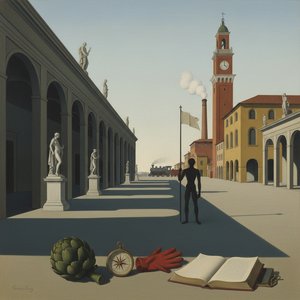
Giorgio de Chirico: Metaphysical Realities & the Poetics of Absence
Explore the captivating world of Giorgio de Chirico and his groundbreaking Metaphysical painting movement. Discover the philosophical depths & surreal imagery that influenced generations of artists. Learn more at OriginalUniqueArt.

Carlo Carrà: Futurist Visions & Metaphysical Transformations in Early 20th-Century Italian Painting
Explore the artistic journey of Carlo Carrà, a pivotal figure in Italian Futurism & Metaphysical painting. Discover his dynamic compositions, collaborations with de Chirico, and lasting influence on modern art history.
Beyond Reality: Unveiling the Enigmatic Depths of Metaphysical Art and its Philosophical Echoes
Explore the profound mystery of Metaphysical Art. Delve into the philosophical depths of Giorgio de Chirico’s dreamscapes and discover how this enigmatic movement redefined reality through unsettling beauty and classical symbolism.

Beyond Reality's Veil: Exploring the Enigmatic World of Metaphysical Art
Explore the captivating world of Metaphysical art with OriginalUniqueArt. Discover Giorgio de Chirico's iconic paintings, philosophical influences & lasting impact on Surrealism. Expert insights for collectors.

Goya Mesterművei: A Spanyol Lélek 25 Legikonikus Képe – OriginalUniqueArt
Fedezze fel Goya 25 leglenyűgözőbb mesterművét! Ismerje meg a spanyol festő életművét, portréit és ikonikus képeit. Vásároljon prémium minőségű reprodukciókat a OriginalUniqueArt.com-on, és teremtsen egyedi otthoni dekorációt klasszikus művészettel! Explore the full collection online.