Megtekintés
 Küldés
 Megosztás
 Részletek
 Útmutató

 Letöltés
 Hasonló darabok
 X-ray felvétel
 Diavetítés
 Statisztika
Piazza d
 Painting
- Surrealist Landscape
 Modern
 59.0 x 49.0 cm
 Legion of Honor
 Összes részlet megjelenítése
Az ezen az oldalon megjelenített műalkotások szerzői jogi védelem alatt állnak, ami azt jelenti, hogy törvényileg nem készíthetünk és nem adhatunk el belőlük pontos másolatokat. Ez a védelem olyan nemzetközi megállapodások alapján érvényesül, mint például a Berni Egyezmény és a nemzeti jogszabályok által, beleértve azokat is, amelyeket meghatározott Az USA szerzői jogi törvénye – 17. cím.
Mint tiszteletes és törvényes alternatívát, olyan egyedi, kézzel festett alkotásokat kínálunk, amelyek az eredetiből merítnek inspirációt. Tapasztalt és professzionális művészeink alaposan tanulmányozzák az eredeti stílusát, hangulatát és művészeti esszenciáját, hogy egy olyan új, egyedi alkotást hozzunk létre, amely ugyanazt az érzést kelti – miközben önálló, eredeti alkotásként létezik.
Ez a módszer teljes mértékben megfelel a szerzői jogi szabályozásnak, mivel nem tartalmazza a védett műalkotás másolását vagy duplikálását. Ehelyett ez egy kreatív újinterpretáció – egy új festmény, amely az eredetivel való összefüggései miatt hatással van rá, de nem az az.
Kézzel készített olajfestmény reprodukció
Kézzel festett olajvastú vászon, az Ön által választott méretben és keretben, művészeink készítik meglévőre. ( Váltás nyomtatványra Áttérés digitális képre)




P118B Ft10

P118H Ft10

P118W Ft10

P438Z Ft10

P508JH Ft12

P508YH Ft12

P805H Ft10

P805Z Ft10

P919BZ Ft10

P919G Ft10

P919XJ Ft10

P959ZH Ft10

P968JZ Ft12

W106C Ft8

W218G Ft10

W218JH Ft8

W218Y Ft10

W307PJ Ft10

W316G Ft10

W316PJ Ft8

W316Y Ft10

W398PJ Ft8

W4111J Ft10

W500HY Ft15

W500JH Ft15

W692G Ft12

W849H Ft8

W940BG Ft15

W953PJ Ft8




Válasszon előre meghatározott méreteink közül, amelyek megfelelnek a műalkotás eredeti arányainak.

Írja be a kívánt szélességet és magasságot, hogy illeszkedjen a keretéhez vagy a falához. Mivel ez kézzel festett alkotás, egy eltérő formájú méret esetén a művész akár festhet is valamivel többet a kép körül, vagy korolathat is belőle — az Ön döntésének megfelelően. A festés megkezdése előtt küldünk egy digitális tervezetet jóváhagyásra. Az oldalon látható kép nem tartalmazza a végeredményt — csak a tervezet mutatja meg a valódi eredményt.
A rendelést követően a OriginalUniqueArt.com csapata e-mailt küld az ügyfélnek az instrukciókért, és biztosít egy előnézeti képet (mockup).
Világszerte elérhető szállítás () 3-4 hét alatt a szokásos 5 hét helyett. (26 október). A minőség nem kérdőjelezhető.

Ingyenes globális expressz szállítás

Prémium minőségű len vászon

Teljes körű szállítási biztosítás

Vámvisszatérítési Garancia

Hiteles színarányosság garancia

100 napos visszaküldési lehetőség (csak hibás termékek esetén)

100% pénzvisszatérítési garancia

Több darab vásárlásakor kedvezmény
 Az üvegkeretes opció csak 110 cm alatti méretben érhető el

Piazza d
Reprodukciós technika
Reprodukció mérete
-


Összesített ár
Ft 96304
A Fragment of Surrealist Dreamscape
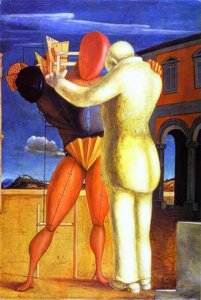
In the hauntingly quiet realm of Giorgio de Chirico’s Piazza d, the boundaries between reality and the subconscious dissolve into a monochrome stillness. This evocative composition serves as a profound exploration of the human psyche, rooted deeply in the existential anxieties that defined early 20th-century Europe. The artwork presents a meticulously crafted illusion, where a solitary statue—a male figure lying prone upon a cobblestone pavement—confronts a nondescript building façade. There is an immediate, unsettling sense of disorientation captured here; the stark juxtaposition of the heavy, resting form against the architectural void mirrors the artist’s lifelong preoccupation with fractured realities and the elusive, often deceptive nature of human perception.
The technique employed by de Chirico is a masterclass in metaphysical tension. While his style is undeniably a precursor to Surrealism, it is anchored by a rigorous, academic draftsmanship learned during his formative years. He utilizes a deliberate flattening of perspective to strip the scene of depth, creating an atmosphere of dreamlike stasis. By choosing a monochrome palette, de Chirico removes the emotional distractions of color, forcing the viewer to confront the raw power of form and texture. The subtle gradations of light and shadow are particularly striking, sculpting the contours of the statue to convey a sense of both monumental permanence and profound vulnerability.
Symbolism and the Weight of Silence
Beyond its visual strikingness, Piazza d is laden with symbolic weight that resonates with anyone who has ever felt the sting of isolation. The statue itself acts as a powerful motif for humanity’s confrontation with mortality and decay. As the figure lies in a state of repose—perhaps sleeping, perhaps eternally still—it embodies a melancholic contemplation of existence. This sense of unease was deeply influenced by the intellectual upheaval of de Chirico's era, particularly the Nietzschean philosophies that challenged traditional moral frameworks and left the individual adrift in an increasingly irrational world.
For the discerning collector or interior designer, this piece offers more than mere decoration; it provides a focal point for deep intellectual engagement. The presence of secondary figures—shadowy individuals engaged in quiet activities near benches—adds layers of narrative complexity, suggesting that even within the vast, empty squares of our dreams, we are never truly alone, yet always fundamentally separate. This artwork is an ideal acquisition for those seeking to infuse a space with sophistication, mystery, and a timeless, contemplative energy.
Kérdések és válaszok
Mely korszakból származik a "Piazza d"?
A "Piazza d" a Modern korszak alkotása.
„Piazza d”, De Chirico alkotása színei élénkek vagy fakók?
A „Piazza d”, De Chirico alkotása alkotás Subtle Color telítettségű és Balanced intenzitású.
„Piazza d”, De Chirico alkotása színei tel愈tek vagy fakók?
A "Piazza d" színeinek telítettsége Subtle Color.
A művész életrajza
A Dreamscape of the Mind: The Life and Art of Giorgio de Chirico
Giorgio de Chirico’s artistic journey began in Volos, Greece, in 1888, a birthplace that would profoundly shape his unique vision. Born to Italian parents – a Genoese mother and a Sicilian father – he was immersed in a world of dual heritage, a blend of classical tradition and burgeoning modern alienation. His early education at the Athens Polytechnic provided him with a solid grounding in traditional techniques, but it was his subsequent studies in Munich that truly ignited his creative spirit. This period exposed him to the evocative landscapes and symbolic imagery of artists like Arnold Böcklin and Max Klinger, whose work resonated deeply with his own developing aesthetic sensibilities. Equally influential were the philosophical currents swirling through Europe at the time – the challenging ideas of Friedrich Nietzsche, Arthur Schopenhauer, and Otto Weininger, which explored themes of existentialism, the irrationality of human desire, and the subjective nature of reality. These intellectual currents became the bedrock upon which de Chirico built his groundbreaking artistic vision.The Birth of Metaphysical Painting
Around 1909, a truly singular style began to emerge from de Chirico’s explorations – a style he himself termed “Metaphysical” art. This wasn't merely a stylistic innovation; it was a profound attempt to penetrate the surface of everyday life, to reveal the unsettling poetry hidden within familiar spaces. A pivotal moment occurred during a visit to Florence and an experience in Piazza Santa Croce, which served as the catalyst for his iconic ‘Metaphysical Town Square’ series. These paintings are characterized by their arresting stillness, long dramatic shadows, illogical perspectives, and the disconcerting presence of classical architecture juxtaposed with unsettling elements – faceless mannequins, looming statues, and a pervasive sense of isolation. The effect is deeply disquieting, evoking a potent blend of nostalgia, loneliness, and an almost unbearable longing for something lost or unattainable. It’s as if he was peering into a dreamscape, capturing the hidden anxieties and unspoken desires of the human psyche. De Chirico founded the Scuola Metafisica, profoundly impacting Surrealism, though his relationship with the movement remained complex and often fraught with disagreement over interpretations of his work. His paintings weren't intended as literal representations of dreams; rather, they were attempts to depict a reality beyond the visible world – a realm where time and space are fluid, and the boundaries between consciousness and unconsciousness blur. Works like *The Vexations of the Thinker*, *The Enigma of an Autumn Afternoon*, and *The Song of Love* exemplify this haunting aesthetic, inviting viewers to contemplate the mysteries of existence and the fragility of human perception.Influences and Philosophical Roots
De Chirico’s artistic development was inextricably linked to his intellectual pursuits. He devoured the works of philosophers like Friedrich Nietzsche and Arthur Schopenhauer, whose ideas about existentialism, irrationality, and the subjective nature of reality deeply influenced his art. Nietzsche's concept of the "eternal recurrence" – the idea that life repeats itself infinitely – resonated with de Chirico’s fascination with cycles, repetition, and the sense of déjà vu that permeates many of his paintings. Schopenhauer’s pessimistic worldview, emphasizing the suffering inherent in human existence, informed the melancholic atmosphere of his works. The influence of Otto Weininger, a controversial Austrian philosopher who explored themes of sexuality and race, is also evident in de Chirico's exploration of psychological states and the unsettling juxtaposition of familiar objects. These philosophical currents provided him with a framework for exploring the darker aspects of human experience – alienation, loneliness, anxiety, and the search for meaning in a seemingly meaningless world.A Shift in Style and Lasting Legacy
Following World War I, around 1919, de Chirico’s artistic trajectory took an unexpected turn. He consciously distanced himself from his earlier metaphysical approach, embracing instead a more traditional neoclassical or neo-baroque style. This shift was met with considerable criticism; many critics lamented the perceived abandonment of the innovative spirit that had defined his early work. However, de Chirico remained steadfast in his artistic choices, revisiting themes from his past but rendering them with a different aesthetic sensibility. He continued to paint and exhibit prolifically throughout his life, exploring various styles and subjects while maintaining a consistent commitment to craftsmanship and technical skill. Despite the criticism, his influence on subsequent generations of artists remains undeniable. His innovative use of space, perspective, and symbolism challenged conventional artistic norms and paved the way for new forms of expression. He left behind not just a body of artwork but a new way of seeing – a way of perceiving the world as a place of hidden meanings, unsettling beauty, and enduring mystery.Key Influences & Artistic Lineage
- Influenced By: Arnold Böcklin, Max Klinger, Friedrich Nietzsche, Arthur Schopenhauer.
- Influenced: Surrealism, particularly artists like René Magritte and Salvador Dalí. His work also impacted later movements such as Magic Realism.

De Chirico
1888 - 1978 , Görögország
Rövid információk
- Artistic Movement Or Style: Metafisziikai művészet
- Artists Or Movements Influenced By This Artist: ['Surrealizmus']
- Artists Who Influenced This Artist:
- Böcklin
- Klinger
- Date Of Birth: 1888. 7. 10.
- Date Of Death: 1978. 11. 20.
- Full Name: Giorgio de Chirico
- Nationality: Olasz
- Notable Artworks:
- A Veszélyes gondolatok
- Őszi estének rejtélye
- Place Of Birth: Volos, Görögország
Kapcsolódó cikkek

A sötét szépség: 10 híres festmény a 'Mars Black' árnyalataiban | OriginalUniqueArt
Fedezze fel a 10 leghíresebb festményt, melyeket a 'Mars Black' mély árnyalatai dominálnak! Rembrandt, Goya és Picasso remekművei – történetük, technikájuk és időtlenségük. Múzeumi minőségű művészeti reprodukciók otthonába. Fedezze fel a teljes gyűjteményt a OriginalUniqueArt.com-on!

A digitális ecsettől a személyes történetekig: Mesterséges intelligencia-alapú anime stílusátalakítás emlékezetes képekhez
Alakítsa át fényképeit egyedi anime stílusú műalkotásokká a OriginalUniqueArt segítségével! Képzett művészek, minőségi anyagok és 100% elégedettségi garancia. Örökké megőrzött emlékek – rendelje meg most!

James Abbott McNeill Whistler 25 Mesterműve: Hangulatok és Elegancia a Falakon
Fedezze fel James Abbott McNeill Whistler 25 legszebb művét! Ismerje meg a Nocturnok, portrék és az amerikai impresszionizmus mesterét. Elegáns faliképek otthonába – OriginalUniqueArt.com kínálatából. Böngésszen online!
A mangák vásztorra kerülése: A modern japán animáció esztétikai metamorfózisa a múzeumi minőségű műalkotásokban
Fedezze fel a manga és anime lenyűgöző világát! Mélyreható elemzések, történelmi áttekintés és szakértői vélemények a japán animáció művészetéről és kulturális hatásáról. Prémium minőségű gyűjtemények és exkluzív betekintések várják Önt!

Anime és Manga Hatása a Kortárs Művészetre: Új Esztétikai Trendek és Egyedi Megoldások
Fedezze fel az anime és manga lenyűgöző hatását a kortárs művészetre! Mélyreható elemzésünk bemutatja az új esztétikai trendeket, inspiráló művészeket és a jövő vizuális kultúráját.