

 Előnézet
 Megosztás
 Megosztás
 Részletek
 Útmutató

 Letöltés
 Hasonló darabok
 X-ray felvétel
 Diavetítés
 Statisztika
Speeding Automobile
 Futurist Painting
 1912
1912 56.0 x 69.0 cm
 Modern Művészeti Múzeum (New York)
 Tovább olvasom
Az ezen az oldalon megjelenített műalkotások szerzői jogi védelem alatt állnak, ami azt jelenti, hogy törvényileg nem készíthetünk és nem adhatunk el belőlük pontos másolatokat. Ez a védelem olyan nemzetközi megállapodások alapján érvényesül, mint például a Berni Egyezmény és a nemzeti törvények által, beleértve azokat is, amelyeket meghatározott Az USA szerzői jogi törvénye – 17. cím.
Mint tiszteletes és törvényes alternatívát, olyan egyedi, kézzel festett alkotásokat kínálunk, amelyek az eredetiből merítnek inspirációt. Tapasztalt és professzionális művészeink alaposan tanulmányozzák az eredeti stílusát, hangulatát és művészeti esszenciáját, hogy egy olyan új, egyedi alkotást hozzunk létre, amely ugyanazt az érzést kelti – miközben önálló, eredeti alkotásként létezik.
Ez a módszer teljes mértékben megfelel a szerzői jogi szabályozásnak, mivel nem tartalmazza a védett műalkotás másolását vagy duplikálását. Ehelyett ez egy kreatív újinterpretáció – egy új festmény, amely az eredetivel való összefüggései miatt hatással van rá, de nem az az.
Kézzel készített olajfestmény reprodukció
Kézzel festett olajvastú vászon, az Ön által választott méretben és keretben, művészeink készítik meglévőre. ( Váltás nyomtatványra Áttérés digitális képre)




P118B Ft10

P118H Ft10

P118W Ft10

P438Z Ft10

P508JH Ft12

P508YH Ft12

P805H Ft10

P805Z Ft10

P919BZ Ft10

P919G Ft10

P919XJ Ft10

P959ZH Ft10

P968JZ Ft12

W106C Ft8

W218G Ft10

W218JH Ft8

W218Y Ft10

W307PJ Ft10

W316G Ft10

W316PJ Ft8

W316Y Ft10

W398PJ Ft8

W4111J Ft10

W500HY Ft15

W500JH Ft15

W692G Ft12

W849H Ft8

W940BG Ft15

W953PJ Ft8




Válasszon előre meghatározott méreteink közül, amelyek megfelelnek a műalkotás eredeti arányainak.

Írja be a kívánt szélességet és magasságot, hogy illeszkedjen a keretéhez vagy a falához. Mivel ez kézzel festett alkotás, egy eltérő formájú méret esetén a művész akár festhet is valamivel többet a kép körül, vagy korolathat is belőle — az Ön döntésének megfelelően. A festés megkezdése előtt küldünk egy digitális tervezetet jóváhagyásra. Az oldalon látható kép nem tartalmazza a végeredményt — csak a tervezet mutatja meg a valódi eredményt.
A rendelést követően a OriginalUniqueArt.com csapata e-mailt küld az ügyfélnek az instrukciókért, és biztosít egy előnézeti képet (mockup).
Világszerte elérhető szállítás () 3-4 hét alatt a szokásos 5 hét helyett. (23 október). A minőség nem kérdőjelezhető.

Ingyenes globális expressz szállítás

Prémium minőségű len vászon

Teljes körű szállítási biztosítás

Vámvisszatérítési Garancia

Tökéletes színarányosság garancia

100 napos visszaküldési garancia (csak gyártási hibás termékek esetén)

100% pénzvisszatérítési garancia

Több darab vásárlásakor kedvezmény
 Az üvegkeretes opció csak 110 cm alatti méretben érhető el

Speeding Automobile
Reprodukciós technika
Reprodukció méretei
-


Összesített ár
Ft 96443
Speeding Automobile: A Futurist Vision of Modernity
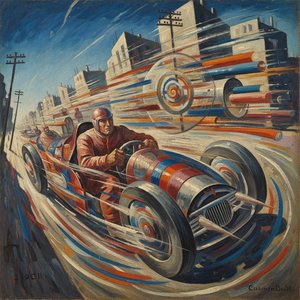
Giacomo Balla’s “Speeding Automobile,” completed in 1912, stands as a cornerstone of Futurism—a movement that vehemently rejected the past and embraced speed, dynamism, and technological advancement. Painted on wood, this striking artwork exemplifies the Futurist aesthetic's obsession with capturing fleeting moments of motion and disrupting traditional artistic conventions.
- Subject Matter: The painting depicts a car in rapid movement, illuminated by its headlights, traversing an urban landscape populated by buildings. This deliberate choice reflects Futurists’ fascination with the transformative influence of automobiles on society and daily life.
- Style & Technique: Balla employed Divisionism—a technique pioneered by Monet and others—to achieve a luminous effect through juxtaposed patches of pure color. However, he pushed beyond mere optical representation, prioritizing expressive gesture and conveying the sensation of speed rather than precise visual detail. The artist’s meticulous attention to capturing the car's wheels at varying positions underscores this commitment to portraying movement effectively.
The inclusion of two figures—one positioned on the left side of the canvas and another closer to the center—adds a human element to the scene, emphasizing the relationship between individuals and the burgeoning pace of industrialization. These figures aren’t merely incidental; they serve as conduits for conveying the emotional impact of this accelerated world.
Historical Context: The Birth of Futurism
Born in Turin in 1871, Giacomo Balla's artistic journey began with an initial inclination towards music before shifting his focus to visual art following his father’s untimely death. His formative years were spent honing his skills in lithograph printmaking and studying at academies and the University of Turin. Moving to Rome in 1895 broadened his horizons creatively, fostering collaborations with illustrators and portrait painters.
The painting emerged during a period defined by fervent optimism about technological progress and fueled by the revolutionary manifesto penned by Filippo Tommaso Marinetti in 1910. Futurism championed concepts like violence, speed, and the glorification of machines—ideas that profoundly challenged artistic sensibilities of the time.
Symbolism & Emotional Resonance
"Speeding Automobile" transcends mere depiction; it embodies Futurist ideals. The vibrant colors and fractured forms symbolize the disruption of established order and celebrate the exhilarating energy of modernity. The headlights, strategically placed, represent illumination—both literal and metaphorical—guiding viewers toward a new understanding of time and space.
Resources for Further Exploration
- MoMA: Giacomo Balla. Speeding Automobile. 1912
- Obelisk Art History: Speeding Automobile by Giacomo Balla
Gyakran Ismételt Kérdések
Mennyi éves volt Giacomo Balla, amikor megalkotta a "Speeding Automobile" alkotást 1912 årban?
Amikor a "Speeding Automobile" alkotása 1912-ben készült, Giacomo Balla – aki 1871-ben született – 41 éves volt.
Elérhető diaporáma „Speeding Automobile”, Giacomo Balla alkotása alkotáshoz?
A „Speeding Automobile”, Giacomo Balla alkotása diaporámaként tekinthető a mű Diaváltás oldalán.
Hogyan írják le „Speeding Automobile”, Giacomo Balla alkotása színezetét?
A „Speeding Automobile”, Giacomo Balla alkotása színek palettáját úgy írják, mint Earthy. Ez a mű színeinek tömör leírása.
A művész életrajza
Giacomo Balla élete és korai pályája
- Születés: 1871. július 18., Torino, Olaszország
- Elhunyt: 1958
- Giacomo Balla művészcsaládban született; apja fotográfus volt.
- Kezdetben zenét tanult kilenc éves koráig.
- Apja halála után litográfiai nyomdában dolgozott, ahol érdeklődése a vizuális művészetek felé fordult.
- Torinói akadémiákon és később a Torinói Egyetemen tanult.
- 1895-ben Rómába költözött, ahol illusztrátorként, karikaturistaként és portréfestőként kezdett dolgozni.
Művészeti fejlődése és kulcsfontosságú korszakai
- Divizionizmus: Korai munkáit a divizionizmus befolyásolta, egy olyan technika, amely apró színes ecsetvonásokkal törekedett a fényesség elérésére. Ez az időszak érdeklődését mutatta a fényhatások iránt.
- Futurizmus: Egy fordulópontot jelentett, amikor Filippo Tommaso Marinetti megismerése után csatlakozott a futurizmushoz. 1910-ben aláírta a Futuristák Kiáltványát.
- Futurista elvek: Balla futurista munkái a fény, a mozgás és a sebesség ábrázolására összpontosítottak, gyakran absztrakt elemeket is beépítve. A futurista elveket a bútortervezésre és a ruházat tervezésére is kiterjesztette.
- Későbbi munkái: Később távolodott a futurizmus radikálisabb aspektusaitól, visszatérve egy hagyományosabb figuratív stílushoz.
Főbb művei és művészeti stílusa
- Absztrakt sebesség + hang (Velocità Astratta + Rumore): Egy jelentős munka, amely egy autóval szimbolizált sebességet ábrázolja.
- Az utcalámpa (The Street Light): Kiemelkedő példája a fény, a légkör és a mozgás felfedezésének.
- A pórázon lévő kutya dinamizmusa (Dynamism of a Dog on a Leash): Egy kulcsfontosságú alkotás, amely a mozgás ábrázolására tett erőfeszítéseit mutatja meg.
- Boccioni ökle (Boccioni's Fist): Bemutatja munkásságát szobrászként a futurista mozgalomban.
- Stílus: Balla stílusa a divizionista technikáktól a mozgás, a fény és a modern élet dinamikus és absztrakt ábrázolásai felé fejlődött. Fragmentált formákat, átfedő síkokat és élénk színeket használt az energia és a sebesség érzetének közvetítésére.
Hatások és történelmi jelentősége
- Etienne-Jules Marey: Marey kronofotográfiájának hatása, amely a mozgás egymást követő szakaszait rögzítette.
- Filippo Tommaso Marinetti: A Futuristák Kiáltványa és Marinetti ötletei voltak kulcsfontosságúak Balla művészeti irányának alakításában.
- Történelmi jelentőség: A futurista mozgalom alapító tagjaként Balla fontos szerepet játszott annak esztétikai elveinek kidolgozásában és befolyásának előmozdításában a különböző művészeti formákban. Munkája segített meghatározni a 20. század eleji modernizmust, és ma is ünneplik innovatív megközelítéséért a mozgás és a technológia ábrázolásában.
Öröksége és elismerése
- Tagság: 1935-ben tagja lett Róma Accademia di San Lucájának.
- Kiállítások: Részt vett a Documenta 1-en Kasselben (1955) és munkái kiállítva voltak a Documenta 8-on (1987).
- Múzeumi gyűjtemények: Művei olyan gyűjteményekben találhatók, mint az Albright-Knox Art Gallery, a National Academy of Saint Luke Rómában és az Estorick Collection.
- Balla öröksége abban rejlik a mozgás és a dinamizmus úttörő felfedezésében a művészetben, jelentős mértékben hozzájárulva a futurizmus és a modern művészi kifejezés fejlődéséhez.

Giacomo Balla
1871 - 1958 , Olaszország
Gyors információk
- Artistic Movement Or Style: Futurizmus
- Artists Or Movements Influenced By This Artist:
- Umberto Boccioni
- Gino Severini
- Artists Who Influenced This Artist: ['Etienne-Jules Marey']
- Date Of Birth: 1871. július 18.
- Date Of Death: 1958
- Full Name: Giacomo Balla
- Nationality: Olasz
- Notable Artworks:
- Absztrakt sebesség + hang
- Az utcalámpa
- Kutya pókon dinamikusan
- Place Of Birth (City And Country): Torino, Olaszország
Kapcsolódó cikkek

Carlo Carrà: Futurist Visions & Metaphysical Transformations in Early 20th-Century Italian Painting
Explore the artistic journey of Carlo Carrà, a pivotal figure in Italian Futurism & Metaphysical painting. Discover his dynamic compositions, collaborations with de Chirico, and lasting influence on modern art history.

Speed, Power, and Motion: A Journey Through the Energetic Soul of Futurism
Explore the exhilarating energy of Futurism. From Italian dynamism to Russian Cubo-Futurism, journey through a masterclass in speed, power, and motion in art history with our expert cultural reflections.
Giacomo Balla: Dynamism, Futurism & the Aesthetic of Speed – A Comprehensive Exploration
Explore the revolutionary art of Giacomo Balla, a key figure in Futurism. Discover his dynamic paintings capturing speed, light & movement. Learn about his techniques, masterpieces & legacy with our comprehensive guide.
Dynamism & Disruption: The Enduring Legacy of Futurism
Explore the revolutionary world of Futurism! Discover its key artists like Boccioni & Balla, defining principles, and lasting impact on modern art. A deep dive into this influential movement.

Speed, Power, and Motion: A Collector's Guide to the Dynamic World of Futurism
Explore the exhilarating world of Futurism with our expert guide. Discover how masters like Balla and Boccioni captured speed, power, and modern motion through dynamic avant-garde techniques—essential knowledge for any discerning art collector.
