
 Előnézet
 Megosztás
 Megosztás
 Részletek
 Útmutató

 Letöltés
 Hasonló darabok
 X-ray felvétel
 Diavetítés
 Statisztika
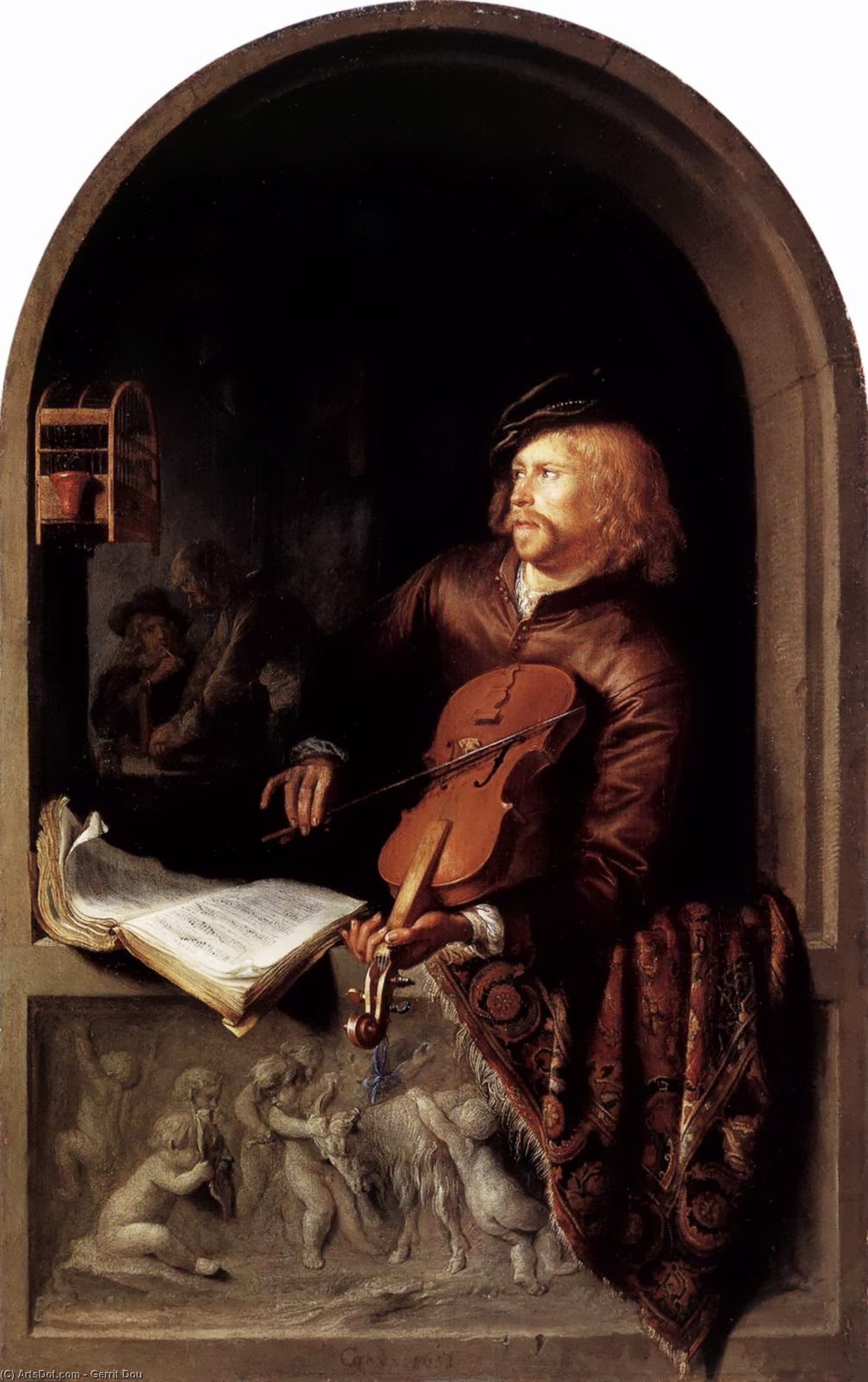
Violon Player
 Oil On Canvas
- WallArt
- Baroque Dutch Painting
 1653
1653- Renaissance
 32.0 x 20.0 cm
 Liechtenstein Museum
 Tovább olvasom
Kézzel készített olajfestmény reprodukció
Kézzel festett olajvastú vászon, az Ön által választott méretben és keretben, művészeink készítik meglévőre. ( Váltás nyomtatványra Áttérés digitális képre)




P118B Ft10

P118H Ft10

P118W Ft10

P438Z Ft10

P508JH Ft12

P508YH Ft12

P805H Ft10

P805Z Ft10

P919BZ Ft10

P919G Ft10

P919XJ Ft10

P959ZH Ft10

P968JZ Ft12

W106C Ft8

W218G Ft10

W218JH Ft8

W218Y Ft10

W307PJ Ft10

W316G Ft10

W316PJ Ft8

W316Y Ft10

W398PJ Ft8

W4111J Ft10

W500HY Ft15

W500JH Ft15

W692G Ft12

W849H Ft8

W940BG Ft15

W953PJ Ft8




Válasszon előre meghatározott méreteink közül, amelyek megfelelnek a műalkotás eredeti arányainak.

Ön megadhat saját méreteket egy adott kerethez vagy térhez igazításhoz. Ha a kiválasztott méret nem egyezik az eredeti kép arányával, akkor a műalkotást levágjuk, vagy további kézzel festett elemekkel meghosszabbítjuk a festményt. A gyártás megkezdése előtt küldünk Önnek egy digitális előnézetet jóváhagyásra.
Kérjük, vegye figyelembe, hogy a képernyőn megjelenő előnézet nem tükrözi a tényleges vágást vagy kiterjesztést. Csak az előnézet fog pontosan mutatni a végső kompozíciót.
Bár egyedi méretek állnak rendelkezésre, javasoljuk, hogy válasszon egy méretet az előre meghatározott listából az eredeti arányok megőrzése érdekében.
A rendelést követően a OriginalUniqueArt.com csapata e-mailt küld az ügyfélnek az instrukciókért, és biztosít egy előnézeti képet (mockup).
Világszerte elérhető szállítás () 3-4 hét alatt a szokásos 5 hét helyett. (14 október). A minőség nem kérdőjelezhető.

Ingyenes globális expressz szállítás

Prémium minőségű len vászon

Teljes körű szállítási biztosítás

Vámvisszatérítési Garancia

Tökéletes színarányosság garancia

100 napos visszaküldési garancia (csak gyártási hibás termékek esetén)

100% pénzvisszatérítési garancia

Több darab vásárlásakor kedvezmény
 Az üvegkeretes opció csak 110 cm alatti méretben érhető el

Violon Player
Reprodukciós technika
Reprodukció méretei
-


Összesített ár
Ft 95108
Gerrit Dou’s ‘Violon Player’: A Masterclass in Dutch Golden Age Detail
This exquisite hand-painted reproduction captures Gerrit Dou's remarkable ability to distill the essence of human experience into a single, intensely observed moment. Painted in 1653, “Violon Player” offers a poignant glimpse into the life of a musician during the Dutch Golden Age – a period defined by burgeoning commerce, artistic innovation, and a profound appreciation for leisure and refinement. The painting’s subject, a man absorbed in his violin, is rendered with an almost unsettling realism, inviting us to contemplate not just his actions but also his inner world.
- Subject & Composition: The central figure dominates the canvas, his posture suggesting both concentration and perhaps a touch of melancholy. The inclusion of indistinct figures in the background – likely members of his audience – adds depth to the scene without disrupting the focus on the musician himself. This careful composition is characteristic of Dou’s approach, prioritizing narrative suggestion over explicit storytelling.
- Style & Technique: Dou was a key figure within the Leiden Fijnschilders group, renowned for their meticulous attention to detail and mastery of *sfumato* – a technique that employs subtle gradations of light and shadow to create an atmospheric effect. Notice the incredibly detailed rendering of the violin’s varnish, the folds in the man's clothing, and the play of light on his face. This level of precision was exceptionally demanding, requiring hours of painstaking work.
Chiaroscuro and the Drama of Light
Gerrit Dou’s command of chiaroscuro – the dramatic use of light and dark – is perhaps the most striking element of “Violon Player.” He expertly manipulates light to create a sense of depth, volume, and emotional intensity. The soft glow illuminating the musician's face contrasts sharply with the darker recesses of the room, drawing our attention to his expression and intensifying the scene’s mood. This technique was particularly favored by Dou, reflecting his fascination with capturing fleeting moments of illumination – often seen in his candlelit night-scenes.
- Material & Craftsmanship: Each reproduction is created using traditional hand-painting techniques, employing archival-quality pigments and canvas to ensure lasting beauty. The meticulous brushwork and the rich color palette faithfully recreate Dou’s original vision, capturing the nuances of light and texture that are essential to his style.
Symbolism and Context
“Violon Player” transcends a simple portrait; it offers a window into 17th-century Dutch society. The musician represents a segment of the middle class, enjoying a moment of respite from their daily activities. The violin itself was a symbol of status and refinement during this era. Dou’s work reflects the growing importance of secular pursuits and leisure within the burgeoning merchant culture of Leiden. This painting aligns with the broader artistic trends of the Dutch Golden Age, where artists sought to capture not just physical likenesses but also the psychological states of their subjects.
- Historical Significance: Created in 1653, this work exemplifies Dou’s peak creative period. It provides a valuable insight into the artistic practices and aesthetic sensibilities of the Dutch Golden Age – a time when art flourished alongside economic prosperity and intellectual curiosity.
Perfect for Your Space
This stunning reproduction of Gerrit Dou's “Violon Player” is more than just a beautiful image; it’s an investment in timeless artistry. Its elegant composition, masterful technique, and evocative atmosphere make it a perfect addition to any interior space – from a formal salon to a contemporary living room. Bring the drama and sophistication of the Dutch Golden Age into your home with this exceptional hand-painted reproduction.
Gyakran Ismételt Kérdések
Milyen más nevét vagy álname""")vét használ még Gerrit Dou?
Gerrit Dou más néven is ismert: Gerárd Douw.
Milyen érzelmi hangulat kíséri a "Violon Player" alkotás Baroque Dutch Painting stílusát?
A "Violon Player" Reflective érzelmi hangulatot áraszt a Baroque Dutch Painting kortól fel nem szabott stílusban.
Milyen technikával és milyen stílusban készült a "Violon Player"?
A „Violon Player”, Gerrit Dou alkotása ötvözi a Oil On Canvas technikát a Baroque Dutch Painting stílussal. A technika és a művészeti irány a mű elkészítését és stílusát írja le.
Milyen összefüggésben áll a "Violon Player" témája Gerrit Dou megszokott motíveivel?
Gerrit Dou dokumentált témái – dutch golden age, genre scene painting, chiaroscuro mastery”, “leiden fijnschilders influence”, “portraiture, social commentary – között a „Violon Player” különös hangsúlyt fektet violin player, portrait painting, dutch golden age, gerrit dou, chiaroscuro, elegant man, 17th century-ra.
Milyen stílusba tartozik a "Violon Player"?
A "Violon Player" a Baroque Dutch Painting egyik alkotása. A művészeti irány jelzi azt a művészeti hagyományt, amelybe a mű tartozik.
Mely paletta és domináns szín határozza meg a "Violon Player" alkotást?
A „Violon Player”, Gerrit Dou alkotása egy Earthy színvilágot használ, melynek domináns színe a Black (#0c0506).
Milyen technika és milyen méret jellemzi az eredeti „Violon Player”, Gerrit Dou alkotása alkotást?
A "Violon Player" alkotás Oil On Canvas technikával készült, eredeti mérete pedig 32 x 20 cm.
Milyen színpalettát és milyen érzést ötvöz a "Violon Player"?
A „Violon Player”, Gerrit Dou alkotása egy Earthy színpalettát ötvöz a Reflective hangulatú tónussal.
A művész életrajza
Gerrit Dou (1613 - 1675)
Gerrit Dou was one of the most famous of all dutch painters until the beginning of the 19th century. He trained with Rembrandt, whose influence shows in his early works. His fame depended on his minutely painted scenes of everyday life, often represented in arched stone openings, like 'A Poulterer's Shop'; these are sometimes called 'niche' paintings. Trompe l’œil techniques were a hallmark of his style, creating illusions that blurred the boundaries between reality and artifice.Life
Gerrit Dou was born in Leiden on April 7, 1613, the son of Marytje Jansdr van Rosenburg and the glassmaker and engraver Douwe Jansz. According to Jan Jansz. Orlers (1570–1646), burgomaster of Leiden and author of a city chronicle in 1641, Dou evinced “a pleasure and desire toward painting” at a young age. He studied drawing under Bartholomeus Dolendo, and then trained in the stained-glass workshop of Pieter Couwenhorn. In February 1628, at the age of fourteen, his father sent him to study painting in the studio of Rembrandt (then aged about 21) who lived nearby. From Rembrandt, with whom he remained for about three years, he acquired his skill in colouring and in the more subtle effects of chiaroscuro, and his master's style is reflected in several of his earlier pictures, notably a self-portrait at the age of 22, around 1635–1638, in the Bridgewater Collection, and in the *Blind Tobit going to meet his Son*, at Wardour Castle. Dou’s workshop was initially located on Kort Rapenburg, where he resided until his death in 1675. He married Anna Maria van der Meer in 1649, and they had several children.Artistic Style and Specialization
Gerrit Dou's artistic style is characterized by its minute and elaborate treatment, often featuring genre scenes and trompe l’œil ‘niche’ paintings. His mastery of chiaroscuro—the dramatic interplay of light and shadow—is particularly notable, as seen in his candlelit night-scenes. He achieved this remarkable effect through a combination of techniques, including the use of concave lenses and convex mirrors to accurately reproduce the illumination of real objects. Dou's meticulous attention to detail extended beyond mere visual representation; he painstakingly crafted every brushstroke, striving for an unparalleled level of realism and expressive nuance. His work was admired by contemporaries and continues to captivate viewers today.Notable Works
Gerrit Dou produced over 200 paintings during his lifetime, many of which are housed in prominent museums across Europe. Among his most celebrated works include *The Astronomer by Candlelight*, a masterful depiction of scientific observation bathed in soft light; *A Poulterer’s Shop*, a stunning example of trompe l'œil that creates the illusion of depth and architectural grandeur; and *The Leiden Collection*, new york, which showcases Dou’s contribution to European art history. His influence extended beyond his own generation, inspiring subsequent artists and shaping the aesthetic sensibilities of the eighteenth century.Legacy
Gerrit Dou is considered one of the founders of the Leiden fijnschilderij—a movement that emphasized precision, subtlety, and polished realism in painting. He was a student of Rembrandt, whose artistic vision profoundly impacted Dou’s own approach to artmaking. His pupils included Frans van Mieris the Elder and Gabriel Metsu, who carried forward Dou's legacy into the next generation of Dutch painters. Gerrit Dou remains an enduring symbol of artistic excellence and innovation—a testament to the transformative power of observation and meticulous craftsmanship.
Gerrit Dou
1613 - 1675 , Holland
Gyors információk
- Artistic Movement Or Style: Fijnschilder
- Artists Or Movements Influenced By This Artist: ['Frans van Mieris öreg']
- Artists Who Influenced This Artist: ['Rembrandt van Rijn']
- Date Of Birth: Április 7., 1613.
- Date Of Death: Február 9., 1675.
- Full Name: Gerrit Dou
- Nationality: Hollandi
- Notable Artworks:
- Az astronomerák kandillal
- A Leiden gyűjteménye
- Place Of Birth: Leiden, Hollandia
Kapcsolódó cikkek
Gerrit Dou: Intimacy & Light in the Dutch Golden Age
Explore the exquisite world of Gerrit Dou, a master of Dutch Golden Age painting. Discover his intimate genre scenes, signature use of light, and lasting legacy. Learn about collecting Dou's works & their value.

A Hollandi Aranykor 10 Mesterműve: Festmények, Amelyek Megváltoztatták a Világot | OriginalUniqueArt.com
Fedezze fel a Hollandi Aranykor 10 legikonikusabb műalkotását! Rembrandt, Vermeer és más mesterek festményeinek történeteit olvassa el. Barokk stílus, klasszikus művészet – inspirálódjon otthon dekorációjához a OriginalUniqueArt.com-on! Fedezze fel a teljes gyűjteményt online.

Golden Light & Dutch Skies: The Timeless Magic of Dutch Golden Age Landscapes
Discover the breathtaking beauty of Dutch Golden Age landscapes. Explore the mastery of light, chiaroscuro, and 17th-century realism through an expert art history lens, celebrating the enduring legacy of the Dutch Masters for discerning collectors and art lovers.

Golden Age Reflections: Dutch Baroque Painting & Cultural Innovation
Explore the Dutch Golden Age of painting! Discover key artists like Vermeer & ter Borch, their innovative techniques, and the rich cultural context behind these Baroque masterpieces. Learn about collecting & appreciating this iconic art period.
Illuminating Realism: Exploring the Dutch Golden Age of Painting (1600-1700)
Explore the Dutch Golden Age of painting (1600-1700) with OriginalUniqueArt. Discover Rembrandt, Vermeer & other masters. Learn about techniques, history & find museum-quality reproductions.


