

 Előnézet
 Megosztás
 Megosztás
 Részletek
 Útmutató

 Letöltés
 Hasonló darabok
 X-ray felvétel
 Diavetítés
 Statisztika
An Evening School
 Oil On Panel
- Dutch Golden Age
 1655
1655 25.0 x 23.0 cm
 Metropolitan Művészeti Múzeum
 Tovább olvasom
Kézzel készített olajfestmény reprodukció
Kézzel festett olajvastú vászon, az Ön által választott méretben és keretben, művészeink készítik meglévőre. ( Váltás nyomtatványra Áttérés digitális képre)




P118B Ft10

P118H Ft10

P118W Ft10

P438Z Ft10

P508JH Ft12

P508YH Ft12

P805H Ft10

P805Z Ft10

P919BZ Ft10

P919G Ft10

P919XJ Ft10

P959ZH Ft10

P968JZ Ft12

W106C Ft8

W218G Ft10

W218JH Ft8

W218Y Ft10

W307PJ Ft10

W316G Ft10

W316PJ Ft8

W316Y Ft10

W398PJ Ft8

W4111J Ft10

W500HY Ft15

W500JH Ft15

W692G Ft12

W849H Ft8

W940BG Ft15

W953PJ Ft8




Válasszon előre meghatározott méreteink közül, amelyek megfelelnek a műalkotás eredeti arányainak.

Írja be a kívánt szélességet és magasságot, hogy illeszkedjen a keretéhez vagy a falához. Mivel ez kézzel festett alkotás, egy eltérő formájú méret esetén a művész akár festhet is valamivel többet a kép körül, vagy korolathat is belőle — az Ön döntésének megfelelően. A festés megkezdése előtt küldünk egy digitális tervezetet jóváhagyásra. Az oldalon látható kép nem tartalmazza a végeredményt — csak a tervezet mutatja meg a valódi eredményt.
A rendelést követően a OriginalUniqueArt.com csapata e-mailt küld az ügyfélnek az instrukciókért, és biztosít egy előnézeti képet (mockup).
Világszerte elérhető szállítás () 3-4 hét alatt a szokásos 5 hét helyett. (21 október). A minőség nem kérdőjelezhető.

Ingyenes globális expressz szállítás

Prémium minőségű len vászon

Teljes körű szállítási biztosítás

Vámvisszatérítési Garancia

Tökéletes színarányosság garancia

100 napos visszaküldési garancia (csak gyártási hibás termékek esetén)

100% pénzvisszatérítési garancia

Több darab vásárlásakor kedvezmény
 Az üvegkeretes opció csak 110 cm alatti méretben érhető el

An Evening School
Reprodukciós technika
Reprodukció méretei
-


Összesített ár
Ft 118487
A Moment of Quiet Instruction: Gerrit Dou’s “An Evening School”
Gerrit Dou's "An Evening School," painted around 1655-57, isn’t merely a depiction of a classroom; it’s a carefully constructed tableau of learning, contemplation, and the quiet dignity of shared knowledge. Emerging from the Dutch Golden Age, this small masterpiece exemplifies the ‘fijnschilder’ style – a hallmark of Dou's oeuvre characterized by meticulous detail, subtle gradations of tone, and an almost photographic realism achieved through painstaking layering of paint. The painting immediately draws the viewer in with its dramatic chiaroscuro, a masterful manipulation of light and shadow that creates a sense of intimacy and mystery within the dimly lit interior.
At the heart of the composition sits a man, presumably a teacher, seated at a table surrounded by three eager young students. The arrangement is deliberately triangular, anchoring the scene with the central figure while subtly guiding the eye through the carefully rendered details – the open books, the sharpened quill pen, and the flickering candlelight that casts long shadows across the room. Dou’s skill lies not just in capturing individual likenesses but in conveying a palpable sense of atmosphere; you can almost feel the warmth of the fire and hear the rustle of pages.
The Language of Light and Symbol
Dou's use of light is profoundly symbolic, acting as both illumination and metaphor. The single candle, positioned centrally within the scene, isn’t simply a source of visibility; it represents knowledge itself – a beacon guiding the students towards enlightenment. The carefully controlled shadows suggest introspection and the quiet contemplation that often accompanies learning. Notice how Dou renders the flame itself—not as a simple shape but as a dynamic, almost tangible presence, imbued with warmth and luminosity. This attention to detail extends throughout the painting, from the rough texture of the clothing to the subtle variations in tone within the wooden table.
The students’ expressions are particularly noteworthy. They aren't posed stiffly; instead, they exhibit a genuine curiosity and attentiveness, their faces illuminated by the candlelight and reflecting a desire to absorb the knowledge being imparted. This portrayal of engaged learners speaks to Dou’s humanist sensibilities – a belief in the importance of education and its transformative power.
Technique and Historical Context
“An Evening School” is a testament to Gerrit Dou's mastery of oil painting technique, particularly his innovative glazing method. He applied incredibly thin layers of paint, building up color and texture gradually over time – a process that allowed him to achieve the luminous effects and subtle gradations of tone so characteristic of his work. This meticulous approach demanded immense patience and skill, contributing to the painting’s remarkable realism and depth.
Painted during the Dutch Golden Age (roughly 1600-1700), this piece reflects a period of unprecedented artistic flourishing in the Netherlands. The rise of the merchant class fueled a demand for art that celebrated domestic life, education, and moral values. Dou’s work aligns with this trend, offering a glimpse into the everyday world of a Dutch community while simultaneously exploring themes of knowledge, virtue, and family.
A Timeless Image of Learning
“An Evening School” transcends its historical context to offer a timeless meditation on learning, mentorship, and the pursuit of wisdom. The painting’s quiet intimacy, combined with Dou's masterful technique and evocative symbolism, creates an experience that is both visually stunning and emotionally resonant. It’s a reminder of the enduring value of education and the importance of passing knowledge from one generation to the next – a message as relevant today as it was nearly 400 years ago.
Gyakran Ismételt Kérdések
Milyen technikával készült és milyen méretű „An Evening School”, Gerrit Dou alkotása?
A "An Evening School" alkotás Oil On Panel technikával készült, eredeti mérete pedig 25 x 23 cm.
Miről szól a "An Evening School", és milyen hangulatot áraszt?
A „An Evening School”, Gerrit Dou alkotása night school, dutch painting, candlelight, education, children, chiaroscuro, domestic scene-t ábrázol, Calm hangulatban. A tárgy és a légkör együtt határozza meg a művet.
Milyen használat és milyen térhelyiség ajánlott a(z) „An Evening School”, Gerrit Dou alkotása számára?
A(z) Reflective használatát és a(z) Living Room helyiségben való elhelyezést javasoljuk „An Evening School”, Gerrit Dou alkotása esetében.
A művész életrajza
Gerrit Dou (1613 - 1675)
Gerrit Dou was one of the most famous of all dutch painters until the beginning of the 19th century. He trained with Rembrandt, whose influence shows in his early works. His fame depended on his minutely painted scenes of everyday life, often represented in arched stone openings, like 'A Poulterer's Shop'; these are sometimes called 'niche' paintings. Trompe l’œil techniques were a hallmark of his style, creating illusions that blurred the boundaries between reality and artifice.Life
Gerrit Dou was born in Leiden on April 7, 1613, the son of Marytje Jansdr van Rosenburg and the glassmaker and engraver Douwe Jansz. According to Jan Jansz. Orlers (1570–1646), burgomaster of Leiden and author of a city chronicle in 1641, Dou evinced “a pleasure and desire toward painting” at a young age. He studied drawing under Bartholomeus Dolendo, and then trained in the stained-glass workshop of Pieter Couwenhorn. In February 1628, at the age of fourteen, his father sent him to study painting in the studio of Rembrandt (then aged about 21) who lived nearby. From Rembrandt, with whom he remained for about three years, he acquired his skill in colouring and in the more subtle effects of chiaroscuro, and his master's style is reflected in several of his earlier pictures, notably a self-portrait at the age of 22, around 1635–1638, in the Bridgewater Collection, and in the *Blind Tobit going to meet his Son*, at Wardour Castle. Dou’s workshop was initially located on Kort Rapenburg, where he resided until his death in 1675. He married Anna Maria van der Meer in 1649, and they had several children.Artistic Style and Specialization
Gerrit Dou's artistic style is characterized by its minute and elaborate treatment, often featuring genre scenes and trompe l’œil ‘niche’ paintings. His mastery of chiaroscuro—the dramatic interplay of light and shadow—is particularly notable, as seen in his candlelit night-scenes. He achieved this remarkable effect through a combination of techniques, including the use of concave lenses and convex mirrors to accurately reproduce the illumination of real objects. Dou's meticulous attention to detail extended beyond mere visual representation; he painstakingly crafted every brushstroke, striving for an unparalleled level of realism and expressive nuance. His work was admired by contemporaries and continues to captivate viewers today.Notable Works
Gerrit Dou produced over 200 paintings during his lifetime, many of which are housed in prominent museums across Europe. Among his most celebrated works include *The Astronomer by Candlelight*, a masterful depiction of scientific observation bathed in soft light; *A Poulterer’s Shop*, a stunning example of trompe l'œil that creates the illusion of depth and architectural grandeur; and *The Leiden Collection*, new york, which showcases Dou’s contribution to European art history. His influence extended beyond his own generation, inspiring subsequent artists and shaping the aesthetic sensibilities of the eighteenth century.Legacy
Gerrit Dou is considered one of the founders of the Leiden fijnschilderij—a movement that emphasized precision, subtlety, and polished realism in painting. He was a student of Rembrandt, whose artistic vision profoundly impacted Dou’s own approach to artmaking. His pupils included Frans van Mieris the Elder and Gabriel Metsu, who carried forward Dou's legacy into the next generation of Dutch painters. Gerrit Dou remains an enduring symbol of artistic excellence and innovation—a testament to the transformative power of observation and meticulous craftsmanship.
Gerrit Dou
1613 - 1675 , Holland
Gyors információk
- Artistic Movement Or Style: Fijnschilder
- Artists Or Movements Influenced By This Artist: ['Frans van Mieris öreg']
- Artists Who Influenced This Artist: ['Rembrandt van Rijn']
- Date Of Birth: Április 7., 1613.
- Date Of Death: Február 9., 1675.
- Full Name: Gerrit Dou
- Nationality: Hollandi
- Notable Artworks:
- Az astronomerák kandillal
- A Leiden gyűjteménye
- Place Of Birth: Leiden, Hollandia
Kapcsolódó cikkek
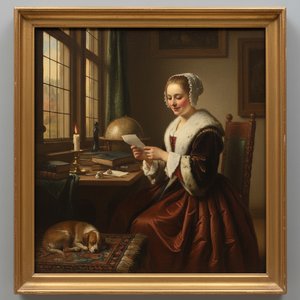
Gerrit Dou: Intimacy & Light in the Dutch Golden Age
Explore the exquisite world of Gerrit Dou, a master of Dutch Golden Age painting. Discover his intimate genre scenes, signature use of light, and lasting legacy. Learn about collecting Dou's works & their value.

Golden Light & Dutch Skies: The Timeless Magic of Dutch Golden Age Landscapes
Discover the breathtaking beauty of Dutch Golden Age landscapes. Explore the mastery of light, chiaroscuro, and 17th-century realism through an expert art history lens, celebrating the enduring legacy of the Dutch Masters for discerning collectors and art lovers.
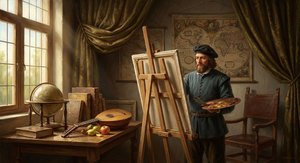
Illuminating Realism: Exploring the Dutch Golden Age of Painting (1600-1700)
Explore the Dutch Golden Age of painting (1600-1700) with OriginalUniqueArt. Discover Rembrandt, Vermeer & other masters. Learn about techniques, history & find museum-quality reproductions.

A Hollandi Aranykor 10 Mesterműve: Festmények, Amelyek Megváltoztatták a Világot | OriginalUniqueArt.com
Fedezze fel a Hollandi Aranykor 10 legikonikusabb műalkotását! Rembrandt, Vermeer és más mesterek festményeinek történeteit olvassa el. Barokk stílus, klasszikus művészet – inspirálódjon otthon dekorációjához a OriginalUniqueArt.com-on! Fedezze fel a teljes gyűjteményt online.

Golden Age Reflections: Dutch Baroque Painting & Cultural Innovation
Explore the Dutch Golden Age of painting! Discover key artists like Vermeer & ter Borch, their innovative techniques, and the rich cultural context behind these Baroque masterpieces. Learn about collecting & appreciating this iconic art period.


