A szöveg mérete

() ·

Egy Önnek készült, kézzel festett alkotás

The Nativity (detail)

Kézzel készített olajfestmény reprodukció

Kézzel festett olajvastú vászon, az Ön által választott méretben és keretben, művészeink készítik meglévőre. ( Váltás nyomtatványra Áttérés digitális képre)

A gyűjtemény leírása

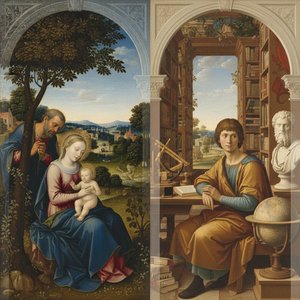
This intricately crafted painting showcases Mary, Joseph, and Jesus amidst a tranquil forest setting, embodying the spiritual essence of Flemish art during the Renaissance.

A művész életrajza

Gerard David (1460-1523) a kiváló festő, a holland reneszánsza egyik legkiemelkedőbb alakja. Lenyűgöző fényekkel, részletgazdag vallásos képeivel és innovatív tájképfestészetével gazdagította a kor művészetét.

előbb ·

1. fejezet

Mekkora méretű legyen?

Húzza a csúszkát a méret megváltoztatásához; a bal oldali kép a keret valós szélességét mutatja. Az eredeti arányok megmaradnak.

Standard méret
egyedi méretű
CM
INCH

Válasszon előre meghatározott méreteink közül, amelyek megfelelnek a műalkotás eredeti arányainak.

szélesség
magasság

Írja be a kívánt szélességet és magasságot, hogy illeszkedjen a keretéhez vagy a falához. Mivel ez kézzel festett alkotás, egy eltérő formájú méret esetén a művész akár festhet is valamivel többet a kép körül, vagy korolathat is belőle — az Ön döntésének megfelelően. A festés megkezdése előtt küldünk egy digitális tervezetet jóváhagyásra. Az oldalon látható kép nem tartalmazza a végeredményt — csak a tervezet mutatja meg a valódi eredményt.

2. fejezet

Hogyan érkezzen meg?

Válaszd ki a feszített vászon széleit

Válassza ki a keretet

Corner sample of the WhiteWrap canvas edge finish, stretched on tömörfa bars
Fehér Ft1
Corner sample of the BlurSideWrap canvas edge finish, stretched on tömörfa bars
Elmosódott szélek Ft1
Corner sample of the ExtendedWrap canvas edge finish, stretched on tömörfa bars
Kiterjesztett Ft1
Corner sample of the P118B picture frame: formázott polisztirol, 5 cm wide and 3 cm thick
P118B Ft10
Corner sample of the P118H picture frame: formázott polisztirol, 5 cm wide and 3 cm thick
P118H Ft10
Corner sample of the P118W picture frame: formázott polisztirol, 5 cm wide and 3 cm thick
P118W Ft10
Corner sample of the P438Z picture frame: formázott polisztirol, 5.5 cm wide and 3.5 cm thick
P438Z Ft10
Corner sample of the P508JH picture frame: formázott polisztirol, 7 cm wide and 3.5 cm thick
P508JH Ft12
Corner sample of the P508YH picture frame: formázott polisztirol, 7 cm wide and 3.5 cm thick
P508YH Ft12
Corner sample of the P805H picture frame: formázott polisztirol, 5 cm wide and 3.5 cm thick
P805H Ft10
Corner sample of the P805Z picture frame: formázott polisztirol, 5 cm wide and 3.5 cm thick
P805Z Ft10
Corner sample of the P919BZ picture frame: formázott polisztirol, 7 cm wide and 3.5 cm thick
P919BZ Ft10
Corner sample of the P919G picture frame: formázott polisztirol, 7 cm wide and 3.5 cm thick
P919G Ft10
Corner sample of the P919XJ picture frame: formázott polisztirol, 7 cm wide and 3.5 cm thick
P919XJ Ft10
Corner sample of the P959ZH picture frame: formázott polisztirol, 5 cm wide and 3 cm thick
P959ZH Ft10
Corner sample of the P968JZ picture frame: formázott polisztirol, 6 cm wide and 4 cm thick
P968JZ Ft12
Corner sample of the W106C picture frame: tömörfa, 5 cm wide and 3 cm thick
W106C Ft8
Corner sample of the W218G picture frame: tömörfa, 5 cm wide and 3 cm thick
W218G Ft10
Corner sample of the W218JH picture frame: tömörfa, 5 cm wide and 3 cm thick
W218JH Ft8
Corner sample of the W218Y picture frame: tömörfa, 5 cm wide and 3 cm thick
W218Y Ft10
Corner sample of the W307PJ picture frame: tömörfa, 6 cm wide and 3 cm thick
W307PJ Ft10
Corner sample of the W316G picture frame: tömörfa, 6 cm wide and 3 cm thick
W316G Ft10
Corner sample of the W316PJ picture frame: tömörfa, 6 cm wide and 3 cm thick
W316PJ Ft8
Corner sample of the W316Y picture frame: tömörfa, 6 cm wide and 3 cm thick
W316Y Ft10
Corner sample of the W398PJ picture frame: tömörfa, 5 cm wide and 3 cm thick
W398PJ Ft8
Corner sample of the W4111J picture frame: tömörfa, 6.5 cm wide and 3.5 cm thick
W4111J Ft10
Corner sample of the W500HY picture frame: tömörfa, 7 cm wide and 5 cm thick
W500HY Ft15
Corner sample of the W500JH picture frame: tömörfa, 7 cm wide and 5 cm thick
W500JH Ft15
Corner sample of the W692G picture frame: tömörfa, 8 cm wide and 4 cm thick
W692G Ft12
Corner sample of the W849H picture frame: tömörfa, 5 cm wide and 3 cm thick
W849H Ft8
Corner sample of the W940BG picture frame: tömörfa, 7.5 cm wide and 4.5 cm thick
W940BG Ft15
Corner sample of the W953PJ picture frame: tömörfa, 6 cm wide and 3.5 cm thick
W953PJ Ft8
Corner sample of the H24-GOLD picture frame: faragott fa gesszóval, 10 cm wide and 6 cm thick
H24-GOLD Ft30
Corner sample of the H24-SILVER picture frame: faragott fa gesszóval, 10 cm wide and 6 cm thick
H24-SILVER Ft30
Corner sample of the H36-GOLD picture frame: faragott fa gesszóval, 15 cm wide and 6.5 cm thick
H36-GOLD Ft45
Corner sample of the H36-SILVER picture frame: faragott fa gesszóval, 15 cm wide and 6.5 cm thick
H36-SILVER Ft45

Keretprofil: . A kerettel együtt vett teljes méret: .

3. fejezet

Ki festi, és változtatni kellene-e bármit?

Példák a módosíthatóságra: Az arc kicserélése a vásárló fotójára; háziállat hozzáadása (pl. macska kicserélése kutyára); rejtett üzenet elhelyezése a háttérben; a háttér tájéképének vagy elemeinek megváltoztatása.
A megrendelést követően a OriginalUniqueArt.com csapat e-mailt küld a vásárlónak az instrukciókkal, és biztosítja a tervezeti előnézetet

Világszerte elérhető szállítás () 3-4 hét alatt a szokásos 5 hét helyett. (3 november). A minőség nem kérdőjelezhető.

4. fejezet

Az utolsó finomhangolás

Egy felirat, mint egy múzeumban?

A gravírozott bronztábla részletei

This elegant plaque features the artist's name and the title of the artwork, finely engraved for a timeless presentation.

It is made from bronze with a refined, elegant finish. The text is precisely laser-engraved for a sharp and permanent result. Measuring 9x2 cm, the plaque is compact yet easy to read. It's built to be durable and scratch-resistant, offering a professional, museum-quality look. Mounting is simple thanks to the included adhesive backing.

Átlátszó akril tábla részletei

The plaque includes essential engraved details such as the artist's name, the title of the artwork, the date it was created, the type of media used-like oil on canvas or watercolor-a brief description of the piece, and a QR code that links to the complete artwork information.

It is crafted from clear acrylic, offering a sleek, modern appearance. The text is UV-engraved in black to ensure strong visual contrast. With a size of 10x15 cm, it ensures optimal readability. It comes equipped with two metal hooks for secure wall mounting. The plaque is designed to be weather-resistant, making it suitable for various environments, and it includes interactive features that work seamlessly with smartphone scanning.

Fekete akril tábla részletei

This elegant plaque includes engraved information such as the artist's name, the title of the artwork, the date it was created, the type of media used (like oil on canvas or watercolor), a short description of the artwork, and a QR code for quick access to more information.

The plaque itself is made from refined black acrylic with a premium finish. The text is laser-engraved in white for high contrast and readability. Its size is 10x15 cm, designed to be easy to read. It comes with two metal hooks for professional mounting. The design is sleek and fits any interior style. It is also weather-resistant and durable, with built-in digital integration for mobile compatibility.

Egy védőréteg?

Mikor lenne szüksége rá?

5. fejezet

Az Ön által megrendelt festmény

The Nativity (detail)

Reprodukciós technika

Reprodukció mérete

-

Kiváló mesterművész

Nagyobb részletesség, finomság és bővített gyártási idő

-

Reprodukció keretezése

-

-

A bármely oldalsó méretét túlszálaló 105 cm (kb. 41 hüvelyk) meghaladó műalkotások vagy reprodukciók esetében a keret összeszerelhető készletként, szétszerelve kerül szállításra. Ez a módszer biztosítja a biztonságos szállítást, és megakadályozza a szállítás során fellépő sérüléseket.

Szakmész összeszerelést igényel – ez nem DIY (önösszeszerelhető) termék.
A készletet egy tapasztalt keretező szakembernek kell összeszerelnie és a vásznat feszítenie kell, fa ragasztó (nem tartalmazza a csomag), vásznfeszítő fogó és szorítók használatával, amelyek a ragasztó száradásáig a keretrészeket egymáshoz vuôngjba tartják. A helytelen összeszerelés vagy a nem egyenletes vásznfeszítés maradandó károsíthatja a műalkotást, és ez nem része a garanciánknak.

  • A készlet tartalmazza az összes tömörfa rudat, pontosan méretre vágva.

  • A mellékelt csavarokkal, valamint a sarokszerekhez szükséges faütő ragasztóval kell összeszerelnie (ez nem tartalmazható a csomagban), így a keretrendezőnek külön kell beszereznie.

  • A csomag nem tartalmazza a szükséges professzionális eszközöket: egy vászonfeszítőt és klipseket a rácsok vízszintes tartásához a ragasztó megszáradásáig.

Fontos:
A sarokcsatlakozásokhoz fánylagra van szükség, a keretrudakat szorítókapcsokkal kell rögzíteni, amíg a rag teljesen meg nem szárad, a kész keretre feszített vászonhoz pedig vászonfeszítő fogat szükséges. Ezek egyike sem található meg a készletben. Kérjük, rendelés előtt győződjön meg róla, hogy rendelkezik tapasztalt keretező szakemberrel.

Névtábla

-

-

Védőréteg (Lakk)

Fényes lakk (intenzívabb színek, védelem a fény és a nedvesség hatása ellen)

-

Műalkotásom egyedi igényre szabása

Példák a módosíthatóságra: az arc kicserélése az ügyfél fotójára; háziállat hozzáadása (pl. macska helyett kutya); rejtett üzenet elhelyezése a háttérben; a háttér tájainak vagy elemeinek megváltoztatása.

-

Sürgős

Világszerte szóló szállítás () mindössze 3-4 hét alatt, a szokásos 5 hét helyett. (3 november). A minőség nem kérdőjelezhető.

-

Express szállítás

Világszerte elérhető szállítás területre 5 héten belül. (10 november).

A szállítás díja tartalmazza

Összesített ár

Ft 98290

Összesített ár Ft 98290

Az üvegkeretes opció csak 110 cm alatti méretben érhető el

Minden rendelés mellé tartalmazva

  • Ingyenes globális expressz szállítás
  • Prémium minőségű len vászon
  • Teljes körű szállítási biztosítás
  • Vámvisszatérítési Garancia
  • Hiteles színarányosság garancia
  • 100 napos visszaküldési lehetőség (csak hibás termékek esetén)
  • 100% pénzvisszatérítési garancia
  • Több darab vásárlásakor kedvezmény

A Moment of Divine Stillness: Exploring Gerard David's Nativity Detail

To gaze upon this detail from Gerard David’s The Nativity is to step across the threshold of time and into a moment suspended by divine grace. This painting, dating back to 1490, is not merely a depiction of a biblical event; it is a profound meditation on humility, divinity, and the quiet miracle of human connection. The composition centers around Mary and Joseph, figures rendered with an exquisite tenderness that speaks volumes of the Northern Renaissance spirit. Notice how the light seems to emanate from within the scene itself, illuminating the gentle interaction between the Holy Family while casting the surrounding elements—like the watchful donkey on the right—into a state of reverent quiet.

Mastery in Flemish Light and Detail

Gerard David was celebrated for his unparalleled ability to capture light, earning him renown as a master of Flemish illumination. In this work, that mastery is breathtakingly apparent. The technique employed showcases the meticulous detail characteristic of early Netherlandish painting; every fold in Mary’s long dress, the subtle gesture of the child standing beside her with clasped hands, and even the texture suggested on the donkey's coat are rendered with painstaking precision. This level of craftsmanship invites the viewer to lean closer, almost whispering secrets gleaned from the pigment itself. It is a testament to the period when painting was elevated to an art form demanding both spiritual devotion and supreme technical virtuosity.

Symbolism Woven into the Scene

The symbolism within this intimate grouping is rich and layered. The presence of Mary, Joseph, and the infant Jesus anchors the narrative in profound religious meaning. Yet, David enriches this core story with surrounding elements—the tranquil forest setting suggested by the background, and the inclusion of animals like the donkey—which ground the divine event within a tangible, earthly reality. These details serve to heighten the emotional resonance, reminding us that miracles often unfold amidst the mundane. The entire scene vibrates with an unspoken sense of awe, inviting contemplation on themes of sacrifice and new beginnings.

Bringing Renaissance Serenity Home

For the collector or designer seeking a piece that transcends mere decoration, this reproduction offers a window into the spiritual depth of the late Quattrocento. Owning a representation of David’s work is to curate an atmosphere of contemplative beauty within your own space. The soft palette and the inherent narrative weight lend themselves beautifully to drawing-room settings, chapels, or any area where moments of quiet reflection are cherished. It is more than art; it is an heirloom piece imbued with centuries of artistic devotion.

Kérdések és válaszok

A „The Nativity (detail)” Gerard David pályájának mely szakaszát képviseli?

A "The Nativity (detail)" Gerard David alkotói pályájának Mature Period szakaszát képviseli.

Hol tudom letölteni a(t) „The Nativity (detail)”, Gerard David alkotása?

A „The Nativity (detail)”, Gerard David alkotása képe letölthető a mű Letöltés oldaláról: magas felbontású digitális kép letöltése.

Mit ábrázol a "The Nativity (detail)"?

„The Nativity (detail)”, Gerard David alkotása a következőket ábrázolja: nativity, religious painting, flemish light, devotional panel, medieval art, joseph, mary.

Több információ erről a festményről

Megtekintés AR előnézet Váltás nyomtatványra Áttérés digitális képre Küldés
Részletek Útmutató Kedvencekhez ad Letöltés Hasonló darabok X-ray felvétel Diavetítés Kérdések és válaszok Statisztika

Számokban kifejezve

  • 1490a festés éve
  • 29választható keretek
  • standard méretek, saját arányokkal
  • 5hetek a festésre és a kézbesítésre
Gerard David

Gerard David

1450 - 1523, Holland

Gyors információk Gerard David művészről

  • Artistic Movement Or Style: Early Netherlandish
  • Artists Or Movements Influenced By This Artist:
    • Jan van Eyck
    • Rogier van der Weyden
  • Artists Who Influenced This Artist:
    • Jacob Janszoon
    • Dieric Bouts
  • Date Of Birth: c. 1460
  • Date Of Death: 1523
  • Full Name: Gerard David
  • Nationality: Netherlandish
  • Notable Artworks:
    • A Marriage St. Cath.
    • Virgin Among Virgins
  • Place Of Birth: Oudewater, Holland

A művész életrajza

A Master of Flemish Light: The Enigmatic World of Gerard David

Gerard David, a name that resonates with the brilliance of early Netherlandish painting, remains an artist shrouded in intriguing mystery. Born around 1460 in Oudewater, Netherlands, his life story is pieced together from fragmented archival records and the eloquent testimony of his art. Unlike some contemporaries whose lives are richly documented, David’s personal narrative is sparse, allowing his paintings to speak volumes where biographical details fall silent. What is known suggests a remarkably successful career, likely managing workshops in both Antwerp and Bruges – centers of artistic innovation during the Renaissance. His reputation experienced an ebb in the 17th century, only to be gloriously resurrected by 19th-century art historians who recognized his unique contributions to the Northern Renaissance. He was inducted as a free master into the Corporation of Imagemakers and Saddlers in Bruges in 1484, marking a pivotal moment in his ascent. His later involvement with the Antwerp guild in 1515 further solidifies his standing within the artistic community.

Formative Influences and Artistic Development

David’s artistic journey began under influences that shaped the very foundation of his style. Early works reveal a clear debt to painters like Jacob Janszoon, Dieric Bouts, and Geertgen tot Sint Jans – masters who instilled in him a meticulous attention to detail and a sensitivity to religious narrative. It is believed he spent time in Haarlem absorbing these lessons before relocating to Bruges, a vibrant hub of artistic exchange attracting talent from across Europe. Here, David encountered the masterpieces of Jan van Eyck, Rogier van der Weyden, and Hans Memling, absorbing their techniques while forging his own distinct path. He didn’t merely imitate; he synthesized these influences into something uniquely his own – a style characterized by luminous color, serene compositions, and an increasingly sophisticated understanding of landscape. His early paintings demonstrate this evolution, moving from the doll-like figures reminiscent of Haarlem traditions towards more sculptural forms grounded in their environment. This transition is visible in works like *Christ Nailed to the Cross*, where the influence of Bouts’ spatial construction blends with David’s emerging coloristic sensibility. The meticulous detail and realistic portrayal of textures, a hallmark of Van Eyck's work, are subtly incorporated into David’s compositions, while the emotional intensity found in Memling’s paintings informs his depictions of religious scenes.

Innovation in Landscape and Religious Narrative

Gerard David’s artistic signature lies in his innovative approach to both landscape and religious subject matter. He wasn’t simply depicting backgrounds; he was creating immersive environments that enhanced the emotional resonance of his scenes. His landscapes are not merely decorative, but integral components of the narrative, often imbued with symbolic meaning. This fascination with natural settings – dense forests, rolling hills, expansive skies – set him apart from many of his contemporaries and foreshadowed the development of landscape painting as an independent genre. Consider *View in a Forest*, outer wing of a triptych; it’s not simply a backdrop but a world unto itself, rendered with meticulous detail and atmospheric perspective. Within his religious works, David demonstrated a remarkable ability to convey both profound spirituality and human emotion. Paintings like *The Marriage of St. Catherine* exemplify this skill. The scene is rendered with exquisite detail, yet it's the subtle expressions on the figures’ faces – their piety, contemplation, or gentle joy – that truly captivate the viewer. He possessed a gift for imbuing his sacred subjects with a sense of quiet dignity and relatable humanity. The *Triptych of the Madonna Enthroned and Saints* in Genoa showcases this mastery, presenting a harmonious composition filled with vibrant color and delicate detail. His *Virgin Among the Virgins*, donated to the Carmelite nuns of Sion at Bruges, is another testament to his skill, featuring a self-portrait within the painting itself – a rare and intimate gesture from an artist of his time. This blending of realism and symbolism, combined with a profound understanding of human psychology, distinguishes David’s work from that of many of his peers.

A Period of Mastery and Artistic Expansion

The period between 1484 and 1515 represents the zenith of Gerard David's artistic career. During this time, he established himself as a leading painter in Bruges, attracting wealthy patrons and commanding respect within the guild system. He oversaw workshops, managed commissions, and honed his skills, producing a remarkable body of work that reflects both his technical mastery and his evolving artistic vision. His paintings from this era are characterized by their refined elegance, balanced compositions, and luminous color palettes. The influence of Hans Memling is still evident in his depictions of religious figures, but David increasingly incorporated elements of naturalism and perspective, creating a more dynamic and engaging visual experience for the viewer. He also began to experiment with new techniques, such as glazing – applying thin layers of translucent paint to create depth and luminosity – which further enhanced the richness and vibrancy of his works. This period saw the creation of some of his most celebrated paintings, including *The Virgin and Child with Saints*, a masterpiece that exemplifies his skill in depicting human emotion and creating harmonious compositions.

Legacy and Enduring Influence

Though his fame waned for a period after his death in 1523, Gerard David’s influence on subsequent generations of artists is undeniable. His innovative use of color, his masterful handling of light and shadow, and his pioneering approach to landscape all left an indelible mark on the development of Flemish painting. He paved the way for artists who would further explore the expressive potential of natural settings, such as Jacob Patinir and Jacob van Ruisdael.
  • A Bridge Between Traditions: David successfully bridged the gap between the late medieval tradition and the emerging Renaissance style.
  • Influence on Landscape Painting: His detailed and atmospheric landscapes foreshadowed the development of landscape as a distinct genre.
  • Masterful Colorist: He was renowned for his vibrant palette and skillful use of color to create emotional impact.
Today, David’s works are celebrated in museums and collections around the world, including the Groeninge Museum in Bruges, which houses an impressive collection of his paintings. His art continues to inspire awe and admiration, offering a glimpse into the spiritual and artistic landscape of the Northern Renaissance. Exploring his oeuvre is not merely studying art history; it’s entering a world of luminous beauty, profound contemplation, and enduring human emotion – a testament to the genius of Gerard David, a master of Flemish light.

Exploring Further

  • OriginalUniqueArt.com: Discover an extensive collection of Gerard David’s paintings, including *The Adoration of the Magi*.
  • View in a Forest: Explore this stunning Northern Renaissance landscape painting.
  • The Early Netherlandish Art Movement: Delve deeper into the artistic context of David’s work.

Gyors információk

  • Subject or theme: Religious iconography
  • Artist: Gerard David
  • Year: c.1490
  • Title: The Nativity (detail)
  • Notable elements or techniques: Detailed depiction of biblical scene
  • Dimensions: 76 x 56 cm

Művészeti kvíz

Minden kérdésre csak egy helyes válasz létezik.

Kérdés 1:
What is the primary subject matter depicted in Gerard David’s ‘The Nativity’?
Kérdés 2:
According to the description, what is notable about Mary’s attire in ‘The Nativity’?
Kérdés 3:
The image description mentions the presence of a donkey. What is its significance within the context of Nativity scenes?
Kérdés 4:
Gerard David was inducted into Bruges’ Corporation of Imagemakers and Saddlers in what year?
Kérdés 5:
What artistic style is ‘The Nativity’ considered to be?